Integrated approach to assess water quality and risk assessment for aquatic biota in Baía Negra, Pantanal, Brazil
Abstract
The Baía Negra Environmental Protection Area, situated within the Pantanal Sul-Mato-Grossense (BNEPA), represents an important conservation unit subjected to considerable environmental pressures resulting from human activities, such as agriculture and mining. This study evaluated the impact of these activities on water quality and their toxicogenetic effects on native fish. Physicochemical parameters and metals (Cd, Pb, Cr, Ni, Fe, Mn, Cu and Zn) were analyzed in water and macrophytes (Eichhornia sp.) collected from three sites along the Paraguay River. A 20 km buffer zone was used to assess the composition and structure of the landscape in the BNEPA. The results showed that the concentrations of Cd, Pb, Cr, Ni, Fe and Cu exceeded the legal limits established by CONAMA N° 357/2005, with Fe levels reaching a threshold that poses a substantial risk to aquatic biota. Macrophytes accumulated high Fe concentrations, indicating bioavailability and potential trophic transfer. Genotoxic and mutagenic alterations, including nuclear abnormalities and micronuclei in fish erythrocytes, were observed, indicating chronic exposure to contaminants. These findings highlight the urgent need for long-term biomonitoring programs and regulatory measures to mitigate the environmental risks of metal contamination and protect biodiversity in the Pantanal.
Keywords:
anthropogenic impacts; aquatic bioindicators; genotoxicity; Pantanal wetlands
Resumo
A Área de Proteção Ambiental Baía Negra (APABN) localizada no Pantanal Sul-Mato-Grossense, representa uma importante unidade de conservação sujeita a consideráveis pressões ambientais resultantes de atividades humanas, como a agricultura e a mineração. Este estudo avaliou o impacto dessas atividades na qualidade da água e seus efeitos toxicogenéticos em peixes nativos. Foram analisados parâmetros físico-químicos e metais (Cd, Pb, Cr, Ni, Fe, Mn, Cu e Zn) na água e em macrófitas (Eichhornia sp.) coletadas em três pontos ao longo do Rio Paraguai. Para avaliação da composição e estrutura da paisagem na APABN, foi utilizada uma zona de amortecimento de 20 km. Os resultados mostraram que as concentrações de Cd, Pb, Cr, Ni, Fe e Cu excederam os limites legais estabelecidos pela CONAMA N° 357/2005, com níveis de Fe superiores ao limite, representando um risco significativo para a biota aquática. As macrófitas acumularam altas concentrações de Fe, indicando biodisponibilidade e potencial transferência trófica. Além disso, foram observadas alterações genotóxicas e mutagênicas, incluindo anormalidades nucleares e micronúcleos em eritrócitos de peixes, evidenciando uma exposição crônica a contaminantes. Esses achados ressaltam a necessidade de programas de biomonitoramento de longo prazo e medidas regulatórias para mitigar os riscos ambientais da contaminação por metais e proteger a biodiversidade do Pantanal.
Palavras-chave:
áreas úmidas do Pantanal; bioindicadores aquáticos; genotoxicidade; impactos antrópicos
1. INTRODUCTION
Global environmental crises are placing unprecedented pressure on ecosystems, requiring urgent measures to mitigate the impacts of human activities (Fisher et al., 2023). In this context, Environmental Protection Areas (EPAs) play a crucial role in conserving essential ecosystem services, including maintaining water quality, soil integrity, and biodiversity (Silva and Branchi, 2021). Beyond their ecological value, these areas support traditional and indigenous communities, promoting socio-environmental justice and the sustainable use of natural resources (Bontempi et al., 2023).
Among these areas, the Baía Negra Environmental Protection Area (BNEPA), established by Decree N° 1,735 in 2010 and located in the southern Pantanal, is a strategically important conservation unit that protects a highly biodiverse ecosystem. However, this region is under increasing pressure from agricultural expansion, cattle ranching, and mining activities, which contribute to water pollution, habitat degradation, and potential impacts on aquatic biota (Silva-Melo et al., 2020). Elevated metal concentrations in water can compromise the health of aquatic ecosystems by harming bioindicator species and bioaccumulating in the food chain, posing risks to biodiversity and human health (Ladário, 2016).
Despite previous studies on metal contamination and its genotoxic effects in aquatic ecosystems, a knowledge gap remains regarding the influence of land use patterns on metal bioaccumulation in aquatic macrophytes and their cascading effects on fish biota. Furthermore, the Pantanal remains underrepresented in the scientific literature, despite being one of the largest and most biodiverse wetlands in the world. Understanding the interactions between landscape composition, water quality, and genotoxic biomarkers can provide critical insights for conservation and management strategies in this region.
Given the paucity of studies that comprise the BNEPA and that evaluate the environmental conditions of this protection area, this study evaluated the impacts of human activities on water quality and the risks to aquatic biota in the Baía Negra Environmental Protection Area.
Specifically, we sought to: (1) assess the influence of landscape composition and structure on water quality in the BNEPA; (2) determine whether the physicochemical parameters of water comply with Brazilian legislation for the conservation of aquatic life; (3) quantify the concentrations of metals (Cd, Pb, Cr, Ni, Fe, Mn, Cu, and Zn) in water samples and macrophytes (Eichhornia sp.); (4) evaluate the risks assessment of metal concentrations in aquatic biota; and (5) investigate the genotoxic effects of water contamination on native fish species from the Pantanal.
2. MATERIAL AND METHODS
2.1. Study area
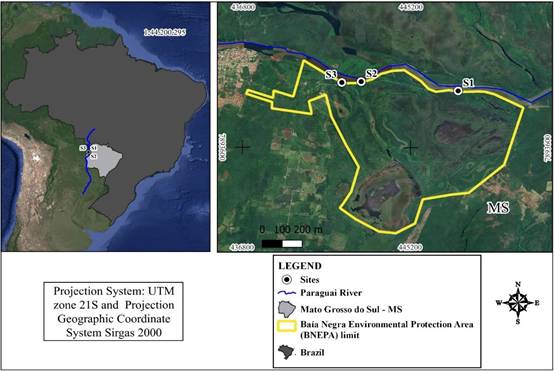
The study was carried out in the BNEPA, a conservation unit located on the banks of the Paraguay River within the Pantanal Sul-Mato-Grossense region (Figure 1).
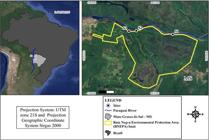
Geographical location of the study area within the Baía Negra Environmental Protection Area (BNEPA), located in the Upper Paraguay River Basin, Mato Grosso do Sul, Brazil.
The Baía Negra Environmental Protection Area (BNEPA), established by Decree N° 1,735 of 2010, is located in the municipality of Ladário, Mato Grosso do Sul, Brazil. To evaluate the impact of anthropogenic activities, sampling was conducted at three selected sites along the banks of the Paraguay River during the dry season of 2022, a period characterized by lower water levels that facilitate the detection of metal concentrations and their effects on aquatic biota. The sites were selected based on their proximity to potential sources of contamination, including agricultural runoff, urban wastewater discharges, and past mining activities.
2.2. Land use and cover
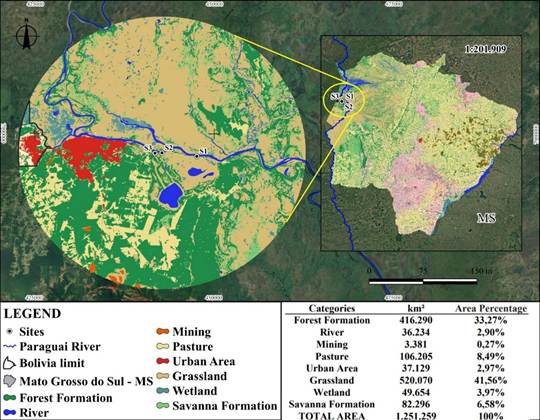
Land use and land cover analyses were performed using data from the MapBiomas Brasil© platform (Collection 9, Mapbiomas, 2024), which provides high-resolution satellite imagery in GeoTIFF format. The data, representing land use for the year 2022, were processed using QuantumGIS 3.28 software. In order to assess the influence of human activities in the study area, a 20 km buffer was created around each sampling site. This approach was taken to obtain information on the land use and land cover in the surrounding area, while also considering the large extension of the river. The classification of land use and land cover was performed based on the categories established by MapBiomas. This approach allowed the identification of land use patterns, such as agriculture, mining, and urbanization, which are critical to understanding the environmental pressures affecting water quality and aquatic biota in the BNEPA.
2.3. Physicochemical parameters of water
Physicochemical parameters of the water were measured in situ at the three sampling sites using a Hanna HI98194 multiparameter probe. The parameters assessed included dissolved oxygen (mg L⁻¹), electrical conductivity (µS cm⁻¹), total dissolved solids (TDS, mg L⁻¹), temperature (°C) and pH. These variables are critical indicators of water quality, reflecting both natural conditions and potential anthropogenic impacts, such as nutrient enrichment or heavy metal contamination. The measurements were conducted immediately to provide an accurate snapshot of the environmental conditions in the Paraguay River at the time of sampling in the BNEPA.
2.4. Collection and analysis of metals in water and aquatic macrophytes
At each sampling site, 200 mL of surface water was collected from the Paraguay River at a depth of approximately 5 cm using sterilized bottles. Samples were immediately acidified with nitric acid (1% v/v) to pH <2, according to ANA (2011) and USEPA (1994) recommendations, to ensure metal stabilization for subsequent analysis. They were transported in thermal boxes under refrigeration (4°C) until laboratory processing.
For digestion, 10 mL of each water sample was mixed with 10 mL of P.A. nitric acid and 2.5 mL of concentrated perchloric acid (HClO₄) and allowed to stand for 24 h. The samples were then heated on a hot plate at 120°C to near dryness, cooled, and dissolved in 3 mL of ultrapure water (Human UP 900/Scholar-UV) with 1 mL of concentrated hydrochloric acid (HCl). The final volume was adjusted to 5 mL in a volumetric flask.
Macrophyte samples (Eichhornia sp., stem and roots) were dried in an oven at 60°C for 48 h and ground to a homogeneous powder. Approximately 4 g of dried material was digested with 20 mL of concentrated HNO₃ (1:1 v/v) at 100°C under reflux for 30 min. After cooling, 10 mL of HNO₃ and 6 mL of 30% H₂O₂ were added and heated until effervescence ceased. The digested samples were filtered through a 0.45 µm membrane filter and the final volume was adjusted to 5 mL in a volumetric flask.
Both water and macrophyte samples, along with analytical blanks, were analyzed in triplicate using a Shimadzu AA7000 atomic absorption spectrophotometer. Flame atomization was used for Fe, Mn, Cu, Ni, Cr, and Zn, while graphite furnace atomization was used for Cd and Pb due to their lower detection limits. The detection limits for water samples were Cu = 0.003; Cd = 0.0004; Cr = 0.001; Fe = 0.05; Mn = 0.02; Ni = 0.005; Pb = 0.01; and Zn = 0.02 µg M-1. For macrophyte samples, the limits of detection were: Cu = 0.06; Cd = 0.01; Cr = 0.01; Fe = 0.05; Mn = 0.03; Ni = 0.04; Pb = 0.04; and Zn = 0.08 µg g-1.
2.5. Risk assessment for aquatic biota
In order to assess the potential ecological risks to aquatic biota in the Pantanal, the risk quotient (RQ) was calculated. The RQ is defined as the ratio between the concentration of each metal quantified in the water samples and the corresponding threshold established by CONAMA Resolution N° 357 (CONAMA, 2005) for freshwater Class II. This classification is established for waters intended for the protection of aquatic life, recreational activities and public supply after conventional treatment. Given the ecological and socio-economic importance of the studied section of the Paraguay River, this classification was considered appropriate for risk assessment.
An RQ value ≥ 1 indicates a potential risk to aquatic life (Godoy et al., 2015). In addition, the risk index (RI) was calculated as the sum of the RQ values for all metals analyzed, providing an integrated measure of cumulative contamination. Although there is no absolute threshold for RI, higher values indicate an increased likelihood of adverse ecological effects due to metal interactions and combined toxicity (Evans et al., 2015; Gustavsson et al., 2017; Viana et al., 2022).
2.6. Collecting and Analyzing of Genotoxicity in Fish
Fish specimens were collected concurrently with water samples using gill nets with mesh sizes ranging from 1.5 to 8.0 cm and fishing rods. After capture, the standard length (cm) and total weight (g) of each specimen were measured in the field using an ichthyometer and a digital scale, respectively. To facilitate blood sample collection, fish were immersed in cold water to reduce activity. Blood samples were obtained by caudal vein puncture using heparinized syringes. Two blood smears per specimen were placed on glass slides, air-dried for 15 min, and fixed in absolute ethanol (100%) for 10 min to ensure proper cell preservation for subsequent genotoxic analyses.
Taxonomic identification of the specimens was initially performed in the field following Britski et al. (2007). Morphological identification was later confirmed in the laboratory based on diagnostic taxonomic characteristics. The collected fish included twelve specimens of three omnivorous species: Astyanax lacustris (Lütken, 1875), Mylossoma duriventre (Cuvier, 1818), and Leporinus friderici (Bloch, 1794), representing different size and weight classes (Table 1). The procedures for animal handling were approved by the Ethics Committee under protocol N° 08/2018.
Nuclear changes in erythrocytes of the fish species listed in Table 1 were evaluated according to the protocols of De Jesus et al. (2016) and Viana et al. (2023). The genotoxicity index (GI) was determined based on the frequency of nuclear abnormalities in erythrocytes and was calculated according to Viana et al. (2023). This index provides an estimate of cumulative DNA damage in individuals exposed to environmental contaminants.
2.7. Statistical analysis
Statistical analysis was conducted using the R programming language (R Core Team, 2022). The normality of the data was assessed prior to hypothesis testing, using the Shapiro-Wilk test. Due to deviations from normality, the Kruskal-Wallis test was used to compare nuclear alterations and genotoxicity index (GI) among fish species. Significant results from the Kruskal-Wallis test (p<0.05) were further examined using Dunn's post-hoc test to identify specific group differences. Spearman's correlation was performed between metal concentrations in water and macrophytes. This approach is consistent with standard practices for nonparametric data analysis and ensures robust and reliable conclusions.
3. RESULTS AND DISCUSSION
3.1. Land use and cover
The analysis of land use and cover around the three sampling sites shows the following distribution: Forest Formation > Grassland > Pasture > Savanna > Wetland > Urban Area > River > Mining (Figure 2). Forest Formation represents the most significant area surrounding the sampled sites, followed by Grassland and Pasture. It is important to highlight mining activities near the BNEPA, where companies extract elements such as Fe and Mn (Mato Grosso do Sul, 2023).
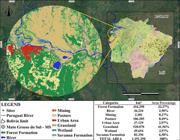
Brazil's abundant mineral resources position it as a leading global producer and exporter, especially of Fe (Araujo et al., 2014). While mining contributes to the national economy, it also leads to environmental problems such as deforestation, soil erosion, and water contamination in mining regions (Araujo et al., 2014).
The banks of the Paraguay River have minimal to no vegetation cover. This lack of riparian vegetation compromises the natural protective barrier, making the aquatic environment more vulnerable to contamination. Riparian vegetation plays a critical role in maintaining water quality by filtering contaminants and stabilizing river banks (Melo et al., 2022). According to Marmontel and Rodrigues (2015), the presence of riparian vegetation in a basin reduces nitrogen concentrations by 38%, phosphate by 94%, dissolved phosphorus by 42%, total infiltrated Al by 21%, and Fe entering the waterways by 54%.
In addition, the annual expansion of pastureland and cultivation of crops such as soy, corn, and sugarcane have contributed to the degradation of natural vegetation. This agricultural growth has become a source of contamination to aquatic environments through the introduction of metals (Neame and Galpern, 2025). These elements may be released naturally due to environmental characteristics or as a result of increased use of fertilizers and pesticides (Viana et al., 2021a; 2021b; Sharma et al., 2024b).
In watersheds with natural forest cover, vegetation serves as a protective barrier that reduces soil erosion, sedimentation, and excessive nutrient leaching. This natural filtration system plays a critical role in maintaining water quality and highlights the importance of maintaining riparian zones, especially in agricultural landscapes (Donadio et al., 2005).
3.2. Physicochemical parameters and metals in water
At the three sampling sites, the physicochemical parameters dissolved oxygen (DO), pH, and total dissolved solids (TDS) were within the limits established for Class II freshwater bodies according to Brazilian legislation (Resolution CONAMA N° 357/2005) (Table 2). However, the legislation does not specify maximum permissible values for electrical conductivity (Cond) and temperature (Temp) (Table 2).
The observed values of DO, pH, and TDS are insufficient for conclusively determining the quality of a body of water. To ensure a more reliable diagnosis of water quality, it is necessary to complement these analyses with other data. In the case of parameters for which no established values exist, it is necessary to update the relevant legal resolutions in order to include these parameters, given that they can influence the characteristics of a body of water and indicate environmental stresses that affect aquatic biota. A study conducted by da Silva Gomes et al. (2023) on the Paraguay River, values for physicochemical parameters similar to the results of the present study were observed.
The concentrations of metals, Cd, Pb, Cr, Ni, Fe, and Cu, in the water samples from the three sampling sites exceeded the maximum limits established by Brazilian legislation to conserve aquatic life (CONAMA, 2005). Conversely, the concentrations of Mn and Zn were within acceptable limits for Class II freshwaters (Table 3).
Fish are known to accumulate elements in their tissues, particularly in muscle, where these elements can trigger redox reactions that generate free radicals. This process leads to physiological and morphological changes in the tissues, ultimately resulting in environmental oxidative stress (Kolarova and Napiórkowski, 2021). Although metals are naturally present in the aquatic environment, their concentrations are often increased by anthropogenic activities such as agriculture, mining, and industrial operations (Rocha et al., 2024). Some metals, including Cu, Zn, and Mn, are essential for the metabolic processes of organisms. Others, such as Cd and Pb, have no known biological function and are considered toxic (Rocha et al., 2024).
Cd contamination of aquatic environments is a major environmental concern. This metal is bioaccumulative and can induce cellular toxicity in a wide range of organisms (Xie et al., 2024). Cd enters aquatic systems from various sources, including industrial waste discharges, resource extraction activities, and urbanization-related processes (Zhang et al., 2024). In aquatic organisms, Cd exposure has been associated with behavioral changes, such as irregular swimming patterns and hyperactivity (Ferro et al., 2019), and genotoxic effects, including micronuclei formation (Ossana et al., 2016).
Pb enters the environment through various anthropogenic activities, including the discharge of wastewater and the use of herbicides, pesticides, and insecticides. In fish, Pb exposure can lead to physiological changes such as impaired growth, reproductive dysfunction, and immunosuppression (Sharma et al., 2024a). A study reported Pb accumulation in the intestines of Cyprinus carpio after exposure to 0.25 mg L-1 of Pb (Hu et al., 2023). In addition, Viana et al. (2022) reported the bioaccumulation of metals in the muscle tissue of native Pantanal fish species (Hypostomus regani, Prochilodus lineatus, Brycon hilarii, Mylossoma duriventre) collected in the waters of the Aquidauana River. In the same study, the presence of metals was also observed in concentrations that did not comply with CONAMA N° 357/2005 legislation.
Soil leaching processes can increase Cr concentrations in aquatic environments (Sharma et al., 2024b). Cr is a relatively abundant metal on earth, with environmental releases resulting from activities such as drainage and fertilizer application (Kolarova and Napiórkowski, 2021). Ni, primarily associated with mining activities, has been shown to affect fish health by weakening the immune system and causing reproductive problems (Sharma et al., 2024a).
Fe is essential for metabolic processes in aquatic organisms, including fish. However, excessive concentrations may result in toxicity (Lau and Chris Le, 2023). Lima (2023) reported Fe concentrations of up to 1.36 mg L-1 in water samples from headwater streams. Similarly, Viana et al. (2021a) found Fe concentrations ranging from 0.97 to 3.68 mg L-1 in the Dourados River and from 1.48 to 3.04 mg L-1 in the Brilhante River. In addition, Sampaio (2003) recorded Fe values ranging from 1 to 35 mg L-1 in rivers of the Upper Paraguay River Basin. These values are lower than those observed in the present study, where Fe concentrations exceeded the limits set by Brazilian legislation by more than twenty times.
Waste discharges and agricultural activities contribute to elevated Cu concentrations in aquatic environments. While Cu is essential for various enzymatic functions, excessive levels can damage fish gills twenty times. Multiple chemical elements in aquatic systems can lead to combined toxicity, where interactions between these elements cause biological responses that differ from those observed with individual exposures (Kou et al., 2021; Amachree et al., 2024).
3.3. Metal concentrations in a macrophyte species
The elements quantified in Eichhornia sp. samples exhibited a decreasing order of concentration: Fe > Mn > Zn > Cu > Cr > Ni > Pb > Cd (Table 4). Among them, Fe showed the highest concentrations, ranging from 456 to 467 µg g-1, followed by Mn, which remained constant at 5.37 µg g-1 among the three sampling sites. Zn concentrations varied slightly, ranging from 3.25 to 3.33 µg g-1 (Table 4).
Concentrations of metals in Eichhornia sp (µg g-1) (mean ± standard deviation) were sampled at the three collection sites of BNEPA, Upper Paraguay River Basin.
In Brazil, no legislation establishes maximum allowable metal concentrations in aquatic plants. However, Outridge and Noller (1991) proposed reference values for certain metals in vascular aquatic plants. A comparison of the results of this study with these reference values indicates that all metals quantified are within the established limits, except for Fe, for which no reference value exists.
Metals can induce severe toxicity in higher plants, with their absorption and utilization regulated by plant cellular mechanisms. Metals such as Cd, Cr and Pb are toxic even at very low concentrations because they have no physiological role and disrupt cellular processes (Kolarova and Napiórkowski, 2021). Plants possess an ability to adapt to contaminated environments by absorbing and accumulating elements from water and soil (Negrão et al., 2021). In particular, aquatic plants are considered bioindicators of aquatic ecosystems due to their ability to sequester metals in their tissues, which can subsequently be transferred along the food chain. Both essential and non-essential elements for metabolism of life organisms in high concentrations have the potential to induce toxic effects in plants, leading to adverse outcomes such as reduced biomass accumulation, chlorosis, inhibited growth and photosynthesis, disrupted water balance, impaired nutrient assimilation, and, ultimately, plant death (Kolarova and Napiórkowski, 2021).
The macrophyte species Eichhornia sp. is notable for its capacity to accumulate metals relative to its biomass and its ability to modify its physiology and anatomy under stressful conditions (Rodrigues et al., 2016). While metals like Zn and Cu are essential for plant metabolism and enzymatic activity, they can become toxic at elevated concentrations (Rodrigues et al., 2016). The initial toxic effects of metals often target the plasma membrane, resulting in a cascade of physiological and structural consequences for the plant (Rodrigues et al., 2016).
Vitória et al. (2015) quantified the concentrations of Cd, Cr, Cu, and Zn in the roots of Eichhornia crassipes, reporting values of 1.60, 27.6, 16.7, and 73.5 µg g⁻¹, respectively, from samples collected in the Paraíba do Sul and Itabapoana Rivers. The study revealed that metals affected the anatomical characteristics of the plants but did not affect their photosynthetic capacity. Oliveira et al. (2024) documented exceptionally high Fe concentrations of 2077.21 µg g⁻¹ in E. crassipes samples collected from a site in the Apodi-Mossoró River Basin. In the same study, a Mn concentration of 2564.04 µg g⁻¹ was recorded at another sampling site within the same watershed.
Furthermore, Oliveira et al. (2024) did not observe a direct relationship between metal concentrations in water and in E. crassipes. The authors emphasized that metal accumulation in aquatic plant biomass is not only determined by metal concentrations in the water but is also influenced by the metals' bioavailability and the plant species' specific absorption properties. A comprehensive evaluation of metal concentrations across diverse aquatic ecosystems necessitates a consideration of the mobility of metals between these compartments. This approach facilitates a holistic assessment of metal contamination and its repercussions on ecosystem health (Oliveira et al., 2024). A positive correlation was demonstrated between the concentrations of all metals measured in both water and macrophytes (Figure 3A, S1). The results also underscore the potential of aquatic macrophytes as bioindicators, offering a dual perspective: their ability to sequester high concentrations of metals and their role in highlighting spatial heterogeneity in contamination across the BNEPA.
3.4. Risk assessment of aquatic biota
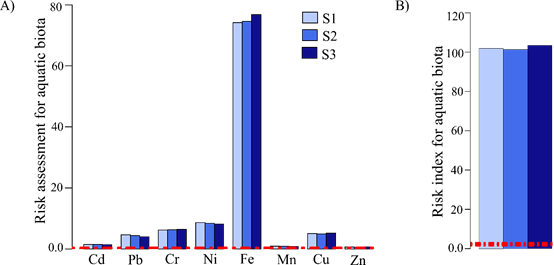
The individual risk assessment revealed that concentrations of Cd, Pb, Cr, Ni, Fe, and Cu posed risks to aquatic biota (RQ > 1) at all three sampling sites in the Paraguay River. Fe exhibited the highest individual risk, with the highest RQ value observed at site 3 (RQ = 76.8) due to the high quantified values of this element. In contrast, RQ values for Mn and Zn were less than 1, indicating a lower individual risk to aquatic biota (Figure 3A).
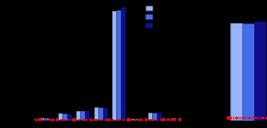
Aquatic life risk assessment of water samples from BNEPA S1, S2 and S3 on the Paraguay River, Upper Paraguay River Basin, Mato Grosso do Sul, Brazil. (A) Individual metal Risk Quotients (RQs); (B) Cumulative Risk Index (RI), representing the sum of individual metal RQs. The red dashed line represents RQ = 1.
When considering the combined effects of Cd, Pb, Cr, Ni, Fe, Mn, Cu, and Zn, the calculated Risk Index (RI) values were elevated, indicating risks to the conservation of aquatic life in the Pantanal at all sampling sites (Figure 3B). The average RQs, ranked in descending order of their contribution to the overall risk, were: Fe (RQs ~75) > Ni (RQs ~8.4) > Cr (RQs ~6.30) > Cu (RQs ~5.06) > Pb (RQs~4.33) > Cd (RQs ~1.47) > Mn (RQs ~0.87) > Zn (RQs ~0.63) (Figure 3A).
Fe exhibited the highest individual risk, with the peak RQ value observed at site 3 (RQ = 76.8). In contrast, the RQ values for Mn and Zn were below 1, indicating a lower individual risk to aquatic biota (Figure 3A). The risk values observed indicate that aquatic biota is susceptible to the adverse effects of metals in the water. Elevated concentrations of Fe can accumulate on fish gills, leading to respiratory impairment and possible suffocation. For instance, a study reported that Fe concentrations in river water exceeded safe limits for aquatic life, posing a risk to fish health.
Melo et al. (2022) conducted a risk analysis for aquatic biota based on the metals quantified in water samples from Córrego São José, MS. The results indicated that Fe presented a risk, with values exceeding the maximum indicative risk limit by more than tenfold. Similarly, Viana et al. (2022) identified risks to aquatic biota associated with Fe, Pb, Cu, and Cd in Aquidauana River, MS water samples.
3.5. Genotoxicity in fish
In the fish species collected in situ, six types of nuclear alterations were identified: nuclear invagination, nuclear budding, vacuolated nuclei, binucleated cells, lobulated nuclei and micronuclei (Table 5). The most frequent nuclear alterations across the three species were nuclear budding, vacuolated nuclei, and micronuclei. No significant differences were observed among the species for nuclear invagination and nuclear budding (p>0.05; Table 5). However, for vacuolated nuclei, binucleated cells, and micronuclei, A. lacustris differed significantly from L. friderici and M. duriventre (p<0.05), while L. friderici and M. duriventre did not show significant differences between them (p>0.05; Table 5). Regarding lobulated nuclei, M. duriventre differed significantly from both A. lacustris and L. friderici (p < 0.05; Table 5).
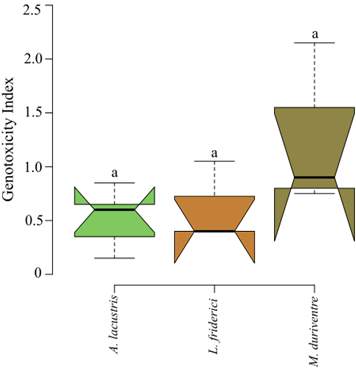
No statistically significant differences (p > 0.05) were observed between the three fish species for the genotoxicity index, although the sample number was reduced (Figure 4).
This study evaluates three species of omnivorous Pantanal fish as bioindicators of environmental health, emphasizing their ecological and economic importance. Astyanax lacustris is highlighted for its suitability as a bioindicator due to its opportunistic behavior, high abundance, migratory nature, and wide distribution in the Upper Paraná and Paraguay Basins (Viana et al., 2018). Previous studies have reported genotoxic effects in this species. For instance, Silva et al. (2021) showed micronuclei formation, binucleated cells, lobulated nuclei, and DNA degradation in A. lacustris exposed in situ to water from a Brazilian Cerrado river. Similarly, Silva et al. (2020) observed increased DNA damage in A. lacustris from urbanized streams in the Brazilian Midwest and linked these effects to urbanization-related contamination. Da Rocha et al. (2018) further corroborated these findings, demonstrating micronuclei formation in A. lacustris from the Curral de Arame Stream, Dourados, MS, and associating these changes with elevated metal concentrations.

The median and interquartile range of the genotoxicity index based on nuclear alterations in erythrocytes of fish species sampled in situ at BNEPA, Paraguay River.
Leporinus friderici, or the three-spotted piau, is another key species characterized by its generalist, opportunistic, and long-distance migratory behavior (Riveros et al., 2021). Research conducted on the Pantanal Plateau identified six nuclear alterations in erythrocytes of this species (nuclear invagination, nuclear budding, vacuolated nuclei, pyknosis, binucleated cells, and lobulated nuclei) (Riveros et al., 2021). These findings align with the results of this study. Furthermore, agricultural expansion in the Upper Paraguay River Basin causes habitat degradation, which has consequences for local aquatic biota and species such as L. friderici (Guerra et al., 2020).
Myllossoma duriventre is a migratory and omnivorous species that feeds on small invertebrates, fruits, seeds, and zooplankton (Lima, 2021; Viana et al., 2022). Previous studies have documented nuclear alterations, such as nuclear invagination, nuclear budding, lobulated nuclei, and binucleated cells, in M. duriventre collected in the Pantanal of Mato Grosso do Sul. These alterations were associated with genotoxic agents present in the Aquidauana River (Viana et al., 2022).
Fish are recognized as bioindicators for assessing the health of aquatic ecosystems because contaminants bioaccumulate through the food chain, often causing adverse effects (Kolarova and Napiórkowski et al., 2021). Excess metals in aquatic environments can interfere with cell division, leading to cellular alterations. For instance, bioaccumulated metals can disrupt reproductive rates and endocrine functions, contributing to health issues such as failed cell division and genotoxic effects (Mustafa, 2020).
The nuclear alterations observed in the erythrocytes of the fish in this study reflect the quality of the water, indicating that the contaminants present may induce nuclear defects. Although the BNEPA is a protected area, pollution sources such as untreated domestic effluents and boat traffic persist. Fossil fuel residues and other contaminants introduced by these activities contribute to the presence of genotoxic agents in the aquatic environment. These nuclear alterations serve as reliable indicators of environmental stress, highlighting the potential for disrupted cell division, mutations, and cell death. It is important to acknowledge the fact that the riverside population of BNEPA relies on this water source for sustenance, as it serves as a primary source of fish. These fish are not only utilized for personal consumption but also for commercial purposes, further emphasizing the significance of this water body.
4. CONCLUSIONS
The analysis of land use and cover in the BNEPA revealed sparse riparian vegetation along the riverbanks, despite a larger forested area in hectares. The presence of mining and urban areas near the sampling sites contributed to environmental stress, likely affecting water quality. In the water, Cd, Pb, Cr, Ni, Fe, and Cu exceeded the limits of Brazilian legislation, indicating risks to conserving aquatic life in the Pantanal. Similarly, the macrophytes accumulated Fe, emphasizing the potential of macrophytes as bioindicators of metal contamination.
The risk assessment to aquatic biota revealed that metal concentrations pose substantial risks, with Fe showing the highest individual risk. When considering the combined effects of multiple metals, the cumulative risk to aquatic biodiversity was significant, underscoring the ecological threats posed by metal contamination.
The blood analysis of Astyanax lacustris, Myllossoma duriventre, and Leporinus friderici confirmed the genotoxic impact of contaminants providing us with a preliminary result of the environmental conditions of the BNEPA.
This study integrates landscape analysis, genotoxic biomarkers, and risk assessments, providing a replicable framework for evaluating environmental health in wetland ecosystems. Implementing public policies, establishing environmental monitoring programs, and adopting sustainable management practices are crucial to mitigating these impacts and preserving the integrity of the Pantanal. In conclusion, the practical contribution of the study could be reinforced by explicitly proposing continuous monitoring or adaptive management actions.
5. ACKNOWLEDGEMENTS
The authors thank the Federal University of Grande Dourados (UFGD) and the State University of Mato Grosso do Sul (UEMS) for the logistical support, the Coordenação de Aperfeiçoamento de Pessoal de Nível Superior (CAPES), the Fundação de Apoio ao Desenvolvimento do Ensino, Ciência e Tecnologia do Estado de Mato Grosso do Sul (FUNDECT), and the Conselho Nacional de Desenvolvimento Científico e Tecnológico (CNPq) for the financial support.
6. REFERENCES
- ANA (Brasil). Guia Nacional de Coleta e Preservação de Amostras. Água, Sedimento, Comunidades Aquáticas e Efluentes Líquidos. Brasília, 2011.
-
AMACHREE, D.; MOODY, A. J.; HANDY, R. D. Bioaccumulation and sub-lethal physiological effects of metal mixtures on mussel, Mytilus edulis: Continuous exposure to a binary mixture of mercury and cadmium. Aquatic Toxicology, v. 273, p. 106987, 2024. https://doi.org/10.1016/j.aquatox.2024.106987
» https://doi.org/10.1016/j.aquatox.2024.106987 - ARAUJO, E. R.; OLIVIERI, R. D.; FERNANDES, R. C. Atividade mineradora gera riqueza e impactos negativos nas comunidades e no meio ambiente. In: FERNANDES, F. R. C.; ALAMINO, R. C. J.; ARAUJO, E. R. Recursos minerais e comunidade: impactos humanos, socioambientais e econômicos. Rio de Janeiro: CETEM/MCTI, 2014.
-
BONTEMPI, A.; VENTURI, P.; DEL BENE, D.; SCHEIDEL, A.; ZALDO-AUBANELL, Q.; ZARAGOZA, R. M. Conflict and conservation: On the role of protected areas for environmental justice. Global Environmental Change, v. 82, p. 102740, 2023. https://doi.org/10.1016/j.gloenvcha.2023.102740
» https://doi.org/10.1016/j.gloenvcha.2023.102740 - BRITSKI, H. A.; SILIMON, K. Z. S.; LOPES, B. S. Peixes do Pantanal, Manual de identificação. 2nd ed. Corumbá: Embrapa - SPI, 2007.
- CONAMA (Brasil). Resolução nº 357 de 17 de março de 2005. Dispõe sobre a classificação dos corpos de água e diretrizes ambientais para o seu enquadramento, bem como estabelece as condições e padrões de lançamento de efluentes, e dá outras providências. Diário Oficial da União: seção 1, Brasília, DF, n. 053, p. 58-63, 18 mar. 2005.
-
DA ROCHA, M. P.; DOURADO, P. L. R.; CARDOSO, C. A. L.; CÂNDIDO, L. S.; PEREIRA, J. G.; DE OLIVEIRA, K. M. P. et al Tools for monitoring aquatic environments to identify anthropic effects. Environmental Monitoring and Assessment, v. 190, p. 60-73, 2018. https://doi.org/10.1007/s10661-017-6440-2
» https://doi.org/10.1007/s10661-017-6440-2 -
DA SILVA GOMES, P. E.; VIANA, J. G. M.; MIRANDA, W. A. M.; SILVA, G. R.; OLIVEIRA, H. R. Physical-chemical analysis and analysis of potentially con-taminating metals in surface waters of the Rio Verde and Córrego Fundo streams, Paraguai River Basin, municipality of Rio Verde de Mato Grosso - MS. Revista UNESUM-Ciências, v. 7, p. 29-41, 2023. https://doi.org/10.47230/une-sum-ciencias.v7.n2.2023.29-41
» https://doi.org/10.47230/une-sum-ciencias.v7.n2.2023.29-41 -
DE JESUS, I. S.; CESTARI, M. M.; BEZERRA, M. A.; AFFONSO, P. R. A. M. Genotoxicity effects in freshwater fish from a Brazilian impacted river. Bulletin of Environmental Contamination and Toxicology, v. 96, p. 490-495, 2016. https://doi.org/10.1007/s00128-016-1755-1
» https://doi.org/10.1007/s00128-016-1755-1 -
DONADIO, N. M. M.; GALBIATTI, J. A.; DE PAULA, R. C. Qualidade da água de nascentes com diferentes usos do solo na bacia hidrográfica do córrego rico, São Paulo, Brasil. Engenharia de Água e Solo, v. 25, p. 115-125, 2005. https://doi.org/10.1590/S0100-69162005000100013
» https://doi.org/10.1590/S0100-69162005000100013 -
EVANS, R. M.; SCHOLZE, M.; KORTENKAMP, A. Examining the feasibility of mixture risk assessment: a case study using a tiered approach with data of 67 pesticides from the Joint FAO/WHO Meeting on Pesticide Residues (JMPR). Food and Chemical Toxicology, v. 84, p. 260-269, 2015. https://doi.org/10.1016/j.fct.2015.08.015
» https://doi.org/10.1016/j.fct.2015.08.015 -
FERRO, J. P.; CAMPOS, L. B.; OSSANA, N. A.; FERRARI, L.; EISSA, B. L. Effects of cadmium on the behaviour of Cnesterodon decemmaculatus International Journal of Environment and Health, v. 9, p. 372-379, 2019. https://doi.org/10.1504/ijenvh.2019.108681
» https://doi.org/10.1504/ijenvh.2019.108681 -
FISHER, J.; ALLEN, S.; WOOMER, A.; CRAWFORD, A. Protected areas under pressure: An online survey of protected area managers regarding social and environmental conservation target attainment and stakeholder conflicts. World Development Sustainability, v. 3, p. 100084, 2023. https://doi.org/10.1016/j.wds.2023.100084
» https://doi.org/10.1016/j.wds.2023.100084 -
GODOY, A. A.; KUMMROW, F.; PAMPLIN, P. A. Z. Ecotoxicological evaluation of propranolol hydrochloride and losartan potassium to Lemna minor L. (1753) individually and in binary mixtures. Ecotoxicology, v. 24, p. 1112-1123, 2015. https://doi.org/10.1007/s10646-015-1455-3
» https://doi.org/10.1007/s10646-015-1455-3 -
GUERRA, A.; ROQUE, F. O.; GARCIA, L. C.; OCHOA-QUINTERO, J. M.; OLIVEIRA, P. T. S.; GUARIENTO, R. D. et al Drivers and projections of vegetation loss in the Pantanal and surrounding ecosystems. Land Use Policy, v. 91, p. 104388, 2020. https://doi.org/10.1016/j.landusepol.2019.104388
» https://doi.org/10.1016/j.landusepol.2019.104388 -
GUSTAVSSON, M.; KREUGER, J.; BUNDSCHUH, M.; BACKHAUS, T. Pesticide mixtures in the Swedish streams: environmental risks, contributions of individual compounds and consequences of single-substance oriented risk mitigation. Science of The Total Environment, v. 598, p. 973-983, 2017. https://doi.org/10.1016/j.scitotenv.2017.04.122
» https://doi.org/10.1016/j.scitotenv.2017.04.122 -
HU, Y.; LIN, S.; TANG, J.; LI, Y.; WANG, X.; JIANG, Y.; ZHANG, H.; WANG, B. Effects of microplastics and lead exposure on gut oxidative stress and intestinal inflammation in common carp (Cyprinus carpio L.). Environmental Pollution, v. 327, p. 121528, 2023. https://doi.org/10.1016/j.envpol.2023.121528
» https://doi.org/10.1016/j.envpol.2023.121528 -
KOLAROVA, N.; NAPIÓRKOWSKI, P. Trace elements in aquatic environment. Origin, distribution, assessment and toxicity effect for the aquatic biota. Ecohydrology & Hydrobiology, v. 21, p. 655-668, 2021. https://doi.org/10.1016/j.ecohyd.2021.02.002
» https://doi.org/10.1016/j.ecohyd.2021.02.002 -
KOU, Y.; ZHANG, W.; ZHANG, Y.; GE, X.; WU, Y. Toxic effects of trace metal(loid) mixtures on aquatic organisms. Science of The Total Environment, v. 948, p. 174677, 2021. https://doi.org/10.1016/j.scitotenv.2024.174677
» https://doi.org/10.1016/j.scitotenv.2024.174677 -
LADÁRIO - MS. Plano de manejo APA Baía Negra. Encarte III Planejamento da APA Baía Negra. Ladário: Prefeitura Municipal, 2016. Available: Available: https://ecoa.org.br/wp-content/uploads/2021/05/Encarte-III-Planejamento-Baia-Negra-ok.pdf Access: 2024, March.
» https://ecoa.org.br/wp-content/uploads/2021/05/Encarte-III-Planejamento-Baia-Negra-ok.pdf -
LAU, C.; CHRIS LE, X. Cadmium, chromium, copper, iron, lead, mercury, nickel, and zinc in freshwater fish: Assessing trophic transfer using stable isotope ratios of δ15N and δ13C. Journal of Environmental Sciences, v. 128, p. 250-257, 2023. https://doi.org/10.1016/j.jes.2023.01.007
» https://doi.org/10.1016/j.jes.2023.01.007 - LIMA, N. A. Reflexos das atividades antropogênicas: genotoxicidade em peixes no médio Rio Aquidauana, Pantanal Sul. 2021. 40 f. Trabalho de Conclusão de Curso (Bacharelado em Ciências Biológicas) - Faculdade de Ciências Biológicas e Ambientais, Universidade Federal da Grande Dourados, Dourados, 2021.
- LIMA, N. A. Elementos inorgânicos e contaminantes emergentes na água e sedimento de nascentes como indicadores de contaminação ambiental. 2023. 73 f. Dissertação (Mestrado em Ciência e Tecnologia Ambiental) - Faculdade de Ciências Exatas e Tecnologia, Universidade Federal da Grande Dourados, Dourados, 2023.
-
MAPBIOMAS BRASIL. Mapas e dados, 2024. Available at: Available at: https://brasil.mapbiomas.org/ Access: 2024, 04 Nov.
» https://brasil.mapbiomas.org/ -
MARMONTEL, C. V. F.; RODRIGUES, V.A. Parâmetros Indicativos para Qualidade da Água em Nascentes com Diferentes Coberturas de Terra e Conservação da Vegetação Ciliar. Floresta e Ambiente, v. 22, p. 171-181, 2015. http://dx.doi.org/10.1590/2179-8087.082014
» http://dx.doi.org/10.1590/2179-8087.082014 -
MATO GROSSO DO SUL. Secretaria de Estado de Meio Ambiente, Desenvolvimento, Ciência, Tecnologia e Inovação - SEMADESC. Mineração de ferro e manganês em Corumbá e Ladário ganha impulso com investimento de R$ 5,5 bilhões. 2023. Available: Available: https://www.semadesc.ms.gov.br/grupo-investe-r-55-bilhoes-na-mineracao-de-ferro-e-manganes-em-corumba-e-ladario-impulsionando-o-setor-e-a-economia-local/ . Access: 2024, Nov.
» https://www.semadesc.ms.gov.br/grupo-investe-r-55-bilhoes-na-mineracao-de-ferro-e-manganes-em-corumba-e-ladario-impulsionando-o-setor-e-a-economia-local/ -
MELO, M. P.; CRISPIM, B. A.; VIANA, L. F.; LIMA, N. A.; MELO, E. S. P.; NASCIMENTO, V. A. et al Effects of local land use on riparian vegetation, water quality, and in situ toxicity. Revista Ambiente & Água, v. 17, p. e2856, 2022. https://doi.org/10.4136/ambi-agua.2856
» https://doi.org/10.4136/ambi-agua.2856 -
MUSTAFA, S. A. Histopathology and heavy metal bioaccumulation in some tissues of Luciobarbus xanthopterus collected from Tigris River of Baghdad, Iraq. Egyptian Journal of Aquatic Research, v. 46, p. 123-129, 2020. https://doi.org/10.1016/j.ejar.2020.01.004
» https://doi.org/10.1016/j.ejar.2020.01.004 -
NEAME, T.; GALPERN, P. Body size mediates ground beetle dispersal from non-crop vegetation: Implications for conservation biocontrol. Agriculture, Ecosystems & Environment, v. 377, p. 109270, 2025. https://doi.org/10.1016/j.agee.2024.109270
» https://doi.org/10.1016/j.agee.2024.109270 - NEGRÃO, G. N.; MARCONDES DE OLIVEIRA, B. H.; BUTIK, M. Monitoramento ambiental de metais pesados em macrófita aquática pela análise de espectrometria de absorção atômica - AAS na bacia do Rio Cascavel, Guarapuava, PR. Revista Geoaraguaia, v. 11, p. 338-354, 2021.
-
OLIVEIRA, C. T. A.; CAMARGO, A. F. M.; SILVA, E. F.; HENRY-SILVA, G. G. Concentrations of metals in water, sediments and aquatic macrophytes in a river located in a region with a hot semi-arid climate. Acta Limnologica Brasiliensia, v. 36, p. e17, 2024. https://doi.org/10.1590/S2179-975X6523
» https://doi.org/10.1590/S2179-975X6523 -
OSSANA N. A.; EISSA, B. L.; BAUDOU, F. G.; CASTAÑÉ, P. M.; SOLONESKI, S.; FERRARI, L. Multibiomarker response in ten spotted live-bearer fish Cnesterodon decemmaculatus (Jenyns, 1842) exposed to Reconquista river water. Ecotoxicology and Environmental Safety, v. 133, p. 73-81, 2016. https://doi.org/10.1016/j.ecoenv.2016.06.046
» https://doi.org/10.1016/j.ecoenv.2016.06.046 -
OUTRIDGE, P. M.; NOLLER, B. N. Accumulation of Toxic Trace Elements by Freshwater Vascular Plants. Reviews of Environmental Contamination and Toxicology, v. 21, p. 1-63, 1991. https://doi.org/10.1007/978-1-4612-3196-7_1
» https://doi.org/10.1007/978-1-4612-3196-7_1 - R CORE TEAM. R: A Language and Environment for Statistical Computing. R Foundation for Statistical Computing, 2022.
-
RIVEROS, A. F.; JUT SOLORZANO, J. C.; MONACO, I. A.; LIMA CARDOSO, C. A.; SÚAREZ, Y. R.; VIANA, L.F. Toxicogenetic effects on fish species in two sub-basins of the Upper Paraguay River, Southern Pantanal - Brazil. Chemosphere, v. 264, p. 128383, 2021. https://doi.org/10.1016/j.chemosphere.2020.128383
» https://doi.org/10.1016/j.chemosphere.2020.128383 -
RODRIGUES, A. C. D.; SANTOS, A. M.; SANTOS, F. S.; PEREIRA, A. C. C.; SOBRINHO, N. M. B. A. Mecanismos de respostas das plantas à poluição por metais pesados: possibilidade de uso de macrófitas para remediação de ambientes aquáticos contaminados. Revista Virtual de Química, v. 8, p. 262-276, 2016. http://dx.doi.org/10.5935/1984-6835.20160017
» http://dx.doi.org/10.5935/1984-6835.20160017 -
ROCHA, G. S.; DE PALMA LOPES, L. F.; ESPÍNDOLA, E. L. G. Copper and cadmium, isolated and in the mixture, impact the Neotropical freshwater Calanoida copepod Notodiaptomus iheringi: A short-term approach with environmental concentrations. Environmental Toxicology and Pharmacology, v. 105, p. 104326, 2024. https://doi.org/10.1016/j.etap.2023.104326
» https://doi.org/10.1016/j.etap.2023.104326 - SAMPAIO, A. C. S. Metais pesados na água e sedimento dos rios da Bacia do Alto Paraguai. 2003. Dissertação (Mestrado em Tecnologias Ambientais) - Universidade Federal de Mato Grosso do Sul, Campo Grande, 2003.
-
SHARMA, A. K.; SHARMA, M.; SHARMA, S.; MALIK, D. S.; SHARMA, M.; SHARMA, M. et al A systematic review on assessment of heavy metals toxicity in freshwater fish species: Current scenario and remedial approaches. Journal of Geochemical Exploration, v. 262, p. 107472, 2024a. https://doi.org/10.1016/j.gexplo.2024.107472
» https://doi.org/10.1016/j.gexplo.2024.107472 -
SHARMA, I.; SHARMA, S.; SHARMA, V.; SINGH, A. K.; SHARMA, A.; KUMAR, A. et al PGPR-Enabled bioremediation of pesticide and heavy metal-contaminated soil: A review of recent advances and emerging challenges. Chemosphere, v. 362, p. 142678, 2024b. https://doi.org/10.1016/j.chemosphere.2024.142678
» https://doi.org/10.1016/j.chemosphere.2024.142678 -
SILVA, D. S.; GONÇALVES, B.; RODRIGUES, C. C.; DIAS, F. C.; TRIGUEIRO, N. S. S.; MOREIRA, I. S. et al A multibiomarker approach in the caged neotropical fish to assess the environment health in a river of central Brazilian Cerrado. Science of The Total Environment, v. 751, p. 141632, 2021. https://doi.org/10.1016/j.scitotenv.2020.141632
» https://doi.org/10.1016/j.scitotenv.2020.141632 -
SILVA, E. P.; BENVINDO-SOUZA, M.; COTRIM, C. F. C.; MOTTA, A. G. C.; LUCENA, M. M.; ANTONIOSI FILHO, N. R. et al Genotoxic effect of heavy metals on Astyanax lacustris in an urban stream. Heliyon, v. 6, e05034, 2020. https://doi.org/10.1016/j.heliyon.2020.e05034
» https://doi.org/10.1016/j.heliyon.2020.e05034 -
SILVA, G. H. P.; BRANCHI, B. A. A contribuição da política ambiental brasileira na proteção das áreas de conservação urbanas. Revista Cerrados, v. 19, p. 181-202, 2021. https://doi.org/10.46551/rc24482692202108
» https://doi.org/10.46551/rc24482692202108 - SILVA-MELO, M. R.; MELO, G. A. P.; GUEDES, N. M. R. Turismo Sustentável: alternativa para o desenvolvimento da APA Baia Negra, Pantanal de Mato Grosso do Sul. Revista Brasileira de Ecoturismo, v. 12, p. 757-771, 2020.
- USEPA. Method 200.8 - Determination of trace elements in waters and wastes by inductively coupled plasma - Mass spectrometry. Revision 5.4 EMMC Version. Cincinnati, 1994.
-
VIANA, L. F.; SÚAREZ, Y. R.; CARDOSO, C. A. L.; CRISPIM, B. A.; CAVALCANTE, D. N. C.; GRISOLIA, A. B. et al The response of neotropical fish species (Brazil) on the water pollution: metal bioaccumulation and genotoxicity. Archives of Environmental Contamination and Toxicology, v. 75, p. 476-485, 2018. https://doi.org/10.1007/s00244-018-0551-9
» https://doi.org/10.1007/s00244-018-0551-9 -
VIANA, L. F.; CRISPIM, B. A.; SPOSITO, J. C. V.; MELO, M. P.; FRANCISCO, L. F. V.; NASCIMENTO, V. A. et al High iron content in river waters: environmental risks for aquatic biota and human health. Revista Ambiente & Água, v. 16, p. e2751, 2021a. https://doi.org/10.4136/ambi-agua.2751
» https://doi.org/10.4136/ambi-agua.2751 -
VIANA, L. F.; KUMMROW, F.; CARDOSO, C. A. L.; DE LIMA, N. A.; SOLÓRZANO, J. C. J.; CRISPIM, B. A. et al High concentrations of metals in the waters from Araguari River lower section (Amazon biome): Relationship with land use and cover, ecotoxicological effects and risks to aquatic biota. Chemosphere, v. 285, p. 131451, 2021b. https://doi.org/10.1016/j.chemosphere.2021.131451
» https://doi.org/10.1016/j.chemosphere.2021.131451 -
VIANA, L. F.; CRISPIM, B. A.; KUMMROW, F.; NASCIMENTO, V. A.; MELO, E. S. P.; DE LIMA, N. A. et al Bioaccumulation, genotoxicity, and risks to native fish species from inorganic contaminants in the Pantanal Sul-Mato-Grossense, Brazil. Environmental Pollution, v. 314, p. 120204, 2022. https://doi.org/10.1016/j.envpol.2022.120204
» https://doi.org/10.1016/j.envpol.2022.120204 -
VIANA, L. F.; SOUZA, D. C. D.; SILVA, E. B.; KUMMROW, F.; CARDOSO, C. A.; LIMA, N. A. et al Bioaccumulation of metals and genotoxic effects in females of Colomesus asellus collected in an Amazon River estuary, Amapá, Brazil. Limnetica, v. 42, p. 1-214, 2023. https://doi.org/10.23818/limn.42.15
» https://doi.org/10.23818/limn.42.15 -
VITÓRIA, A. P.; SANTOS, J. L. S.; SALOMÃO, M. M. B.; VIEIRA, T. O.; DA CUNHA, M.; PIREDA, S. F. et al Influence of ecologic type, seasonality, and origin of macrophyte in metal accumulation, anatomy and ecophysiology of Eichhornia crassipes and Eichhornia azurea Aquatic Botany, v. 125, p. 9-16, 2015. https://doi.org/10.1016/j.aquabot.2015.04.001
» https://doi.org/10.1016/j.aquabot.2015.04.001 -
XIE, D.; WEI, H.; HUANG, Y.; QIAN, J.; ZHANG, Y.; WANG, M. Elevated temperature as a dominant driver to aggravate cadmium toxicity: Investigations through toxicokinetics and omics. Journal of Hazardous Materials, v. 474, p. 134789, 2024. https://doi.org/10.1016/j.jhazmat.2024.134789
» https://doi.org/10.1016/j.jhazmat.2024.134789 -
ZHANG, Z.; WANG, Q.; GAO, X.; TANG, X.; XU, H.; WANG, W. et al Reproductive toxicity of cadmium stress in male animals. Toxicology, v. 504, p. 153787, 2024. https://doi.org/10.1016/j.tox.2024.153787
» https://doi.org/10.1016/j.tox.2024.153787