Systematic review of green nanotechnology in the Andes: nanoparticle biosynthesis and applications from Chara globularis
Abstract
Chara globularis, a submerged macroalga widely distributed in the smaller Lake of Titicaca, covers approximately 436 km² over 60% of the vegetated lakebed-forming dense underwater meadows between 5 and 10 meters deep. Its ecological relevance lies in its ability to precipitate calcium carbonate and co-precipitate phosphorus, improving water clarity and modulating nutrient cycling in high-altitude oligotrophic environments. Beyond its ecosystem functions, C. globularis has emerged as a promising bioresource for the green synthesis of metal nanoparticles, offering a sustainable and low-cost alternative to conventional methods. Phytochemical-rich extracts from C. globularis are used to synthesize copper, silver, and gold nanoparticles, with visual colour changes indicating nanoparticle synthesis brown for copper nanoparticles (CuNPs), reddish-brown for silver nanoparticles (AgNPs), and ruby-pink for gold nanoparticles (AuNPs). These biogenic nanoparticles exhibited high stability and functional surface groups, as confirmed by Fourier Transform Infrared Spectroscopy (FTIR), Dynamic Light Scattering (DLS), and X-ray Diffraction (XRD) analyses. Their nanoscale size (typically 10-80 nm) and biocompatibility make them suitable for diverse applications in biomedicine (antimicrobial and anticancer therapy), agriculture (nanofertilizers and pest control), and environmental remediation (wastewater treatment and heavy metal removal). This study underscores the dual value of C. globularis as both a keystone species in Andean aquatic ecosystems and a platform for eco-innovative nanotechnology. The successful integration of native biodiversity with advanced material science not only promotes clean technology but also repositions C. globularis as a strategic natural resource for the sustainable development of high-altitude regions like Lake Titicaca.
Keywords:
green synthesis; macroalga; macrophyte; nanostructures
Resumo
Chara globularis, uma macroalga submersa amplamente distribuída no Lago Menor do Titicaca, cobre aproximadamente 436 km² mais de 60% do leito vegetado do lago formando densas pradarias subaquáticas entre 5 e 10 metros de profundidade. Sua relevância ecológica reside na capacidade de precipitar carbonato de cálcio e co-precipitar fósforo, melhorando a clareza da água e modulando o ciclo de nutrientes em ambientes oligotróficos de alta altitude. Para além de suas funções ecossistêmicas, C. globularis emergiu como um promissor recurso biológico para a síntese verde de nanopartículas metálicas, oferecendo uma alternativa sustentável e de baixo custo aos métodos convencionais. Extratos ricos em fitoquímicos de C. globularis são utilizados para sintetizar nanopartículas de cobre, prata e ouro, com mudanças colorimétricas visíveis que confirmam sua formação - marrom para nanopartículas de cobre (CuNPs), marrom-avermelhado para nanopartículas de prata (AgNPs) e rosa-rubi para nanopartículas de ouro (AuNPs). Essas nanopartículas biogênicas apresentam alta estabilidade e grupos funcionais de superfície, conforme confirmado pelas análises de Espectroscopia de Infravermelho por Transformada de Fourier (FTIR), Espalhamento Dinâmico de Luz (DLS) e Difração de Raios X (XRD). Seu tamanho nanométrico (tipicamente entre 10-80 nm) e biocompatibilidade as tornam adequadas para diversas aplicações em biomedicina (terapias antimicrobianas e anticâncer), agricultura (nanofertilizantes e controle de pragas) e remediação ambiental (tratamento de águas residuais e remoção de metais pesados). Este estudo destaca o duplo valor de C. globularis como espécie-chave nos ecossistemas aquáticos andinos e como plataforma para nanotecnologia eco-inovadora. A integração bem-sucedida da biodiversidade nativa com a ciência de materiais avançada não apenas promove tecnologias limpas, mas também reposiciona C. globularis como um recurso natural estratégico para o desenvolvimento sustentável de regiões de alta altitude como o Lago Titicaca.
Palavras-chave:
macroalga; macrófita; nanoestruturas; síntese verde
1. INTRODUCTION
1.1. Habitat characterisation
Submerged macrophytes are widely recognized as bioindicators of water quality and eutrophication processes, as their decline often reflects increased nutrient loads and diminished water transparency. Their distribution and structure in lake ecosystems are strongly influenced by light penetration and water dynamics (Retike et al., 2021). Alves et al. (2023) review technological advances for detecting algal blooms using unmanned aerial vehicles (UAVs) and artificial intelligence (AI), offering powerful tools for early intervention in eutrophic lakes. In this context, Cao et al. (2021) highlight the persistent challenge of shoreline algal blooms, which are exacerbated by both meteorological variability and anthropogenic pressures.
In Lake Titicaca, submerged macrophytes, particularly species of Chara, dominate vegetation communities at depths between 5 m and 10 m, extending in some areas down to 21 m (Pasapera et al. 2023). According to Collot et al. (1983), Characeae occupy approximately 436 km² in the Lesser Lake, comprising over 60% of submerged vegetation. Their continuous presence along a 40 km transect between Cojata Island and Taraco Point highlights the ecological relevance and high adaptability of this genus, particularly C. globularis, in high-altitude Andean environments.
The study aims to (i) identify recent advances in nanoparticle biosynthesis from C. globularis, (ii) evaluate its ecological and technological potential, and (iii) highlight its relevance in sustainable nanotechnology. These objectives guide the structure of the review and address the increasing interest in eco-friendly nanomaterials. As noted by Bhattacharya et al. (2019), algal-mediated nanoparticles offer low-cost, scalable, and non-toxic alternatives to chemical synthesis. Chugh et al. (2021) and Khanna et al. (2019) emphasize that biological synthesis enhances biocompatibility and functionalization. Shah et al. (2024) further support the integration of plant-based nanoparticles in environmental applications. Our research questions and objectives are now framed accordingly to strengthen the narrative.
Advances in harmful algal bloom (HAB) detection especially through biosensors-provide a timely context for the study’s focus on nanoparticle biosynthesis. McPartlin et al. (2017) reviewed biosensor platforms integrating nanomaterials, highlighting their real-time sensitivity and low detection limits in aquatic environments. Concurrently, Hassan et al. (2021) demonstrated that C. globularis-derived AgNPs possess surface functional groups suitable for immobilization on electrode interfaces. Additionally, Bhattacharya et al. (2019) showed that algae-mediated nanoparticles maintain uniform morphology and stability properties essential for reliable and reproducible sensor performance. Integrating these insights would strengthen the introduction by linking technological advances in HAB detection with the ecological and nanotechnological potential of C. globularis.
A more comprehensive understanding of C. globularis is essential to fully appreciate its ecological role in Andean aquatic systems. As noted by Bhattacharya et al. (2019), submerged macrophytes such as C. globularis serve not only as bioindicators but also as ecological engineers that stabilize sediments, modulate nutrient cycling, and support aquatic biodiversity. Likewise, Hassan et al. (2021) highlighted that species of Chara contribute significantly to improving water clarity and reducing eutrophication by absorbing excess nutrients and providing oxygen through photosynthesis. In addition, Iravani (2011) emphasized that macrophytes are valuable for sustainable biotechnological applications due to their ecological resilience and biomass availability.
Historically, in high-altitude Andean lakes, C. globularis has played a key role in maintaining ecosystem balance under fluctuating climatic conditions. According to Saini and Ledwani (2022), the physiological tolerance of charophytes to UV radiation and their ability to thrive in oligotrophic waters make them ideal candidates for long-term environmental monitoring. Furthermore, Barabadi et al. (2021) underscored the importance of integrating local species like C. globularis into green technologies due to their abundance and minimal ecological disruption during harvesting. By expanding the introduction to include the ecological, historical, and biotechnological relevance of C. globularis within Andean ecosystems, the study would establish a stronger scientific and contextual foundation for exploring its applications in green nanotechnology.
Previous research has shown that plant and algal extracts are widely used for nanoparticle biosynthesis due to their reducing and stabilizing phytochemicals (Chugh et al., 2021; Khanna et al., 2019). For example, Chlorella vulgaris and Botryococcus braunii have been successfully used to produce silver and copper nanoparticles with antimicrobial applications (Arsiya et al., 2017; Arya et al., 2018). However, few studies have explored submerged aquatic macrophytes like C. globularis for this purpose. Its ecological role, wide distribution in Lake Titicaca, and phytochemical richness make it a unique and underexplored candidate. By synthesizing nanoparticles from C. globularis, our study introduces a novel biosource with both ecological and technological relevance.
1.2. Biomass and ecological functions
The ecological role of submerged macrophytes in regulating eutrophication is well documented. In a comparative study of 36 ponds, high macrophyte biomass was associated with lower algal bloom intensity, demonstrating an inverse relationship (Bakker et al., 2010). Consequently, remote sensing has been proposed for effective biomass monitoring (Li et al., 2018), with UAV-based platforms showing promising detection and estimation performance (Johnson and Newman, 2011).
While this study emphasizes the ecological relevance of C. globularis in green nanoparticle synthesis, it is also essential to consider potential environmental impacts from large-scale production. Barabadi et al. (2021) stressed that a sustainable approach should include life cycle assessment (LCA), from biomass acquisition to nanoparticle disposal, identifying emissions, resource use, and waste generation. Likewise, Saini and Ledwani (2022) highlighted the need for sustainability metrics to compare the ecological footprint of green versus conventional methods. Incorporating LCA improves understanding of cumulative impacts and supports responsible design of C. globularis based technologies.
Of particular interest is the capacity of Chara hispida to improve water clarity through calcium carbonate (CaCO₃) precipitation and co-precipitation of inorganic phosphorus, especially during flooding events (Rodrigo et al., 2015). In shallow freshwater systems, excess benthic biofilms pose ecological risks. The strategic introduction of submerged macrophytes like C. globularis can mitigate these impacts by competing for light and nutrients and exerting allelopathic inhibition on filamentous algae (Gette-Bouvarot et al., 2015). However, remote sensing methods such as multispectral UAV imaging may underestimate biomass by up to 36% (Borges et al., 2023).
Under oligotrophic conditions, Chara biomass can be up to four times higher than in eutrophic systems, further contributing to nutrient cycling and phytoplankton suppression (Bakker et al., 2010). This robust ecological performance positions C. globularis not only as a keystone species in aquatic ecosystems, but also as a sustainable bioresource for innovative applications such as green nanotechnology.
These include seasonal biomass variation, habitat sensitivity, and possible interference from coexisting aquatic species during extract preparation (Pełechaty et al., 2015). Recognizing these challenges provides a realistic perspective on its biotechnological use. Additionally, we have expanded the sustainability section. C. globularis grows abundantly in the Lesser Lake of Titicaca, where aquatic ecosystems face nutrient enrichment, pollution, and biodiversity loss (Pasapera et al., 2023). Promoting native biomass for green nanotechnology aligns with global goals for sustainable development and climate adaptation in fragile Andean environments (Fu et al., 2020). These updates help to contextualize our research within both ecological complexity and sustainability priorities.
This region faces unique ecological issues such as water scarcity, land degradation, and biodiversity loss, all of which are exacerbated by climate change (United Nations, 2015; Bonnesoeur et al., 2019). Incorporating a more detailed discussion of these challenges would strengthen the alignment of the research with the United Nations' Sustainable Development Goals (SDGs), promoting greater integration of the proposed solutions with global objectives.
The use of C. globularis in nanoparticle synthesis offers a sustainable alternative to traditional chemical methods, which aligns with the growing emphasis on green technologies. Previous research has shown that the synthesis of nanoparticles from plant extracts provides an eco-friendly solution to environmental pollution while supporting biodiversity conservation and water remediation efforts (Bonnesoeur et al., 2019). By focusing on local ecological issues in the Andes, such as improving water quality and reducing reliance on harmful chemical methods, the study can contribute to the region's sustainability efforts.
Given the rich phytochemical composition and ecological importance of C. globularis in Andean ecosystems, this species is an ideal candidate for the green synthesis of multifunctional nanomaterials. Moreover, the use of C. globularis could support local sustainability initiatives by offering low-cost, environmentally friendly alternatives to traditional practices. This approach not only addresses regional environmental issues but also aligns with global sustainability objectives aimed at reducing environmental degradation and promoting sustainable development (United Nations, 2015).
1.3. Influence on water physicochemistry
Experimental cultivation of Chara fibrosa under varying calcium and magnesium concentrations revealed that encrustation intensity positively correlated with calcium levels; however, excessive calcium inhibited growth and reduced chlorophyll content (Asaeda et al., 2014). While charophyte abundance and coverage showed site-specific heterogeneity, most species preferred high-clarity waters, emphasizing their role in pristine aquatic environments (Pełechaty et al., 2015). Recolonisation dynamics observed in Central European lakes showed dominance shifts, with C. rudis thriving in shallow zones and C. globularis gradually dominating deeper areas (Hutorowicz and Dziedzi, 2008), suggesting plasticity and adaptability under varying environmental conditions.
2. METHODS
2.1. Review and data sources
This study is based on an exhaustive literature review conducted through the CONCYTEC Perú virtual library, accessing databases such as ScienceDirect, IOPScience, IEEE, Wiley, and Google Scholar. All retrieved open-access articles were critically analyzed, and key findings were systematically extracted and synthesized. Based on this analysis, we developed figures detailing the process of Chara-based nanoparticle synthesis-from extract preparation to characterization techniques and potential applications.
3. RESULTS AND DISCUSSION
3.1. Preparation of macroalgae extract
A clear and detailed description of methodological procedures is essential for ensuring reproducibility and scientific validation in green nanoparticle synthesis studies. Hassan et al. (2021) documented the Ag/AgCl nanoparticle synthesis from Chara spp. extracts, specifying exact ratios, temperature, stirring, pH, and reaction times. Characterization using UV-Vis, FTIR, SEM, and XRD verified nanoparticle formation, morphology, stability, and crystalline structure nanoparticles. Chugh et al. (2021) emphasized that omitting technical details such as solvent type, centrifugation speed, or drying conditions may hinder independent replication. Therefore, detailed synthesis and characterization protocols strengthen methodological transparency and advance green nanotechnology based on C. globularis.
The process begins with the careful washing and air-drying of the algae. A total of 50 g of dried biomass are powdered and heated in 500 mL of distilled water at 60°C under magnetic stirring for one hour (Hassan et al., 2021). The resulting mixture is filtered through Whatman No. 1 paper to eliminate coarse residues (Arsiya et al., 2017), then centrifuged at 3000 rpm for 10 minutes. The supernatant is concentrated using a rotary evaporator at 45°C (Hassan et al., 2021) and subsequently stored in sterilized glass containers at 4°C. This extract serves as a natural reducing and stabilizing agent in the green synthesis of metallic nanoparticles (Bhattacharya et al., 2019).
The use of C. globularis as a raw material for green nanoparticle synthesis represents an ecological innovation with high application potential in water treatment, environmental sensors, and regenerative medicine. Unlike other plant species, its ability to thrive in high-altitude oligotrophic environments, precipitate minerals, and modulate nutrient dynamics makes it an ideal source for functional nanomaterials. This approach not only promotes clean and sustainable technology, but also enhances the ecological value of key species in sensitive ecosystems such as Lake Titicaca.
Sunlight-assisted green synthesis has proven to be an energy-efficient strategy, as evidenced by Assad et al. (2023), who used Cotoneaster nummularia polar extract to obtain silver nanoparticles with antimicrobial and wound healing properties using only solar radiation. This methodology is especially relevant for high-altitude Andean ecosystems such as Lake Titicaca, where C. globularis could leverage intense UV radiation to induce photocatalytic reduction processes without artificial energy inputs. Therefore, incorporating this approach enhances the sustainable potential of the proposed synthesis system, reinforcing its applicability in rural and environmentally sensitive contexts.
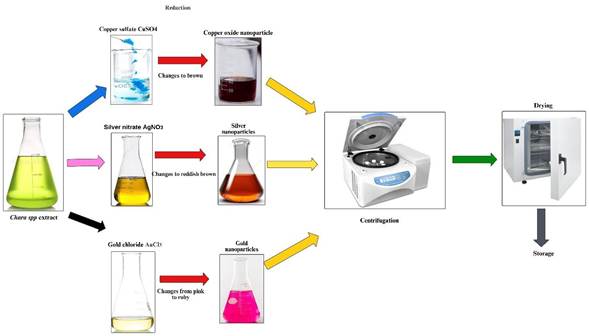
The process for obtaining the Chara spp. extract, used in the green synthesis of nanoparticles, involves drying, pulverizing, and heating the algae at 60 °C for one hour in distilled water. The extract is then filtered, centrifuged, and concentrated using a rotary evaporator. This extract contains essential bioactive compounds that act as eco-friendly reducing and stabilizing agents for metallic nanoparticles. The simplicity of the process, low cost, and absence of toxic chemicals make C. globularis an ideal source for sustainable nanotechnology. Its application promotes clean technologies and highlights the ecological value of key species from high-Andean ecosystems such as Lake Titicaca (Figure 1).
3.2. Copper oxide nanoparticles
The C. globularis extract is added dropwise to 50 mL of a 1 M copper acetate solution in a 100 mL Erlenmeyer flask, under continuous stirring at 100°C for 24 hours. The color gradually shifts from light sky-blue to dark brown, indicating the successful formation of copper nanoparticles. The reaction mixture is then centrifuged for 15 minutes, washed with deionized water to eliminate residual by-products, and oven-dried for subsequent characterization (Arsiya et al., 2017).

In another approach, 100 mL of 1 M copper sulfate solution (CuSO₄·5H₂O, Merck, India) is placed in a 250 mL flask. The C. globularis extract is again added dropwise under constant stirring (500-1000 rpm) at 60°C. The visible color change confirms the nanoparticle formation. These nanoparticles are repeatedly washed, centrifuged, and finally dried at 100°C for 24 hours. The product is stored in airtight containers for further applications (Bhattacharya et al., 2019). The bioactive compounds in C. globularis play a central role as eco-friendly reducing and stabilizing agents in the formation of copper-based nanomaterials with potential applications in catalysis, antimicrobial coatings, and environmental remediation.
3.3. Silver nanoparticles
A total of 45 mL of 1 M aqueous silver nitrate is placed in a 100 mL Erlenmeyer flask, and the C. globularis extract is added gradually under magnetic stirring at room temperature. The color transition from yellow to pale reddish-brown signals the synthesis of silver nanoparticles. The mixture is then centrifuged for 20 minutes, and the resulting nanoparticles are oven-dried at 55°C for 5 hours (Arsiya et al., 2017). The reducing power of C. globularis enables the green synthesis of silver nanoparticles, widely known for their antimicrobial, anti-inflammatory, and optical properties.
3.4. Gold nanoparticles
To synthesize gold nanoparticles, 10 mL of C. globularis extract is mixed with 100 mL of 1 M aqueous gold chloride solution at room temperature. The development of a ruby-red color confirms the formation of gold nanoparticles (Rajeshkumar et al., 2013). This colorimetric change reflects the surface plasmon resonance characteristic of nanoscale gold, whose biocompatibility and conductivity open pathways for applications in biosensors, drug delivery, and photothermal therapy.
The green synthesis process of copper, silver, and gold nanoparticles using Chara spp. extract as a reducing agent is employed. Color changes confirm the formation of metallic nanoparticles: brown (CuO), reddish-brown (Ag), and ruby-red (Au). After reduction, the nanoparticles are centrifuged, oven-dried, and stored for future applications. This approach underscores the role of C. globularis as a biocatalyst in advancing sustainable nanotechnology (Figure 2).
Structural characterisation of nanoparticles is subdivided into morphology, crystalline structure, and composition (Naganthran et al., 2022), as summarized in Table 1.
3.4.1. Fourier transform infrared spectroscopy (FTIR)
FTIR is a powerful technique that uses infrared light to identify molecular structures by detecting chemical bonds within a sample. It reveals functional groups, detects oxidation or decomposition, and identifies contaminants and additives. This method is essential for evaluating nanoparticles synthesized with C. globularis, as it confirms the presence of phytochemical-derived surface functionalities that contribute to their stability and biological activity (Baudot et al., 2010).
Surface functionalization of green nanoparticles through capping strategies such as carboxylic acid modification significantly enhances their stability and reactivity. Siddique et al. (2024) demonstrated that carboxyl-capped AgNPs exhibit superior antimicrobial activity and effective colorimetric detection of Ni²⁺. Similarly, Chugh et al. (2021) emphasized that the absence of capping agents compromises biocompatibility and morphological consistency. Moreover, Saini and Ledwani (2022) highlighted that surface engineering improves catalytic and sensing performance. In this context, adapting these capping strategies to C. globularis extracts could strengthen nanoparticle stability and functionality, thereby supporting their sustainable use in environmental monitoring and biocontrol.
3.4.2. Dynamic light scattering (DLS)
DLS is a rapid and widely used method to determine the size and distribution of nanoparticles, ranging from 1 nm to 1 µm. It measures fluctuations in the scattering of a laser beam caused by the Brownian motion of particles suspended in a colloid. In the case of C. globularis-based nanoparticles, DLS helps assess their homogeneity and dispersion stability-key parameters for biomedical and environmental applications (Pal et al., 2009; Zhang et al., 2016).
3.4.3. UV-Visible spectroscopy
This technique analyzes the optical properties of nanoparticles by measuring their light absorption across UV and visible wavelengths. The surface plasmon resonance observed in silver and gold nanoparticles manifests as characteristic color shifts, confirming their synthesis. UV-Vis spectroscopy thus plays a crucial role in monitoring the reduction of metal ions by C. globularis extract and evaluating reaction kinetics and nanoparticle formation efficiency (Khan et al., 2022).
Recent work has shown that sunlight-assisted green synthesis of gold nanocubes using horsetail (Equisetum) extract enables selective Pb²⁺ detection while offering photocatalytic and antimicrobial effects (Khan et al., 2024). This method operates under natural light and utilizes phytochemicals as reducing and capping agents. Given the aquatic habitat and rich phytochemical makeup of C. globularis, we propose that similar sunlight-driven synthesis may produce highly responsive gold nanoprobes. Such an approach would align with sustainable green nanotechnology and enhance environmental sensing performance.
3.4.4. X-ray diffraction (XRD)
XRD is used to determine the crystalline nature, phase composition, and lattice structure of nanoparticles. It provides essential information on the size, purity, and morphology of metal nanoparticles derived from C. globularis, validating their structural integrity for use in catalysis, sensors, and drug delivery systems (Saini and Ledwani, 2022).
3.4.5. Scanning electron microscopy (SEM)
SEM enables visualization of the surface morphology and particle shape by scanning the material with a focused electron beam. This technique reveals the external structure and approximate size of nanoparticles synthesized with C. globularis, offering valuable insights into their uniformity, aggregation, and potential interaction with biological systems (Arya et al., 2018).
3.4.6. Transmission electron microscopy (TEM)
TEM provides high-resolution images and quantitative data about particle size, shape, and internal structure. By observing nanoparticles at the atomic level, TEM confirms the nanoscale dimensions and crystalline domains of particles synthesized through green methods using C. globularis (Naganthran et al., 2022).
3.5. Classification of nanoparticles
Nanoparticles (NPs) can be classified by origin into natural (e.g., chitosan, viruses, humic substances, magnetite) and anthropogenic (e.g., metal oxides, carbon nanotubes, peptides, and synthetic polymers). They can also be grouped by uniformity into isometric and non-homogeneous types (El-Sheekh et al., 2022; Saleh, 2020). The C. globularis-derived nanoparticles are considered biogenic and eco-friendly, aligning with the global demand for green nanotechnology alternatives.
3.5.1. Nanoparticle synthesis approaches
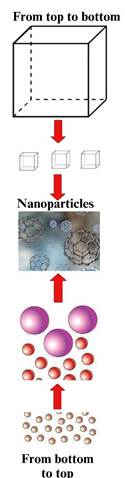
Nanoparticles are synthesized through top-down and bottom-up approaches. The top-down method involves mechanical or chemical breakdown of bulk materials but is often energy-intensive and environmentally hazardous (El-Sheekh et al., 2022). In contrast, the bottom-up approach, particularly the biological route, is more sustainable. Using C. globularis, nanoparticles are formed via self-assembly of metal ions reduced by bioactive compounds, enabling the production of stable nanostructures with antimicrobial, antioxidant, and catalytic properties (Kan et al., 2020; Daniel and Astruc, 2004). This strategy exemplifies how aquatic plants can drive innovation in low-impact, high-efficiency nanomaterial synthesis.
Shows a size reduction process for obtaining nanoparticles. It begins with the representation of a large-scale material, which is progressively reduced in size until it reaches the nanoscale. The image highlights two transformation directions: top-down (size reduction) and bottom-up (nanoparticle aggregation), underscoring the versatility in manipulating the size and structure of materials at the nanoscale level (Figure 3).
3.5.2. Chemical synthesis
Chemical synthesis of nanoparticles typically involves reducing metal ions using chemical agents such as sodium citrate or sodium borohydride under heating conditions (Chaudhary et al., 2020). While effective, this method often requires additional stabilizing agents to control particle size and prevent aggregation, resulting in by-products that are toxic and environmentally persistent. Among the most common chemical routes are polymer dispersion, monomer polymerization, and ionic gelation of hydrophilic polymers (Chugh et al., 2021). Although these methods allow for controlled synthesis, they lack eco-compatibility and biocompatibility-two essential features for applications in biomedicine and environmental remediation, where green-synthesized nanoparticles from C. globularis offer a safer alternative.
3.5.3. Physical synthesis
Physical methods use high-energy inputs-such as thermal evaporation, laser ablation, and microwave irradiation-to rapidly generate nanoparticles in large quantities (El-Sheekh et al., 2022). Despite their speed and scalability, these techniques involve high operational costs, consume significant energy, and may pose ecological and biological risks. The lack of biological surface functionality limits the applicability of physically synthesized nanoparticles in sensitive domains like drug delivery. In contrast, nanoparticles synthesized using C. globularis naturally incorporate bioactive surface compounds, enhancing their functional versatility.

3.5.4. Green synthesis
Green synthesis stands out as a sustainable and eco-conscious strategy for nanoparticle production, avoiding toxic reagents and minimizing environmental impact (Chugh et al., 2021). This method uses natural reducing agents from biological sources to facilitate metal ion reduction and particle stabilization. The use of C. globularis in green synthesis not only eliminates harmful chemical additives but also adds value to native aquatic flora, promoting biocompatible nanoparticles suitable for applications in health, agriculture, and water treatment.
Unlike conventional physicochemical methods that require toxic agents and high energy consumption, green synthesis using C. globularis offers an ecological, economical, and functional alternative. According to Chugh et al. (2021), green methods simplify the process by eliminating additional capping agents. Similarly, El-Sheekh et al. (2022) highlighted the biocompatibility of algal compounds as natural stabilizers. Hassan et al. (2021) demonstrated that C. globularis extracts produce stable AgNPs with antimicrobial properties. Lastly, Saini and Ledwani (2022) emphasized that green methods are especially suitable for rural contexts due to their low cost and sustainability.
3.5.5. Biological synthesis
Biological synthesis employs living organisms such as plants, bacteria, fungi, and algae to produce nanoparticles under mild conditions. This method is low-risk, non-toxic, and energy-efficient (Ovais et al., 2018). By leveraging the metabolic capabilities of biological systems, nanoparticles can be produced with enhanced functionalization and reduced environmental footprint, addressing the limitations of conventional techniques. The metabolic products of C. globularis, for example, act both as reducing and capping agents, ensuring nanoparticle stability and biocompatibility.
3.5.6. Nanoparticle synthesis using algae
Algae are highly efficient systems for nanoparticle biosynthesis. These photosynthetic organisms, found in diverse aquatic environments, are capable of absorbing and transforming heavy metals into their nanoparticle form (Pandit et al., 2022). Their rapid growth and high biomass yield make them ideal candidates for scalable green nanotechnology. The biosynthetic pathway involves metal ion binding, intracellular accumulation, and subsequent reduction and nanoparticle formation, both intra- and extracellularly (Khanna et al., 2019). In this context, C. globularis emerges as a model species due to its abundance, adaptability, and rich content of secondary metabolites essential for nanoparticle synthesis. Its application promotes low-cost production of eco-friendly nanomaterials with uses in environmental cleanup, antimicrobial formulations, and smart agriculture.
3.5.7. Nanoparticle synthesis using bacteria
Bacteria, including prokaryotes and actinomycetes-are also widely used for nanoparticle synthesis due to their metal-reducing abilities and resilience to harsh conditions (Gobinath et al., 2021). These microorganisms produce nanoparticles with defined morphologies and high stability, often forming unique nanostructures not easily achievable by chemical means (Saini and Ledwani, 2022; Ovais et al., 2018). While promising, bacterial methods may involve complex culturing and purification processes. In contrast, algae like C. globularis require simpler extraction protocols and offer higher yields of nanoparticles with equally beneficial properties.
3.5.8. Nanoparticle synthesis using plants
Plant-based synthesis utilizes crude extracts or biomass containing a variety of bioactive metabolites that participate in redox reactions and stabilize nanoparticles. These include phenolic compounds, flavonoids, alkaloids, terpenoids, amino acids, organic acids, and antioxidants (Chugh et al., 2021). These molecules act simultaneously as reducing agents and capping agents, giving the nanoparticles enhanced biological activity (Saini and Ledwani, 2022). The biochemical richness of C. globularis, as a submerged aquatic plant, mirrors the complexity of terrestrial plants while adding the advantages of aquatic biomass: faster growth, easier cultivation, and suitability for water-based synthesis systems.
Recent studies by Chugh et al. (2021), and Saini and Ledwani (2022), agree that gaps remain regarding the ecophysiological interactions of green nanoparticles in natural environments, particularly in high-altitude regions. Furthermore, Hassan et al. (2021) highlighted the need to standardize synthesis protocols and assess long-term nanoparticle stability. Therefore, future research should focus on evaluating the ecotoxicological impact of C. globularis derived AgNPs and designing multielemental selective sensors for complex environments.
Studies have emphasized the potential of botanical extracts for the green synthesis of nanoparticles that exhibit multifunctional properties, such as sensing, antibacterial action, and photocatalysis. For instance, extracts from Cyperus scariosus have been used to produce gold nanoparticles (AuNPs) capable of detecting Ni²⁺ ions, while also demonstrating antibacterial properties and photocatalytic activity. This highlights the critical role that the selection of botanical source material plays in determining the functional characteristics of the nanoparticles, which directly influences their effectiveness in applications such as environmental sensing and water remediation.
Ejaz et al. (2024) demonstrate that gold nanoparticles synthesized from Cyperus scariosus extract serve as effective colorimetric probes for Ni²⁺ detection and exhibit notable antibacterial and photocatalytic properties. These findings not only reinforce the significance of selecting suitable botanical sources for nanoparticle synthesis but also suggest that other plant species, such as C. globularis, may possess similar potential for producing multifunctional nanoparticles. Given the rich phytochemical composition and ecological importance of C. globularis in Andean ecosystems, it presents an ideal candidate for developing sustainable, multifunctional nanomaterials. This approach aligns with the growing demand for environmentally friendly technologies and offers promising opportunities for advancing the application of nanotechnology in various ecological and industrial sectors.
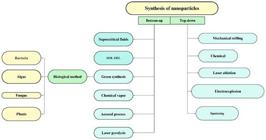
The two main strategies for nanoparticle synthesis: the "Bottom-up" approach, which builds nanoparticles from atoms or molecules, and the "Top-down" approach, which involves reducing the size of larger materials to obtain nanoparticles. The "Bottom-up" approach includes methods such as supercritical fluids, Sol-Gel, green synthesis, chemical vapour deposition, aerosol processes, and laser pyrolysis. On the other hand, the "Top-down" approach employs techniques like mechanical milling, chemical methods, laser ablation, electroexplosion, and sputtering. Additionally, the diagram highlights a biological method, also part of the "Bottom-up" approach, where organisms such as bacteria, algae, fungi, and plants are used for nanoparticle synthesis, emphasising the relevance of green and sustainable approaches in nanoparticle material science (Figure 4).
3.6. Uses and applications
Nanoparticles (NPs), due to their unique morphological (shape, size, surface charge) and physicochemical properties, have found widespread applications across nearly all scientific fields, including aerospace, energy, defense, telecommunications, biomedicine, and agriculture (Chaudhary et al., 2020). Their high surface-area-to-volume ratio and functional versatility make them powerful tools for addressing global technological and environmental challenges. In particular, nanomaterials synthesized from biological sources such as C. globularis offer an effective platform for pollution remediation, especially in treating industrial effluents, while maintaining environmental safety (Khanna et al., 2019).
3.6.1. Biomedical applications
Nanoparticles have gained considerable attention for their broad-spectrum antimicrobial activity and high biocompatibility. A growing body of literature highlights their effectiveness against pathogenic bacteria, including multidrug-resistant strains (Sharma et al., 2019). The global rise in antimicrobial resistance presents a major public health challenge, and NPs provide novel therapeutic avenues. Their nanoscale size allows for precise drug delivery directly to target cells, enhancing therapeutic efficacy and minimizing side effects (El-Sheekh et al., 2022). In preventive dentistry, NPs have been employed to infiltrate early carious lesions and promote enamel remineralization, contributing to tooth strengthening (Al-Nerabieah et al., 2020). Green-synthesized nanoparticles from C. globularis represent a safe, effective, and sustainable alternative for biomedical applications.
Recent studies provide quantitative evidence on the efficiency and effectiveness of green-synthesized nanoparticles. Barabadi et al. (2021) reported that AgNPs synthesized using Achillea biebersteinii extract exhibited 90-100% antimicrobial inhibition against E. coli and S. aureus, with particle sizes between 10 and 25 nm. Iravani (2011) noted that green methods achieve synthesis yields above 80%, with controlled nanoparticle size distribution, enhancing bioavailability. Agarwal et al. (2017) found that green AuNPs reduced HeLa cell viability by 65% at 50 µg/mL. Zhang et al. (2020) showed photocatalytic degradation of dyes above 92% within 60 minutes using green ZnONPs. Rajiv et al. (2013) demonstrated 1.5 times higher antimicrobial efficacy in green NPs compared to chemically synthesized ones. These findings demonstrate that green synthesis methods not only reduce environmental impact but also produce highly effective nanomaterials.
3.6.2. Anticancer applications
Silver nanoparticles (AgNPs) are widely used in cancer therapy due to their selective cytotoxicity against tumor cells. Compared to bulk materials, AgNPs demonstrate enhanced ability to induce oxidative stress, DNA damage, and apoptosis in cancerous tissues (Chugh et al., 2021). Their small size facilitates cellular uptake through endocytosis or phagocytosis, enabling deeper penetration into tumor environments-an advantage over larger particles (El-Sheekh et al., 2022). When derived from C. globularis, these nanoparticles incorporate natural bioactive compounds, potentially enhancing anticancer effects with reduced systemic toxicity.
3.6.3. Antimicrobial activity
AgNPs are renowned for their antimicrobial properties against both Gram-positive and Gram-negative bacteria. They interact with the bacterial membrane, penetrate it, and disrupt essential cellular processes, ultimately leading to cell death (Chugh et al., 2021). Unlike traditional antibiotics, AgNPs bypass common resistance mechanisms, offering a robust solution for persistent infections. Biogenic AgNPs synthesized using C. globularis have shown similar antimicrobial efficacy while avoiding the environmental risks associated with chemicals.
The functionalization of AgNPs with sulfonamides enables dual applications in detection and biocontrol. Amin et al. (2022) developed nanoparticles capable of detecting Ni²⁺ with high sensitivity (LOD: 48 nM) while simultaneously inhibiting pathogenic bacteria. This multifunctional model suggests that C. globularis could also be used to synthesize integrated-function nanomaterials, expanding the ecological and technological value of green nanoparticles derived from this macroalga.
3.6.4. Antiviral activity
Nanoparticles have also shown promising antiviral capabilities. They can bind to viral envelope proteins, block host cell entry, and interfere with viral genome replication (DNA or RNA) (Gurunathan et al., 2020). This multi-targeted mode of action is particularly useful in combating emerging and re-emerging viral pathogens. Nanoparticles synthesized from C. globularis may offer a new generation of eco-friendly antiviral agents with high stability and biocompatibility.
3.6.5. Agricultural applications
Nanotechnology holds the potential to revolutionize agriculture by improving the efficiency of agrochemicals, fertilizers, and pest control agents (Fu et al., 2020). Smart NPs can deliver nutrients or bioactive compounds in a controlled manner, minimizing losses and enhancing crop yield. Nanoparticles derived from C. globularis are especially suited for agricultural use due to their biodegradability, low toxicity, and compatibility with sustainable farming practices.
3.6.6. Wastewater treatment
Algae-mediated nanoparticles such as those produced using C globularis are increasingly studied for their role in water purification. They serve as disinfectants, adsorbents for heavy metals, and agents for phosphorus and nitrogen removal. Additionally, they exhibit antifouling properties and can be used in biosensors to detect environmental pollutants (Koduru et al., 2018). These green nanoparticles offer a viable, low-impact alternative to conventional water treatment chemicals, with added multifunctionality and environmental safety.
Silver nanoparticles (AgNPs) have been increasingly incorporated into electroanalytical devices due to their superior conductivity, high surface area, and enhanced electrocatalytic behavior. According to Kumaravel (2022), AgNP-modified electrodes demonstrated high electrocatalytic efficiency in detecting neonicotinoid pesticides, reflecting their versatility in sensor development. Meanwhile, Hassan et al. (2021) reported that AgNPs synthesized using C. globularis extracts present uniform morphology and abundant surface functional groups, features that are ideal for electrode immobilization and consistent electron transfer.
Furthermore, Bhattacharya et al. (2019) underscored that algae-derived nanoparticles exhibit stability and reproducibility characteristics crucial for long-term sensor performance. The recent review by Kumaravel (2022) highlights that AgNP-modified electrodes offer enhanced sensitivity, selectivity, and robustness in electrochemical applications, especially when green-synthesized nanoparticles are employed.
Therefore, leveraging C. globularis-derived AgNPs in electroanalytical setups offers a strategic avenue for creating eco-friendly biosensors. The natural phytochemical matrix of C. globularis can serve as both reducing and capping agents, yielding green-synthesized nanoparticles suitable for sustainable electrode fabrication and environmental monitoring in Andean aquatic ecosystems.
Jabbar et al. (2023) developed silver nanoparticles through green synthesis using Equisetum diffusum extract, which showed high colorimetric selectivity for Hg²⁺ ions, generating a visible color change. These nanoparticles were characterized by spectroscopic techniques and demonstrated a detection limit of 70 nM in real matrices such as tap and river water. They also exhibited significant antimicrobial activity, particularly against Listeria monocytogenes, evidencing their dual function as sensor and bactericidal agent. In this context, C. globularis, a dominant macroalga in Lake Titicaca, emerges as a promising resource to replicate such applications. Previous studies have shown its capacity to synthesize silver, gold, and copper nanoparticles through eco-friendly processes. Aqueous extracts of C. globularis contain secondary metabolites with reducing and stabilizing properties, enabling the production of highly stable, biocompatible nanomaterials with defined optical and antimicrobial characteristics. This evidence suggests that, like E. diffusum, the bioactive compounds in C. globularis may facilitate the development of specific colorimetric sensors for heavy metals such as mercury, especially in high Andean ecosystems vulnerable to mining-related contamination.
Siddique et al. (2024) demonstrated that AgNPs modified with hydroxyethylcellulose phthalate possess antibacterial, photocatalytic, and selective Hg²⁺ sensing properties. This versatility has also been observed in nanoparticles derived from C. globularis, which exhibit stability, optical functionality, and potential for advanced ecological applications. Therefore, their use may extend beyond environmental remediation to include sustainable sensors and photocatalytic processes.
Recent findings by Shah et al. (2024) demonstrated that gold nanoparticles stabilized with Fagonia arabica extract offer highly selective detection of Cd²⁺ ions, with additional photocatalytic and antibacterial efficacy. These multifunctional properties make them suitable for integrated sensor platforms under green nanotechnology paradigms. Comparatively, C. globularis-mediated nanoparticles exhibit strong surface plasmon resonance and high biocompatibility, attributes largely derived from their phytochemical content, which acts as both reducing and capping agents (Bhattacharya et al., 2019). Additionally, algae-based biosynthesis using C. globularis provides ecological and technological advantages due to its native distribution, abundant biomass, and ability to stabilize nanoparticles through polysaccharide-rich extracts (Khanna et al., 2019; Chugh et al., 2021). Altogether, these features support the potential of C. globularis-derived systems in developing multifunctional and sustainable environmental sensors.
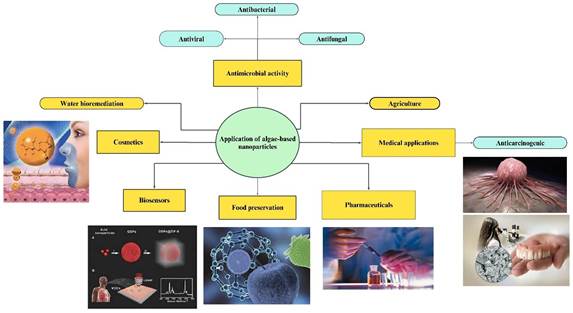
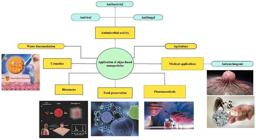
The various applications of algae-based nanoparticles, highlighting their antimicrobial activity, including antibacterial, antiviral, and antifungal properties. These nanoparticles have a wide range of applications, including water bioremediation, agriculture, cosmetics, biosensors, food preservation, medical and pharmaceutical applications. Additionally, their anticancer potential is highlighted, making them useful in the treatment and prevention of cancer. The figure demonstrates how these nanoparticles can be utilised across different industries, underscoring their versatility and efficacy in multiple fields (Figure 5).
The growing scientific interest in C. globularis reflects its role in ecological and biotechnological fields. Ecologically, charophytes such as C. globularis serve as bioindicators of water quality and are key structural components of submerged vegetation in oligotrophic lakes. Fossil records from the Late Miocene, such as those found in the Yalvaç Basin, underscore their evolutionary resilience and environmental stability over geological timescales (Demirci et al., 2025). In modern aquatic ecosystems, Chara species continue to play a critical role in community dynamics, often outcompeting other submerged macrophytes during specific seasons, thus shaping biodiversity patterns in mesotrophic environments (Brzozowski and Pełechaty, 2025).
Although this study highlights the applications of C. globularis nanoparticles in biomedicine, agriculture, and environmental remediation, their potential extends beyond these fields. Optical properties, structural stability, and surface functionalization from phytochemicals allow their use in electronics and energy storage. Saini and Ledwani (2022) noted that green nanomaterials can be integrated into energy conversion technologies such as solar cells, supercapacitors, and batteries due to their high surface-to-volume ratio and low environmental impact. Similarly, Daniel and Astruc (2004) emphasized the use of metal nanoparticles in optoelectronic devices and quantum sensors due to their surface plasmon properties and conductivity. Thus, expanding the discussion to emerging applications such as green electronics or clean energy storage reinforces the interdisciplinary relevance of the study and positions C. globularis as a strategic resource beyond environmental scope.
Beyond their ecological role, recent discoveries reveal the physiological complexity of C. globularis. Mahadeva et al. (2024) demonstrated its ability to modulate cell membrane potential via extracellular voltage coupling-an insight that opens new avenues for plant electrophysiology and cellular bioelectricity research. Moreover, the allelopathic properties observed in related species like Chara tomentosa suggest that chemical interference with terrestrial plant germination may be a strategy to maintain dominance in nutrient-poor habitats (Kleiven and Szczepańska, 1988).
Importantly, C. globularis is now recognized as a promising platform for green nanotechnology. Its phytochemical-rich extracts have been successfully applied in the biosynthesis of metallic nanoparticles, offering a sustainable and cost-effective alternative to chemical synthesis methods. This intersection of aquatic botany and nanoscience represents a novel frontier, positioning C. globularis not only as an ecological keystone species but also as a valuable biotechnological resource. The integration of paleobotanical, physiological, and nanotechnological perspectives highlights the emerging importance of C. globularis in advancing both fundamental science and applied innovation.
4. CONCLUSIONS
C. globularis, abundantly distributed in Lake Titicaca, plays a key ecological role in maintaining water clarity and nutrient cycling through its ability to precipitate minerals and compete with phytoplankton. Its dominance in submerged vegetation zones highlights its adaptability to high-altitude oligotrophic conditions, making it a sentinel species for aquatic ecosystem health.
The use of C. globularis as a natural bioreducing and stabilizing agent in the green synthesis of metal nanoparticles represents a novel and eco-friendly approach to nanotechnology. Its rich phytochemical composition enables the formation of stable copper, silver, and gold nanoparticles without the need for toxic chemicals, contributing to sustainable innovation.
Nanoparticles derived from C. globularis offer multifunctional applications in biomedicine, agriculture, and environmental remediation, combining high efficiency with biocompatibility and low environmental impact. This scientific advancement not only revalorizes native aquatic flora of the Andes but also positions C. globularis as a strategic bioresource for green nanotechnology under high-altitude conditions.
5. DATA AVAILABILITY STATEMENT
Data availability not informed.
6.REFERENCES
-
ABDALFATTAH, I. A.; MOGAWER, W. S.; STUART, K. Quantification of the degree of blending in hot-mix asphalt (HMA) with reclaimed asphalt pavement (RAP) using Energy Dispersive X-Ray Spectroscopy (EDX) analysis. Journal of Cleaner Production, v. 294, p.126261, 2021. https://doi.org/10.1016/j.jclepro.2021.126261
» https://doi.org/10.1016/j.jclepro.2021.126261 -
AGARWAL, H.; KUMAR, S. V.; RAJESHKUMAR, S. A review on green synthesis of zinc oxide nanoparticles - An eco-friendly approach. Resource-Efficient Technologies, v. 3, n. 4, p. 406-413, 2017. https://doi.org/10.1016/j.reffit.2017.03.002
» https://doi.org/10.1016/j.reffit.2017.03.002 -
AL- NERABIEAH, Z.; ARRAG, E. A.; COMISI, J. C.; RAJAB, A. Effectiveness of a novel nano-silver fluoride with green tea extract compared with silver diamine fluoride: A randomized, controlled, non-inferiority trial. International Journal of Dentistry and Oral Science, v. 7, n. 7, p. 753-761, 2020. https://doi.org/10.19070/2377-8075-20000148
» https://doi.org/10.19070/2377-8075-20000148 -
ALVES, S. B.; VEETTIL, B. K.; VIEIRO, A. P.; KESSLER, A. B.; GONZATTI, C. Remote sensing for mapping algal blooms in freshwater lakes: a review. Environmental Science and Pollution Research, v. 30, p. 19602-19616, 2023. https://doi.org/10.1007/s11356-023-25230-2
» https://doi.org/10.1007/s11356-023-25230-2 -
AMIN, S.; SHER, M.; ALI, A.; REHMAN, M. F.; HAYAT, A.; IKRAM, M. et al Sulfonamide-functionalized silver nanoparticles as an analytical nanoprobe for selective Ni(II) sensing with synergistic antimicrobial activity. Environmental Nanotechnology Monitoring & Management, v. 18, p. 100735, 2022. https://doi.org/10.1016/j.enmm.2022.100735
» https://doi.org/10.1016/j.enmm.2022.100735 -
ARSIYA, F.; SAYADI, M. H.; SOBHANI, S. Green synthesis of palladium nanoparticles using Chlorella vulgaris Materials Letters, v. 186, p. 113-115, 2017. https://doi.org/10.1016/j.matlet.2016.09.101
» https://doi.org/10.1016/j.matlet.2016.09.101 -
ARYA, A.; GUPTA, K.; CHUNDAWAT, T. S.; VAYA, D. Biogenic Synthesis of Copper and Silver Nanoparticles Using Green Alga Botryococcus braunii and Its Antimicrobial Activity. Bioinorganic Chemistry and Applications, v. 2018, n. 1, p. 7879403, 2018. https://doi.org/10.1155/2018/7879403
» https://doi.org/10.1155/2018/7879403 -
ASAEDA, T.; JAYASANKA-SENAVIRATHNA, M. D. H.; KANEKO, Y.; RASHID, M. H. Effect of calcium and magnesium on the growth and calcite encrustation of Chara fibrosa Aquatic Botany, v. 113, p. 100-106, 2014. http://dx.doi.org/10.1016/j.aquabot.2013.11.002
» http://dx.doi.org/10.1016/j.aquabot.2013.11.002 -
ASSAD, N.; NAEEM-UL-HASSAN, M.; HUSSAIN, M. A.; ABBAS, A.; SHER, M.; MUHAMMAD, G. et al Diffused sunlight assisted green synthesis of silver nanoparticles using Cotoneaster nummularia polar extract for antimicrobial and wound healing applications. Natural Product Research, v. 39, n. 8, p. 2203-2217, 2023. https://doi.org/10.1080/14786419.2023.2295936
» https://doi.org/10.1080/14786419.2023.2295936 -
BAKKER, E. S.; VAN-DONK, E.; DECLERCQ, S. A. J.; HELMSING, N. R.; HIDDING, B.; NOLET, B. A. Effect of macrophyte community composition and nutrient enrichment on plant biomass and algal blooms. Basic Applied Ecology, v. 11, n. 5, p. 432-443, 2010. https://doi.org/10.1016/j.baae.2010.06.005
» https://doi.org/10.1016/j.baae.2010.06.005 -
BARABADI, H.; MOJAB, F.; VAHIDI, H.; MARASHI, B.; TALANK, N.; HOSSEINI, O. et al Green synthesis, characterization, antibacterial and biofilm inhibitory activity of silver nanoparticles compared to commercial silver nanoparticles. Inorganic Chemistry Communications, v. 129, p. 108647, 2021. https://doi.org/10.1016/j.inoche.2021.108647
» https://doi.org/10.1016/j.inoche.2021.108647 -
BAUDOT, C.; TAN, C. M.; KONG, J. C. FTIR spectroscopy as a tool for nano-material characterization. Infrared Physics and Technology, v. 53, n. 6, p. 434-438, 2010. https://doi.org/10.1016/j.infrared.2010.09.002
» https://doi.org/10.1016/j.infrared.2010.09.002 -
BHATTACHARYA, P.; SWARNAKAR, S.; GHOSH, S.; MAJUMDAR, S.; BANERJEE, S. Disinfection of drinking water via algae mediated green synthesized copper oxide nanoparticles and its toxicity evaluation. Journal of Environmental Chemical Engineering, v. 7, n. 1, p. 102867, 2019. https://doi.org/10.1016/j.jece.2018.102867
» https://doi.org/10.1016/j.jece.2018.102867 -
BONNESOEUR, V.; LOCATELLI, B.; GUARIGUATA, M. R.; OCHOA-TOCACHI, B. F.; VANACKER, V.; MAO, Z. et al Impacts of forests and forestation on hydrological services in the Andes: A systematic review. Forest Ecology and Management, v. 433, p. 569-584, 2019. https://doi.org/10.1016/j.foreco.2018.11.033
» https://doi.org/10.1016/j.foreco.2018.11.033 -
BORGES, D.; DUARTE, L.; COSTA, I.; BIO, A.; SILVA, J.; SOUSA-PINTO, I. et al New methodology for intertidal seaweed biomass estimation using multispectral data obtained with unoccupied aerial vehicles. Remote Sensing, v. 15, n. 13, p. 3359, 2023. https://doi.org/10.3390/rs15133359
» https://doi.org/10.3390/rs15133359 -
BRZOZOWSKI, M.; PEŁECHATY, M. Different seasonal dynamics of contrasting aquatic plants and the consequences for the submerged macrophyte biodiversity. Ecohydrology & Hydrobiology, v. 25, n. 2, p. 225-237, 2025. https://doi.org/10.1016/j.ecohyd.2024.03.003
» https://doi.org/10.1016/j.ecohyd.2024.03.003 -
CAO, M.; QING, C.; JIN, E.; EERDEMUTU, L. Y.; ZHAO, W. A spectral index for algae bloom detection using Sentinel-2 Multispectral Instrument (MSI) images: a case study of Hulun Lake, China. International Journal of Remote Sensing, v. 42, n. 12, p. 4514-4535, 2021. https://doi.org/10.1080/01431161.2021.1897186
» https://doi.org/10.1080/01431161.2021.1897186 - COLLOT, D.; KORIYAMA, F.; GARCÍA, E. Répartitions, biomasses et productions des macrophytes du lac Titicaca. Revue d'Hydrobiologie Tropicale, v. 16, n. 3, p. 241-261, 1983.
-
CHAUDHARY, R.; NAWAZ, K.; KHAN, A. K.; HANO, C. An Overview of the Algae-Mediated Biosynthesis of Nanoparticles and Their Biomedical Applications. Biomolecules, v. 10, n. 11, p. 1498, 2020. https://doi.org/10.3390/biom10111498
» https://doi.org/10.3390/biom10111498 -
CHUGH, D.; VISWAMALYA, V. S.; DAS, B. Green synthesis of silver nanoparticles with algae and the importance of capping agents in the process. Journal of Genetic Engineering and Biotechnology, v. 19, n. 26, p. 1-21, 2021. https://doi.org/10.1186/s43141-021-00228-w
» https://doi.org/10.1186/s43141-021-00228-w -
DANIEL, M.; ASTRUC, D. Gold Nanoparticles: Assembly, Supramolecular Chemistry, Quantum-Size-Related Properties, and Applications toward Biology, Catalysis, and Nanotechnology. Chemical Reviews, v. 104, n. 1, p. 293-346, 2004. https://doi.org/10.1021/cr030698
» https://doi.org/10.1021/cr030698 -
DEMIRCI, E.; SANJUAN, J; TUNOĞLU, C.; TUNCER, A.; BULUT, Y. Late Miocene aquatic flora from the Yalvaç Basin (Central Anatolia, Türkiye): Biostratigraphy and paleoecology. Review of Palaeobotany and Palynology, v. 332, p. 105221, 2025. https://doi.org/10.1016/j.revpalbo.2024.105221
» https://doi.org/10.1016/j.revpalbo.2024.105221 -
EJAZ, A.; MAMTAZ, Z.; YASMIN, I.; SHABAN, M.; SIDDIQUE, A. B.; IRFAN, M. I. et al Cyperus scariosus extract-based greenly synthesized gold nanoparticles as colorimetric nanoprobe for Ni²⁺ detection and as antibacterial and photocatalytic agent. Journal of Molecular Liquids, v. 393, p. 123622, 2024. https://doi.org/10.1016/j.molliq.2023.123622
» https://doi.org/10.1016/j.molliq.2023.123622 -
EL-SHEEKH, M. M.; MORSI, H. H.; HASSAN, L. H. S.; ALI, S. S. The efficient role of algae as green factories for nanotechnology and their vital applications. Microbiological Research, v. 263, p. 127111, 2022. https://doi.org/10.1016/j.micres.2022.127111
» https://doi.org/10.1016/j.micres.2022.127111 -
FU, L.; WANG, Z.; DHANKHER, O. P.; XING, B. Nanotechnology as a new sustainable approach for controlling crop diseases and increasing agricultural production. Journal of Experimental Botany, v. 71, n. 2, p. 507-519, 2020. https://doi.org/10.1093/jxb/erz314
» https://doi.org/10.1093/jxb/erz314 -
GETTE-BOUVAROT, M.; MERMILLOD-BLONDIN, F.; LEMOINE, D.; DELOLME, C.; DANJEAN, M.; ETIENNE, L. et al The potential control of benthic biofilm growth by macrophytes-A mesocosm approach. Ecological Engineering, v. 75. p. 178-186, 2015. http://dx.doi.org/10.1016/j.ecoleng.2014.12.00
» http://dx.doi.org/10.1016/j.ecoleng.2014.12.00 -
GOBINATH, R.; BANDEPPA, M.; RAJENDIRAN, V.; KUMAR, K.; PAUL, K.; BASAVARJ, K. Nanoparticle-Mediated Adsorption of Pollutants: A Way Forward to Mitigation of Environmental Pollution. In: PANPATTE, D. G.; JHALA, Y. K. (eds.). Microbial Rejuvenation of Polluted Environment, Microorganisms for Sustainability. Springer, 2021. p. 317-342. https://doi.org/10.1007/978-981-15-7455-9_13
» https://doi.org/10.1007/978-981-15-7455-9_13 -
GURUNATHAN, S.; QASIM, M.; CHOI, Y.; DO, J. T.; PARK, C.; HONG, K. et al Antiviral Potential of Nanoparticles-Can Nanoparticles Fight against Coronaviruses? Nanomaterials, v. 10, n. 9, p. 1645, 2020. https://doi.org/10.3390/nano10091645
» https://doi.org/10.3390/nano10091645 -
HASSAN, K. T.; IBRAHEEM, I. J.; HASSAN, O. M; OBAID, A. S.; ALI, H. H.; SALIH, T. A. et al Facile green synthesis of Ag/AgCl nanoparticles derived from Chara algae extract and evaluating their antibacterial activity and synergistic effect with antibiotics. Journal of Environmental Chemical Engineering, v. 9, n. 4, p. 105359, 2021. https://doi.org/10.1016/j.jece.2021.105359
» https://doi.org/10.1016/j.jece.2021.105359 -
HUTOROWICZ, A.; DZIEDZI, J. Long-term changes in macrophyte vegetation after reduction of fish stock in a shallow lake. Aquatic Botany, v. 88, n. 3, p. 265-272, 2008. https://doi.org/10.1016/j.aquabot.2007.11.002
» https://doi.org/10.1016/j.aquabot.2007.11.002 -
IRAVANI, S. Green synthesis of metal nanoparticles using plants. Green Chemistry, v. 13, n. 10, p. 2638-2650, 2011. https://doi.org/10.1039/C1GC15386B
» https://doi.org/10.1039/C1GC15386B -
JABBAR, A.; ABBAS, A.; ASSAD, N.; NAEEM-UL-HASSAN, M.; ALHAZMI, H. A.; NAJMI, A. et al A highly selective Hg²⁺ colorimetric sensor and antimicrobial agent based on green synthesized silver nanoparticles using Equisetum diffusum extract. RSC Advances, v. 13, n. 41, p. 28666-28675, 2023. https://doi.org/10.1039/D3RA05070J
» https://doi.org/10.1039/D3RA05070J -
JOHNSON, J. A.; NEWMAN, R. M. A comparison of two methods for sampling biomass of aquatic plants. Journal of Aquatic Plant Management, n. 49, p. 1-8, 2011. https://www.apms.org/wp-content/uploads/japm-49-01-001.pdf
» https://www.apms.org/wp-content/uploads/japm-49-01-001.pdf -
KHAN, A. R.; AL-MAMUN, M. S.; ISLAM, M. A.; MAHIUDDIN, M.; KARIM, K. M.; NAIME, J. et al A review on gold nanoparticles: Biological synthesis, characterizations, and analytical applications. Results in Chemistry, v. 4. n. 100478, 2022. https://doi.org/10.1016/j.rechem.2022.100478
» https://doi.org/10.1016/j.rechem.2022.100478 -
KHAN, A. W.; LALI, N. S.; SABEI, F. Y.; IRFAN, M. I.; NAEEM UL HASSAN, M.; SHER, M. et al Sunlight-assisted green synthesis of gold nanocubes using horsetail leaf extract: A highly selective colorimetric sensor for Pb²⁺, photocatalytic and antimicrobial agent. Journal of Environmental Chemical Engineering, v. 12, p. 112576, 2024. https://doi.org/10.1016/j.jece.2024.112576
» https://doi.org/10.1016/j.jece.2024.112576 -
KHANNA, P.; KAUR, A.; GOYAL, D. Algae-based metallic nanoparticles: Synthesis, characterization, and applications. Journal of Microbiological Methods, v. 163, p. 105656, 2019. https://doi.org/10.1016/j.mimet.2019.105656
» https://doi.org/10.1016/j.mimet.2019.105656 -
KLEIVEN, S.; SZCZEPAŃSKA, W. The effects of extracts from Chara tomentosa and two other aquatic macrophytes on seed germination. Aquatic Botany, v. 32, n. 1-2. p. 193-198, 1988. https://doi.org/10.1016/0304-3770(88)90099-X
» https://doi.org/10.1016/0304-3770(88)90099-X -
KODURU, J. R.; KAILASA, S. K.; BHAMORE, J. R.; KIM, K.; DUTTA, T.; VELLINGIRI, K. Phytochemical-assisted synthetic approaches for silver nanoparticles antimicrobial applications: A review. Advances in Colloid and Interface Science, v. 256, p. 326-339, 2018. https://doi.org/10.1016/j.cis.2018.03.001
» https://doi.org/10.1016/j.cis.2018.03.001 -
KUMARAVEL, A. Silver nanoparticle-modified electrodes for the electrochemical detection of neonicotinoid pesticide: clothianidin. Analytical Methods, v. 14, p. 4643-4648, 2022. https://doi.org/10.1039/D2AY01541B
» https://doi.org/10.1039/D2AY01541B -
LI, J.; WANG, X.; ZHANG, M. Satellite-based assessment of macroalgal biomass in freshwater ecosystems. Remote Sensing, v. 10, n. 3, p. 498, 2018. https://doi.org/10.3390/rs10030498
» https://doi.org/10.3390/rs10030498 -
MAHADEVA, M.; NIESTĘPSKI, S.; KOWACZ, M. Dependence of cell's membrane potential on extracellular voltage observed in Chara globularis Biophysical Chemistry, v. 307, p. 107199, 2024. https://doi.org/10.1016/j.bpc.2024.107199
» https://doi.org/10.1016/j.bpc.2024.107199 -
MCPARTLIN, D. A.; LOCHHEAD, M. J.; CONNELL, L. B.; DOUCETTE, G. J.; O’KENNEDY, R. J. Biosensors for the monitoring of harmful algal blooms. Current Opinion in Biotechnology, v. 45, p. 164-169, 2017. https://doi.org/10.1016/j.copbio.2017.02.018
» https://doi.org/10.1016/j.copbio.2017.02.018 -
NAGANTHRAN, A.; VERASOUNDARAPANDIAN, G.; KHALID, F. E.; MASARUDIN, M. J.; AHMAD, S. A. Synthesis, Characterization and Biomedical Application of Silver Nanoparticles. Materials, v. 15, n. 2, p. 427, 2022. https://doi.org/10.3390/ma15020427
» https://doi.org/10.3390/ma15020427 -
OVAIS, M.; KHALIL, A. T.; AYAZ, M.; AHMAD, I.; NETHI, S. K.; MUKHERJEE, S. Biosynthesis of Metal Nanoparticles via Microbial Enzymes: A Mechanistic Approach. International Journal of Molecular Sciences, v. 19, n. 12, p. 4100, 2018. https://doi.org/10.3390/ijms19124100
» https://doi.org/10.3390/ijms19124100 -
PAL, A.; SHAH, S.; DEVI, S. Microwave-assisted synthesis of silver nanoparticles using ethanol as a reducing agent. Materials Chemistry and Physics, v. 114, n. 2-3, p. 530-532, 2009. https://doi.org/10.1016/j.matchemphys.2008.11.056
» https://doi.org/10.1016/j.matchemphys.2008.11.056 -
PANDIT, C.; ROY, A.; GHOTEKAR, S.; KHUSRO, A.; BIN, T. N.; UDDIN, M.; ANDREW, D. Biological agents for synthesis of nanoparticles and their applications. Journal of King Saud University - Science, v. 34, n. 3, p. 101869, 2022. https://doi.org/10.1016/j.jksus.2022.101869
» https://doi.org/10.1016/j.jksus.2022.101869 -
PASAPERA, J.; VILLANUEVA, C.; SIGUAYRO, H.; GAMARRA, C.; ARPASI, D. Zonificación espacial de la vegetación subacuática en zonas litorales del lago Titicaca, 2018-2019. Boletín del Instituto del Mar del Perú, v. 38, n. 1, 2023. https://doi.org/10.53554/boletin.v38i1.384
» https://doi.org/10.53554/boletin.v38i1.384 -
PEŁECHATY, M.; OSSOWSKA, J.; PUKACZ, A.; APOLINARSKA, K.; SIEPAK, M. Site-dependent species composition, structure, and environmental conditions of Chara tomentosa L. meadows in western Poland. Aquatic Botany, v. 120, p. 92-100, 2015. https://doi.org/10.1016/j.aquabot.2014.06.015
» https://doi.org/10.1016/j.aquabot.2014.06.015 - RAJESHKUMAR, S.; MALARKODI, C.; VANAJA, M.; GNANAJOBITHA, G.; PAULKUMAR, K.; KANNAN, C. et al Antibacterial activity of algae mediated synthesis of gold nanoparticles from Turbinaria conoides Der Pharma Chemica, v. 5, n. 2, p. 224-229, 2013.
-
RAJIV, P.; RAJESHWARI, S.; VENCKATESH, R. Bio-Fabrication of zinc oxide nanoparticles using leaf extract of Parthenium hysterophorus L. and its size-dependent antifungal activity against plant fungal pathogens. Spectrochimica Acta Part A: Molecular and Biomolecular Spectroscopy, v. 112, p. 384-387, 2013. https://doi.org/10.1016/j.saa.2013.04.072
» https://doi.org/10.1016/j.saa.2013.04.072 -
RETIKE, I.; AKSTINAS, V.; BIKŠE, J.; BRUZGO, M.; DEMIDKO, J.; DIMANTE-DEIMANTOVIČA, I. et al Methodology of lake ecosystem health assessment. European Union, 2021. 86 p. Available: Available: https://2014-2020.latlit.eu/wp-content/uploads/2020/04/Methodology_lake_ekosystem_health_TRANSWAT-1.pdf Access: sep. 2025.
» https://2014-2020.latlit.eu/wp-content/uploads/2020/04/Methodology_lake_ekosystem_health_TRANSWAT-1.pdf -
RODRIGO, M. A.; ROJO, C.; SEGURA, M.; ALONSO-GUILLÉN, J. L.; MARTÍN, M.; VERA, P. The role of charophytes in a Mediterranean pond created for restoration purposes. Aquatic Botany, v. 120, p. 101-111, 2015. http://dx.doi.org/10.1016/j.aquabot.2014.05.004
» http://dx.doi.org/10.1016/j.aquabot.2014.05.004 -
SAINI, N.; LEDWANI, L. Potential applications of nanotechnology in agriculture: Conceptions, characteristics, prospects, and limitations - A review. NanoWorld Journal, v. 8, n. 1, p. S147-S161, 2022. https://doi.org/10.17756/nwj.2022-s1-025
» https://doi.org/10.17756/nwj.2022-s1-025 -
SALEH, T. A. Nanomaterials: Classification, properties, and environmental toxicities. Environmental Technology & Innovation, v. 20, n. 101067, 2020. https://doi.org/10.1016/j.eti.2020.101067
» https://doi.org/10.1016/j.eti.2020.101067 -
SHAH, A.; AKHTAR, S.; MAHMOOD, F.; UROOJ, S.; SIDDIQUE, A. B.; IRFAN, M. I. et al Fagonia arabica extract-stabilized gold nanoparticles as a highly selective colorimetric nanoprobe for Cd²⁺ detection and as a potential photocatalytic and antibacterial. Surfaces and Interfaces, v. 51, p. 104556, 2024. https://doi.org/10.1016/j.surfin.2024.104556
» https://doi.org/10.1016/j.surfin.2024.104556 -
SHARMA, D.; KANCHI, S.; BISETTY, K. Biogenic synthesis of nanoparticles: A review. Arabian Journal of Chemistry, v. 12, n. 8, p. 3576-3600, 2019. https://doi.org/10.1016/j.arabjc.2015.11.002
» https://doi.org/10.1016/j.arabjc.2015.11.002 -
SIDDIQUE, A. B.; AMR, D.; ABBAS, A.; ZOHRA, L.; IRFAN, M. I.; ALHOSHANI, A. et al Synthesis of hydroxyethylcellulose phthalate-modified silver nanoparticles and their multifunctional applications as an efficient antibacterial, photocatalytic and mercury-selective sensing agent. International Journal of Biological Macromolecules, v. 256, p. 128009, 2024. https://doi.org/10.1016/j.ijbiomac.2023.128009
» https://doi.org/10.1016/j.ijbiomac.2023.128009 -
SUNDEEP, D.; KUMAR, T. V.; RAO, P. S. Green synthesis and characterization of Ag nanoparticles from Mangifera indica leaves for dental restoration and antibacterial applications. Progress in Biomaterials, v. 6, n. 1. p. 57-66, 2017. https://doi.org/10.1007/s40204-017-0067-9
» https://doi.org/10.1007/s40204-017-0067-9 -
UNITED NATIONS. Transforming our world: the 2030 agenda for sustainable development. United Nations, 2015. Available: Available: https://sdgs.un.org/2030agenda Access: sep. 2025.
» https://sdgs.un.org/2030agenda -
UVAROV, V.; POPOV, I. Metrological characterization of X-ray diffraction methods at different acquisition geometries for determination of crystallite size in nano-scale materials. Materials Characterization, v. 85, p. 111-123, 2013. https://doi.org/10.1016/j.matchar.2013.09.002
» https://doi.org/10.1016/j.matchar.2013.09.002 -
ZHANG, X.; LIU, Z.; SHEN, W.; GURUNATHAN, S. Silver Nanoparticles: Synthesis, Characterization, Properties, Applications, and Therapeutic Approaches. International Journal of Molecular Sciences, v. 17, n. 9, p. 1534, 2016. https://doi.org/10.3390/ijms17091534
» https://doi.org/10.3390/ijms17091534 -
ZHANG, Y.; ZHANG, Y.; WANG, Y.; WANG, L.; LI, J. Green synthesis of ZnO nanoparticles using Camellia sinensis and their photocatalytic activity under UV light. Journal of Photochemistry and Photobiology B: Biology, v. 202, p. 111713, 2020. https://doi.org/10.1016/j.jphotobiol.2019.111713
» https://doi.org/10.1016/j.jphotobiol.2019.111713
Edited by
-
Editor-in-Chief:
Nelson Wellausen Dias https://orcid.org/0000-0002-9507-9211