
 Effects of an exercise program using an smatphone App with remote or in-person supervision on the functional capacity of older adults: a randomized clinical
ABSTRACT
Introduction Population aging is a significant global challenge, demanding strategies that promote healthy aging. Regular physical activity is crucial for maintaining functional capacity, quality of life, and preventing chronic diseases in older adults. However, sedentary behavior remains high, and evidence on effective, supervised smartphone-based exercise strategies for older adults is limited.
Objective To evaluate the effects of smartphone-based exercises with in-person or remote therapeutic supervision on functional capacity.
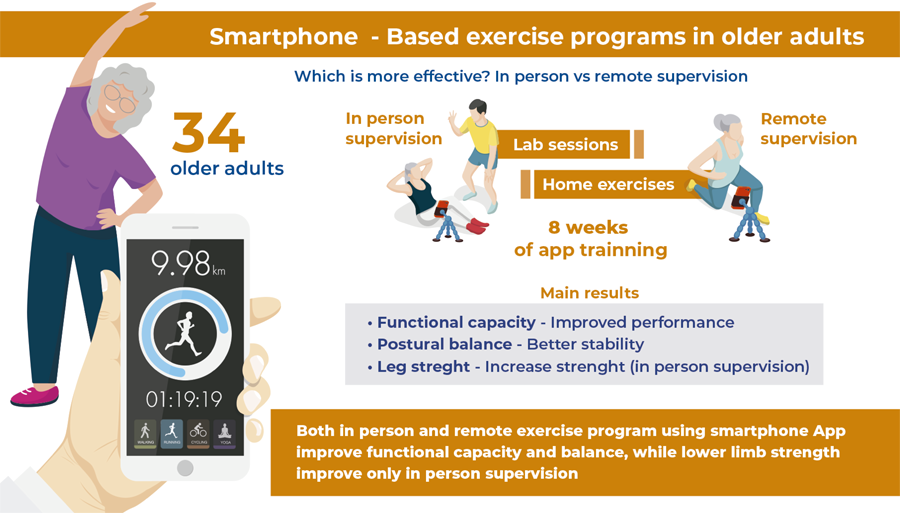
Methods Thirty-four older adults were randomized into two training groups with App-based exercises: a Control Group with in-person supervision and an Experimental Group with remote supervision. The exercises were performed three times a week for 8 weeks. The Experimental Group performed exercises at homes with remote supervision, and the Control Group performed exercises in the laboratory. Functional capacity was measured using the Glittre Activities of Daily Living (Glittre ADL) test, postural balance with the Mini Balance Evaluation Systems Test, and lower limb strength with the Five Times Sit-to-Stand test.
Results Both groups demonstrated significant improvement in functional capacity. After 8 weeks, Glittre-ADL test time reduced similarly in both groups (Experimental Group: 217±63 to 188±47 s and Control Group 194±34 to 171±30 s, ES=0.09). Postural balance improved similarly in both groups (ES=0.15), and the lower limb strength improved in the Experimental Group (ES=0.32).
Conclusion A smartphone App-based exercise program, with and without in-person supervision, improved functional capacity and postural balance in older adults, whereas lower limb strength improved only with in-person supervision. Brazilian Registry of Clinical Trials: RBR-22ctkjq.
Keywords
Frail older individuals; Functional residual capacity; Postural balance; Muscle strength; Mobile applications; Physical exercise
HIGHLIGHTS
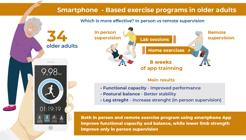
Smartphone-based training improved functional capacity in older adults.
Remote and in-person supervision led to similar gains in functional capacity.
Postural balance improved comparably in both groups.
Lower limb strength improved only in-person supervision with exercise App.
In Brief
This study evaluated App-based exercise programs with in-person or remote supervision in older adults. After 8 weeks, both groups showed similar improvements in functional capacity and postural balance. Lower limb strength improved only in the in-person supervised group, supporting the effectiveness of smartphonebased training.
INTRODUCTION
Global population aging is the most relevant medical and social demographic problem worldwide. UK Office for National Statistics (2012)( 1 ) predict a 23% increase in the population over 60 years of age by 2035.
Therefore, strategies promoting healthy aging are required. The World Health Organization( 2 ) defines healthy aging as maintaining social inclusion and immune to diseases or disabilities that impair daily activities and reduce functional capacity.
Thus, regular physical activity is crucial for the health of older adults, promoting physical and mental well-being, improving functional capacity and quality of life, and helping to prevent or reduce chronic disease (hypertension, diabetes) progression.( 3 - 6 )
Despite these well-described and known effects, a systematic review( 7 ) showed that older adults remain sedentary for an average of 9.4 h a day, and Taylor (2014)( 8 ) notes that many do not comply with current physical activity recommendations. This low adherence stems from barriers such as limited access to sports and leisure activities and lack of transportation.( 9 , 10 )
Thus, smartphones have been used to encourage healthy habits such as physical exercise because they can be adapted to different environments and carried out at any time of the day, improving adherence by practitioners.( 11 , 12 ) Furthermore, smartphone- and tablet-guided exercise is a highly feasible, well-accepted, reliable, and easily implemented, allowing older adults exercise with greater autonomy.( 12 - 14 ) In addition, smartphone use among older adults is increasing.
Smartphone applications (Apps) may be more cost-effective than traditional interventions and enable a pragmatic approach to decentralized, equitable healthcare.( 15 - 17 ) However, a major challenge is that many older adults find it difficult to exercise alone because they need guidance and proper instructions to maximize benefits and prevent risks such as falls, muscle injury, and fractures.( 18 , 19 )
OBJECTIVE
This study aimed to evaluate the effects of exercises using a smartphone application with in-person or remote therapeutic supervision, on functional capacity and motivation in older adults.
METHODS
Trial design
This study was a randomized controlled clinical trial involving older adults. Participants were assigned either to training using a remotely supervised exercise App (Experimental Group - EG) or to training using an exercise App under face-to-face supervision (Control Group - CG). Functional capacity (primary outcome), postural balance, lower-limb strength, satisfaction, motivation, and attendance (secondary outcomes) were obtained at baseline, after 4 weeks, and after 8 weeks of intervention.
Participants
Fifty older adults residing in São Paulo, Brazil, were recruited. Inclusion criteria required participants to be between 60 and 80 years old (with an upper age limit to ensure sample homogeneity), physically active, and functionally independent with a Katz( 20 ) score ≥4. Participants also had to be vaccinated against coronavirus disease (COVID-19), exhibit preserved cognitive function (assessed using the Mini-Mental State Examination,( 21 )) and have no neurological, cardiovascular, or musculoskeletal diseases contraindicating physical exercise. All participants provided written informed consent.
All assessments were conducted in the Rehabilitation Sciences laboratory of the Master’s and Doctoral programs at Universidade Nove de Julho , São Paulo, Brazil. Participants in the Experimental Group performed the exercises in the laboratory, and Control Group participants performed the exercises at home.
Interventions
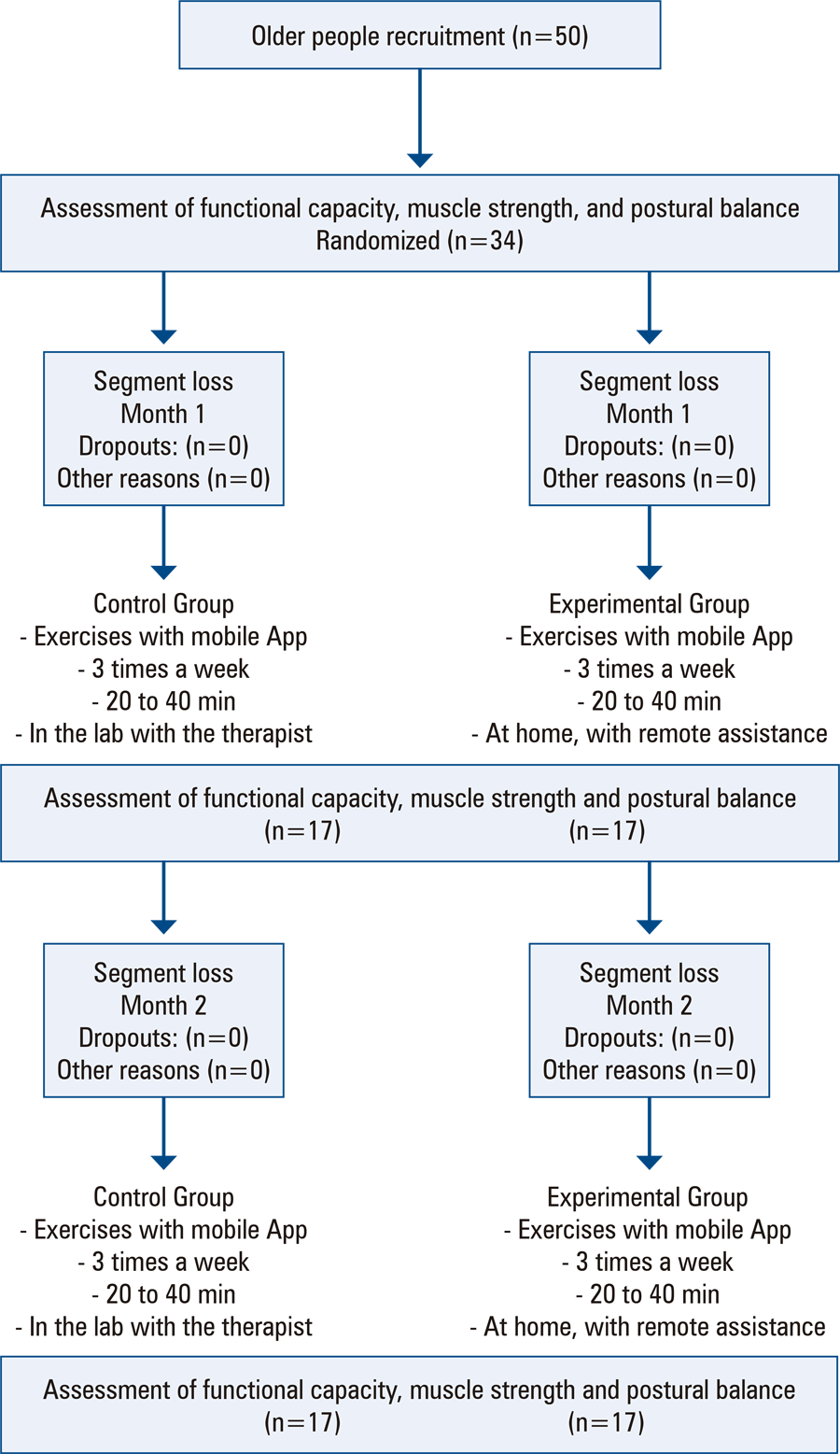
Participants were randomized to the Control Group (CG), which performed the App-based exercises in the laboratory during individual sessions supervised by a therapist, or to the Experimental Group (EG), which completed App-based exercises at home. The EG could contact the therapist via phone or message for clarification or guidance if they had difficulties performing the exercises. Furthermore, therapists frequently contacted patients to identify any complications.
The exercise program was conducted using the free application ‘Exercise for Older Adults’ available for Android and iOS platforms. All patients were familiar with smartphones. The researcher installed the application on the participants’ smartphones and instructed them to use it before performing the activities.
The training program used the ‘Improve your strength and balance’ exercise category, which included warm-up exercises, stationary running, free movement and small jumping tasks, and lower limb strength exercises (such as sit-to-stand, squats and lunges) abdominal exercises and bi- and single-leg balance exercises; Table 1S, Supplementary Material). The EG received a booklet explaining how to perform each exercise, based on the application manual.
Participants were required to perform the exercises three times a week for 8 consecutive weeks, totaling 24 sessions. Each session lasted approximately 45 min, with duration varying according to the rest interval between each exercise. Participants selected their preferred rest interval time, which could vary between 30 and 60 s.
As a protective measure, the therapist assessed the CG participants’ blood pressure and heart rate before and after exercise using an automatic sphygmomanometer.
The EG was instructed to have these measurements taken before and after each exercise session, subsequently reporting the values to the researcher.
Outcomes
To characterize the sample, demographic data collected including age, weight, height, and body mass index (BMI) was collected using a questionnaire. Symptoms of depression and sleep-related disorders were assessed using the Beck Depression Inventory( 22 ) and the Pittsburgh Sleep Quality Index,( 23 ) respectively, to characterize the sample.
Primary and secondary outcomes were measured pre- and post-intervention
Primary outcome - functional capacity
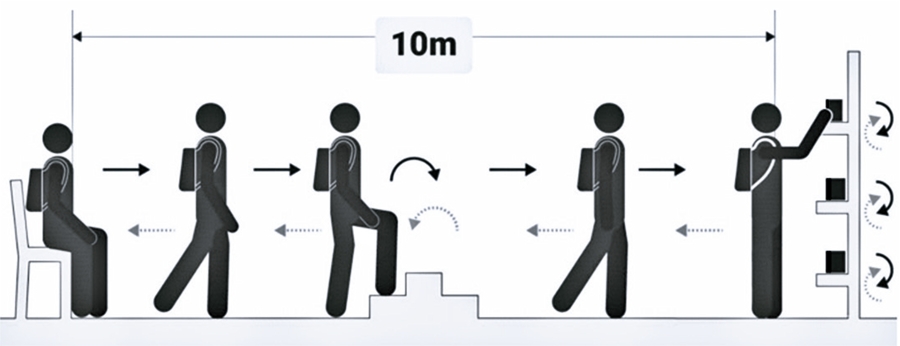
Functional capacity was assessed using the Glittre Activities of Daily Living (ADL) test, previously validated for older adults by Gomes et al.( 24 ) The test began when participants rose from a chair (without upper limb support, 46cm from feet to seat), while wearing a backpack (2.5kg for women or 5.0kg for men). Participants subsequently walked 10m on a flat track and halfway up and down two steps (step measurements 17cm high ×27cm deep) and continued walking towards a shelf where there were three objects weighing 1kg. Each weight was transferred, one at a time, with both hands, from the upper shelf (at the height of the participant’s shoulders) to the lower shelf (at the level of the participant’s pelvic girdle) and from there to the floor. Thereafter, participants placed the objects again on the central shelf and then on the top shelf, returned along the 10-meter route, went up and down the steps, and sat back on the chair ( Figure 1 ).
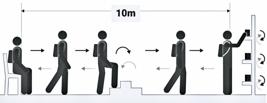
This circuit was repeated five times, as quickly as possible, without running. The shorter the time (s) to perform the test, the better the individual’s functional capacity. The predicted time (s) of the Glittre-ADL test was calculated for adult participants based on age, BMI, and height as independent variables, as described by Reis et al.,( 25 ) using the Glittre test formula: predicted ADL=0.558 + (0.018 × BMI) + (0.016 × age years).
Secondary outcomes
Postural balance was measured using the Mini-Balance Evaluation System Test,( 26 ) assessing balance during anticipatory postural adjustments, postural responses, sensory orientation, and gait. The score varied from 0 to 28 points; the higher the score, the better the balance.
Lower limb strength was evaluated with the Five Times Sit-to-Stand test.( 27 ) This measures the time it takes the individual (s) to rise from a chair with a backrest and no armrests to a standing position, repeating the movement five times.
Level of satisfaction and motivation with the exercise program
Participant satisfaction and motivation with the exercise program were assessed using a researcher-developed questionnaire. The questionnaire contained the following questions: Were you satisfied with the exercise App? (Yes or no, and then rate from zero to 10). Were you satisfied with the exercise program? (Yes or no, and then rate from zero to 10). How motivated are you with the exercise program? (Not motivated, slightly motivated, moderately motivated, very motivated, and extremely motivated).
Sample size
The sample size was based on a pilot study with ten participants, five participants per group. Using an effect size of 0.55, an α=0.05, and β=0.8, the estimated required sample size was 28 participants. However, owing to dropout risk, an additional 20% of the sample was included, resulting in a total sample of 34 participants.
Randomization and blinding
An independent researcher randomized the participants into the EG and CG using block randomization via www.randomizer.org. A blinded researcher, unaware of each participant’s exercise program allocation, conducted assessments.
Statistical methods
Data normality was assessed using the Shapiro-Wilk test. Continuous data were expressed as the mean±standard deviation, and categorical data as absolute and relative frequencies. Baseline group comparisons were performed using the Independent t-test and Fisher’s exact test. The effects of exercise training programs were analyzed using the Generalized Estimation Equation. Eta squared (η2 ) was presented as a measure of effect size. For inferential analysis, statistical significance was set at p<0.05.
RESULTS
Fifty older adults were contacted between January 2022 and July 2022, and sixteen were excluded from the study for the following reasons: aged >80 years (n=4), fear of the COVID-19 pandemic (n=8), and lack of interested in participating (n=4) ( Figure 2 ).
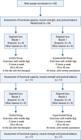
The final sample included 34 participants, and their characteristics are presented in table 1 .
At baseline, the groups were similar for all clinical variables and outcomes (p>0.05).
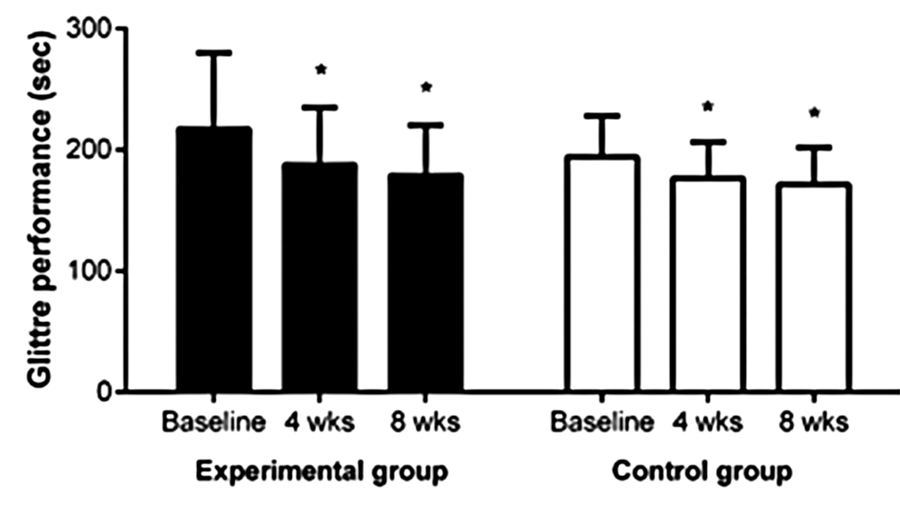
All participants completed interventions without complications. Pre- and post-session blood pressure values consistently remained within the acceptable range throughout the exercise program in both groups (Figure 1S, Supplementary Material). Figure 3 presents functional capacity results of both groups at baseline, 4 weeks, and 8 weeks after the intervention.
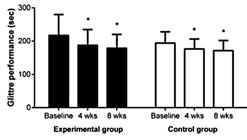
Glittre-ADL test performance in seconds at baseline, after 4 weeks (wks), and 8 weeks of intervention for the Experimental and Control Groups
Both groups showed significant, comparable improvement in Glittre-ADL test performance from baseline to 4 and 8 weeks (EG: 217±63 s to 188±47 s after 4 weeks, and 179±41 s after 8 weeks; CG: 194±34 s to 177±30 s after 4 weeks, and 171±30 s after 8 weeks; time effect p<0.01, ES=0.09).
Individual analysis (Figure 2S, Supplementary Material) showed that all older participants increased their functional capacity after 8 weeks of training.
Table 2 presents the Mini Balance Evaluation System Test and the Five Times Sit-to-Stand test results. Both groups showed significant, comparable Mini Balance Evaluation System Test improvements from baseline to 4 and 8 weeks (time effect p<0.01). Five Times Sit-to-Stand performance improved at 8 weeks only in the CG (group x time effect, p<0.05).
Table 3 reports attendance, motivation, and satisfaction outcomes with exercise programs for both groups. Attendance, motivation, and satisfaction were similar between groups (p>0.05).
DISCUSSION
This study showed that an exercise program using a smartphone application improved functional capacity and balance in older adults with and without in-person supervision. However, lower limb strength improved only when exercises were accompanied with in-person supervision. The smartphone-based exercise program was considered motivating and satisfactory regardless of supervision modality.
The primary novelty of this study is the finding of a smartphone application-based exercise program improved older adults’ functional capacity regardless of the supervision strategy. These results align with a prior study( 27 ) of adults aged 18-50, which showed than an application enhanced functional movement, flexibility, strength, and cardiovascular conditioning, indicating its potential improve physical performance. Similarly, Lyons et al.( 28 ) demonstrated that an intervention combining physical activity wearable monitoring a tablet and telephone counseling was feasible and acceptable among adults aged 55-79.
The improvement in participants’ functional capacity in this study was clinically relevant. At baseline, both the Control and Experimental Groups performed the ADL Glittre test performance was slower than expected for this age.( 25 ) After 2 months of training, the Control Group reduced test time by 38 s and the Experimental Group by 23 s. Consequently, the ADL Glittre performance after the training programs was faster than the age-predicted average for both groups.
Participants’ postural balance improved after the exercise program regardless of supervision strategy, aligning with Papi et al.,( 29 ) who observed improved anteroposterior (A/P) and mediolateral (M/L) orthostatic posture oscillation in older adults undergoing a balance exercise program. Silveira et al.( 12 ) also observed that assistive technology using tablets helped and motivated healthy older independent adults to perform strength and balance exercises independently with low dropout rates. Finally, Delbaere et al.( 30 ) showed that an App-based at-home balance exercise program did not significantly reduce fall frequency yet lowered fall rates and fall-related injuries over 2 years, indicating promise as a fall prevention strategy for community-dwelling older adults.
Lower-body strength gains revealed a significant group × time interaction, with improvements observed only in the in-person supervised group. This suggested that direct supervision-related factors, such as increased safety, precise exercise prescription, and immediate feedback, may enhance the intervention’s effectiveness.( 31 , 32 ) Such support may be particularly important for lower-limb strength exercises directly related to sit-and-stand test performance, such as sit-to-stand movements, squats, and lunges, where concerns about falls and adequate exercise intensity may arise.
In-person programs are the preferred option among older adults( 33 ) and individuals with chronic conditions such as Parkinson’s disease( 34 ) and cancer.( 35 ) In contrast, the present findings indicated no differences in attendance, motivation, and satisfaction between groups, suggesting that remotely delivered programs may be as effective as in-person interventions. This equivalence may be partly attributable to the convenience of remote formats, eliminating travel demands – a notable barrier in large urban centers such as São Paulo. Moreover, participants perceived improvements in physical function, including maintenance or enhancement of overall physical activity, aerobic capacity, balance, and general functional capacity, likely reinforced adherence, motivation, and satisfaction. Contextual factors, such as COVID-19-related restrictions may also have strengthened intrinsic motivation and contributed to the absence of dropouts. Finally, App usability also appeared to facilitate engagement, as commonly reported barriers to technology use among older adults were not observed in this study. Collectively, these elements may explain the positive perception of the remote intervention comparable to in-person programs.
This study design included a short-term, 8-week intervention, leaving the medium- and long-term stability of the findings uncertain. Remote programs can maintain adherence for up to 6 months( 36 ) or longer, although use/willingness usually decline in over time. Retention is not always complete yet feasible. Interventions with additional support, such as feedback or peer support, demonstrate greater retention, highlighting the importance of motivational and social mechanisms.( 37 , 38 ) Future studies should evaluate whether the results observed in the current study persist over extended periods.
Although adherence was comparable between groups, a potential limitation of this study is that the App used for the remote intervention provided instructions only in English, necessitating adaptation and translation into the participants’ native language to ensure proper comprehension of the exercises. Despite written instructions, some participants in the in-person supervised group still required direct guidance to perform activities correctly, indicating that language barriers constrained autonomy for certain participants. Consequently, enhanced outcomes might have been attained if the App had provided instructions in the participants’ native language.
Another limitation is the narrow age range of participants (60-80 years), selected to increase sample homogeneity and ensure feasibility and safety of the clinical trial given that the intervention requirements for smartphone use, active monitoring, and a certain level of digital literacy. Consequently, although benefits were demonstrated for this age group, the findings cannot be directly generalized to the oldest-old or institutionalized populations without further investigation.
Future research should consider adaptive designs or pilot studies specifically targeting this population, incorporating objective reality, measures preparatory technology use training, enhanced safety monitoring, and age group-stratified analyses to evaluate intervention effectiveness and safety in more vulnerable subgroups.
CONCLUSION
In conclusion, this study indicated that a smartphone application-based exercise program improved functional capacity and postural balance and was considered motivating and satisfactory for older adults when performed with and without in-person supervision. However, improvements in lower limb strength occurred only with in-person supervision.
The findings highlight the potential of smartphone applications as a strategy to enhance health outcomes in older adults. These results broaden the scope for prescribing and monitoring exercise programs among older adults, including for individuals unable or unwilling to receive supervised interventions. Further investigation over an extended duration is warranted to ascertain whether the observed levels of participant motivation, exercise frequency, and physical improvements persist over time.
SUPPLEMENTARY MATERIAL
Supplementary material
ACKNOWLEDGEMENTS
We thank the Universidade Nove de Julho and all study participants. We also thank the Coordenação para o Aperfeiçoamento do Pessoal do Ensino Superior (CAPES), Brazil, for providing a scholarship to André Issao Kunitake (Financial Code 29 88887.473952/2020-00).
REFERENCES
- 1 McPhee JS, French DP, Jackson D, Nazroo J, Pendleton N, Degens H. Physical activity in older age: perspectives for healthy ageing and frailty. Biogerontology. 2016;17(3):567-80.
- 2 Rudnicka E, Napierala P, Podfigurna A, Meczekalski B, Smolarczyk R, Grymowicz M. The World Health Organization (WHO) approach to healthy ageing. Maturitas. 2020;139:6-11.
- 3 Botoseneanu A, Ambrosius WT, Beavers DP, de Rekeneire N, Anton S, Church T, Folta SC, Goodpaster BH, King AC, Nicklas BJ, Spring B, Wang X, Gill TM; LIFE Study Groups. Prevalence of metabolic syndrome and its association with physical capacity, disability, and self-rated health in Lifestyle Interventions and Independence for Elders Study participants. J Am Geriatr Soc. 2015;63(2):222-32.
- 4 Rantanen T, Guralnik JM, Foley D, Masaki K, Leveille S, Curb JD, et al. Midlife hand grip strength as a predictor of old age disability. JAMA. 1999;281(6):558-60.
- 5 Goenka S, Lee IM. Physical activity lowers mortality and heart disease risks. Lancet. 2017;390(10113):2609-10.
- 6 Borek AJ, Abraham C, Greaves CJ, Tarrant M. Group-based diet and physical activity weight-loss interventions: a systematic review and meta-analysis of randomised controlled trials. Appl Psychol Health Well-Being. 2018;10(1):62-86.
- 7 Harvey JA, Chastin SF, Skelton DA. Prevalence of sedentary behavior in older adults: a systematic review. Int J Environ Res Public Health. 2013;10(12):6645-61.
- 8 Taylor D. Physical activity is medicine for older adults. Postgrad Med J. 2014;90(1059):26-32.
- 9 Das P, Horton R. Physical activity-time to take it seriously and regularly. Lancet. 2016;388(10051):1254-5.
- 10 Dumierre D, Coelho-Ravagnani C, Cecília Tenório M, Andrade DR, Autran R, Barros MV, Benedetti TR, Cavalcante FV, Cyrino ES, Dumith SC, Florindo AA, Garcia LM, Manta SW, Mielke G, Ritti-Dias RM, Magalhães LL, Sandreschi PF, da Silva JR, da Silva KS, Siqueira FC, Hallal PC; Brazilian Physical Activity Guidelines Working Group*. Physical Activity Guidelines for the Brazilian Population: Recommendations Report. J Phys Act Health. 2022;19(5):374-81.
- 11 Rathbone AL, Prescott J. The use of mobile apps and SMS messaging as physical and mental health interventions: systematic review. J Med Internet Res. 2017;19(8):e295.
- 12 Silveira P, van de Langenberg R, van Het Reve E, Daniel F, Casati F, de Bruin ED. Tablet-based strength-balance training to motivate and improve adherence to exercise in independently living older people: a phase II preclinical exploratory trial. J Med Internet Res. 2013;15(8):e159.
- 13 Nikitina S, Didino D, Baez M, Casati F. Feasibility of virtual tablet-based group exercise among older adults in Siberia: findings from two pilot trials. JMIR Mhealth Uhealth. 2018;6(2):e40.
- 14 Hawley-Hague H, Tacconi C, Mellone S, Martinez E, Ford C, Chiari L, et al. Smartphone apps to support falls rehabilitation exercise: app development and usability and acceptability study. JMIR Mhealth Uhealth. 2020;8(9):e15460.
-
15 Smith A. Older adults and technology use. Pew Research Center; 2014 [cited 2025 Dec 9]. Available from: https://www.pewresearch.org/wp-content/uploads/sites/9/2014/04/PIP_Seniors-and-Tech-Use_040314.pdf
» https://www.pewresearch.org/wp-content/uploads/sites/9/2014/04/PIP_Seniors-and-Tech-Use_040314.pdf - 16 Sjöström M, Lindholm L, Samuelsson E. Mobile app for treatment of stress urinary incontinence a cost-effectiveness analysis. J Med Internet Res. 2017;19(5):e154.
- 17 Wall C, Hetherington V, Godfrey A. Beyond the clinic: the rise of wearables and smartphones in decentralising healthcare. NPJ Digit Med. 2023;6(1):219.
- 18 Bray NW, Smart RR, Jakobi JM, Jones GR. Exercise prescription to reverse frailty. Appl Physiol Nutr Metab. 2016;41(10):1112-6.
- 19 Paterson DH, Jones GR, Rice CL. Aging and physical activity data on which to base recommendations for exercise in older adults. Appl Physiol Nutr Metab. 2007;32 Suppl 2F:S75-171.
- 20 Shelkey M, Wallace M. Katz Index of Independence in Activities of Daily Living (ADL). Director (Cincinnati, Ohio). 2000;8(2):72-3.
- 21 Brucki SM, Nitrini R, Caramelli P, Bertolucci PH. Sugestões para utilização do mini-exame do estado mental no Brasil. Arq Neuropsiquiatr. 2003;61 3B:777-81.
- 22 Beck AT, Ward CH, Mendelson M, Mock J, Erbaugh J. An inventory for measuring depression. Arch Gen Psychiatry. 1961;4(6):561-71.
- 23 Buysse DJ, Reynolds CF 3rd, Monk TH, Hoch CC, Yeager AL, Kupfer DJ. Quantification of subjective sleep quality in healthy elderly men and women using the Pittsburgh Sleep Quality Index (PSQI). Sleep. 1991;14(4):331-8.
- 24 Gomes BT, Dal Corso S, Kunitake AI, Heinz G, Sousa IP, Nascimento BV, et al. Validation and reliability of the Test of Daily Activities-GLITTRE (GLITTRE-ADL TEST) to evaluate functional capacity in older adults. ABCS Health Sci. 2023;48:e023222.
- 25 Reis CM, Karloh M, Fonseca FR, Biscaro RR, Mazo GZ, Mayer AF. Functional capacity measurement: reference equations for the Glittre Activities of Daily Living test. J Bras Pneumol. 2018;44(5):370-7.
- 26 Maia AC, Rodrigues-de-Paula F, Magalhães LC, Teixeira RL. Cross-cultural adaptation and analysis of the psychometric properties of the Balance Evaluation Systems Test and MiniBESTest in the elderly and individuals with Parkinson's disease: application of the Rasch model. Braz J Phys Ther. 2013;17(3):195-217.
- 27 Goldberg A, Chavis M, Watkins J, Wilson T. The five-times-sit-to-stand test: validity, reliability and detectable change in older females. Aging Clin Exp Res. 2012;24(4):339-44.
- 28 Lyons EJ, Swartz MC, Lewis ZH, Martinez E, Jennings K. Feasibility and acceptability of a wearable technology physical activity intervention with telephone counseling for mid-aged and older adults: a randomized controlled pilot trial. JMIR Mhealth Uhealth. 2017;5(3):e28.
- 29 Papi E, Chiou SY, McGregor AH. Feasibility and acceptability study on the use of a smartphone application to facilitate balance training in the ageing population. BMJ Open. 2020;10(12):e039054.
- 30 Delbaere K, Valenzuela T, Lord SR, Clemson L, Zijlstra GA, Close JC, et al. E-health StandingTall balance exercise for fall prevention in older people: results of a two year randomised controlled trial. BMJ. 2021;373(740):n740.
- 31 Maranhão DC, de Araújo Silva JD, Farah BQ, Pruaiá NB, de Araújo RC, Cavalcante BR, et al. Effects of 12-weeks of home-based exercise training on physical and cognitive function of older adults: randomized trial comparing virtual versus minimal supervision in the context of the Covid-19 pandemic in Brazil. Geriatr Gerontol Int. 2023;23(11):864-70.
- 32 Baez M, Khaghani Far I, Ibarra F, Ferron M, Didino D, Casati F. Effects of online group exercises for older adults on physical, psychological and social wellbeing: a randomized pilot trial. PeerJ. 2017;5:e3150.
- 33 Taveira F, Barbosa B. Older adults' continuance intentions for online physical exercise classes. Behav Sci (Basel). 2024;14(5):393.
- 34 Torriani-Pasin C, Domingues VL, de Freitas TB, Silva TA, Caldeira MF, Júnior RP, et al. Adherence rate, barriers to attend, safety and overall experience of a physical exercise program via telemonitoring during COVID-19 pandemic for individuals with Parkinson's disease: A feasibility study. Physiother Res Int. 2022;27(4):e1959.
- 35 Duchek D, McDonough MH, Bridel W, McNeely ML, Culos-Reed SN. Understanding in-person and online exercise oncology program delivery: a mixed-methods approach to participant perspectives. Curr Oncol. 2023;30(8):7366-83.
- 36 Mehra S, van den Helder J, Kröse BJ, Engelbert RH, Weijs PJ, Visser B. Predicting exercise adherence and physical activity in older adults based on tablet engagement: a post-hoc study. Arxiv. 2021;2101.10140.
- 37 Tabira K, Oguma Y, Yoshihara S, Shibuya M, Nakamura M, Doihara N, et al. A 12-month digital peer-supported app intervention to promote physical activity among community-dwelling older adults: follow-up study of a nonrandomized controlled trial. JMIR Aging. 2025;8:e66610.
- 38 Hawley-Hague H, Tacconi C, Mellone S, Martinez E, Yang F, Su TL, et al. Using smartphone technology to support an effective home exercise intervention to prevent falls amongst community-dwelling older adults: the TOGETHER feasibility RCT. Gerontology. 2023;69(6):783-98.
-
DATA AVAILABILITY:
Data are available to reviewers upon request.
-
AUTHORS’ STATEMENT ON GENERATIVE ARTIFICIAL INTELLIGENCE:
The authors declare that Artificial Intelligence (Chat GPT) tools were used exclusively for technical support, including suggestions for writing, grammatical adjustments, improving textual clarity. These tools were not used to produce original scientific content, interpret results, formulate conclusions, develop methods, conduct analyses, or replace the intellectual work of the authors. All ideas, data, methodological decisions, and arguments presented are the result of human work and reflect the authors’ full responsibility for the manuscript.
Edited by
-
Associate Editor:
Filipe Utuari de Andrade Coelho Faculdade Israelita de Ciências da Saúde Albert Einstein, São Paulo, SP, Brazil ORCID: https://orcid.org/0000-0003-4787-1420
Data are available to reviewers upon request.

 Own Source
 * Significant difference from baseline p<0.05.Data are expressed as the mean ± standar derivation