 Irreversible electroporation combined with immunotherapy versus irreversible electroporation alone for locally advanced pancreatic cancer: a systematic review and meta-analysis
ABSTRACT
Objective: The aim of this meta-analysis was to determine the efficacy and safety of percutaneous irreversible electroporation combined with immunotherapy compared with irreversible electroporation alone in patients with locally advanced pancreatic cancer.
Methods: We systematically searched Embase, Cochrane Central Register of Controlled Trials, and PubMed/Medline for relevant studies. The outcomes of interest were progression-free survival, overall survival, carbohydrate antigen 19-9 (CA 19-9) levels, and adverse events. Progression-free survival and overall survival were assessed using pooled hazard ratios (HR), odds ratios (OR) were used for adverse events, and mean differences (MD) for CA 19-9.
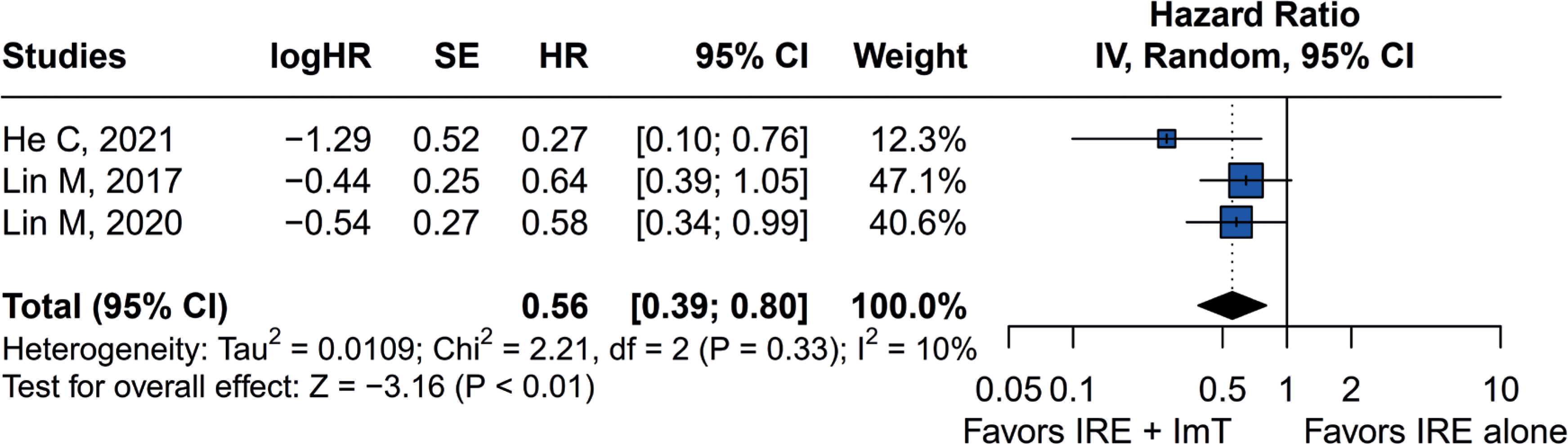
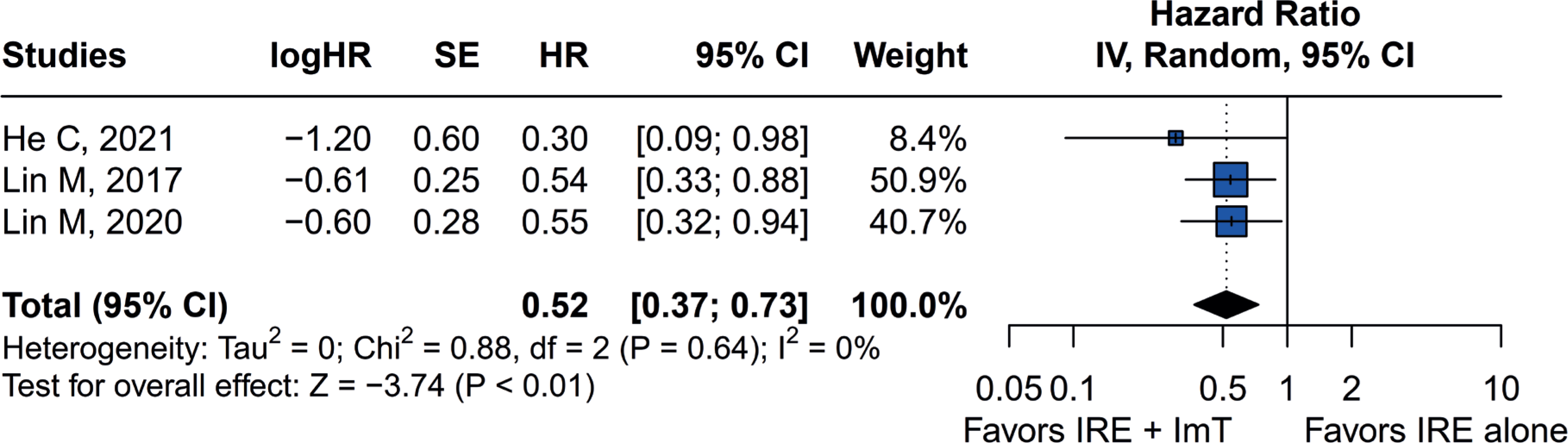
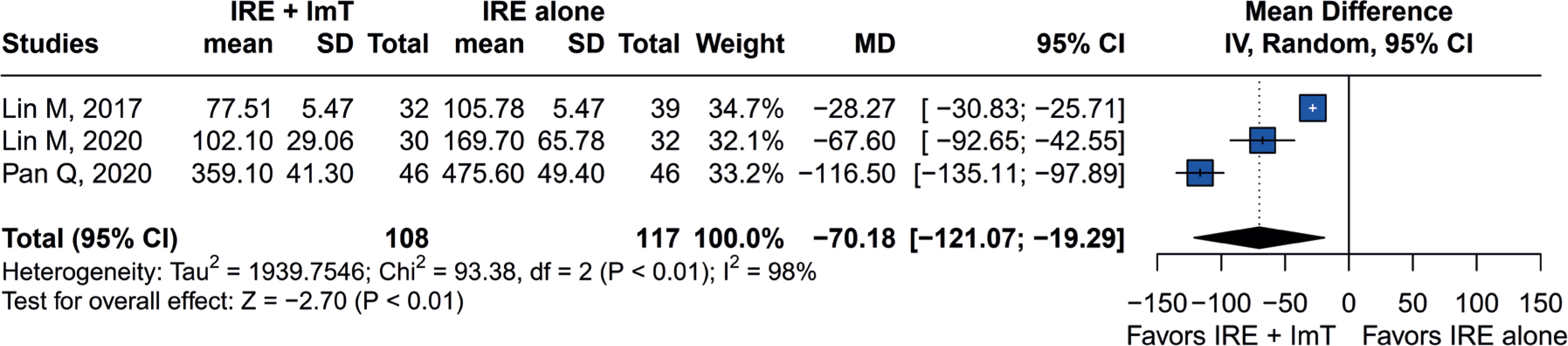
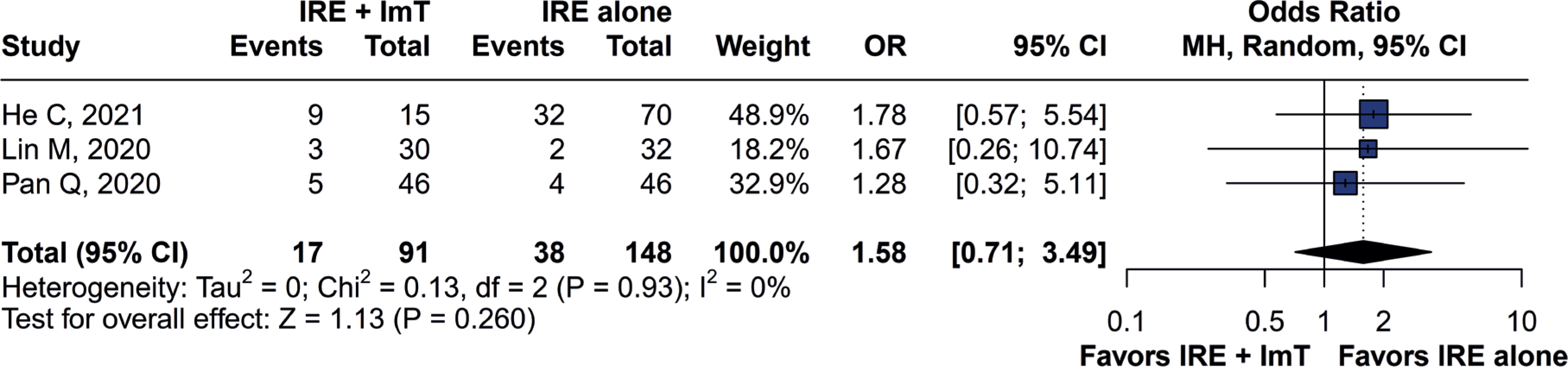
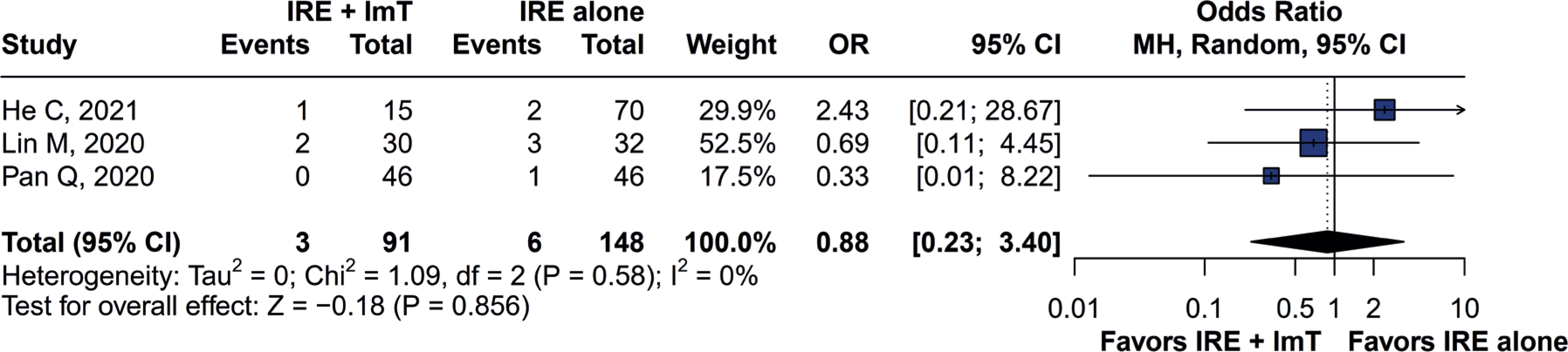
Results: Four studies involving 310 patients were included in the pooled analysis. Irreversible electroporation combined with immunotherapy significantly prolonged progression-free survival compared with irreversible electroporation alone (hazard ratio [HR], 0.56; 95%CI=0.39 – 0.80; p<0.01; I2=10%). Additionally, patients who received irreversible electroporation plus immunotherapy achieved a greater overall survival compared with irreversible electroporation alone (HR=0.52; 95%CI=0.37 – 0.73; p<0.01; I2=0%). The pooled results for CA 19-9 showed significantly lower levels in patients receiving irreversible electroporation and immunotherapy compared with those receiving irreversible electroporation alone (MD: −70.18U/L; 95%CI=-121.07 – −19.29; p<0.01; I2=98%). No significant difference in the occurrence of adverse events such as nausea and vomiting (OR=1.58; 95%CI=0.71 – 3.49; p=0.26; I2=0%) and gastroparesis (OR=0.88; 95%CI=0.23 – 3.40; p=0.85; I2=0%) was not observed between the groups.
Conclusion: Combined therapy using percutaneous irreversible electroporation and systemic immunotherapy offers a safe and effective treatment approach for locally advanced pancreatic cancer, with irreversible electroporation potentially enhancing the efficacy of systemic immunotherapy in combined applications.
Prospero database registration: ID CRD42024562216.
Keywords:
Electroporation; Pancreatic neoplasms; Immunotherapy; Ablation techniques
INTRODUCTION
Pancreatic ductal adenocarcinoma (PDAC) is the most common malignant neoplasm of the pancreas and its incidence and mortality rates have increased in recent years.(1) Pancreatic ductal adenocarcinoma is categorized into three non-metastatic categories based on resectability status: resectable, borderline resectable, and locally advanced pancreatic cancer (LAPC). Surgery remains the only potentially curative treatment, yet only 15% of patients present with resectable disease. In these patients, margin-negative resection followed by adjuvant chemotherapy is associated with 5-year survival rates of approximately 20%.(2) Nearly 30% of cases are classified as LAPC at diagnosis, which involves a locoregional tumor extending to adjacent vasculature or structures without distant metastasis. These tumors are considered unresectable, with an overall survival of 9–13 months.(3)
Management of LAPC focuses on symptom control such as pain related to celiac plexus involvement, digestive obstruction, and nutrition-related weight loss. For patients with good or intermediate performance status (PS), first-line treatment typically consists of induction chemotherapy followed by chemoradiation or stereotactic body radiotherapy (SBRT). Targeted therapy based on molecular profiling may be considered as a subsequent therapy in patients with disease progression and poorer PS.(4) Pancreatic cancer is largely refractory to immunotherapy and is considered an immune-cold tumor.(5) In a Phase II randomized clinical trial, O’ Reilly et al. reported poor response rates with anti-PD-1 alone or anti-PD-1 combined with anti-CTLA-4 drugs in PDAC.(6) In contrast, Chen et al. reported significantly improved responses with combined anti-PD-1, anti-CTLA-4, and SBRT in patients with PDAC.(7) Despite the availability of systemic therapy options, tumor responses remain unsatisfactory, highlighting the potential role of minimally invasive ablation techniques for focal tumor destruction.(8)
Irreversible electroporation (IRE) is a non-thermal ablation technique that delivers high-voltage electrical pulses to induce cell death through apoptosis. Because it is nonthermal, IRE preserves surrounding tissue structures, including major blood vessels, bile ducts, and the intestines. IRE also triggers significant antigen release and T-cell activation post-therapy, providing potential synergistic effect when combined with immunotherapy to enhance targeting and destruction of tumor cells.(9–11)
OBJECTIVE
Therefore, the aim of this systematic review and meta-analysis was to determine the efficacy and safety of percutaneous irreversible electroporation combined with immunotherapy compared with irreversible electroporation alone in patients with locally advanced pancreatic cancer.
METHODS
Search strategy
We systematically searched the MEDLINE, Embase, and Cochrane Library databases for articles published until July 2025. The search strategy included terms such as "irreversible electroporation," "immunotherapy," and "locally advanced pancreatic cancer." The MeSH and input terms were adapted for the selected databases, combining terms with Boolean connectors (OR and AND) and conforming to the syntax rules in each database. Duplicate articles were manually excluded. References from all included studies, previous systematic reviews, and meta-analyses were also manually searched for additional studies, and reference manager software, Zotero® (Version 7.0.3), was used.(12) The search strategy for each database is presented in Table 1S, Supplementary Material. Our study was conducted in accordance with the Preferred Reporting Items for Systematic Reviews and Meta-Analyses (PRISMA) guidelines and the Cochrane Handbook for Systematic Reviews of Interventions.(13,14)
Study selection
Two reviewers independently assessed the initial search results to identify studies that met the eligibility criteria based on their titles and abstracts. The selected studies then underwent full-text assessment by the same reviewers, who made the final selection based on the inclusion and exclusion criteria. Any disagreements were resolved through discussion among all authors, with the lead reviewer making the final decision, if necessary.
Eligibility criteria
Inclusion in this meta-analysis was restricted to studies that met the following eligibility criteria: (1) enrolled patients with LAPC, (2) compared IRE combined with systemic immunotherapy with IRE alone, (3) were clinical trials or observational studies, and (4) reported any of the outcomes of interest.
We excluded studies that: (1) used ablation methods other than IRE; (2) included intratumoral immunotherapy as treatment; (3) had no Control Group; (4) had overlapping patient populations, retaining only the study with the highest number of patients; (5) were reviews, case reports, editorials, correspondences, comments, or meeting abstracts; (6) used a murine animal model; (7) did not have available full texts; and (8) were written in languages other than English.
Data extraction of study characteristics
Two reviewers independently extracted relevant data from the selected studies in a standardized form. The extracted data included study characteristics and demographic data such as the first author, year of publication, study location, total sample size, sample size of the Control Group (irreversible electroporation alone arm), sample size of the Intervention Group (irreversible electroporation plus immunotherapy arm), immunotherapy drug regimen, sex and age (median and/or average) of the sample population, study design, single- or multi-center setup, follow-up time, and tumor diameter (Table 1). Any disagreement between the two reviewers was resolved by consensus with the assistance of a third reviewer.
Endpoints data extraction
The following raw statistics were extracted for data synthesis: hazard ratio (HR) for progression-free survival (PFS), overall survival (OS), carbohydrate antigen 19-9 (CA 19-9), and adverse events (AEs) in both groups. If Kaplan–Meier (KM) curves for PFS and OS were provided instead of HR and 95%CI, time-to-event data were extracted from the Kaplan–Meier curves using WebPlotDigitizer version 4.7 software.(15) Subsequently, this data was used to calculate the HR and 95%CI using the R software package, "IPDfromKM."(16)
For CA 19-9, the values from Lin et al.(17) and Lin et al.(18) were extracted using WebPlotDigitizer, version 4.7.(15) Data normality was first assessed using the method reported by Shi et al.(19) Values from Lin et al.(18) were transformed from median and interquartile range to mean and standard deviation using the method described by Wan et al.(20)
Progression-free survival was defined as the period from the date of treatment initiation or baseline assessment to objective disease progression, subjective disease deterioration, or death, whichever occurred first. Overall survival was defined as the time from treatment initiation or baseline assessment to death. Progression-free survival was censored on the date of the last cancer assessment if no progression had occurred, and OS was censored at the time of the last follow-up for patient who were alive or lost to follow-up. Serum CA19-9 levels were evaluated at each follow-up using a quantitative sandwich enzyme immunoassay. Adverse events were defined as any unfavorable symptoms or diseases occurring after treatment initiation, including any new health issues or worsening of preexisting conditions, regardless of their relationship to the treatment.
Quality assessment
We evaluated the risk of bias in the randomized controlled trials (RCTs) using the Cochrane Risk of Bias assessment tool (version 2).(21) Non-randomized studies were assessed using the ROBINS-I ("Risk of Bias in Nonrandomized Studies of Interventions") tool.(22) Two authors independently assessed risk of bias. Disagreements were resolved by consensus after discussing the reasons for discrepancy. Testing for funnel plot asymmetry was not conducted because its power was too low to distinguish between chance and real asymmetry when fewer than 10 studies were included in the meta-analysis.(23)
Statistical analysis
The statistical analysis was conducted using R software, particularly the "meta,""metafor," and "dmetar" packages.(16) For the estimation of meta-analytic measures, an inverse variance estimator was used in a random-effects model. For the estimation of between-study variances (τ2) and considering the odds ratio, the Restricted Maximum Likelihood (REML) method(24) was applied. For the HR, the DerSimonian–Laird method(25) was applied. A p<0.05 was considered as the threshold of statistical significance. The results are presented as pooled estimates with 95%CI and plotted as forest plots.(16,26)
Heterogeneity was assessed using the I2 statistic(27) and Q-test.(26) Sensitivity analysis was conducted by omitting one study from each analysis to evaluate the effect of each study on the overall result. The extracted data are summarized in tables 2 and 3.
RESULTS
Study selection
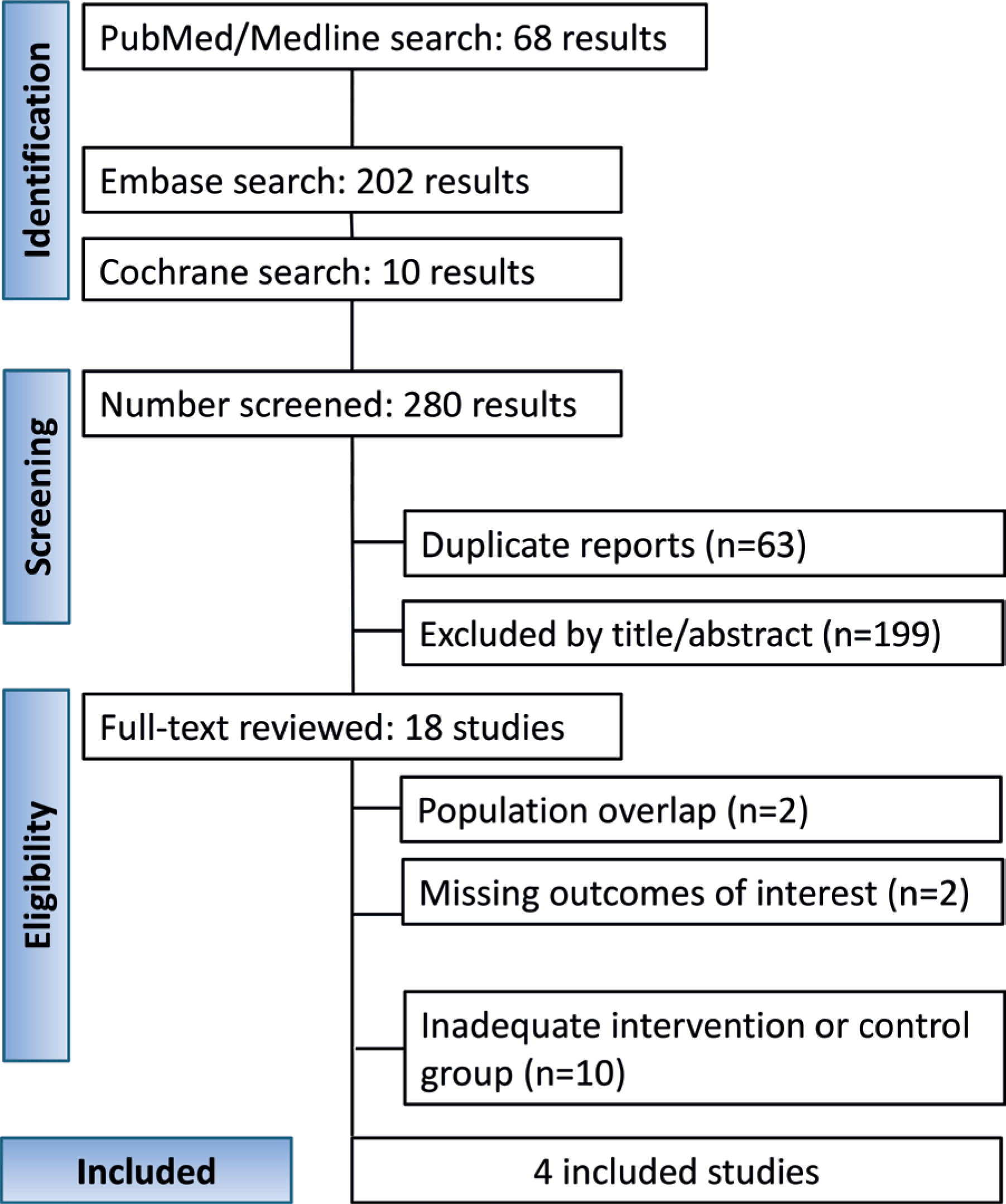
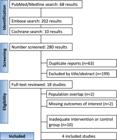
The initial search identified 280 studies. After excluding 63 duplicates, 199 studies were excluded based on their titles and abstracts. Eighteen of the remaining studies were read in full. Among these, 14 were excluded because of population overlap, missing outcomes of interest, or inadequate Intervention or Control Groups This process resulted in four articles(17,18,28,29) deemed eligible for analysis (Figure 1).
Characteristics of included studies
The selected studies resulted in a sample of 310 patients, with 187 in the Control Group and 123 in the Intervention Group. Among these patients, 48% were female and the mean age was 58.45 years. All the studies were conducted at different hospitals in China. The selected studies were published between 2017 and 2021. Two studies were RCTs, one was an observational retrospective study and the other was a prospective study. All studies were conducted at a single center. The median tumor diameter was 4.0cm in the Control Group and 4.2cm in the Intervention Group. The mean follow-up time was 17.5 months. The immunotherapy drug regimen was the same for the Interventional and Control Groups, but varied across studies. The characteristics of the individual studies are presented in table 1.
Main findings and heterogeneity of PFS, OS, CA 19-9, and AEs
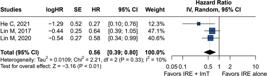
Pooled PFS indicated that the combination of IRE with immunotherapy effectively protected patients from disease progression compared to IRE alone with an HR of 0.56 (95%CI=0.39–0.80; p<0.01). Heterogeneity was not significant (I2=10%, p=0.33 (Figure 2).
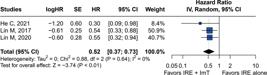
Combination therapy of IRE and immunotherapy improved OS with a pooled HR of 0.52 (95%CI=0.37–0.73; p<0.01). No obvious heterogeneity was observed (I2=0%, p=0.64 (Figure 3).
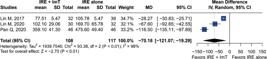
The CA 19-9 outcome was reported in three studies. The pooled results showed significantly lower levels of CA 19-9 in patients receiving IRE and immunotherapy compared to those receiving IRE alone (mean difference [MD]: −70.18 U/L; 95%CI=-121.07 – −19.29; p<0.01). However, the heterogeneity was considerable, with I2=98% and p<0.01 (Figure 4). This heterogeneity might be explained by the different CA 19-9 testing intervals implemented in each study during the follow-up period. Lin et al.(18) reported results for CA 19-9 on day 90 after the intervention; Lin et al.(17) reported results on days 1, 7, and 30; and Pan et al.(28) reported CA 19-9 levels on days 1, 7, and 30. Lin et al. and Pan et al. found that CA 19-9 levels remained high on days 1 and 7, but dropped by day 30 in both groups. All three studies reported that CA 19-9 levels were lower in the IRE plus immunotherapy group than in the IRE alone group on days 30 or 90. This heterogeneity might also be attributed to differences in the baseline levels of CA 19-9 in patients before intervention in each study.
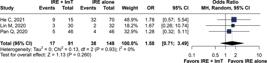
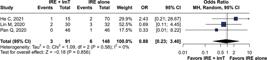
The overall analysis of AEs is presented in table 3, which shows no significant differences in AEs between groups. No significant difference in the occurrence of AEs such as nausea and vomiting (OR=1.58; 95%CI=0.71–3.49; p=0.26) (Figure 5) and gastroparesis (OR=0.88; 95%CI=0.23–3.40; p=0.85) (Figure 6) was observed between the groups. No heterogeneity was found, as indicated by I2=0% and p=0.93 for nausea and vomiting, and I2=0% and p=0.58 for gastroparesis. No deaths related to the procedure occurred during follow-up.
Quality of the studies
Quality ratings for the included studies ranged from "serious risk of bias" to "some concerns." Pan et al.(28) reported "some concerns" regarding the overall risk of bias due to potential issues with the blinding of participants, personnel, and outcome assessors. Lin et al.(18) also reported "some concerns" related to the lack of explicit mention of allocation concealment in the randomization process, the potential for performance bias given the nature of the intervention, and the potential for detection bias from assessors aware of the intervention.(21) Lin et al.(17) and He et al.(29) presented a "serious risk of bias" owing to confounding factors, as at least one confounder was not adequately measured.(22) Individual appraisals of each study included in the meta-analysis are shown in (Table 2S and 3S, Supplementary Material).
DISCUSSION
This systematic review and meta-analysis evaluated the efficacy and safety of percutaneous IRE combined with immunotherapy compared with IRE alone in patients with advanced LAPC. The findings indicate that combining IRE with immunotherapy significantly improves survival in patients with LAPC compared with IRE alone, and without a significant increase in AEs.
Several factors may contribute to the overall efficacy of the combined therapy, including modulation of the tumor microenvironment, suppression of tumor growth, and enhanced immunomodulatory responses through synergistic therapeutic effects. Breakthroughs in immunotherapy with immune checkpoint inhibitors (ICIs) have dramatically transformed treatment paradigms for other hard-to-treat malignancies, such as melanoma and lung cancer.(30,31) However, the efficacy of immunotherapy remains limited because of the immunosuppressive nature of pancreatic cancer.
Previous studies have demonstrated that IRE promotes M1 macrophage polarization, increases PD-1+ T cells, reduces Tregs cells, and induces in situ release of tumor-specific antigens after the procedure further enhancing the efficacy of immunotherapy in patients with pancreatic cancer.(32,33) In addition, one study suggested that the systemic antitumor immune response triggered by IRE can be further enhanced by stimulating the innate immune system with a toll-like receptor-7 (TLR7) agonist and the adaptive immune system with anti-PD-1 checkpoint blockade.(34) A preclinical study by Zhao et al.(35) demonstrated that IRE can reprogram the immunosuppressive tumor microenvironment in PDAC. Their murine PDAC model showed that IRE induced immunogenic cell death, fostered dendritic cell activation, and preserved critical stromal collagen scaffolding. Notably, when combined with anti-PD-1 therapy, IRE facilitated robust CD8+ T-cell infiltration, markedly prolonged survival, and even generated long-term immune memory.
The immunotherapy applied in the experimental groups included in this review comprised γδ T-cell infusion, allogeneic natural killer (NK) cell therapy, and Toripalimab.(17,18,28,29) T cells are key components of the tumor microenvironment and previous reports have indicated that γδ T-cells contribute to tumor immune surveillance against various types of tumors.(36,37) NK cells recognize non-self-histocompatibility antigens on cell surface through their NK cell immunoglobulin-like receptors (KIRs).(38)
Toripalimab is a monoclonal antibody that targets the PD-1 receptor on T cells and is classified as an ICI. Low PD-1 expression within the pancreatic microenvironment may partially explain the limited response to ICIs; however, this limitation may be offset by the systemic adaptive immune response triggered by IRE, thereby sensitizing tumors to ICI therapy.(39) He et al.(29) demonstrated an increase in CD4+ T helper and CD8+ T cytotoxic cells and a decrease in CD8+ Treg cells in patients treated with IRE and Toripalimab. In addition, elevated levels of cytokines, including IL-4, IL-6, IL-10, TNF, and IFN-γ were observed in the IRE and Toripalimab group.(29) Collectively, these therapies appear to enhance the efficacy of IRE through synergistic effects.
The levels of CA 19-9 were also significantly lower in the group treated with IRE combined with immunotherapy. Studies have shown that lower levels of CA 19-9, or its decrease during systemic treatment, are associated with better outcomes in patients with PDAC.(40,41) Carbohydrate antigen 19-9 is synthesized by normal pancreatic and biliary ductal cells and by gastric, colon, endometrial, and salivary epithelia. It is typically present in small amounts in the serum and levels increase in plasma in neoplastic diseases.(42) The literature suggests that CA 19-9 has an average sensitivity of 81% and a specificity of 90% for pancreatic cancer.(43) However, elevated CA 19-9 levels alone do not always indicate the presence of cancer or advanced disease. This finding may also be due to inflammatory conditions such as pancreatitis and other benign gastrointestinal diseases. Furthermore, CA 19-9 is undetectable in individuals who are Lewis antigen-negative.(44)
The results also demonstrated no significant difference in AEs between the groups, indicating that combined therapy does not increase treatment-related risk, aligning with various other studies showing that IRE is a safe treatment for patients with pancreatic cancer.(45–47) The safety of immunotherapy in the treatment of pancreatic cancer has also been evaluated in previous studies.(48,49) Together, these findings supporting the safety and feasibility of combined therapy may facilitate future advances in involving novel regimens and therapeutic agents. Intratumoral immunotherapy, which has a different safety profile, was not included in this review.(50)
This meta-analysis had several limitations. The included in the studies all had small sample sizes, with fewer than 100 patients each. Given the limited number of published studies on this topic, observational studies were included alongside RCTs. Additionally, the RCTs did not report whether they were open-label or blind. Variations in IRE techniques and incomplete reporting of IRE parameters, as well as differences in the types of immunotherapy used in each study, may have affected the outcomes. All included studies were conducted in China, meaning that publication bias cannot be rules out, and therefore, the generalizability of the findings to other populations is limited. These results must be interpreted with caution, and large-sample multi-center RCTs are needed to confirm the efficiency of IRE plus immunotherapy in LAPC.
CONCLUSION
The findings of this systematic review and meta-analysis suggest that combining percutaneous irreversible electroporation with systemic immunotherapy may provide a safe and effective treatment option for locally advanced pancreatic cancer, with irreversible electroporation potentially enhancing the efficacy of systemic immunotherapy in combined applications.
DATA AVAILABILITY
The underlying content is contained within the manuscript.
REFERENCES
- 1 Ilic I, Ilic M. International patterns in incidence and mortality trends of pancreatic cancer in the last three decades: A joinpoint regression analysis. World J Gastroenterol. 2022;28(32):4698-715.
- 2 Karunakaran M, Barreto SG. Surgery for pancreatic cancer: current controversies and challenges. Future Oncol. 2021;17(36):5135-62.
- 3 O Kane GM, Knox JJ. Locally advanced pancreatic cancer: an emerging entity. Curr Probl Cancer. 2018;42(1):12-25.
- 4 Tempero MA, Malafa MP, Al-Hawary M, Behrman SW, Benson AB, Cardin DB, et al. Pancreatic Adenocarcinoma, Version 2.2021, NCCN Clinical Practice Guidelines in Oncology. J Natl Compr Canc Netw. 2021;19(4):439-57.
- 5 Mukherji R, Debnath D, Hartley ML, Noel MS. The Role of Immunotherapy in Pancreatic Cancer. Curr Oncol. 2022;29(10):6864-92.
- 6 O'Reilly EM, Oh DY, Dhani N, Renouf DJ, Lee MA, Sun W, et al. Durvalumab With or Without Tremelimumab for Patients With Metastatic Pancreatic Ductal Adenocarcinoma: A Phase 2 Randomized Clinical Trial. JAMA Oncol. 2019;5(10):1431-8.
- 7 Chen IM, Johansen JS, Theile S, Hjaltelin JX, Novitski SI, Brunak S, et al. Randomized Phase II Study of Nivolumab With or Without Ipilimumab Combined With Stereotactic Body Radiotherapy for Refractory Metastatic Pancreatic Cancer (CheckPAC). J Clin Oncol. 2022;40(27):3180-9.
- 8 Paiella S, De Pastena M, Romeo F, D'onofrio M, Fontana M, Pea A, et al. Ablation treatments in unresectable pancreatic cancer. Minerva Chir. 2019;74(3):263-9.
- 9 Timmer FE, Geboers B, Ruarus AH, Schouten EA, Nieuwenhuizen S, Puijk RS, et al. Irreversible Electroporation for Locally Advanced Pancreatic Cancer. Tech Vasc Interv Radiol. 2020;23(2):100675.
- 10 White SB, Zhang Z, Chen J, Gogineni VR, Larson AC. Early Immunologic Response of Irreversible Electroporation versus Cryoablation in a Rodent Model of Pancreatic Cancer. J Vasc Interv Radiol. 2018;29(12):1764-9.
- 11 Bulvik BE, Rozenblum N, Gourevich S, Ahmed M, Andriyanov AV, Galun E, et al. Irreversible Electroporation versus Radiofrequency Ablation: A Comparison of Local and Systemic Effects in a Small-Animal Model. Radiology. 2016;280(2):413-24.
-
12 Zotero (Version 7.0.3). EUA; 2024 [cited 2024 Oct 8]. Available: https://www.zotero.org/
» https://www.zotero.org/ - 13 Page MJ, McKenzie JE, Bossuyt PM, Boutron I, Hoffmann TC, Mulrow CD, et al. The PRISMA 2020 statement: an updated guideline for reporting systematic reviews. BMJ. 2021;372:n71.
-
14 Bossuyt PM, Deeks JJ, Leeflang MM, Takwoingi Y, Flemyng E. Preface, "Cochrane Handbook for Systematic Reviews of Diagnostic Test Accuracy. Version 2.0 (updated July 2023)." The Cochrane Collaboration: [cited 2024 oct 8]. Available from: https://training.cochrane.org/handbook-diagnostic-test-accuracy/current
» https://training.cochrane.org/handbook-diagnostic-test-accuracy/current -
15 Rohatgi A. WebPlotDigitizer (Version 4.7) [Software]. [cited 2024 Oct 8]. Available: https://automeris.io/v4/
» https://automeris.io/v4/ -
16 R Core Team. A Language and Environment for Statistical Computing. R Foundation for Statistical Computing: Vienna, Austria. [cited 2024 jun 13] Available: https://www.R-project.org/
» https://www.R-project.org/ - 17 Lin M, Alnaggar M, Liang S, Wang X, Liang Y, Zhang M, et al. An important discovery on combination of irreversible electroporation and allogeneic natural killer cell immunotherapy for unresectable pancreatic cancer. Oncotarget. 2017;8(60):101795-807.
- 18 Lin M, Zhang X, Liang S, Luo H, Alnaggar M, Liu A, et al. Irreversible electroporation plus allogenic Vγ9Vδ2 T cells enhances antitumor effect for locally advanced pancreatic cancer patients. Signal Transduct Target Ther. 2020;5(1):215.
- 19 Shi J, Luo D, Wan X, Liu Y, Liu J, Bian Z, et al. Detecting the skewness of data from the five-number summary and its application in meta-analysis. Stat Methods Med Res. 2023;32(7):1338-60.
- 20 Wan X, Wang W, Liu J, Tong T. Estimating the sample mean and standard deviation from the sample size, median, range and/or interquartile range. BMC Med Res Methodol. 2014;14(1):135.
- 21 Sterne JA, Savović J, Page MJ, Elbers RG, Blencowe NS, Boutron I, et al. RoB 2: a revised tool for assessing risk of bias in randomised trials. BMJ. 2019;366:l4898.
- 22 Sterne JA, Hernán MA, Reeves BC, Savović J, Berkman ND, Viswanathan M, et al. ROBINS-I: a tool for assessing risk of bias in non-randomised studies of interventions. BMJ. 2016;355:i4919.
-
23 Bossuyt PM, Deeks JJ, Leeflang MM, Takwoingi Y, Flemyng E. Preface, "Cochrane Handbook for Systematic Reviews of Diagnostic Test Accuracy. Version 2.0 (updated July 2023)." The Cochrane Collaboration; 2023. [cited 2024 oct 8]. Available from https://training.cochrane.org/handbook-diagnostic-test-accuracy/current
» https://training.cochrane.org/handbook-diagnostic-test-accuracy/current - 24 Viechtbauer W. Bias and Efficiency of Meta-Analytic Variance Estimators in the Random-Effects Model. J Educ Behav Stat. 2005;30(3):261-93.
- 25 DerSimonian R, Laird N. Meta-analysis in clinical trials. Control Clin Trials. 1986;7(3):177-88.
- 26 Cochran WG. The Combination of Estimates from Different Experiments. Biometrics. 1954;10(1):101.
- 27 Higgins JP, Thompson SG. Quantifying heterogeneity in a meta-analysis. Stat Med. 2002;21(11):1539-58.
- 28 Pan Q, Hu C, Fan Y, Wang Y, Li R, Hu X. Efficacy of irreversible electroporation ablation combined with natural killer cells in treating locally advanced pancreatic cancer. JBUON. 2020;25(3):1643-9.
- 29 He C, Sun S, Zhang Y, Li S. Irreversible Electroporation Plus Anti-PD-1 Antibody versus Irreversible Electroporation Alone for Patients with Locally Advanced Pancreatic Cancer. J Inflamm Res. 2021;14:4795-807.
- 30 Robert C, Schachter J, Long GV, Arance A, Grob JJ, Mortier L, Daud A, Carlino MS, McNeil C, Lotem M, Larkin J, Lorigan P, Neyns B, Blank CU, Hamid O, Mateus C, Shapira-Frommer R, Kosh M, Zhou H, Ibrahim N, Ebbinghaus S, Ribas A; KEYNOTE-006 investigators. Pembrolizumab versus Ipilimumab in Advanced Melanoma. N Engl J Med. 2015;372(26):2521-32.
- 31 Reck M, Remon J, Hellmann MD. First-Line Immunotherapy for Non-Small-Cell Lung Cancer. J Clin Oncol. 2022;40(6):586-97.
- 32 Scheffer HJ, Stam AG, Geboers B, Vroomen LG, Ruarus A, de Bruijn B, et al. Irreversible electroporation of locally advanced pancreatic cancer transiently alleviates immune suppression and creates a window for antitumor T cell activation. OncoImmunology. 2019;8(11):1652532.
- 33 He C, Huang X, Zhang Y, Lin X, Li S. T-cell activation and immune memory enhancement induced by irreversible electroporation in pancreatic cancer. Clin Transl Med. 2020;10(2):e39.
- 34 Narayanan JS, Ray P, Hayashi T, Whisenant TC, Vicente D, Carson DA, et al. Irreversible Electroporation Combined with Checkpoint Blockade and TLR7 Stimulation Induces Antitumor Immunity in a Murine Pancreatic Cancer Model. Cancer Immunol Res. 2019;7(10):1714-26.
- 35 Zhao J, Wen X, Tian L, Li T, Xu C, Wen X, et al. Irreversible electroporation reverses resistance to immune checkpoint blockade in pancreatic cancer. Nat Commun. 2019;10(1):899.
- 36 Bouet-Toussaint F, Cabillic F, Toutirais O, Le Gallo M, Thomas de la Pintière C, Daniel P, et al. Vgamma9Vdelta2 T cell-mediated recognition of human solid tumors. Potential for immunotherapy of hepatocellular and colorectal carcinomas. Cancer Immunol Immunother. 2008;57(4):531-9.
- 37 Dieli F, Vermijlen D, Fulfaro F, Caccamo N, Meraviglia S, Cicero G, et al. Targeting human {γ}δ} T cells with zoledronate and interleukin-2 for immunotherapy of hormone-refractory prostate cancer. Cancer Res. 2007;67(15):7450-7.
- 38 Purdy AK, Campbell KS. Natural killer cells and cancer: regulation by the killer cell Ig-like receptors (KIR). Cancer Biol Ther. 2009;8(23):2211-20.
- 39 Wei XL, Ren C, Wang FH, Zhang Y, Zhao HY, Zou BY, et al. A phase I study of toripalimab, an anti-PD-1 antibody, in patients with refractory malignant solid tumors. Cancer Commun (Lond). 2020;40(8):345-54.
- 40 Wang-Gillam A, Hubner RA, Siveke JT, Von Hoff DD, Belanger B, de Jong FA, et al. NAPOLI-1 phase 3 study of liposomal irinotecan in metastatic pancreatic cancer: Final overall survival analysis and characteristics of long-term survivors. Eur J Cancer. 2019;108:78-87.
- 41 Chiorean EG, Von Hoff DD, Reni M, Arena FP, Infante JR, Bathini VG, et al. CA19-9 decrease at 8 weeks as a predictor of overall survival in a randomized phase III trial (MPACT) of weekly nab-paclitaxel plus gemcitabine versus gemcitabine alone in patients with metastatic pancreatic cancer. Ann Oncol. 2016;27(4):654-60.
- 42 Scarà S, Bottoni P, Scatena R. CA 19-9: Biochemical and Clinical Aspects. Adv Exp Med Biol. 2015;867:247-60.
- 43 Duffy MJ, Sturgeon C, Lamerz R, Haglund C, Holubec VL, Klapdor R, et al. Tumor markers in pancreatic cancer: a European Group on Tumor Markers (EGTM) status report. Ann Oncol. 2010;21(3):441-7.
- 44 Liu C, Deng S, Jin K, Gong Y, Cheng H, Fan Z, et al. Lewis antigennegative pancreatic cancer: an aggressive subgroup. Int J Oncol. 2020;56(4):900-8.
- 45 Ruarus AH, Vroomen LG, Geboers B, van Veldhuisen E, Puijk RS, Nieuwenhuizen S, et al. Percutaneous Irreversible Electroporation in Locally Advanced and Recurrent Pancreatic Cancer (PANFIRE-2): A Multicenter, Prospective, Single-Arm, Phase II Study. Radiology. 2020;294(1):212-20.
- 46 Flak RV, Stender MT, Jensen TM, Andersen KL, Henriksen SD, Mortensen PB, et al. Treatment of locally advanced pancreatic cancer with irreversible electroporation - a Danish single center study of safety and feasibility. Scand J Gastroenterol. 2019;54(2):252-8.
- 47 Sugimoto K, Moriyasu F, Tsuchiya T, Nagakawa Y, Hosokawa Y, Saito K, et al. Irreversible Electroporation for Nonthermal Tumor Ablation in Patients with Locally Advanced Pancreatic Cancer: Initial Clinical Experience in Japan. Intern Med. 2018;57(22):3225-31.
- 48 Padrón LJ, Maurer DM, O'Hara MH, O'Reilly EM, Wolff RA, Wainberg ZA, et al. Sotigalimab and/or nivolumab with chemotherapy in first-line metastatic pancreatic cancer: clinical and immunologic analyses from the randomized phase 2 PRINCE trial. Nat Med. 2022;28(6):1167-77.
- 49 Reiss KA, Mick R, Teitelbaum U, O'Hara M, Schneider C, Massa R, et al. Niraparib plus nivolumab or niraparib plus ipilimumab in patients with platinum-sensitive advanced pancreatic cancer: a randomised, phase 1b/2 trial. Lancet Oncol. 2022;23(8):1009-20.
- 50 Zheng L, Ding D, Edil BH, Judkins C, Durham JN, Thomas DL 2nd, et al. Vaccine-Induced Intratumoral Lymphoid Aggregates Correlate with Survival Following Treatment with a Neoadjuvant and Adjuvant Vaccine in Patients with Resectable Pancreatic Adenocarcinoma. Clin Cancer Res. 2021;27(5):1278-86.
Edited by
-
Associate Editor:
Gustavo Schvartsman Hospital Israelita Albert Einstein, São Paulo SP, Brazil ORCID: https://orcid.org/0000-0001-6601-3726