 One-dimensional computational circulatory models: a scoping review
ABSTRACT
Background Computational modeling of human circulatory system has evolved significantly in recent decades. Among the various modeling strategies, one-dimensional (1D) models have emerged as alternatives to more complex models because of their balance between physiological accuracy and computational efficiency.
Objective This scoping review aimed to summarize and compare the studies on 1D computational models of the entire circulatory system, including those that incorporated additional 0D and 3D components.
Methods A systematic search was performed for studies on computational 1D models of the entire arterial tree. Studies were eligible if they employed 1D modeling either exclusively or in combination with 0D and/or 3D components. Article screening, data extraction, and analyses were conducted in accordance with the PRISMA-ScR guidelines.
Results Out of the 6,841 records, 19 studies were included. Eleven articles presented strictly 1D nonlinear models, two used linear 1D models, and six employed multiscale frameworks that integrated 1D, 0D, and/or 3D components. Nonlinear 1D models consistently outperformed linear models in simulating large elastic arteries and pathological conditions, whereas linear models were effective in simulating small vessels under low-pressure variations. Multiscale models improve local hemodynamic details, but impose significantly higher computational costs.
Conclusion 1D models provide a robust and computationally efficient framework for simulating global cardiovascular hemodynamics. Although nonlinear and multiscale models enhance the physiological fidelity and adaptability to complex scenarios, their higher computational demands should be weighed against the available resources and specific clinical or research goals.
Keywords
Mathematical computing; Hemodynamics; Cardiovascular system; Models
INTRODUCTION
The circulatory system is highly complex, both anatomically and functionally, and it is among the most challenging systems in the human body to comprehend. The dynamic interaction between blood vessels and the heart, along with regional circulation and constant metabolic variations, renders studying the circulatory system challenging.( 1 ) Recently, significant advances in imaging and scientific computing have provided more detailed analyses of the physiological functions of the circulatory system.( 2 )
Growing computational capacity enables the integration of actual hemodynamic parameters with mathematical models of the circulatory system.( 3 , 4 ) Conversely, the intrinsic multifactorial nature of the human cardiovascular system may render simulation models limitless and complex. In one-dimensional (1D) modeling of the circulatory system, linear models assume a proportional relationship between pressure and flow, simplifying the governing equations and making them computationally efficient. However, this linearity limits their ability to simulate complex behaviors such as wave reflections or pressure-dependent vessel compliance. In contrast, nonlinear models incorporate these phenomena by considering the viscoelastic properties of the vessel walls and the complex interactions between flow and pressure, providing more realistic simulations of hemodynamics, particularly under pathological conditions. In addition, zero-dimensional (0D) models or lumped-parameter models represent the cardiovascular system as distinct compartments connected by resistance, compliance, and inertance. These models are useful for simulating global circulatory behavior or for coupling with 1D and 3D models, although they lack spatial resolution. Therefore, producing accurate 1D models of the circulatory system to provide adequate simulations at lower computational costs has been focused on.( 5 , 6 )
However, retrieving the different models from literature and comparing them is also challenging.
OBJECTIVE
The objective of this scoping review was to condense and compare various 1D computational models of the entire circulatory system.
METHODS
Study design and search strategies
This scoping review was conducted in accordance with the Preferred Reporting Items for Systematic reviews and Meta-Analyses (PRISMA) extension for Scoping Reviews (PRISMA-ScR).( 7 )We searched electronic databases (PubMed and Embase) for articles published in English that used 1D computational models of the entire circulatory tree. The search strategy is detailed in Table 1S, 2S and 3S, Supplementary Material. The reference lists of the retrieved articles were also screened for eligible studies. All references were exported to and reviewed using EndNote (version 20.6; Clarivate, PA, USA). After omitting duplicates, we proceeded with the screening process in a stepwise manner as follows: 1) In the first screening phase, we excluded articles based on title review - the absence of relevance to computational modeling or circulatory system structure was the main criteria; 2) In the second phase, we read the abstracts of the remaining articles, and articles were excluded for not meeting the inclusion criteria, such as lack of whole system modeling or absence of 1D elements; and 3) the remaining studies were selected for full-text analysis and inclusion. Studies were listed based on thematic grouping and relevance to the classification structure (linear, nonlinear, and multiscale) rather than chronological order.
Eligibility
Studies were considered eligible for inclusion if they used computational simulations of the entire arterial circulatory tree using 1D computational models. Studies were also eligible if they used other dimensional models (such as 0D or 3D) in addition to a 1D model.
Data extraction
The selected articles were retrieved in full and their findings were summarized in a standard form containing the study objective, model characteristics (including model type, wall properties, geometry, and validation methods), number of arterial segments, inclusion of the venous system in the model, key results, and conclusions. The standard form and individual study summaries are provided in the Supplementary Material.
RESULTS
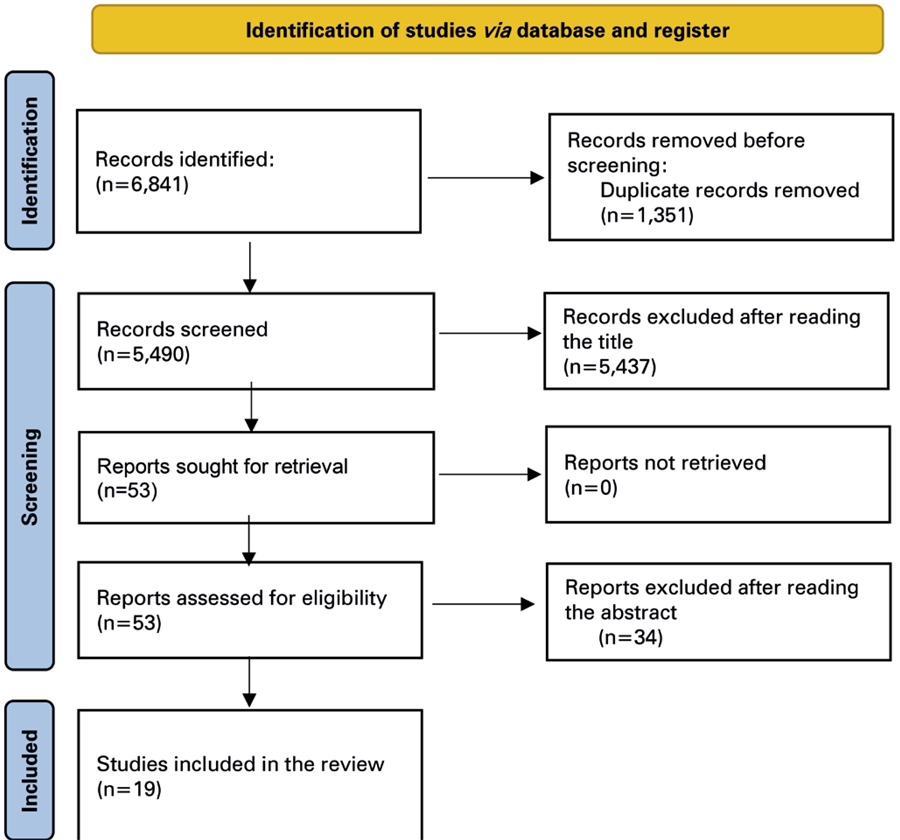
The search strategy yielded 6,184 articles. Of these, 1,351 were duplicates and were excluded. The titles of the remaining 5,490 articles were read and 5,437 were excluded. The abstracts of the remaining 53 articles were fully read, and 19 articles that met the scope of our review were finally selected, retrieved, and read in full. A complete flowchart of the search strategy is shown in figure 1 . We summarized the findings of the selected articles based on model type (linear 1D, nonlinear 1D, and multiscale). We also provided a summary of the findings of these articles - according to author, year, model type, number of arterial segments, inclusion of the venous system, and main features of each model - in table 1 .
Linear 1D models
Wang et al . explored the role of wave reflections and re-reflections in the systemic arterial system using a linearized 1D model of 55 large arteries - isolating the effect of arterial geometry on wave dynamics while simplifying the cardiac input and eliminating nonlinearities - to better understand the pressure and velocity waveforms in normal and pathological scenarios. The model was validated against in vivo and literature data. Their main findings include: (i) re-reflections at bifurcations are the main contributors to waveforms, (ii) their algorithm tracks waves precisely, and (iii) distal waveform changes and pathological alterations ( e.g. , occlusion and regurgitation) can be explained by wave behavior alone.( 8 )
Westerhof et al. developed a distributed hemodynamic model of the human arterial tree that accounts for the developmental changes from newborns to adults. The model comprised 121 arterial segments, and compared simulated and in vivo measurements. The authors demonstrated that the peripheral pressure in children aged <5 years is approximately the central pressure and that the amplification and pulse wave velocity increased with age.( 9 )
Nonlinear 1D models
Alastruey et al. built a model to assess the accuracy of nonlinear 1D viscoelastic equations of pressure and flow wave propagation. The authors also explored a metric called the harmonic flow error, which refers to the difference between the simulated and measured harmonic components (i.e., frequency content) of blood flow waveforms. It was calculated by decomposing the flow signal into its frequency components using Fourier analysis and comparing the amplitude and phase of each harmonic. This error metric allows a detailed assessment of how accurately a model reproduces the shape and dynamics of pulsatile blood flow beyond simple mean flow or peak values. The model was based on 1D nonlinear time-domain viscoelastic equations and compared with in vitro measurements from a 1:1 replica of 37 conduit arteries with a simulated fluid mimicking blood. When compared with the purely elastic models, the model performed significantly better, with lower pressure (2.5% versus 3.0%, p<0.01), flow rate (10.8% versus 15.7%, p<0.01), and harmonic flow errors (3.3% versus 7.0%, p<0.01). They concluded that i) including wall viscoelasticity significantly improved the accuracy of 1D simulations, and ii) 1D viscoelastic modeling achieved a good balance between accuracy and computational cost.( 10 )
Avolio presented a realistic, multi-branched 1D computational model of the entire human arterial system. This model accounted for wave propagation, impedance, and pathological states, such as arteriosclerosis and arterial stenosis. Using an arterial network of 128 segments, this model yielded accurate simulations of the pressure and flow dynamics in the circulatory tree, in agreement with the experimental data.( 11 )
Bárdossy et al developed a 1D arterial model that incorporated the Stuart viscoelastic model to describe the mechanical behavior of arterial walls. This model accounted for three key components: instantaneous elasticity, capturing the immediate response of the wall to pressure; viscous damping, modeling energy dissipation and wave attenuation; and history-dependent deformation, which reflects the time-evolving strain response because of the viscoelastic nature of the vessel wall. This time-dependent component allowed the model to reproduce realistic arterial behavior under pulsatile flow, including wall hysteresis and the dynamic pressure-diameter relationship. The arterial network comprised 45 viscoelastic segments and successfully replicated physiological waveforms, such as backflow in the iliac arteries during diastole and the dicrotic notch in the aortic pressure curves. The model was also capable of simulating localized stenoses and their hemodynamic effects.( 12 )
Blanco et al. devised this study to accurately define criteria for blood flow distribution in preparation for their detailed 1D arterial model (ADAN - anatomically detailed arterial network). They developed a numerical calibration algorithm to compute the terminal resistance, allowing their model of 2,142 arteries (1,598 arterial segments and 544 perforating arteries) to simulate the regional perfusion across 144 vascular beds (specific organs and territories). Their model provided a high-resolution arterial network with validated blood flow distribution criteria, accounted for specific and distributed perfusion using advanced anatomical data, and was suitable for regional hemodynamic studies and surgical planning.( 13 )
Blanco et al. presented a detailed 1D computational model, ADAN, which was calibrated in their previous work.( 13 ) This is a model of the entire arterial system of an average adult male that integrates vascular anatomy, morphometry, wall mechanics, and hemodynamics. The model was validated against both generic physiological data and patient-specific measurements. The model featured 2,142 arteries and blood supply to 28 specific organs and 116 vascular territories, with arterial wall properties based on a viscoelastic model that includes collagen distribution in the walls. However, this model did not include the venous system. Pressure and flow waveforms matched in vivo measurements across the central and peripheral arteries, and the model produced cardiovascular indices, such as heart rate and cardiac output, all within normal ranges.( 6 )
Blanco et al. further developed a simplified version of the ADAN model with 86 arterial segments (ADAN86), and compared its predictive capacity with that of the full model with >2,000 arteries. The model properties remained the same, and the reduced model was compared with the complete ADAN model and those in the literature. Although the ADAN86 model performed adequately under healthy conditions, it outperformed the full ADAN model in the simulations of pathological conditions.( 14 )
Müller et al. presented a model derived from the ADAN framework, which was expanded to include the venous system. The resulting ADAVN (anatomically detailed arterial-venous network) model was a novel 1D closed-loop cardiovascular model that integrated the ultradetailed arterial network of the ADAN with a newly constructed venous network, emphasizing cerebral and coronary territories, and incorporated interactions with cerebrospinal fluid and cardiac mechanics to simulate both normal and pathological conditions. The model comprised 2,185 arterial segments and 189 veins and was validated by comparing the simulation results to hemodynamic data from previously published in vivo measurements. Although patient-specific geometries were not used, the model successfully reproduced physiologically realistic pressure and flow waveforms as well as cardiac indices within the expected clinical range.( 15 )
Mynard et al . developed a model of the systemic and coronary circulation by integrating ventricular pressure, a dynamically modeled aortic valve, and regional coronary flow. The model included approximately 40 arterial segments (systemic and coronary) and was compared with published in vivo pressure and flow curves. The model produced realistic pressure and flow curves at multiple sites as well as realistic aortic valve mechanics.( 16 )
Olufsen designed a study to improve the physiological accuracy of 1D models of large arteries by introducing a structured tree model at the distal ends of the arterial system, allowing wave propagation effects to persist beyond the truncated computational domain. This would better represent the downstream vasculature than the traditional lumped models. The model included 21 large arterial segments coupled with a structured tree outflow of approximately 17 generations each. This was validated against in vivo measurements. The model produced a feasible and physiologically consistent simulation that matched more accurately to in vivo data, accounting for wave propagation, impedance, and arterial-tissue coupling at the terminal level.( 17 )
Schaaf et al.( 33 ) developed a nonlinear 1D model of arterial pulse wave transmission incorporating finite radial wall displacements. The model included 47 arterial segments, and the simulated pressure and flow curves at 14 sites along the arterial tree were compared with published data, showing a good match between the simulated and in vivo data. It demonstrated that nonlinear models improved realism over linear and lumped-parameter models.
Stergiopulos et al.( 34 ) developed a nonlinear 1D computer model of arterial circulation with 55 arterial segments and used it to investigate the hemodynamic effects of arterial and aortic stenoses. This was validated against published literature and ultrasonographic data, and the produced pressure and flow waveforms were comparable to in vivo measurements. The model also accurately reproduced the pulse pressure amplification from the aorta to the femur and the impact of stenoses on the flow, pressure, and pulsatility index.
Multiscale models (1D±0D/ 3D)
Blanco et al . developed a closed-loop computational model of the entire cardiovascular system, incorporating 1D arterial models, the venous system as 0D compartments, and 3D geometry to simulate global and local hemodynamic conditions under physiological and pathological conditions. The model comprised 128 arterial segments and was validated against literature, producing realistic pressure and flow outputs. This model is suitable for simulating complex scenarios and their impact on regional hemodynamics ( e.g ., aneurysms). They also stressed the importance of arterial-venous-cardiac-pulmonary coupling.( 18 )
Liang et al. developed a multiscale closed-loop model of the cardiovascular system by integrating a 1D arterial tree with a 0D lumped parameter model for the heart, pulmonary, and peripheral circulations. This model was used to investigate the effects of the aortic valve and arterial stenoses on global hemodynamics. It included 55 arterial segments with the heart and veins as 0D compartments. Furthermore, it produced realistic pressure and flow waveforms with adequate systolic amplification, and performed satisfactorily in simulated pathological situations.( 19 )
Müller et al . presented a global, closed-loop, multiscale model of the human circulation with a detailed 1D description of both arterial and venous systems. The model also included 0D models of the heart, microcirculation, and pulmonary compartments. The model included 85 major arteries and 92 veins in 1D, and a 0D model of the capillaries, heart, and pulmonary compartments. It was validated against MRI-derived flow waveforms in the head and neck veins; literature-based data for arterial system waveforms and pressure flow; and in vitro and physiological data for wave speed, pressure-area relations, and venous collapse dynamics. The model produced robust wave simulations that were compatible with the validated methods.( 20 )
Mynard et al . developed a 1D closed-loop model of the entire adult cardiovascular system that included detailed representations of systemic, pulmonary, coronary, and portal circulations. The circulatory 1D model was coupled with a lumped-parameter heart model that incorporated chamber interactions. It included 396 vessels (arteries and veins), 5,359 nodes, and 188 junctions, and was validated against in vivo published data. The model produced realistic pressure and flow curves and accurately captured wave reflections in arterial and venous circulation.( 21 )
Reymond et al. built and validated a 1D model of the human systemic arterial tree, including the cerebral and coronary circulation, coupled with a 0D heart compartment. The model included 103 arterial segments and was validated in vivo using flow and pressure data from healthy young volunteers. It produced pressure and flow curves that closely matched the in vivo measurements, with a mean flow error of approximately 12% and a pressure error below 10% at most locations.( 22 )
Safaei et al.( 32 ) proposed a comprehensive, open-source computational framework for simulating full-body cardiovascular circulation by integrating 1D, 0D, and 3D models to enable multiscale coupling with organ physiology and biomechanics. The model included 86 arterial segments of the ADAN86 model, along with 230 elements and 457 nodes, and partially incorporated the venous system. It was validated against published physiological data, and successfully reproduced realistic hemodynamic waveforms. Importantly, by relying predominantly on 1D and 0D modeling and reserving 3D components for localized regions, the framework achieved a significant reduction in computational processing time compared with full 3D simulations.
Comparison of different models
In table 2 , we present a comparison of strictly 1D models regarding their anatomical and physiological fidelity, validation methods, as well as their strengths, and limitations.
DISCUSSION
We designed this study to review the literature on computational-assisted 1D models of the entire circulatory system. We identified 19 publications spanning six decades, from 1972 to 2023. Of the 19 studies included, 11 models were nonlinear 1D, six were multiscale and included the venous system, and only two were linear.
Almost two-thirds of the included models were strictly based on the 1D modeling approach. The 1D models are less demanding computationally than the 3D models and are effective for simulating global hemodynamics and producing accurate pressure and flow curves. However, to be feasible, they require simplifications and assumptions, making them less adaptable to complex geometries and limited to simulating pathologies. Complex multiscale models that incorporate 0D and 3D components into 1D models enhance the accuracy and applicability of simulations, particularly for patient-specific analyses and local-level conditions. They provide detailed local hemodynamics and vessel-wall interactions and are highly flexible in adapting to more complex geometries. As expected, this resulted in a higher computational cost, particularly because of the 3D components of the models.( 23 - 27 )
Most models included in our review were nonlinear. Nonlinear models perform better than linear models in large elastic arteries, such as the aorta, under highly variable pressure conditions. They are also better suited for simulating pathological conditions. However, linear models operate at lower computational costs and appear to be sufficiently accurate for estimating the flow and pressure in smaller, stiffer vessels with small variations in pressure and operating at lower blood flow rates, especially in lumped models of the circulatory system.( 28 - 30 )
Computational costs are of paramount importance when considering 1D versus multiscale models. As stated earlier, 1D models demand less computational power when compared with multiscale models. A full-body arterial tree with over 1,000 arterial segments can be simulated in less than 1 min using a standard laptop computer, whereas a multiscale simulation with 3D coronary segments and a full-body 1D circulatory tree coupled with 0D compartments can take several hours on a high-performance computer (i.e., clusters of very powerful processors working in parallel to process complex operations). Defining the best model depends on the clinical setting, available resources, and spatial resolution required.( 15 , 23 , 24 , 27 , 31 )
Limitations
This study has some limitations. First, the models were heterogeneous, and some articles failed to elucidate which arterial segments were included, why they were included, and how they were modeled. Second, these articles were published over a wide timespan, from the early 1970s to 2023. With regard to computational capacity, scientific research in 1972 relied on mainframe computers, which were large, expensive, and limited in capacity and availability. For instance, a PDP-12 mainframe in 1972 had its memory capacity measured in megabytes with a computational power of approximately 0.01 MIPS (million instructions per second), whereas modern day workstations have their memory capacities measured in petabytes, and an Apple M2 chip has a computational power of approximately 370,000 MIPS. Third, the models were not directly compared, except for ADAN and its reduced version, ADAN86,( 14 )which makes multilateral comparisons almost not feasible.
CONCLUSION
The 1D blood flow models provide a robust and computationally efficient framework for simulating global cardiovascular hemodynamics. Although nonlinear and multiscale models enhance the physiological fidelity and adaptability to complex scenarios, their higher computational demands should be weighed against the available resources and specific clinical or research goals. From a clinical standpoint, 1D and multiscale computational models have shown increasing applicability in cardiovascular medicine. These models have been used to simulate patient-specific hemodynamics in complex cases - such as aortic aneurysms, arterial stenoses, and congenital malformations - aiding in surgical planning and risk assessment. Notably, simplified 1D models have been employed to noninvasively estimate the fractional flow reserve from coronary computed tomography angiography or invasive angiography, reducing the need for pressure wires or hyperemic agents. Multiscale models have also contributed to the device design and evaluation, including stents and grafts, by replicating realistic flow conditions. As computational methods become more accessible and integrated with medical imaging, these models hold promise for personalized diagnoses, virtual surgery simulations, and real-time procedural guidance in interventional cardiology.
SUPPLEMENTARY MATERIAL
SEARCH STRATEGIES
REFERENCES
- 1 Marsden AL. Optimization in cardiovascular modeling. Annu Rev Fluid Mech. 2014;46(1):519-46.
- 2 Taylor AJ, Cerqueira M, Hodgson JM, Mark D, Min J, O'Gara P, Rubin GD; American College of Cardiology Foundation Appropriate Use Criteria Task Force; Society of Cardiovascular Computed Tomography; American College of Radiology; American Heart Association; American Society of Echocardiography; American Society of Nuclear Cardiology; North American Society for Cardiovascular Imaging; Society for Cardiovascular Angiography and Interventions; Society for Cardiovascular Magnetic Resonance. ACCF/SCCT/ACR/AHA/ASE/ASNC/NASCI/SCAI/SCMR 2010 Appropriate Use Criteria for Cardiac Computed Tomography. A Report of the American College of Cardiology Foundation Appropriate Use Criteria Task Force, the Society of Cardiovascular Computed Tomography, the American College of Radiology, the American Heart Association, the American Society of Echocardiography, the American Society of Nuclear Cardiology, the North American Society for Cardiovascular Imaging, the Society for Cardiovascular Angiography and Interventions, and the Society for Cardiovascular Magnetic Resonance. J Cardiovasc Comput Tomogr. 2010;4(6):407.e1-33.
- 3 Ricotta JJ, Pagan J, Xenos M, Alemu Y, Einav S, Bluestein D. Cardiovascular disease management: the need for better diagnostics. Med Biol Eng Comput. 2008;46(11):1059-68.
- 4 Formaggia L, Gerbeau JF, Nobile F, Quarteroni A. On the coupling of 3D and 1D Navier-Stokes equations for flow problems in compliant vessels. Comput Methods Appl Mech Eng. 2001;191(6-7):561-82.
- 5 Watanabe MS. ADAN: um modelo anatomicamente detalhado da rede arterial humana para hemodinâmica computacional [tese]. Petrópolis (RJ): Laboratório Nacional de Computação Científica; 2013.
- 6 Blanco PJ, Watanabe SM, Passos MA, Lemos PA, Feijóo RA. An anatomically detailed arterial network model for one-dimensional computational hemodynamics. IEEE Trans Biomed Eng. 2015;62(2):736-53.
- 7 Tricco AC, Lillie E, Zarin W, O'Brien KK, Colquhoun H, Levac D, et al. PRISMA Extension for Scoping Reviews (PRISMA-ScR): checklist and Explanation. Ann Intern Med. 2018;169(7):467-73.
- 8 Wang JJ, Parker KH. Wave propagation in a model of the arterial circulation. J Biomech. 2004;37(4):457-70.
- 9 Westerhof BE, van Gemert MJ, van den Wijngaard JP. Pressure and flow relations in the systemic arterial tree throughout development from newborn to adult. Front Pediatr. 2020;8:251.
- 10 Alastruey J, Khir AW, Matthys KS, Segers P, Sherwin SJ, Verdonck PR, et al. Pulse wave propagation in a model human arterial network: assessment of 1-D visco-elastic simulations against in vitro measurements. J Biomech. 2011;44(12):2250-8.
- 11 Avolio AP. Multi-branched model of the human arterial system. Med Biol Eng Comput. 1980;18(6):709-18.
- 12 Bárdossy G, Halász G. Modeling blood flow in the arterial system. Periodica Polytechnica Mechanical Engineering. 2011;55(1):49-55.
- 13 Blanco PJ, Watanabe SM, Dari EA, Passos MA, Feijóo RA. Blood flow distribution in an anatomically detailed arterial network model: criteria and algorithms. Biomech Model Mechanobiol. 2014;13(6):1303-30.
- 14 Blanco PJ, Müller LO, Watanabe SM, Feijóo RA. On the anatomical definition of arterial networks in blood flow simulations: comparison of detailed and simplified models. Biomech Model Mechanobiol. 2020;19(5):1663-78.
- 15 Müller LO, Watanabe SM, Toro EF, Feijóo RA, Blanco PJ. An anatomically detailed arterial-venous network model. Cerebral and coronary circulation. Front Physiol. 2023;14:1162391.
- 16 Mynard JP, Nithiarasu PA. 1D arterial blood flow model incorporating ventricular pressure, aortic valve and regional coronary flow using the locally conservative Galerkin (LCG) method. Commun Numer Methods Eng. 2008;24(5):367-417.
- 17 Olufsen MS. Structured tree outflow condition for blood flow in larger systemic arteries. Am J Physiol. 1999;276(1):H257-68.
- 18 Blanco PJ, Feijóo RA. A dimensionally-heterogeneous closed-loop model for the cardiovascular system and its applications. Med Eng Phys. 2013;35(5):652-67.
- 19 Liang F, Takagi S, Himeno R, Liu H. Multi-scale modeling of the human cardiovascular system with applications to aortic valvular and arterial stenoses. Med Biol Eng Comput. 2009;47(7):743-55.
- 20 Müller LO, Toro EF. A global multiscale mathematical model for the human circulation with emphasis on the venous system. Int J Numer Methods Biomed Eng. 2014;30(7):681-725.
- 21 Mynard JP, Smolich JJ. One-dimensional haemodynamic modeling and wave dynamics in the entire adult circulation. Ann Biomed Eng. 2015;43(6):1443-60.
- 22 Reymond P, Merenda F, Perren F, Rüfenacht D, Stergiopulos N. Validation of a one-dimensional model of the systemic arterial tree. Am J Physiol Heart Circ Physiol. 2009;297(1):H208-22.
- 23 Shi Y, Lawford P, Hose R. Review of zero-D and 1-D models of blood flow in the cardiovascular system. Biomed Eng Online. 2011;10(1):33.
- 24 Blanco PJ, Feijóo RA. A 3D-1D-0D computational model for the entire cardiovascular system. Mecánica Computacional. 2010;29(59):5887-911.
- 25 Blanco PJ, Bulant CA, Müller LO, Talou GD, Bezerra CG, Lemos PA, et al. Comparison of 1D and 3D models for the estimation of fractional flow reserve. Sci Rep. 2018;8(1):17275.
- 26 Malatos S, Raptis A, Xenos M. Advances in low-dimensional mathematical modeling of the human cardiovascular system. J Hypertens Manag. 2016;2(2):1-10.
- 27 Chi Z, Beile L, Deyu L, Yubo F. Application of multiscale coupling models in the numerical study of circulation system. Med Novel Technol Devices. 2022;14:100117.
- 28 Valdez-Jasso D, Bia D, Zócalo Y, Armentano RL, Haider MA, Olufsen MS. Linear and nonlinear viscoelastic modeling of aorta and carotid pressure-area dynamics under in vivo and ex vivo conditions. Ann Biomed Eng. 2011;39(5):1438-56.
- 29 Hademenos GJ, Massoud T, Valentino DJ, Duckwiler G, Viñuela F. A nonlinear mathematical model for the development and rupture of intracranial saccular aneurysms. Neurol Res. 1994;16(5):376-84.
- 30 Fogliardi R, Di Donfrancesco M, Burattini R. Comparison of linear and nonlinear formulations of the three-element windkessel model. Am J Physiol. 1996;271(6 Pt 2):H2661-8.
- 31 Boileau E, Nithiarasu P, Blanco PJ, Müller LO, Fossan FE, Hellevik LR, et al. A benchmark study of numerical schemes for one-dimensional arterial blood flow modelling. Int J Numer Methods Biomed Eng. 2015;31(10):e02732.
- 32 Safaei S, Bradley CP, Suresh V, Mithraratne K, Muller A, Ho H, et al. Roadmap for cardiovascular circulation model. J Physiol. 2016;594(23):6909-28.
- 33 Schaaf BW, Abbrecht PH. Digital computer simulation of human systemic arterial pulse wave transmission: a nonlinear model. J Biomech. 1972;5(4):345-64.
- 34 Stergiopulos N, Young DF, Rowe TR. Computer simulation of arterial flow with applications to arterial and aortic stenoses. J Biomech. 1992;25(12):1477-88.
-
DATA AVAILABILITY:
The underlying content is contained within the manuscript.
Edited by
-
Associate Editor:
Marco Aurélio Scarpinella Bueno Hospital Israelita Albert Einstein, São Paulo SP, Brazil ORCID: https://orcid.org/0000-0003-2736-9935
The underlying content is contained within the manuscript.