 Telecardiology assessment of patients undergoing non-cardiac surgery
ABSTRACT
Objective: This study aimed to investigate the clinical characteristics and management strategies of patients referred for telecardiology consultations, specifically for preoperative cardiovascular risk assessment.
Methods: A retrospective observational study at a Telemedicine Center in São Paulo, Brazil, reference for 380 primary health care facilities was performed from May 2021 to March 2024. Adults aged >18 years were included in this study. Thirty-five cardiologists conducted real-time teleconsultations with general practitioners and reviewed patient data, type of surgery, clinical details, complementary examinations, and consultation outcomes. Descriptive statistics were used for analyses.
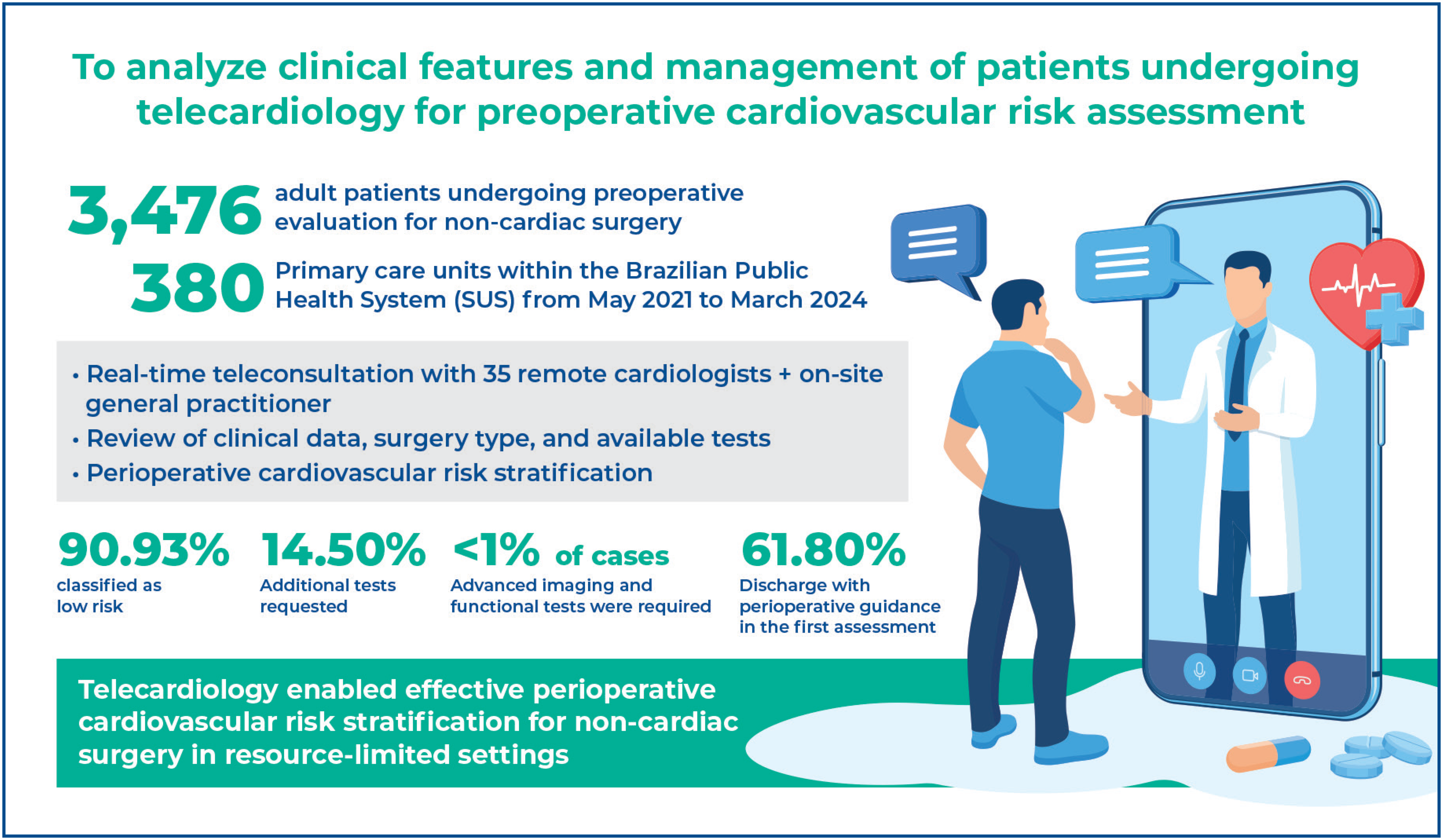
Results: A total of 3,476 patients (63% female, mean age 52.1 years) were evaluated. Among them, 3,307 (95.1%) were asymptomatic, 1,241 (35.70%) had hypertension, and 1,312 (48.4%) had a sedentary lifestyle. The most frequently performed surgical procedure was intra-abdominal surgery, performed in 1,665 (47.9%) cases. Risk stratification categorized 3,161 (90.93%) patients as low risk, 90 (2.59%) as intermediate risk, and 36 (1.03%) as high risk. Ancillary testing was requested in 504 (14.50%) patients, with laboratory evaluations conducted in 304 (8.74%) and electrocardiograms in 234 (6.73%). Telecardiology interventions included antihypertensive medications in 192 (5.52%) patients, statin prescriptions in 88 (2.53%) patients, and guidance for postoperative monitoring in 98 (2.81%) patients.
Conclusion: This exploratory study demonstrated that most cardiologists successfully performed perioperative risk stratification via telemedicine during initial consultation, targeting a predominantly low-risk population.
Keywords:
Perioperative care; Surgical clearance; Telecardiology; Telemedicine; Risk assessment
Highlights
-
■ Telecardiology enabled perioperative cardiovascular risk assessment for non-cardiac surgery.
-
■ Most patients were safely classified as low cardiovascular risk at first consultation.
-
■ Additional testing and urgent referrals were rarely required.
-
■ Remote assessment expanded access to cardiology care in underserved regions.
In Brief
Telecardiology was used for preoperative cardiovascular risk assessment in 3,476 patients undergoing non-cardiac surgery in Brazil. Most patients were asymptomatic and classified as low risk, allowing safe perioperative guidance during the first consultation.
INTRODUCTION
The number of surgeries performed has progressively increased over recent decades.(1) The annual global volume of major surgeries is estimated to exceed 300 million, representing approximately 5% of the global population. Nearly 85% of these procedures are non-cardiac.(2)
Personalized cardiological evaluation is associated with a decreased risk of morbidity and mortality during elective surgical procedures.(3) Nevertheless, this evaluation poses significant challenges for healthcare systems, particularly in remote regions with low human development indices.(4)
Telemedicine (TM) enhances patient access to specialized medical expertise by bridging geographical barriers and reducing waiting times for consultations, thereby optimizing the delivery of specialized care in a more efficient and timely manner.(5) Preoperative virtual anesthesia evaluations are linked to elevated patient satisfaction, substantial cost savings, and no observed increase in day-of-procedure cancellations.(6)
However, no study has specifically assessed the use of telecardiology in perioperative evaluations, particularly in isolated and low-income populations. The characteristics of treated patients, nature of the procedures performed, and level of outcome resolution remain largely undefined. Thus, this study analyzed the clinical profile and management of a population of patients referred for telecardiological consultation for perioperative risk assessment.
OBJECTIVE
To analyze the clinical profile, types of surgical procedures, and approaches used in patients referred for telecardiology consultations for preoperative cardiovascular risk assessment.
METHODS
Study design and participants
We conducted a single-center retrospective study at the TM Center of Hospital Israelita Albert Einstein in São Paulo, Brazil. The study protocol, referred to as the "TelePERIOPERATIVE" trial, along with the waiver of consent (based on the analysis of anonymized retrospective routine care data), was approved by the Review Board of Hospital Israelita Albert Einstein (CAAE: 76389423.0.0000.0071; #6.714.062).
The TM center coordinated the study and conducted all the analyses. All authors unanimously agreed to submit the article for publication, affirming the integrity and accuracy of the data and adherence of the trial to the established protocol.
Between May 2021 and March 2024, this retrospective observational study utilized anonymized data from patients referred for telecardiology evaluation following assessment by a general practitioner in a primary health facility. Analyses were conducted by a TM center in São Paulo, where thirty-five cardiologists assessed patients from two Brazilian macro-regions served by 380 primary health units that provide teleconsultation through the Government's Unified Health System Development Program (PROADI-SUS - Programa de Desenvolvimento do Sistema Unificado de Saúde do Governo). The study included adult patients (>18 years old) who were exclusively referred for preoperative cardiological evaluation of non-cardiac surgeries. Patients who underwent any intervention that coexisted with cardiac procedures were excluded.
Cardiology teleconsultation
All consultations were elective and were prearranged by the local healthcare team. Each patient first underwent an assessment by general practitioners, who then referred them for cardiology evaluation to determine perioperative risk. Teleconsultations took place within a primary care facility, with both the patient and the general practitioner physically present. The cardiologists, all affiliated with the same TM center, conducted 30-minute teleconsultations and provided detailed reports to the local medical team. Follow-up consultations were also provided, if needed. In addition to the conducted anamnesis, the physical examination could be remotely guided by the cardiologist and performed by the local general practitioner. All available complementary examinations were uploaded and made accessible to the cardiologists for review.
Primary outcomes
This study aimed to assess the type of surgery performed, clinical profile, estimated perioperative risk, requested tests, guidance provided, number of consultations conducted, and outcomes of care.
Data extraction
Information from each TM consultation was retrieved from the institution's medical record database. All data were obtained from the project database in an anonymized form. A software-based algorithm was used to extract the required information from the fields completed during the provision of medical care.
Statistical analysis
Statistical analyses were performed using IBM SPSS Statistics for Windows, version 22.0. The analysis was purely descriptive with categorical variables presented as counts and percentages.
RESULTS
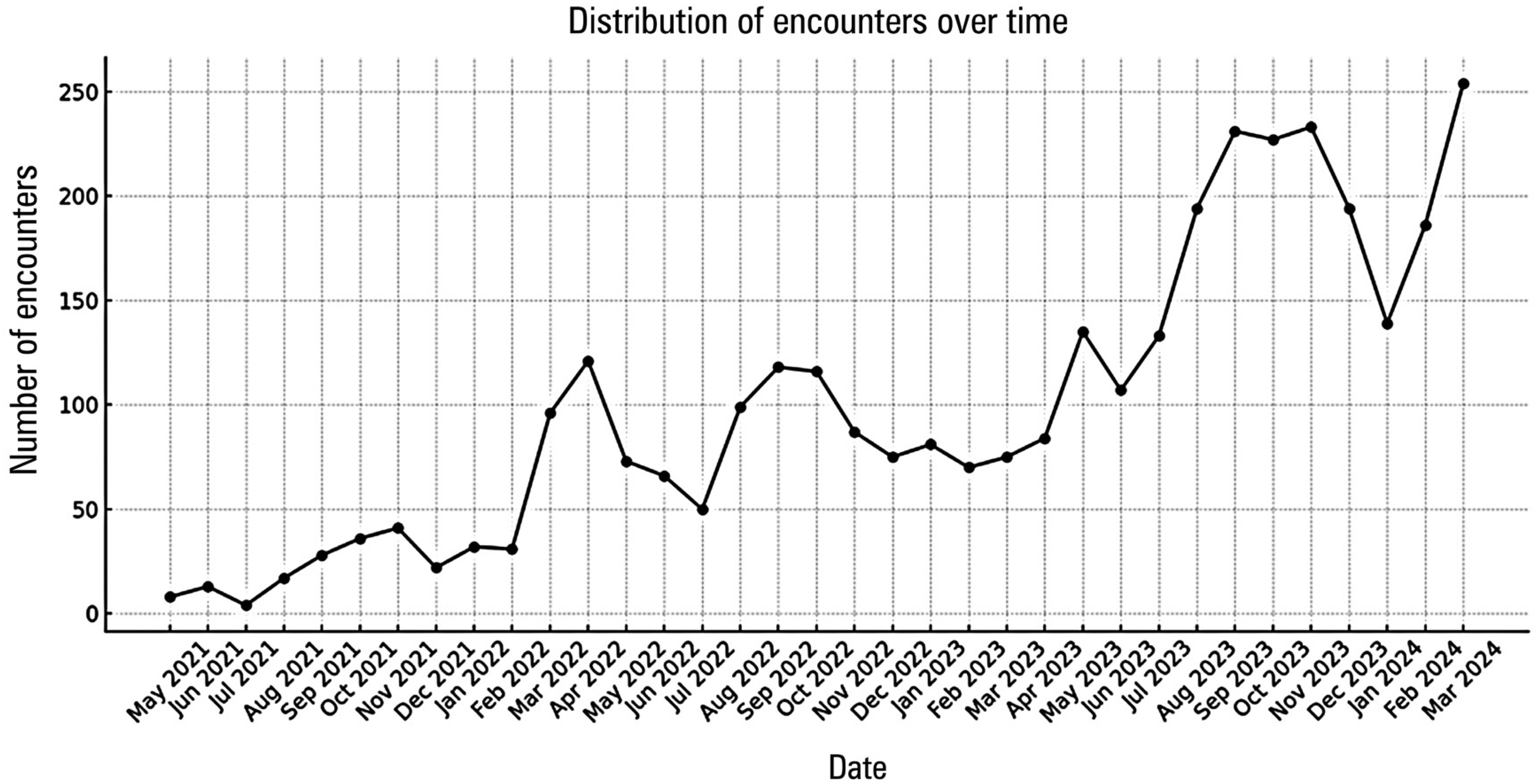
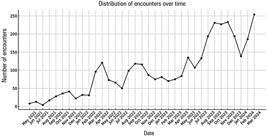
This study analyzed data from 3,476 patients undergoing perioperative evaluation via telecardiology for non-cardiac surgeries. The volume of assessments delivered demonstrated a progressive increase over the study period corresponding to the expansion of the project (Figure 1).
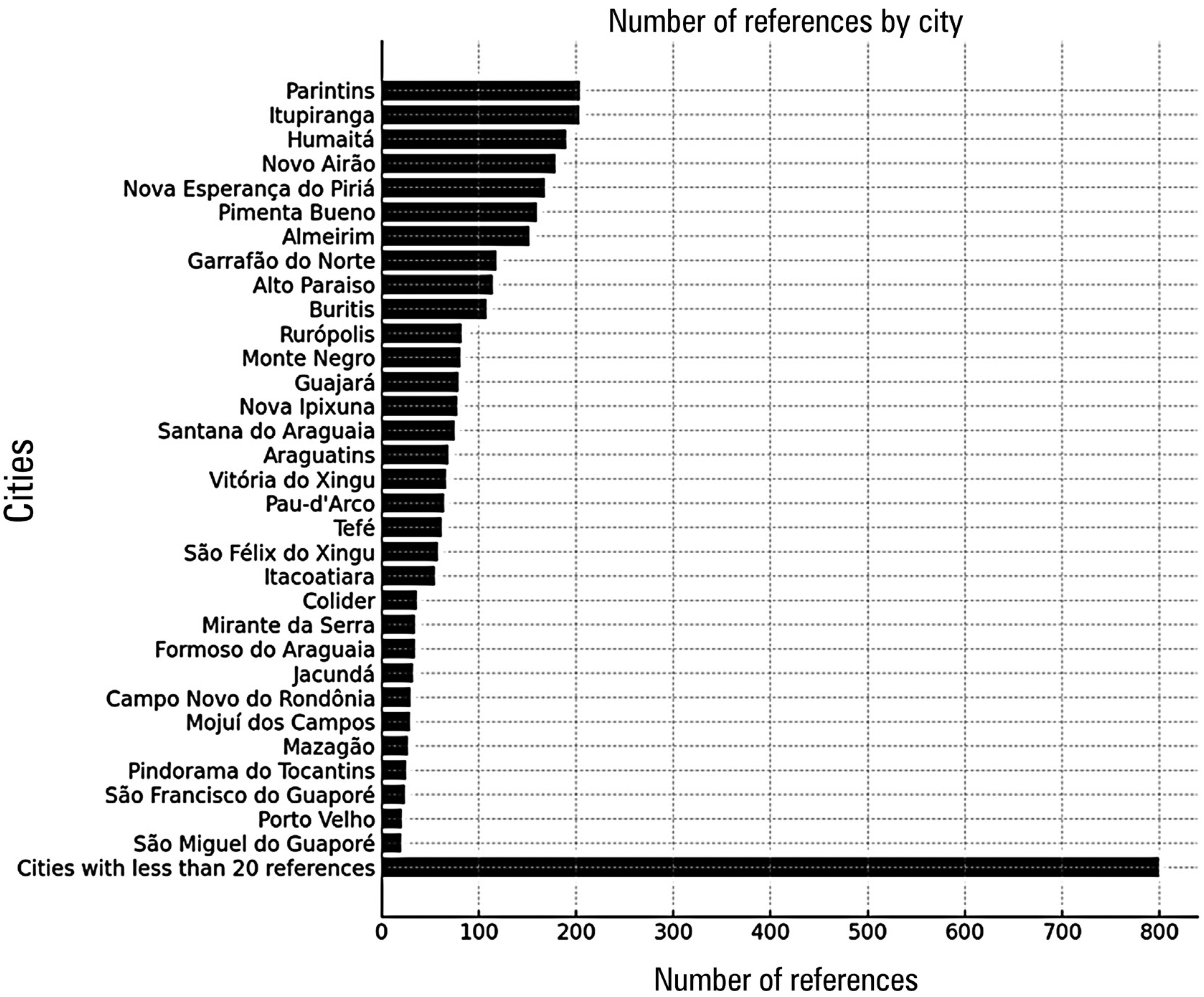
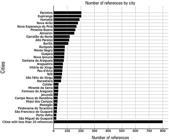
Patients were remotely evaluated within primary care units of the Brazilian public health system, located across a region spanning 5,460,047 square kilometers, including the Amazon rainforest. Figure 2 shows the distribution of the number of services delivered across cities within these regions.
A total of 3,476 patients were included in the analysis. The mean age was 52.10±15.4 years. Among these, 2,191 (61.59%) were female. Most patients were asymptomatic at the time of evaluation, accounting for 3,307 (95.14%) individuals. Functional status was assessed in 2,711 patients, with 1,312 (48.39%) reporting a sedentary lifestyle, 858 (31.64%) having an estimated functional capacity <4 METs, and 541 (19.97%) having an estimated capacity >4 METs.
Cardiovascular comorbidities were relatively rare. A history of myocardial infarction was reported in 34 (0.97%) patients, stroke in 30 (0.86%), and arrhythmias in 26 (0.74%). Dyslipidemia was present in 581 (16.71%) patients, diabetes mellitus in 537 (15.44%), and systemic arterial hypertension in 1,241 (35.70%). A history of tobacco use was documented in 779 patients (22.41%).
Normal physical examination findings were observed in 2,648 (76.17%) patients. Electrocardiograms were available for 3,202 individuals, with normal results for 2,207 (68.92%). Chest radiography was normal in 2,160 (87.02 %) patients.
Regarding the type of surgery proposed, intra-abdominal procedures were the most common, involving 1,665 (47.89%) patients, followed by urological or gynecological surgeries in 990 (28.48%) patients and low-risk procedures in 540 (15.53%) patients. Orthopedic surgeries were proposed for 104 (2.99%) patients, head and neck surgeries for 69 (1.98%), thoracic surgeries for 24 (0.69%), vascular surgeries for 19 (0.54%), and neurosurgeries for 14 (0.40%). An additional 51 patients (1.46 %) were scheduled for unspecified low-risk interventions.
Risk stratification was performed using the American College of Physicians (ACP) guidelines in 3,101 (89.21%) cases, the Revised Cardiac Risk Index (RCRI) in 268 (7.71%), and other risk scores in 107 (4.08%).
Complementary testing was requested for 504 (14.50%) patients, with blood tests performed in 304 (8.74%), electrocardiograms in 234 (6.73%), functional tests in 34 (0.97%), and transthoracic echocardiograms in 12 (0.34%) patients.
Following the initial clinical assessment, 2,148 (61.80%) patients were discharged under perioperative guidance. Follow-up appointments were arranged for 1,139 (32.76%) patients, and 164 (4.72%) were referred to another specialty. Only 25 patients (0.72%) required urgent tertiary care evaluation (Table 1).
The final risk stratification categorized most patients as low risk, accounting for 3,161 (90.93%) individuals. An intermediate-risk level was assigned to 90 (2.59%) patients, while 36 (1.03%) were classified as high-risk.
The most common clinical interventions included the titration of antihypertensive medications in 192 (5.52%) patients, initiation of statin therapy in 88 (2.53%), and beta-blocker prescription in 11 (0.31%). Antiplatelet or anticoagulant therapy was administered to 28 (0.80%) patients. Additionally, 98 (2.81%) patients received recommendations for postoperative monitoring with serial electrocardiograms and troponin measurements, and 101 (2.90%) patients were advised to undergo postoperative care in an intensive care unit setting (Table 2).
DISCUSSION
Telemedicine has gained increasing recognition in the healthcare sector, particularly since the COVID-19 pandemic, which functioned as a major catalyst for the adoption of remote perioperative assessments. The pandemic's unique challenges, including the need for social distancing and reduction of in-person interactions, have accelerated the implementation of TM as a strategy to meet the urgent demands for continuity of care while minimizing exposure risks.(7) Initially, TM was primarily adopted to address the healthcare disparities between geographically isolated and medically disadvantaged regions. However, its popularity has gradually increased among both healthcare providers and patients owing to its convenience, potential to improve care quality, and ability to reduce healthcare costs.(8,9)
The large global volume of noncardiac surgeries poses a significant risk to patients.(1,10) Considering that the primary life-threatening complications in the perioperative period are of a cardiological nature, a precise preoperative cardiac risk evaluation is essential.(11) Accurate risk assessment can provide reliable estimates of surgical risks and aid in informed decision-making regarding the appropriateness of surgery. Furthermore, precise cardiac risk assessment can guide preoperative and intraoperative management strategies and assist in determining postoperative monitoring requirements and appropriate care settings.(3)
This study, which analyzed data from 3,476 patients, represents one of the first large-scale evaluations of telecardiology in perioperative risk stratification, specifically targeting patients from remote and underserved regions. These findings underscore the feasibility and effectiveness of TM as an alternative to traditional cardiology consultations, with significant implications for improving access to specialized care in geographically challenging areas and resource-limited settings. The study demonstrated that physicians felt comfortable performing TM-based perioperative assessments and virtually stratifying risk.
The increase in the volume of assessments conducted throughout the study period reflects not only the expansion of the project but also the rising adoption of TM in perioperative care. A cohort study involving patients scheduled for bariatric surgery demonstrated the non-inferiority of TM when compared to in-person consultations, with no significant differences in clinical outcomes such as surgery delays, procedure duration, length of hospital stay, or major adverse events.(12) Importantly, despite concerns over the limited capacity to perform physical examinations during remote consultations, a systematic review reported that the use of TM in preoperative evaluations did not lead to higher surgery cancellation rates, suggesting that the benefits of TM outweigh the risks in many cases. The review also highlighted high levels of patient satisfaction with virtual evaluations.(13)
This cohort primarily comprised middle-aged adults, with a mean age of 52.1 years and a predominance of females (61.59%). The high prevalence of asymptomatic individuals (95.14%) aligns with the expectations for preoperative evaluations of non-cardiac surgeries. Risk stratification revealed that most patients (90.93%) were classified as low risk, highlighting the profile of patients who may benefit from remote perioperative evaluation.
The significant proportion of patients with a sedentary lifestyle (48.39%) and low functional capacity (<4 METs in 31.64%) highlights the importance of thorough risk stratification in this population, as low functional capacity adds incremental prognostic value to Revised Cardiac Risk Index for predicting 30-day cardiac events.(14) Hypertension was the most prevalent comorbidity, affecting 35.70% of patients, consistent with its high prevalence in the general Brazilian population. Other cardiovascular risk factors such as diabetes (15.44%) and previous myocardial infarction (0.97%) were less frequent but required particular attention because of their implications for perioperative outcomes.
Our findings suggest that telecardiology is not only effective in risk stratification but also in guiding perioperative management. Interventions such as antihypertensive medication adjustments (5.52%), statin prescriptions (2,53%), and antiplatelet/anticoagulant management (0.80%) highlight the proactive role of telecardiology in optimizing medical therapy. The low rate of beta-blocker initiation (0.31%) reflects adherence to current guidelines, which recommend against routine perioperative beta-blockade in the absence of specific indications.(3) With remote monitoring devices providing physiological data (e.g., blood pressure and heart rate) and online access to complementary tests, these adjustments can be made safely and accurately. A prospective cohort study reported a low rate of image quality loss during teletransmission.(15) Parte superior do formulárioParte inferior do formulário
Advanced imaging and functional tests were rarely required (<1% of cases), reflecting the pragmatic approach of telecardiology in resource-limited settings and indicating that most patients do not require extensive diagnostic workups owing to their low risk.(3) Instead, most ancillary tests consisted of laboratory evaluations (8.74%) and electrocardiograms (6.73%), both of which were cost-effective and easily accessible. This trend highlights the potential of telecardiology to efficiently triage patients, reserving more invasive or resource-intensive tests for those at a higher risk of perioperative complications. Although no study has directly compared the effectiveness of cardiologists’ assessments with that of generalists in estimating perioperative risk, the findings of this study suggest an important role for cardiologists in perioperative evaluation.
The broad geographic distribution of services across 380 primary health units and over 5 million square kilometers, including remote areas such as the Amazon rainforest, underscores the transformative potential of telecardiology in bridging healthcare disparities. By enabling access to specialist consultations within local primary care facilities, this model mitigates the logistical and financial barriers that traditionally hinder timely care in underserved regions. Although the present study did not evaluate long-term postoperative outcomes, previous studies have shown that TM follow-up after general surgeries, particularly low-risk procedures, is safe and effective.(16) While not the focus of this study, the virtual service demonstrated high acceptance rates among patients (NPS score of 85) and onsite physicians (NPS score of 92).
Despite its strengths, this study had some limitations. The retrospective design precludes the establishment of causal relationships, and the use of descriptive statistics limits the generalizability of the findings. Moreover, the study's reliance on a single TM center may not fully capture regional differences in healthcare delivery or outcomes. Additionally, the study did not evaluate long-term postoperative outcomes such as morbidity or mortality, which are essential for understanding the true impact of telecardiology in perioperative care. Future research should benefit from prospective multicenter trials that investigate these long-term outcomes to better assess the effectiveness of telecardiology in perioperative settings. Finally, further studies are needed to explore the use of remote consultations for high-risk patients, as this cohort was predominantly low-risk.
CONCLUSION
This study demonstrated that telecardiology is a feasible and effective tool for preoperative risk stratification in non-cardiac surgeries, particularly in resource-limited settings. The model not only bridges geographical barriers but also optimizes the use of healthcare resources while maintaining a high level of care. These findings underscore the transformative potential of telemedicine for enhancing healthcare access and equity. Future studies should address the limitations of this study and expand the scope of telecardiology to improve patient outcomes and healthcare delivery in underserved regions. The integration of telemedicine within the Brazilian Public Health System (SUS) via the PROADI-SUS program represents a promising model that other countries can use to improve healthcare equity through digital innovations.
DATA AVAILABILITY
The content will be made available upon the article's publication.
REFERENCES
- 1 Weiser TG, Haynes AB, Molina G, Lipsitz SR, Esquivel MM, Uribe-Leitz T, et al. Estimate of the global volume of surgery in 2012: an assessment supporting improved health outcomes. Lancet. 2015;385 Suppl 2:S11.
- 2 Weiser TG, Regenbogen SE, Thompson KD, Haynes AB, Lipsitz SR, Berry WR, et al. An estimation of the global volume of surgery: a modelling strategy based on available data. Lancet. 2008;372(9633):139-44.
- 3 Gualandro DM, Fornari LS, Caramelli B, Abizaid AA, Gomes BR, Tavares CA, et al. Diretriz de Avaliação Cardiovascular Perioperatória da Sociedade Brasileira de Cardiologia - 2024. Arq Bras Cardiol. 2024;121(9):e20240590.
- 4 Patel AS, Bergman A, Moore BW, Haglund U. The economic burden of complications occurring in major surgical procedures: a systematic review. Appl Health Econ Health Policy. 2013;11(6):577-92.
- 5 Accorsi TA, Nemoto RP, Nunes JT, Azevedo Filho AF, Moreira FT, Kohler KF, et al. Clinical Features and Management of Patients Assessed by Cardiology Teleconsultation in the Brazilian Region with the Highest Number of Isolated Cities. Arq Bras Cardiol. 2023;120(5):e20220467.
- 6 Kamdar NV, Huverserian A, Jalilian L, Thi W, Duval V, Beck L, et al. Development, Implementation, and Evaluation of a Telemedicine Preoperative Evaluation Initiative at a Major Academic Medical Center. Anesth Analg. 2020;131(6):1647-56.
- 7 Mihalj M, Carrel T, Gregoric ID, Andereggen L, Zinn PO, Doll D, et al. Telemedicine for preoperative assessment during a COVID-19 pandemic: recommendations for clinical care. Best Pract Res Clin Anaesthesiol. 2020; 34(2):345-51.
- 8 Tolu-Akinnawo O, Ezekwueme F, Awoyemi T. Telemedicine in Cardiology: Enhancing Access to Care and Improving Patient Outcomes. Cureus. 2024; 16(6):e62852.
- 9 Wade VA, Karnon J, Elshaug AG, Hiller JE. A systematic review of economic analyses of telehealth services using real time video communication. BMC Health Serv Res. 2010 Aug;10(1):233.
- 10 Halvorsen S, Mehilli J, Cassese S, Hall TS, Abdelhamid M, Barbato E, De Hert S, de Laval I, Geisler T, Hinterbuchner L, Ibanez B, Lenarczyk R, Mansmann UR, McGreavy P, Mueller C, Muneretto C, Niessner A, Potpara TS, Ristić A, Sade LE, Schirmer H, Schüpke S, Sillesen H, Skulstad H, Torracca L, Tutarel O, Van Der Meer P, Wojakowski W, Zacharowski K; ESC Scientific Document Group. 2022 ESC Guidelines on cardiovascular assessment and management of patients undergoing non-cardiac surgery. Eur Heart J. 2022;43(39):3826-3924. Erratum in: Eur Heart J. 2023;44(42):4421.
- 11 Devereaux PJ, Sessler DI. Cardiac Complications in Patients Undergoing Major Noncardiac Surgery. N Engl J Med. 2015;373(23):2258-69.
- 12 Hlavin C, Ingraham P, Byrd T, Hyre N, Gabriel L, Agrawal N, et al. Clinical Outcomes and Hospital Utilization Among Patients Undergoing Bariatric Surgery With Telemedicine Preoperative Care. JAMA Netw Open. 2023; 6(2):e2255994.
- 13 Zhang K, Rashid-Kolvear M, Waseem R, Englesakis M, Chung F. Virtual preoperative assessment in surgical patients: A systematic review and meta-analysis. J Clin Anesth. 2021;75:110540.
- 14 Lurati Buse GA, Puelacher C, Gualandro DM, Genini AS, Hidvegi R, Bolliger D, Arslani K, Steiner LA, Kindler C, Mueller C; BASEL-PMI Investigators. Association between self-reported functional capacity and major adverse cardiac events in patients at elevated risk undergoing noncardiac surgery: a prospective diagnostic cohort study. Br J Anaesth. 2021;126(1):102-10.
- 15 Demartines N, Otto U, Mutter D, Labler L, von Weymarn A, Vix M, et al. An evaluation of telemedicine in surgery: telediagnosis compared with direct diagnosis. Arch Surg. 2000;135(7):849-53.
- 16 Abbitt D, Choy K, Castle R, Bollinger D, Jones TS, Wikiel KJ, et al. Telehealth for general surgery postoperative care. Am J Surg. 2024;229:156-61.
Edited by
-
Associate Editor:
Carlos Vicente Serrano Jr Instituto do Coração (InCor), Hospital das Clínica, Faculdade de Medicina, Universidade de São Paulo, São Paulo, SP, Brazil ORCID: https://orcid.org/0000-0002-9171-1224