 Influence of inflammatory and reninangiotensin system gene polymorphisms ACE2 rs2285666, IL1A rs1800587, and TNF rs1800629 on COVID-19 severity and the persistence of symptoms in the post-COVID-19 phase: a cross-sectional study
ABSTRACT
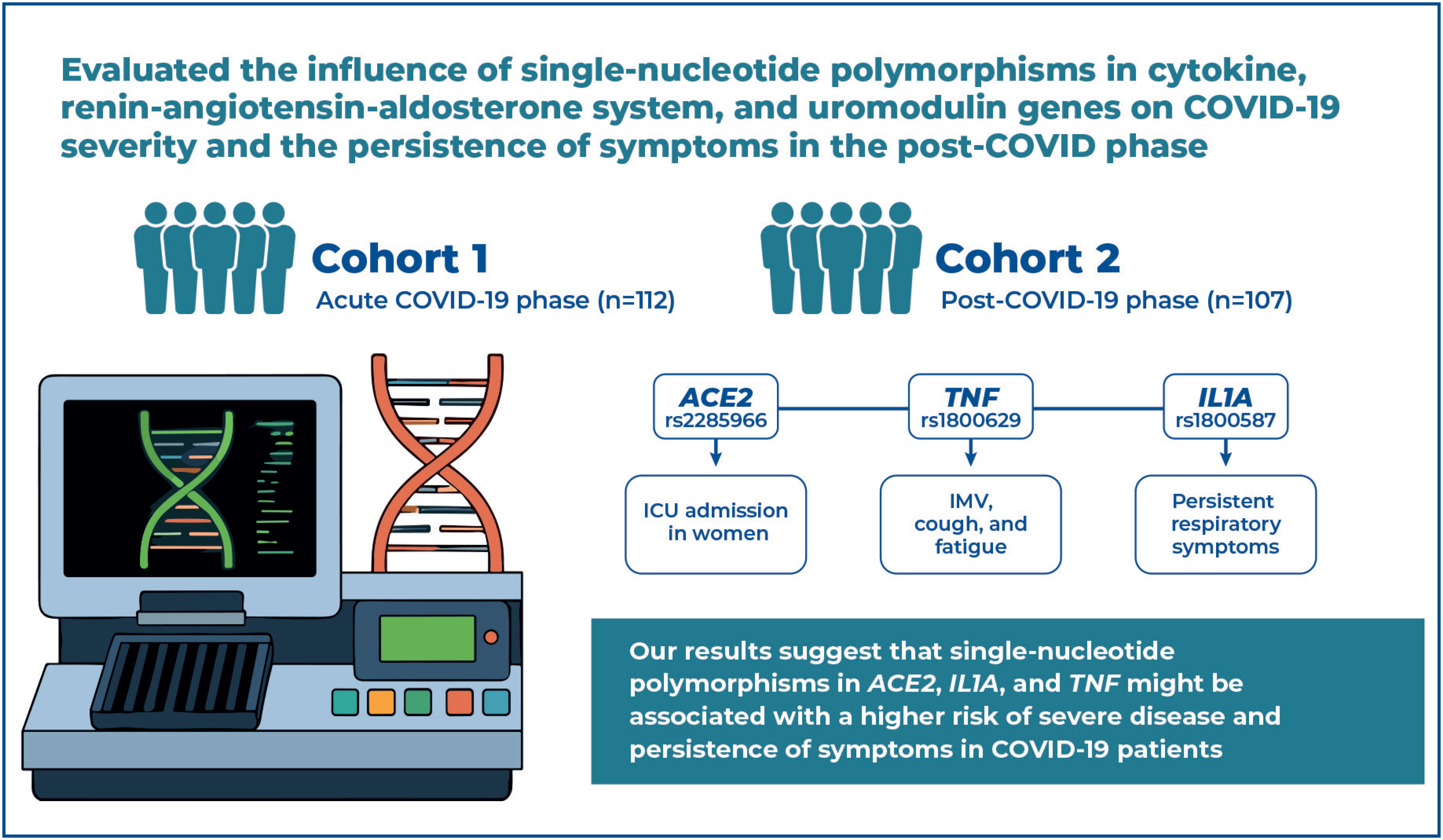
Objective: We evaluated the influence of single-nucleotide polymorphisms in cytokine, renin-angiotensin-aldosterone system, and uromodulin genes on COVID-19 severity and the persistence of symptoms in the post-COVID phase.
Methods: Two cross-sectional cohort studies were conducted: a retrospective cohort (cohort 1) from early phase of the pandemic and a prospective cohort (cohort 2) including patients with symptoms in the post-COVID phase. Single-nucleotide polymorphism detection was performed using real-time and conventional polymerase chain reaction.
Results: Cohort 1 included 112 patients (mean age 57.4±17.5 years, 42% male). ACE rs4646994, ACE2 rs2285666, IL1A rs1800587, and TNF rs1800629 were associated with COVID-19 severity. However, when evaluating more specific outcomes such as intensive care unit admission and the need for invasive mechanical ventilation, associations were observed only for ACE2 and TNF. In women, the ACE2 rs2285666 GG genotype (p=0.003) and G allele (p=0.013) were associated with intensive care unit admission. In addition the A allele of TNF rs1800629 was associated with a higher risk of invasive mechanical ventilation (p<0.001). Cohort 2 included 107 patients (mean age 54.7±15.18 years 27.2% male). The TNF GA genotype was a risk factor for cough (p=0.03) and exertional fatigue (p=0.049). Lastly, IL1A rs1800587 was associated with the risk of persistent respiratory symptoms.
Conclusion: Our results suggest that single-nucleotide polymorphisms in ACE2, IL1A, and TNF may be associated with an increased risk of severe COVID-19 and persistence of symptoms in affected patients.
Keywords:
Uromodulin; Angiotensin-converting enzyme 2; Cytokines; Post-acute COVID-19 syndrome; olymorphism, genetic; SARS-CoV-2; COVID-19
Highlights
-
■ ACE2 rs2285666 GG genotype increased the risk of intensive care unit risk in women.
-
■ TNF rs1800629 A allele was associated with severe COVID-19 and invasive mechanical ventilation.
-
■ IL1A rs1800587 influenced disease severity and respiratory symptoms.
-
■ TNF polymorphism was associated with post-COVID, cough and fatigue.
In Brief
This study investigated whether polymorphisms in ACE2, IL1A, and TNF genes are associated with COVID-19 severity and post-COVID symptoms in Brazilian patients. Our findings showed specific variants were associated with intensive care unit admission, mechanical ventilation, and persistent respiratory symptoms.
INTRODUCTION
Severe acute respiratory syndrome coronavirus 2 (SARS-CoV-2) infection is known to impact the immune response,(1) and single-nucleotide polymorphisms (SNPs) in key genes related to host immunity and cell function contribute to the clinical variability observed in coronavirus disease 2019 (COVID-19).(2-4) Notably, exacerbation of the immune response to SARS-CoV-2 involves the secretion of various immune mediators, which are crucial in determining the severity of COVID-19.(2,3,5) While most individuals with COVID-19 recover without complications, a subset may prolonged symptoms or sequelae, often referred to as post-COVID-19 condition (PCC).(6) According to the World Health Organization (WHO), PCC is a clinical condition characterized by the persistence of symptoms or the development of new symptoms three months after SARS-CoV-2 infection, lasting at least two months and not explained by an alternative diagnosis.(7) The most common persistent symptoms of PCC have been identified, and several mechanisms to explain its pathophysiology, such as an association with a specific inflammatory profile, are currently under investigation.(8)
Refining the existing diagnostic approaches and exploring alternative factors contributing to the persistence of COVID-19 symptoms beyond the acute infection phase remain crucial areas of research. Host SNPs are thought to play a significant role in determining an individual's susceptibility or resistance to various viral infections, and numerous studies have investigated genetic polymorphisms in the context of COVID-19 to date.(4,9-11) Certain studies have indicated that SNPs in genes involved in innate and adaptive immune responses, as well as in viral binding and host cell entry, are associated with the development and severity of COVID-19.(12,13) Nevertheless, the specific SNPs that contribute to susceptibility, prognosis, and the persistence of symptoms in the post-acute COVID-19 phase remain to be fully elucidated,(14-16) particularly given the variability in genetic profiles across different populations.(9,10) The SNPs selected in this study were chosen based on their functional roles in the main immunological and physiological pathways relevant to COVID-19 pathogenesis. Variants in cytokine genes — such as TNF (rs1800629), IL10 (rs1800871, rs1800896), IL6 (rs1800795), and IL1A (rs1800587) — influence the expression of pro- and anti-inflammatory mediators involved in the acute response to viral infections and chronic inflammation.(17-21) Polymorphisms in the angiotensin-converting enzyme genes - ACE (rs4646994) and ACE2 (rs2285666) - affect the expression of proteins essential for viral entry and regulation of the renin-angiotensin system, which has been implicated in disease severity.(22-24) In addition, SNPs in the UMOD gene (rs12917707, rs13333226, rs4293393) modulate uromodulin levels, increase UMOD gene expression, and are associated with kidney function, a frequent site of COVID-19-related complications.(25-27) Therefore, we hypothesize that these SNPs may influence the medium- and long-term pathophysiology of patients with COVID-19.
OBJECTIVE
The aim of this study was to evaluate the influence of SNPs in different genes, including IL1A (rs1800587), IL6 (rs1800795), IL10 (rs1800896 and rs1800871), TNF (rs1800629), ACE (rs4646994), ACE2 (rs2285666) and UMOD (rs4293393, rs13333226 and rs12917707), on COVID-19 severity in a group of Brazilian patients during the first wave of the pandemic and in the post-acute phase of the disease, as well as to investigate associations with the development of the post-COVID-19 condition and its clinical manifestations.
METHODS
Ethical approval
The present study was conducted in two phases, each approved by a Research Ethics Committee The acute phase of COVID-19 was approved by the Research Ethics Committee of Universidade Federal Fluminense (CAAE: 30623520.5.0000.5243; # 3.987.966) and the post-COVID phase was approved by the Research Ethics Committee of Fundação Carlos Chagas Filho de Amparo à Pesquisa do Estado do Rio de Janeiro (CAAE: 59213722.5.0000.5243; # 5.494.515). In accordance with ethical standards, written informed consent was obtained from all participants.
Patients and study design
For cohort 1, we conducted a retrospective cross-sectional study including 112 adult patients enrolled from April to October 2020, diagnosed with acute SARS-CoV-2 infection by RT-PCR. All patients were hospitalized at the Hospital Universitário Antônio Pedro of the Universidade Federal Fluminense (HUAP/UFF/EBSERH). For cohort 2, we conducted a prospective study involving 107 adult patients in the post-COVID-19 period, followed up at the same hospital since July 2022, to diagnose PCC. All participants in this cohort had at least one positive RT-PCR test result for SARS-CoV-2. Patients with missing laboratory or clinical data that could hinder data analysis, as well as those with kidney failure requiring dialysis, were excluded.
Clinical and laboratory data from the acute infection period were obtained from medical records. Patients presenting with fever, cough, sore throat, headache, myalgia, nausea, vomiting, diarrhea, loss of taste and smell, oxygen saturation ≥94%, and no abnormalities on imaging tests were classified as having mild/moderate disease. Those with oxygen saturation <94% on ambient air, pulmonary infiltrates involving >50% of the lungs, septic shock, thrombotic disease, and/or multiple organ dysfunction, or requiring invasive mechanical ventilation (IMV) and intensive care unit (ICU) admission due to respiratory failure, were classified as having severe disease.(28,29)
Patients presenting with dyspnea but maintaining oxygen saturation above 94% were classified as having moderate disease, whereas those without dyspnea and with oxygen saturation above 94% were classified as having mild disease.(30)
Post-COVID-19 condition was diagnosed according to WHO criteria (persistence or development of new symptoms three months after the initial SARS-CoV-2 infection, lasting at least two months and not explained by an alternative diagnosis).(7)
Molecular tests for single-nucleotide polymorphism characterization
High-molecular-weight genomic DNA was isolated from venous blood using the QIAamp® DNA Mini Kit (QIAGEN, Germany). Genotyping of IL1A (rs1800587), IL6 (rs1800795), IL10 (rs1800896 and rs1800871), TNF (rs1800629), ACE2 (rs2285666) and UMOD (rs4293393, rs13333226 and rs12917707) was performed using real-time Polymerase Chain Reaction (PCR) with predesigned and validated Taqman® assays (C___9546481_30, C___1839697_20, C___1747360_10, C___1747362_10, C___7514879_10, C___2551626_1_, C__27865986_10, C__31122293_10 and C__31122302_20, respectively; Thermo Fisher Scientific, Brazil), according to the manufacturer's instructions. Importantly, patients with chronic kidney disease (CKD) diagnosed before admission were excluded from the UMOD (rs4293393, rs13333226, and rs12917707) analysis. Furthermore, the genotyping of ACE (rs4646994) was performed by standard PCR. For this gene, we analyzed an INDEL polymorphism (I/D) insertion/deletion (I/D) polymorphism, in wich the alleles consisted of a 190-bp fragment (D allele) and a 490-bp fragment (I allele), detected by electrophoresis of PCR products on a 2% agarose gel. PCR conditions and primers were previously described by Mohebbi et al.(31)
Statistical analysis
Allele frequencies were obtained by gene counting. Deviations from the Hardy-Weinberg equilibrium were evaluated using the χ2 test. The haplotype block structure of the SNPs in IL10 and UMOD was examined using the spine of linkage disequilibrium (LD) as implemented in Haploview.(32) Categorical variables were expressed as absolute and relative frequencies and compared using the χ2 or Fisher's exact tests. Continuous variables were presented as mean or median, with data dispersion expressed as standard deviation (SD) or interquartile range (IQR), and were subsequently analyzed using the Student's t-test or the Mann-Whitney test to investigate differences between groups.
Comparisons between the ICU and non-ICU, IMV and non-IMV and COVID-19 severity (mild, moderate, and severe) groups were performed for each genotype and allele frequency. Contingency tables were created for genotypes (e.g., II versus ID versus DD) and alleles(e.g., I versus D). The χ2 test (or Fisher's exact test when the expected cell count was <5) was used to assess statistical significance. Odds ratios (ORs) and 95% confidence intervals (95%CIs) were calculated using multivariate logistic regression adjusted for age, cardiovascular disease, and diabetes.
Single-nucleotide polymorphism were considered predictor variables in logistic regression models for the outcomes ICU, IMV, acute kidney injury (AKI), death, cough, dyspnea, shallow breathing and fatigue. Regression models were evaluated using the Hosmer-Lemeshow test, and multivariate logistic regressions analyses were performed including the covariates: cardiovascular disease, diabetes, and age. P-values <0.05 were considered statistically significant.
We performed a post hoc power analysis to evaluate whether the sample size was adequate to detect differences in SNP genotype frequencies according to ICU admission among women. Based on the observed proportions of the GG genotype (60% in ICU versus 20% in non-ICU patients), and sample sizes of 30 and 25, respectively, we obtained a power of 87.7% (α=0.05, two-sided test), indicating a high probability of detecting the observed difference. All statistical analyses were performed using R (R Core Team, 2020).
RESULTS
Cohort 1 (acute COVID-19) comprised 112 patients hospitalized at our center with SARS-CoV-2 infection. The most common comorbidities were cardiovascular disease (59.5%), diabetes (37.5%), obesity (35.1%), and oncohematological disease (18.2%). The main complication during hospitalization was acute kidney injury (AKI), which affected 31 (27.7%) patients. Twenty-nine (25.9%) patients died during hospitalization. Regarding disease severity, 53 patients (47.2%) were classified as having severe COVID-19. This group exhibited a higher mean age compared with the moderate/mild group, along with a higher prevalence of diabetes. The demographic and clinical characteristics of cohort 1 are described in table 1.
The ACE rs4646994 ID genotype was more frequently observed in the severe COVID-19 group, as shown in table 2. In the model evaluating progression to severe COVID-19 (severe versus moderate/mild cases; adjusted for cardiovascular disease, diabetes, and age) the ID genotype was significantly associated with an increased risk of severe COVID-19 (OR=2.58; 95%CI=1.06-6.47; p=0.038), whereas the II genotype was associated with protection against severe disease (OR=0.37; 95%CI=0.14-0.90; p=0.032).
Distribution of genotypes and alleles of selected SNPs according to COVID-19 severity classification (mild, moderate, and severe)
In females, the GG genotype of ACE2 rs2285666 was more frequent in severe cases (Table 2). Multivariate logistic regression confirmed that this genotype was associated with an increased risk risk of severe COVID-19 in females compared with non-severe cases (OR=4.20; 95%CI=1.22-16.36; p=0.028).
The IL1A rs1800587 AA genotype was more frequently observed among patients with mild disease, as described in table 2. In the model evaluating progression to severe COVID-19, the IL1A CT genotype was significantly associated with an increased risk of developing severe disease (OR=3.05; 95%CI=1.26- 7.71; p=0.015).
The TNF rs1800629 GA genotype was also more frequent in severe cases of COVID-19 (Table 2). When compared with non-severe cases in the multivariate logistic regression analysis, the GA genotype (OR=6.32, 95%CI=1.49-43.64; p=0.025) and the A allele (OR=4.15; 95%CI=1.16-19.66; p=0.042) were associated with an increased risk of developing severe disease.
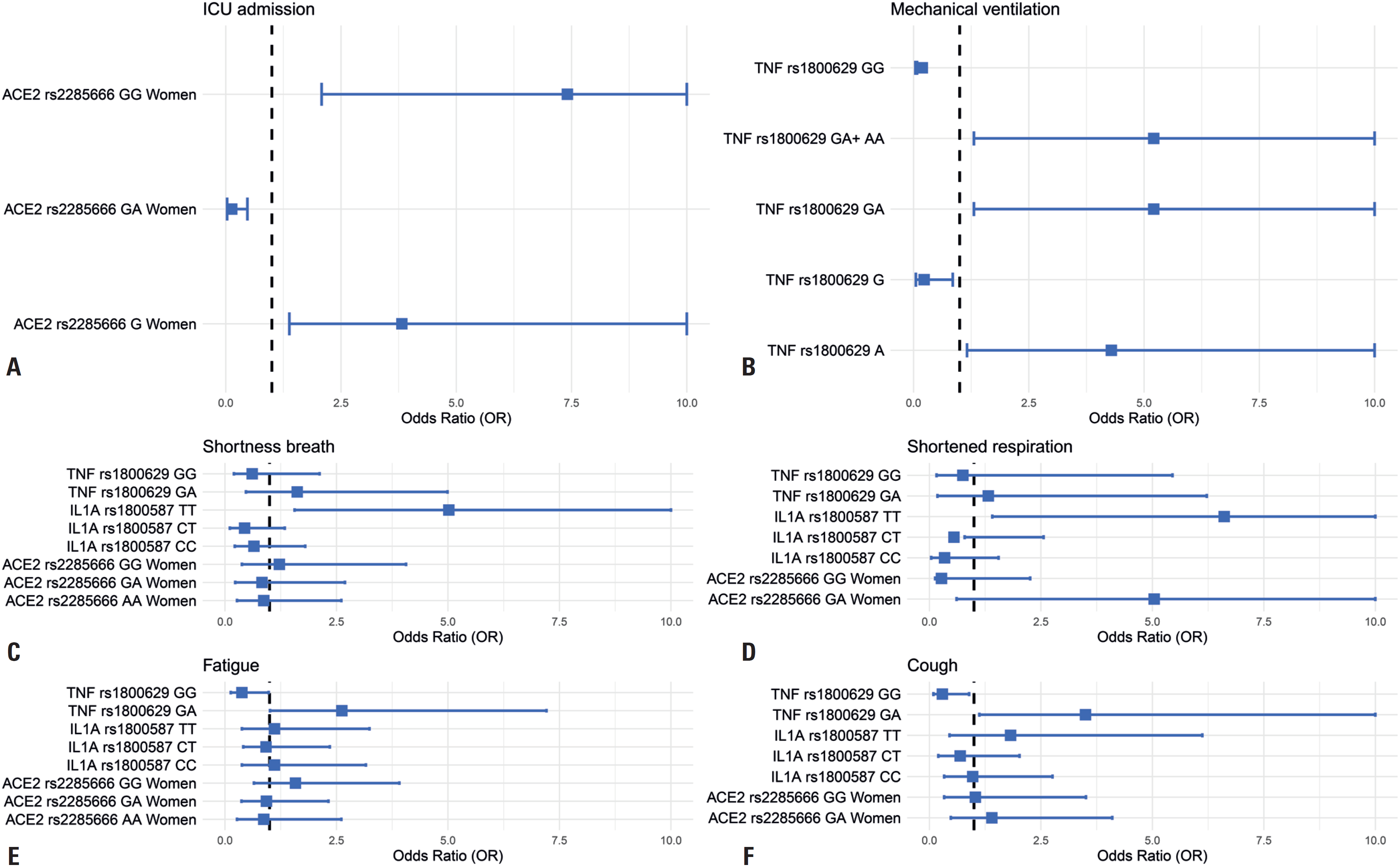
According to ICU admission, we identified that the ACE2 rs2285666 showed statistically significant differences between groups, but only among women. In the multivariate logistic regression analysis, we observed that the ACE2 GG genotype was more frequent in women admitted to the ICU (p=0.021) (Table 3) with a significant risk effect (OR=7.41, 95%CI=2.08-31.68, p=0.003), whereas the GA genotype was more frequent in non-ICU patients (p=0.021) (OR=0.13, 95%CI=0.03-0.47, p=0.003) (Figure 1A). The G allele also showed a significant risk effect (OR=3.82, 95%CI=1.38-11.89, p=0.013) in the multivariate logistic regression analysis, whereas the A allele showed a protective effect (OR=0.26, 95%CI=0.08-0.72, p=0.013) for ICU admission in women (Figure 1A). No associations were observed for the other genes.
Distribution of genotypes and alleles of selected single-nucleotide polymorphisms according to intensive care unit admission
The graphs in the first row represent (A) ICU admission and (B) the need for invasive mechanical ventilation in patients with acute COVID-19. The second row includes outcomes related to the post COVID-19 phase, including (C) dyspnea, (D) shallow breathing, (E) fatigue, and (F) cough. Each blue dot represents the estimated OR, with horizontal bars indicating the 95% confidence interval (95%CI), which was truncated at 10 for better visualization
Next, we compared the frequency of SNPs in COVID-19 patients who required IMV and those who did not (non-IMV). Regarding IMV, we identified that IL1A rs1800587 and TNF rs1800629 showed statistically significant differences (Table 4). The IL1A CT genotype was more frequent in patients receiving IMV (p=0.016), whereas the TT genotype was more frequent in non-IMV patients (p=0.007). However, we found no difference in the multivariate logistic regression analysis for any IL1A genotypes or alleles. The polymorphic A allele of rs1800629 in TNF showed a risk effect (OR=4.29; 95%CI=1.16-20.54; p<0.001), whereas the G allele showed a protective effect (OR=0.23; 95%CI=0.05-0.85; p=0.039) (Figure 1B). In a dominant model of the A allele, the GA+AA genotypes showed a risk effect for IMV (OR=5.21; 95%CI=1.31-26.44; p=0.026).
Distribution of genotypes and alleles of selected single-nucleotide polymorphisms according to invasive mechanical ventilation requirement
Based on the impact of TNF, ACE2, and IL1A polymorphisms on specific outcomes in patients with acute COVID-19 (ICU admission and need for IMV), we analyzed these SNPs according to symptoms and PCC development. In this analysis, cohort 2 (n=107 patients) had a mean age of 54.70±15.18 years, and 73.8% were female. The most frequent comorbidities were hypertension (56.1%), dyslipidemia (47.7%), diabetes (30.8%), and depression (28.0%). The most commonly reported symptoms in the post-COVID-19 period were persistent cough (15.9%), dyspnea (16. 8%), shallow breathing (7.5%), and exertional fatigue (44.9%). The clinical and epidemiological data of the patients in the post-COVID-19 period are shown in the Table 1S, Supplementary Material.
The genotype frequencies of all the SNPs in cohort 2 did not deviate from the Hardy-Weinberg equilibrium. We then analyzed the SNPs associated with cough using regression analysis (Figure 1F), in which the TNF GA genotype showed a significant risk effect for the persistence of this symptom (OR=3.50, 95%CI=1.12-10.67, p=0.03), whereas the GG genotype showed a protective effect (OR=0.29, 95%CI=0.09-0.86, p=0.03). For the symptom of exertional fatigue (Figure 1E), we obtained similar results, the GG genotype showed protective effect (OR=0.38, 95%CI=0.13-0.98, p=0.049) whereas the GA genotype showed a risk effect (OR=2.62, 95%CI=1.01-7.91; p=0.049). For the other symptoms, no relevant associations were observed, corroborating the findings from the acute COVID-19 analysis and suggesting that the TNF rs1800629 polymorphism is associated with the course of the disease. In addition, the TT genotype of IL1A was identified as a risk factor for symptoms of dyspnea (Figure 1C) (OR =5.02; 95%CI 1.56-16.07; p =0.006) and shallow breathing (Figure 1D) (OR =6.61; 95%CI 1.41-31.30; p =0.013), suggesting a possible relationship between this SNP and the persistence of symptoms however no association was observed between with exertional fatigue and cough. ACE2 (rs2285666) was not statistically significant regarding the persistence of reported symptoms.
Regarding the haplotype analysis, complete linkage disequilibrium (D’ =1) was detected between IL10 rs1800871 and rs1800896. The allele combinations observed in our total sample were T-A (36.2%), C-G (34.0%), and T-G (29.8%). For UMOD polymorphisms, rs12917707 was in complete linkage disequilibrium with rs13333226 and rs4293393. UMOD rs13333226 and rs4293393 were almost in complete linkage disequilibrium (D’ =0.971). The UMOD haplotypes (rs12917707-rs13333226-rs4293393) showed a higher frequency of the G-A-A haplotype (73.0%), followed by T-G-G (15.8%), while the remaining haplotypes (G-A-G, G-G-A, G-G-G) accounted for 11.2% of the haplotype distribution in the total sample (Table 2S, Supplementary Material). We compared the haplotypes with clinical outcomes, including hospitalization, ICU admission, and IMV, however, no associations were observed. The complete results are provided in the Tables 3S, 4S and 5S, Supplementary Material.
DISCUSSION
The mechanisms involved in the pathogenesis of COVID-19 have already been widely explored. However, some aspects of the acute and post-acute phases of the disease remain poorly understood. As previously reported, variations in a single nucleotide in the genome sequence may explain individual clinical susceptibility to COVID-19.(14) In this study we aimed to investigate whether SNPs in different genes, including IL1A (rs1800587), IL6 (rs1800795), IL10 (rs1800896 and rs1800871), TNF (rs1800629), ACE (rs4646994), ACE2 (rs2285666) and UMOD (rs4293393, rs13333226 and rs12917707) were associated with the COVID-19 severity during the acute phase or with the persistence or emergence of symptoms in the post-COVID phase in Brazilian patients.
ACE and its homolog, ACE2, are two essential enzymes responsible for generating bioactive peptides within the renin-angiotensin system (RAS).(33) Both ACE and ACE2 play pivotal roles in regulating inflammatory processes.(34) The I allele of ACE rs4646994 (I/D) has been associated with reduced circulating levels of ACE, potentially due to the inhibition of RNA polymerase II-mediated mRNA transcription or alternative splicing mechanisms that produce a truncated ACE protein lacking one of its active sites.(35,36) In your study, we found a significant association between the DD genotype and protection against severe COVID-19. Yenmis et al.(37) also reported that the DD genotype and protective against severe SARS-CoV-2. However, previous studies have shown conflicting results,(33,38) while others did not find this association.(39,40) Alimoradi el al.(22) observed an association between ACE and susceptibility to COVID-19 infection, but not with disease severity. Therefore, further studies are needed to clarify the true impact of this polymorphism on COVID-19 severity.
ACE2 encodes the primary receptor for SARS-CoV-2 entry into host cells. The rs2285666 polymorphism in ACE2 is a splice region variant and has been shown to increase serum levels of ACE2,(41) potentially facilitating viral entry and increasing disease susceptibility and severity.(42) In our study, the G allele of ACE2 (particularly the GG genotype) was associated with a higher risk of COVID-19 and ICU admission in women. The ACE2 rs2285666 polymorphism has previously been associated with hypertension.(22,43) Therefore, it is important to note that we did not observe a difference in the frequency of hypertension between sexes (p=0.351). Möhlendick et al. reported that patients carrying the G allele or the GG genotype had a threefold increased risk of developing severe COVID-19.(41) On the other hand, results from a recent meta-analysis did not confirm this association.(14, 38)
Nevertheless, the variability in these results may be attributed to differences in clinical characteristics, epigenetic mechanisms regulating ACE2 receptor expression, or variations in other genes, such as those involved in immune response or coagulation pathways, which may influence disease prognosis.(44) Furthermore, it is important to note that we did not observe an association between this SNP and the persistence or development of long-term symptoms. Similarly, Fernández-de-Las-Peñas et al. found no significant association with symptom persistence in individuals who had previously been hospitalized, but only with the severity of the acute infection.(45)
In the present study, we also identified two genes associated with with COVID-19 severity and the need for IMV as clinical outcomes, IL1A (rs1800587, CT genotype) and TNF (rs1800629, GA+AA genotypes). The rs1800587 polymorphism is located in the promoter region of the IL1A and has been associated with increased IL-1α expression, which may intensify the inflammatory response, and create a favorable environment for chronic inflammation.(46) When we performed the multivariate analysis controlling for potential confounders, we confirmed the significant association between IL1A rs1800587 and COVID-19 severity, but not with the need for IMV. To our knowledge, there are no studies investigating SNP in IL1A and the need for IMV in patients with COVID-19.(47) However, in our analysis of the post-COVID period, IL1A rs1800587 was significantly associated with dyspnea and shortened of breath. The literature has already described a relationship between IL1A rs1800587 and diseases caused by other coronaviruses.(48)These findings highlight the importance of further investigating how genetic variations influence recovery and potential complications after COVID-19, as studies addressing the association of this SNP with the development of PCC remain scarce.
Lastly, rs1800629, located in the promoter region of the TNF gene, is associated with increased production of TNF-α and may exacerbate systemic inflammation.(49,50) In the present study, the A-allele of this SNP was associated with a higher risk of severe COVID-19 and the need for IMV, while the G allele showed a protective effect. When analyzing genotypes, this association was further supported, as patients carrying the GG genotype showed a reduced risk of severe COVID-19 or requiring IMV. The TNF gene is located within the class III region of the major histocompatibility complex (MHC) on chromosome 6p21.3.(51) TNF-α is well-known for its pro-inflammatory properties and, together with IL-1 and IL-6, plays an important role in the inflammatory response to COVID-19.(52-54) Moreover, the rs1800629 has been associated with sepsis.(55,56) A recent meta-analysis evaluating different TNF polymorphisms found a higher frequency of the AA and GA genotypes among patients who required IMV in COVID-19, however this difference was not statistically significant.(56) In a study conducted in Egypt in 2020, individuals carrying the A-allele (GA and AA genotypes) were more susceptible to COVID-19, and the AA genotype was associated with severe disease and the need for IMV.(9) Importantly, it has been documented that the A allele of in the TNF promoter region (rs1800629) leads to increased transcriptional activity, resulting in elevated production of TNF-α by B and T cells.(57) Consistent with our findings, these results suggest that the association of the A allele with severe COVID-19 may be explained by a dysregulated TNF-α production.
We also observed an association between TNF rs1800629 and PCC. In the study of Fernández-de-Las-Peñas et al, no association between rs1800629 and post-COVID-19 symptoms was observed.(58) However, our findings suggest that this SNP influences both the acute phase and symptom persistence, particularly in the respiratory tract. This is supported by evidence linking TNF-α to asthma, acute respiratory distress syndrome, and chronic obstructive pulmonary disease, conditions in which TNF-α is directly involved in inflammatory processes affecting the alveoli and bronchi.(59) Furthermore, as reported by Saleh et al, the A allele and the GA genotype of TNF are directly associated with acute COVID-19, however, our findings suggest that they are also associated with symptom persistence in the post-COVID phase, as this allele leads to increased transcriptional activity and elevated production of TNF-α by B and T cells.(49,57)
In this study, we did not aim to evaluate the combined effect of SNPs and comorbidities on COVID-19 severity, however, previous studies have demonstrated associations between genetic variations and comorbidities strongly related to COVID-19. Data from genome-wide association studies (GWAS) have identified genetic variants associated with COVID-19 severity in patients with asthma, obesity, and type 2 diabetes mellitus.(60,61) Other case-control studies have reported associations between SNPs, and increased risk of hypertension, obesity, diabetes, and dyslipidemia in the context of COVID-19.(62,63) Shared molecular mechanisms underlying the co-occurrence of COVID-19 and conditions such as osteoarthritis, obesity, and type 2 diabetes have also been investigated.(64-67) Therefore, a combination of multiple genes and non-genetic factors is likely involved in COVID-19 severity and its associated comorbidities. Elucidating reliable markers of COVID-19 severity in patients with comorbidities is crucial for developing personalized treatments strategies.
This study has some limitations, mainly the relatively sample size. In addition, our cohort primarily consisted of patients with multiple comorbidities, as our center is a tertiary referral hospital. Furthermore, comparison with a healthy control group was not possible. Likewise, despite these limitations, our study identified associations between genes related to cytokines and renin-angiotensin-aldosterone system (RAAS) and COVID-19 severity, as well as the persistence of symptoms in the post-COVID-19 period.
CONCLUSION
Our findings indicate an important role for variations in ACE2, IL1A, and TNF in the risk of developing severe COVID-19, as well for IL1A and TNF in the persistence of symptoms in the post-COVID-19 phase among Brazilian patients. The A allele of TNF rs1800629 may represent a risk variant for disease severity, the need for IMV during the acute phase of COVID-19, and the persistence of cough and fatigue, suggesting a link between acute disease severity post-COVID-19 condition. The IL1A rs1800587 polymorphism was associated with disease severity during the acute phase and with the presence of dyspnea and shallow breathing after COVID-19. In contrast, ACE2 polymorphisms in women were associated with disease severity, but not with symptom persistence.
DATA AVAILABILITY
The underlying content is contained within the manuscript.
ACKNOWLEDGEMENTS
The authors would like to thank Simone Martins Rembold for assistance with questionnaire design and administration. We also thank the team responsible for SARS-CoV-2 molecular testing at the Laboratório Multiusuário de Apoio à Pesquisa em Nefrologia e Ciências Médicas (LAMAP/UFF). Additionally, we acknowledge the Postgraduate Program in Medical Science and the Graduate Program in Pathology.
We also acknowledge the Prefeitura de Niterói (#4423, PDPA), the Conselho Nacional de Desenvolvimento Científico e Tecnológico (CNPq) (# 406638/2021-7 for Matheus Daudt-Lemos, and Andrea Alice Silva; #309551/2022-6 for Andrea Alice Silva; # 310147/2023-9 for Fabiana Barzotto Kohlrausch), the Fundação Carlos Chagas Filho de Amparo à Pesquisa do Estado do Rio de Janeiro (FAPERJ) (#E-26/202.523/2024 to Evelyn Maciel de Oliveira and CNE E-26/201.155/2022 to Andrea Alice Silva; E-26/210.828/2021 to Jocemir Ronaldo Lugon), and the Coordenação de Aperfeiçoamento de Pessoal de Nível Superior (CAPES - Funding Code 001 to Evelyn Maciel de Oliveira) for financial support.
REFERENCES
- 1 Toor SM, Saleh R, Sasidharan Nair V, Taha RZ, Elkord E. T-cell responses and therapies against SARS-CoV-2 infection. Immunology. 2021;162(1):30-43. Review.
- 2 Anka AU, Tahir MI, Abubakar SD, Alsabbagh M, Zian Z, Hamedifar H, et al. Coronavirus disease 2019 (COVID-19): An overview of the immunopathology, serological diagnosis and management. Scand J Immunol. 2021;93(4):e12998. Review.
- 3 Queiroz MA, Neves PF, Lima SS, Lopes JD, Torres MK, Vallinoto IM, et al. Cytokine Profiles Associated With Acute COVID-19 and Long COVID-19 Syndrome. Front Cell Infect Microbiol. 2022;12:922422.
- 4 Falahi S, Zamanian MH, Feizollahi P, Rezaiemanesh A, Salari F, Mahmoudi Z, et al. Evaluation of the relationship between IL-6 gene single nucleotide polymorphisms and the severity of COVID-19 in an Iranian population. Cytokine. 2022;154:155889.
- 5 Zhang Y, Zhang H, Zhang W. SARS-CoV-2 variants, immune escape, and countermeasures. Front Med. 2022;16(2):196-207.
- 6 Franco JV, Garegnani LI, Metzendorf MI, Heldt K, Mumm R, Scheidt-Nave C. Post-covid-19 conditions in adults: systematic review and meta-analysis of health outcomes in controlled studies. BMJ Med. 2024;3(1):e000723.
-
7 World Health Organization (WHO). Post-covid-19 condition. Geneva: WHO; 2022 [cited 2024 Sep 3]. Available on: https://www.who.int/europe/news-room/fact-sheets/item/post-covid-19-condition
» https://www.who.int/europe/news-room/fact-sheets/item/post-covid-19-condition - 8 Epsi NJ, Chenoweth JG, Blair PW, Lindholm DA, Ganesan A, Lalani T, et al. Precision Symptom Phenotyping Identifies Early Clinical and Proteomic Predictors of Distinct COVID-19 Sequelae. J Infect Dis. 20250;232(1):39-49.
- 9 Karbalai Saleh S, Oraii A, Soleimani A, Hadadi A, Shajari Z, Montazeri M, et al. The association between cardiac injury and outcomes in hospitalized patients with COVID-19. Intern Emerg Med. 2020;15(8):1415-24.
- 10 Heidari Nia M, Rokni M, Mirinejad S, Kargar M, Rahdar S, Sargazi S, et al. Association of polymorphisms in tumor necrosis factors with SARS-CoV-2 infection and mortality rate: A case-control study and in silico analyses. J Med Virol. 2022;94(4):1502-12.
- 11 Minashkin MM, Grigortsevich NY, Kamaeva AS, Barzanova VV, Traspov AA, Godkov MA, et al. The Role of Genetic Factors in the Development of Acute Respiratory Viral Infection COVID-19: Predicting Severe Course and Outcomes. Biomedicines. 2022;10(3):549.
- 12 Bakaros E, Voulgaridi I, Paliatsa V, Gatselis N, Germanidis G, Asvestopoulou E, et al. Innate Immune Gene Polymorphisms and COVID-19 Prognosis. Viruses. 2023;15(9):1784.
- 13 Sette A, Crotty S. Adaptive immunity to SARS-CoV-2 and COVID-19. Cell. 2021;184(4):861-80. Review.
- 14 Gupta K, Kaur G, Pathak T, Banerjee I. Systematic review and meta-analysis of human genetic variants contributing to COVID-19 susceptibility and severity. Gene. 2022;844:146790.
- 15 Saengsiwaritt W, Jittikoon J, Chaikledkaew U, Udomsinprasert W. Genetic polymorphisms of ACE1, ACE2, and TMPRSS2 associated with COVID-19 severity: A systematic review with meta-analysis. Rev Med Virol. 2022;32(4):e2323.
- 16 Martínez-Gómez LE, Herrera-López B, Martinez-Armenta C, Ortega-Peña S, Camacho-Rea MD, Suarez-Ahedo C, et al. ACE and ACE2 Gene Variants Are Associated With Severe Outcomes of COVID-19 in Men. Front Immunol. 2022;13:812940.
- 17 Li HY, Xia M, Song M, Xie Y, Wang Q, Yue YX, et al. Rs1800629 polymorphism in TNF-alpha is associated with the susceptibility and initial short-term glucocorticoids efficacy in myasthenia gravis patients. J Neuroimmunol. 2024;387:578269.
- 18 Wei XM, Chen YJ, Wu L, Cui LJ, Hu DW, Zeng XT. Tumor necrosis factor-α G-308A (rs1800629) polymorphism and aggressive periodontitis susceptibility: a meta-analysis of 16 case-control studies. Sci Rep. 2016;6(1):19099.
- 19 Ołdakowska M, Ściskalska M, Kepinska M, Marek G, Milnerowicz H. Association of Genetic Variants in IL6 Gene (rs1800795) with the Concentration of Inflammatory Markers (IL-6, hs-CRP) and Superoxide Dismutase in the Blood of Patients with Acute Pancreatitis-Preliminary Findings. Genes (Basel). 2022;13(2):290.
- 20 Abbood SJ, Anvari E, Fateh A. Association between interleukin-10 gene polymorphisms (rs1800871, rs1800872, and rs1800896) and severity of infection in different SARS-CoV-2 variants. Hum Genomics. 2023;17(1):19.
- 21 She X, Xiao H, Lu S, Guo L. Association of Interleukin-1α Functional Polymorphism with Risk of Chronic Periodontitis in Han Chinese Population. Genet Res (Camb). 2021;2021:6614835.
- 22 Alimoradi N, Sharqi M, Firouzabadi D, Sadeghi MM, Moezzi MI, Firouzabadi N. SNPs of ACE1 (rs4343) and ACE2 (rs2285666) genes are linked to SARS-CoV-2 infection but not with the severity of disease. Virol J. 2022;19(1):48.
- 23 Sabater Molina M, Nicolás Rocamora E, Bendicho AI, Vázquez EG, Zorio E, Rodriguez FD, et al. Polymorphisms in ACE, ACE2, AGTR1 genes and severity of COVID-19 disease. PLoS One. 2022;17(2):e0263140.
- 24 Mahmood ZS, Fadhil HY, Abdul Hussein TA, Ad'hiah AH. Severity of coronavirus disease 19: profile of inflammatory markers and ACE (rs4646994) and ACE2 (rs2285666) gene polymorphisms in Iraqi patients. Meta Gene. 2022;31:101014.
- 25 Olden M, Corre T, Hayward C, Toniolo D, Ulivi S, Gasparini P, et al. Common variants in UMOD associate with urinary uromodulin levels: a meta-analysis. J Am Soc Nephrol. 2014;25(8):1869-82.
- 26 Chen T, Wang Q, Li G, Wang L. A single nucleotide polymorphism in the UMOD promoter is associated with end stage renal disease. BMC Med Genet. 2016;17(1):95.
- 27 Köttgen A, Hwang SJ, Larson MG, Van Eyk JE, Fu Q, Benjamin EJ, et al. Uromodulin levels associate with a common UMOD variant and risk for incident CKD. J Am Soc Nephrol. 2010;21(2):337-44.
- 28 Dieter C, Brondani LA, Leitão CB, Gerchman F, Lemos NE, Crispim D. Genetic polymorphisms associated with susceptibility to COVID-19 disease and severity: A systematic review and meta-analysis. PLoS One. 2022;17(7):e0270627.
- 29 Hess DC, Eldahshan W, Rutkowski E. COVID-19-Related Stroke. Transl Stroke Res. 2020;11(3):322-5.
-
30 National Institute of Health (NIH). COVID-19 Treatment Guidelines. NIH; 2020 [cited 2025 Nov 28]. Available on: https://www.ncbi.nlm.nih.gov/books/NBK570371/pdf/Bookshelf_NBK570371.pdf
» https://www.ncbi.nlm.nih.gov/books/NBK570371/pdf/Bookshelf_NBK570371.pdf - 31 Mohebbi I, Abdi Rad I, Bagheri M. Association of angiotensin-1-converting enzyme gene variations with silicosis predisposition. Inhal Toxicol. 2010;22(13):1110-5.
- 32 Barrett JC, Fry B, Maller J, Daly MJ. Haploview: analysis and visualization of LD and haplotype maps. Bioinformatics. 2005;21(2):263-5.
- 33 Najafi M, Mahdavi MR. Association investigations between ACE1 and ACE2 polymorphisms and severity of COVID-19 disease. Mol Genet Genomics. 2023;298(1):27-36.
- 34 Gaddam RR, Chambers S, Bhatia M. ACE and ACE2 in inflammation: a tale of two enzymes. Inflamm Allergy Drug Targets. 2014;13(4):224-34.
- 35 Rigat B, Hubert C, Alhenc-Gelas F, Cambien F, Corvol P, Soubrier F. An insertion/deletion polymorphism in the angiotensin I-converting enzyme gene accounting for half the variance of serum enzyme levels. J Clin Invest. 1990;86(4):1343-6.
- 36 Purwaningroom DL, Saifurrohman M, Widodo N, Putri JF, Lukitasari M. Alteration of splicing pattern on angiotensin converting enzyme gene due to the insertion of alu elements. Inter J Computational Biol. 2015;4(2):53.
- 37 Yenmis G, Kallenci I, Dokur M, Koc S, Yalinkilic SB, Atak E, et al. The Distribution of Sport Performance Gene Variations Through COVID-19 Disease Severity. Diagnostics (Basel). 2025;15(6):701.
- 38 Pecoraro V, Cuccorese M, Trenti T. Genetic polymorphisms of ACE1, ACE2, IFTM3, TMPRSS2 and TNFα genes associated with susceptibility and severity of SARS-CoV-2 infection: a systematic review and meta-analysis. Clin Exp Med. 2023;23(7):3251-64.
- 39 Zobel CM, Kuhn H, Schreiner M, Wenzel W, Wendtland J, Goekeri C, Scheit L, Oltmanns K, Rauschning D, Grossegesse M, Hofmann N, Wirtz H, Spethmann S; BwKrhs-Covid-Research-Group. Impact of ACE I gene insertion/deletion, A-240T polymorphisms and the renin-angiotensin-aldosterone system on COVID-19 disease. Virol J. 2024;21(1):15.
- 40 de Araújo JL, Rossi ÁD, de Almeida JM, Alves HJ, Leitão IC, de Ávila RE, et al. Genetic determinants of COVID-19 severity and mortality: ACE1 Alu 287 bp polymorphism and ACE1, ACE2, TMPRSS2 expression in hospitalized patients. PeerJ. 2025;13(1):e18508.
- 41 Möhlendick B, Schönfelder K, Breuckmann K, Elsner C, Babel N, Balfanz P, et al. ACE2 polymorphism and susceptibility for SARS-CoV-2 infection and severity of COVID-19. Pharmacogenet Genomics. 2021;31(8):165-71.
- 42 Vadgama N, Kreymerman A, Campbell J, Shamardina O, Brugger C, Research Consortium GE, et al. SARS-CoV-2 Susceptibility and ACE2 Gene Variations Within Diverse Ethnic Backgrounds. Front Genet. 2022;13:888025.
- 43 Keikha M, Karbalaei M. Global distribution of ACE1 (rs4646994) and ACE2 (rs2285666) polymorphisms associated with COVID-19: A systematic review and meta-analysis. Microb Pathog. 2022;172:105781.
- 44 Yamamoto N, Nishida N, Yamamoto R, Gojobori T, Shimotohno K, Mizokami M, et al. Angiotensin-Converting Enzyme (ACE) 1 Gene Polymorphism and Phenotypic Expression of COVID-19 Symptoms. Genes (Basel). 2021;12(10):1572. Review.
- 45 Fernández-de-Las-Peñas C, Arendt-Nielsen L, Díaz-Gil G, Gómez-Esquer F, Gil-Crujera A, Gómez-Sánchez SM, et al. Genetic Association between ACE2 (rs2285666 and rs2074192) and TMPRSS2 (rs12329760 and rs2070788) Polymorphisms with Post-COVID Symptoms in Previously Hospitalized COVID-19 Survivors. Genes (Basel). 2022;13(11):1935.
- 46 Hu X, Jhun EH, Yao Y, He Y, Molokie RE, Wilkie DJ, et al. IL1A rs1800587 associates with chronic noncrisis pain in sickle cell disease. Pharmacogenomics. 2016;17(18):1999-2006.
- 47 Chen WJ, Yang JY, Lin JH, Fann CS, Osyetrov V, King CC, et al. Nasopharyngeal shedding of severe acute respiratory syndrome-associated coronavirus is associated with genetic polymorphisms. Clin Infect Dis. 2006;42(11):1561-9.
- 48 Behzadi P, Sameer AS, Nissar S, Banday MZ, Gajdács M, García-Perdomo HA, et al. The Interleukin-1 (IL-1) Superfamily Cytokines and Their Single Nucleotide Polymorphisms (SNPs). J Immunol Res. 2022;2022:2054431. Review.
- 49 Saleh A, Sultan A, Elashry MA, Farag A, Mortada MI, Ghannam MA, et al. Association of TNF-α G-308 a Promoter Polymorphism with the Course and Outcome of COVID-19 Patients. Immunol Invest. 2022;51(3):546-57.
- 50 Smail SW, Babaei E, Amin K. Demographic, clinical and genetic factors associated with COVID-19 disease susceptibility and mortality in a Kurdish population. Ann Saudi Med. 2023;43(3):125-42.
- 51 Zafari P, Zarifian A, Alizadeh-Navaei R, Taghadosi M, Rafiei A. Association between polymorphisms of cytokine genes and brucellosis: A comprehensive systematic review and meta-analysis. Cytokine. 2020;127:154949.
- 52 Kim JS, Lee JY, Yang JW, Lee KH, Effenberger M, Szpirt W, et al. Immunopathogenesis and treatment of cytokine storm in COVID-19. Theranostics. 2021;11(1):316-29. Review.
- 53 Wang Y, Che M, Xin J, Zheng Z, Li J, Zhang S. The role of IL-1β and TNF-α in intervertebral disc degeneration. Biomed Pharmacother. 2020;131:110660.
- 54 Jang DI, Lee AH, Shin HY, Song HR, Park JH, Kang TB, et al. The Role of Tumor Necrosis Factor Alpha (TNF-α) in Autoimmune Disease and Current TNF-α Inhibitors in Therapeutics. Int J Mol Sci. 2021;22(5):2719.
- 55 Veloso S, Olona M, García F, Domingo P, Alonso-Villaverde C, Broch M, et al. Effect of TNF-alpha genetic variants and CCR5 Delta 32 on the vulnerability to HIV-1 infection and disease progression in Caucasian Spaniards. BMC Med Genet. 2010;11:63.
- 56 Fricke-Galindo I, Buendía-Roldán I, Ruiz A, Palacios Y, Pérez-Rubio G, de Jesus Hernández-Zenteno R, et al. TNFRSF1B and TNF Variants Are Associated With Differences in Levels of Soluble Tumor Necrosis Factor Receptors in Patients With Severe COVID-19. J Infect Dis. 2022;226(5):778-87.
- 57 Abdalhabib EK, Algarni A, Saboor M, Alanazi F, Ibrahim IK, Alfeel AH, et al. Association of TNF-α rs1800629 with Adult Acute B-Cell Lymphoblastic Leukemia. Genes (Basel). 2022;13(7):1237.
- 58 Fernández-de-Las-Peñas C, Díaz-Gil G, Gil-Crujera A, Gómez-Sánchez SM, Ambite-Quesada S, Torres-Macho J, et al. Inflammatory Polymorphisms (IL-6 rs1800796, IL-10 rs1800896, TNF-α rs1800629, and IFITM3 rs12252) Are Not Associated with Post-COVID Symptoms in Previously Hospitalized COVID-19 Survivors. Viruses. 2024;16(2):275.
- 59 Mukhopadhyay S, Hoidal JR, Mukherjee TK. Role of TNFα in pulmonary pathophysiology. Respir Res. 2006;7(1):125.
- 60 Amri O, Madore AM, Boucher-Lafleur AM, Laprise C. Genomic analysis of severe COVID-19 considering or not asthma comorbidity: GWAS insights from the BQC19 cohort. BMC Genomics. 2024;25(1):482.
- 61 Loktionov A, Kobzeva K, Dorofeeva A, Sergeeva V, Bushueva O. GWAS-Identified Loci are Associated with Obesity and Type 2 Diabetes Mellitus in Patients with Severe COVID-19. Front Biosci (Schol Ed). 2024;16(3):14.
- 62 Íñiguez M, Pérez-Matute P, Villoslada-Blanco P, Recio-Fernandez E, Ezquerro-Pérez D, Alba J, et al. ACE gene variants rise the risk of severe COVID-19 in patients with hypertension, dyslipidemia or diabetes: a spanish pilot study. Front Endocrinol (Lausanne). 2021;12:688071. Erratum in: Front Endocrinol (Lausanne). 2021;12:771445.
- 63 Salama-Frisbie R, Molina-Flores CA, Urraza-Robledo AI, Gutiérrez-Pérez ME, Miranda-Pérez AA, Gutiérrez-Salas AA, et al. Association of Polymorphisms of the IL-17A and IL-17F Genes with Increased Risk of Hypertension and Obesity in Mexican Patients with COVID-19. J Interferon Cytokine Res. 2024;44(2):60-7.
- 64 Beckman MF, Mougeot FB, Mougeot JC. Comorbidities and Susceptibility to COVID-19: A Generalized Gene Set Data Mining Approach. J Clin Med. 2021;10(8):1666.
- 65 Huang YX, Tian T, Huang JX, Wang J, Sui C, Ni J. A shared genetic contribution to osteoarthritis and COVID-19 outcomes: a large-scale genome-wide cross-trait analysis. Front Immunol. 2023;14:1184958.
- 66 Ni J, Qiu LJ, Yin KJ, Chen GM, Pan HF. Shared genetic architecture between type 2 diabetes and COVID-19 severity. J Endocrinol Invest. 2023;46(3):501-7.
- 67 Chen Y, Fan C, Liu J. Investigating the shared genetic architecture between COVID-19 and obesity: a large-scale genome wide cross-trait analysis. Front Endocrinol (Lausanne). 2024;15:1325939.
Edited by
-
Associate Editor:
Walderez Ornelas Dutra Universidade Federal de Minas Gerais, Belo Horizonte, MG, Brazil ORCID: https://orcid.org/0000-0002-7586-9996