 Effect of non-invasive ventilation and high-flow nasal cannula on hospital mortality in COVID-19-induced acute respiratory failure: a meta-analysis
ABSTRACT
Background Non-invasive respiratory support strategies, such as high-flow nasal cannula therapy and non-invasive ventilation, were widely employed during the coronavirus disease 2019 (COVID-19) pandemic, yet their comparative effectiveness remains uncertain.
Objective To compare the effects of high-flow nasal cannula therapy, non-invasive ventilation, and conventional oxygen therapy on intubation rates and hospital mortality in adults with COVID-19-related acute respiratory failure.
Methods A systematic review and meta-analysis was conducted following PRISMA and Cochrane guidelines, with searches performed in nine databases for publications up to May 2023. Eligible studies were those on adults (≥18 years) with confirmed severe acute respiratory syndrome coronavirus 2 infection and that included intubation and mortality as primary outcomes. Risk of bias was assessed using the National Institutes of Health Quality Assessment Tool for Observational Cohorts and the Cochrane Risk of Bias tool. Pooled results were reported as odds ratios (ORs) with 95% confidence intervals (95%CIs).
Results Forty-one studies were included in the review and ten in the meta-analysis (2,843 patients). High-flow nasal cannula therapy did not differ from non-invasive ventilation in terms of the intubation rate (OR=1.07, 95%CI=0.89-1.29, p=0.45) but was superior to oxygen therapy (OR=0.79, 95%CI=0.64-0.97, p=0.02). High-flow nasal cannula therapy was also associated with lower mortality than non-invasive ventilation (OR=0.62, 95%CI=0.51-0.76, p<0.0001) but did not differ from oxygen therapy (OR=1.06, 95%CI=0.84-1.33, p=0.64). Substantial heterogeneity was observed in the subgroup analyses (I2=64%-90%).
Interpretation High-flow nasal cannula therapy may reduce the need for intubation compared with oxygen therapy and may lower the hospital mortality rate compared with non-invasive ventilation. However, heterogeneity in the studies suggests that patient-specific factors and disease severity may influence outcomes.
Conclusion High-flow nasal cannula therapy shows potential benefits over oxygen therapy and non-invasive ventilation for COVID-19-related acute respiratory failure, particularly in the mortality rate. Clinical use of these therapies should be context-specific, given the need for cautious interpretation of our results and for further high-quality trials.
Prospero database registration: ID CRD 42020226936.
COVID-19; SARS-CoV-2; Oxygen inhalation therapy; Noninvasive ventilation; Intubation; Mortality; Respiratory insufficiency
❚INTRODUCTION
Coronavirus disease 2019 (COVID-19) has a range of clinical manifestations, from mild to severe conditions. Severe COVID-19 frequently progresses to acute hypoxemic respiratory failure, which necessitates the provision of high levels of oxygen and invasive mechanical ventilation (IMV).( 1 , 2 ) Early studies indicated that more than 60% of patients required intubation within 24 h of hospital admission and approximately 80% during their stay in the intensive care unit.( 3 )
The high mortality among patients with severe COVID-19 who were receiving IMV created a substantial burden on healthcare systems, leading to a search for efficient and safe therapies for COVID-19 in the acute phase.( 3 ) Some studies on non-invasive ventilation strategies in this population have shown positive outcomes, including a reduction in the need for IMV and a consequent decrease in mortality rates compared with those of other therapies.( 3 - 5 )
A recent systematic review of nine studies (one randomized controlled trial [RCT], seven retrospective studies, and one prospective study; 1,582 participants) revealed no significant difference between high-flow nasal cannula therapy (HFNC) and non-invasive ventilation (NIV) in the reduction of escalation to IMV.( 6 ) Neither the incidence of IMV nor the number of deaths (without a time limitation) differed between the groups.( 6 )
Considering the continued emergence of new severe acute respiratory syndrome coronavirus 2 (SARS-CoV-2) variants and the potential for new outbreaks, synthesized data on the efficacy of NIV and HFNC concerning mortality and intubation rates are needed.
OBJECTIVE
That was the aim of our meta-analysis, focusing on adults with COVID-19-associated acute respiratory failure.
METHODS
This systematic review was registered with the International Prospective Register of Systematic Reviews. It adhered to the principles of both the Cochrane( 7 )and the Preferred Reporting Items for Systematic Review and Meta-Analyses (PRISMA)( 8 ) guidelines.
Search strategy
The detailed search strategy is provided in Table 1S , Supplementary Material. The search was conducted for studies published until May 2023, without restrictions on language or year of publication.
In the title, abstract, and keywords of articles, we queried for “COVID-19,” “noninvasive ventilation,” and “high flow nasal cannula,” along with their respective variants, abbreviations, and combinations in both English and Brazilian Portuguese. These terms included “SARS-CoV-2,” “coronavirus,” “oxygen therapy,” “non-invasive ventilation,” “NIV,” “respiratory,” “ventilatory,” “ventilation,” “continuous positive,” “continuous positive airway pressure,” “CPAP,” “bilevel positive airway pressure,” “BIPAP,” “HFNC,” “high flow nasal oxygen,” and “HFNO.” To optimize the search, we used the Boolean logical operators “AND” and “OR” to combine terms that were indexed to DeCS/MeSH descriptors.
This search was executed in the following electronic databases: Cochrane Central Register of Controlled Trials (CENTRAL), ClinicalTrials.gov, SciVerse Scopus, ScienceDirect, Google Scholar, Scientific Electronic Library Online (SciELO), Latin American and Caribbean Health Sciences Literature (LILACS), MEDLINE via PubMed, and medRxiv.
Eligibility criteria
This systematic review included studies involving adults (aged 18 years and above) with acute respiratory failure due to a confirmed SARS-CoV-2 infection. Eligible study designs were randomized and non-randomized clinical trials, observational cohort studies (prospective or retrospective), case series, case-control studies, and case reports.
Studies that did not include outcomes related to intubation or hospital mortality associated with NIV (administered through nasal, facial, or helmet interfaces in continuous or bilevel positive airway pressure modes), HFNC, and conventional oxygen therapy were excluded. Additionally, studies focused primarily on interventions aimed at weaning from IMV, and those conducted in settings where these interventions were not the primary approach to ventilatory support, were excluded. Studies focused exclusively on the risk of nosocomial transmission without outcomes related to respiratory support were also excluded.
Screening and data extraction
Titles and abstracts were screened using the Rayyan online software( 9 ) by two independent reviewers. The full text of the selected studies was then screened, and in cases of disagreement between the reviewers, a third evaluator was consulted for the inclusion decision.
The extracted data were the authors, year, country, study design, sample characteristics, comorbidities, medications used, intervention and its parameters, primary outcomes (intubation and mortality), and secondary outcomes. The secondary outcomes were a) oxygenation and ventilation, as determined via arterial blood gas parameters (the partial pressure of oxygen in the arterial blood [PaO2], the PaO2/fraction of inspired oxygen [FiO2] ratio, and the partial pressure of carbon dioxide in the arterial blood); b) the PaO2/FiO2 ratio category (mild, moderate, and severe) according to the Berlin definition;( 10 ) and c) self-reported respiratory health symptoms (flu, common cold, cough, and runny nose) or those measured using a visual assessment scale.
Quality assessment
Study heterogeneity was examined in relation to study designs. Observational studies were assessed using the National Institutes of Health (NIH, USA) Quality Assessment Tool for Observational Cohort and Cross-Sectional Studies (https://www.nhlbi.nih.gov/node/80102). Randomized controlled trials were assessed using the Cochrane Risk of Bias Tool for Randomized Trials (RoB2) across six domains, classifying the risk as “low,” “High,” or “some concerns.”( 7 )
Data analysis
Descriptive analyses were applied to non-comparative studies to examine therapy modalities and protocols, including their associations with different body positions. Meta-analyses of the primary outcomes, orotracheal intubation, and mortality rate were performed by grouping studies into subsets of therapy modalities (HFNV, NIV, or oxygen therapy) to mitigate heterogeneity.
The Mantel-Haenszel (M-H) odds ratio (OR) was calculated using a random-effects model with a 95% confidence interval (95%CI). Heterogeneity was assessed with the I2 statistic. Data were extracted and analyzed using RevMan software (version 5.4.1; The Cochrane Collaboration, Copenhagen, Denmark). These rigorous methodologies ensured the robustness of the synthesized results and accounted for potential biases arising from missing data and reporting biases.
RESULTS
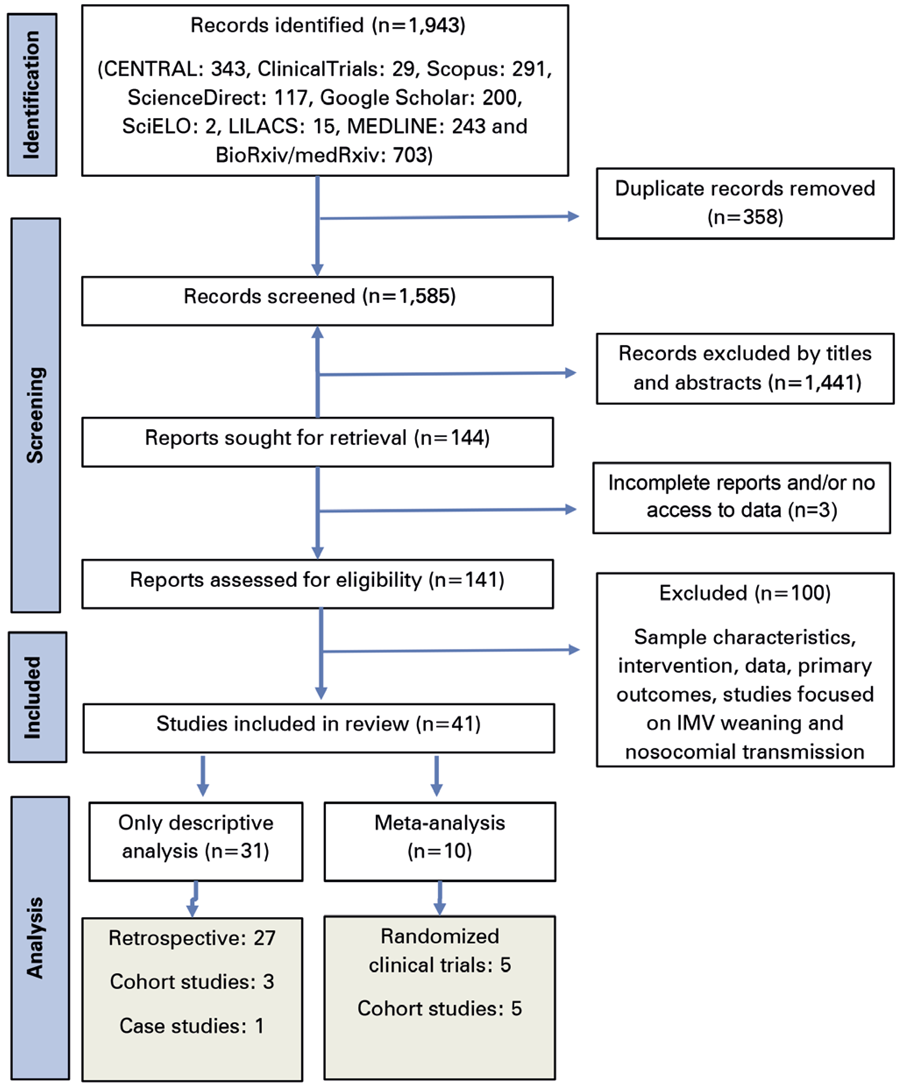
A total of 1,943 studies were initially identified, of which 41 were included in the final analysis ( Figure 1 ). Ten were included in the meta-analysis, comprising five RCTs( 11 - 15 ) and five cohort studies.( 16 - 20 )
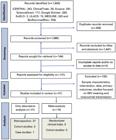
The remaining 31 studies were excluded from the meta-analysis owing to the absence of comparative or control groups, lack of data, or changes in body positioning ( Table 2S , Supplementary Material).
Most included study designs were observational (85.4%) and primarily employed HFNC therapy (85.4%). Sample sizes ranged from 4 to 11,826 participants, with or without control and intervention groups, totaling 23,901 participants (60.3% men, mean age: 62.9 years).
The most investigated therapies were HFNC versus NIV (26.9%), followed by HFNC versus conventional oxygen therapy (24.5%), and HFNC combined with NIV (21.9%), For 32% and 22% of the studies, progression to intubation and a high mortality rate were reported, respectively. Participants who received HFNC had a mean PaO2/FiO2 ratio of 166.07, whereas those who received NIV had a mean PaO2/FiO2 ratio of 147.82.
The authors of only 14 studies (34.14%)( 16 - 18 , 28 , 32 , 34 , 35 , 42 , 44 , 48 , 51 , 52 , 57 , 58 ) reported the use of pharmacological agents as adjuvants in disease treatment, including hydroxychloroquine and steroids (35.71%) and corticosteroids and azithromycin (28.25%). However, no subgroup analysis was conducted to evaluate the effects of concomitant medication use with HFNC.
Meta-analysis results
A meta-analysis ( Table 1 ) was conducted on five RCTs and five cohort studies. HFNC studies revealed intubation rates from 29% to 51% and mortality rates ranging from 0% to 50%. Non-invasive ventilation studies revealed an intubation rate of 30% to 79.6% and a mortality rate ranging from 22% to 61% ( Table 2 ).
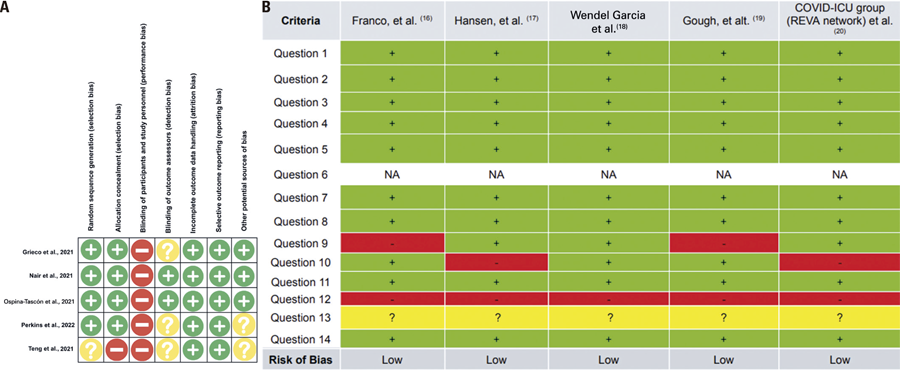
Risk of bias assessment for the five RCTs( 11 - 15 )indicated a low risk of attrition and reporting bias ( Figure 2 ). The quality assessment of the five cohort studies in the meta-analysis was conducted using the NIH Quality Assessment Tool, which indicated a low risk of bias ( Figure 2 ).
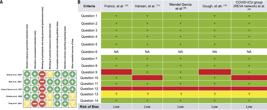
Risk analysis of studies included in the meta-analysis. A) Randomized controlled trials assessed via the Cochrane Risk of Bias Tool. B) Cohort studies assessed via the Quality Assessment Tool for Observational Cohort and Cross-Sectional Studies of the National Institutes of Health (NIH, USA), classified by cell background in shades of green: yes, red: no, and yellow: cannot be determined
NA: not applicable.
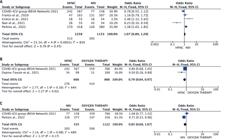
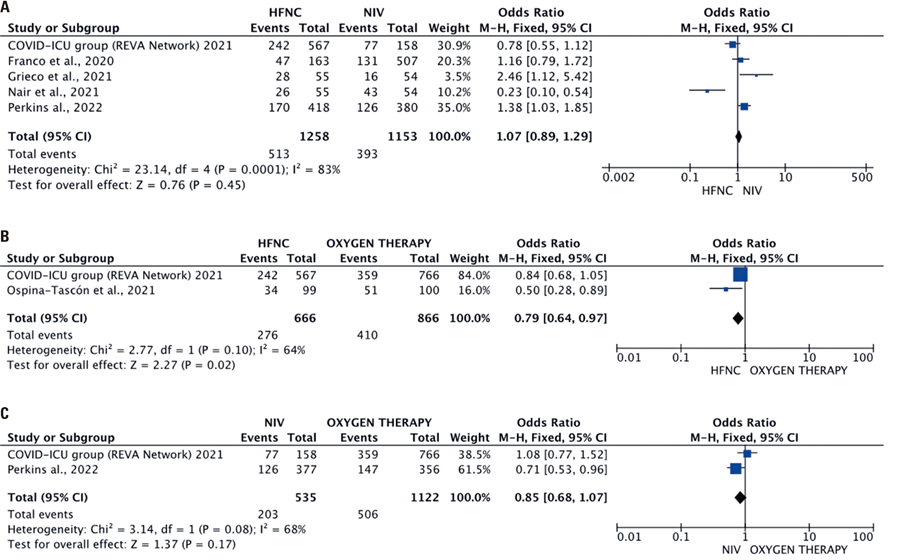
Forest plots of intubation rates. A) Comparison of high-flow nasal cannula (HFNC) and non-invasive ventilation (NIV); B) Comparison of HFNC and conventional oxygen therapy; C) Comparison of NIV versus conventional oxygen therapy. Data expressed as Mantel-Haenszel (M-H) odds ratios (ORs) with fixed and random effects, along with the 95% confidence intervals (95%CIs)
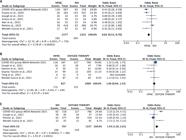
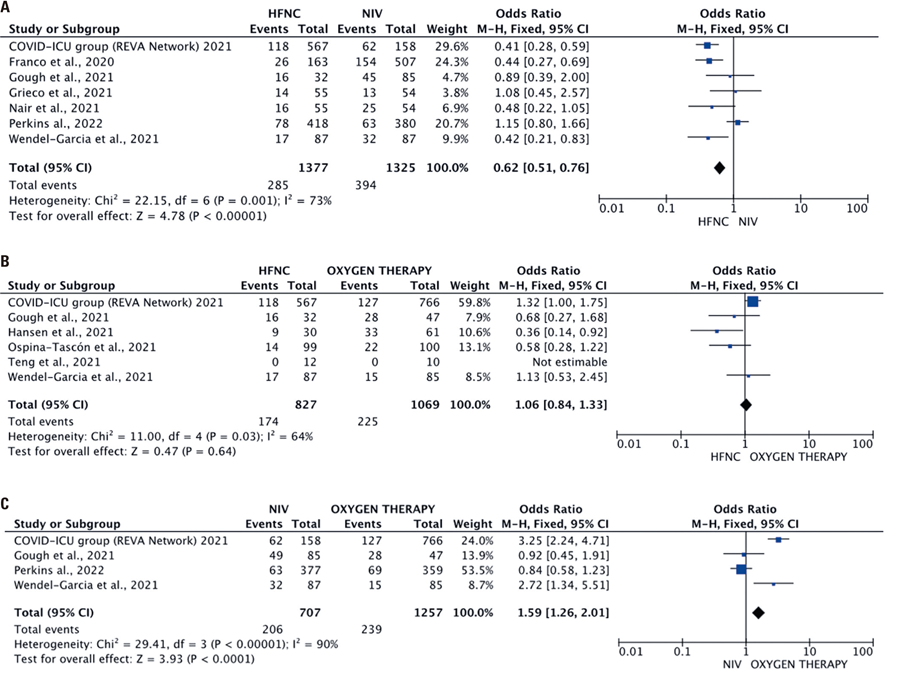
Forest plots of hospital mortality rates. A) Comparison of high-flow nasal cannula (HFNC) and non-invasive ventilation (NIV); B) Comparison of HFNC and conventional oxygen therapy; C) Comparison of NIV and conventional oxygen therapy. Data expressed as Mantel-Haenszel (M-H) odds ratios (ORs) with fixed and random effects, along with 95% confidence intervals (CIs)
Intubation rate
The intubation rate for HFNC versus NIV was analyzed in five studies( 11 , 13 , 15 , 16 , 20 )involving 2,411 participants (HFNC: 1,258; NIV: 1,153). The pooled OR was 1.07 (95%CI=0.89-1.29), with high heterogeneity (I2= 83%; Figure 3A ) and no difference between the groups (p=0.45).
The intubation rate was reported in two studies (1,532 participant) for HFNC (666 participants) versus conventional oxygen therapy (866 participants).( 14 , 20 ) The pooled OR of 0.79 (95%CI=0.64-0.97; Figure 3B ) indicates a protective effect of HFNC against intubation compared with conventional oxygen therapy (p=0.02).
Two studies( 15 , 20 ) of NIV (535 participants) versus conventional oxygen therapy (1,122 participants) revealed no difference in the intubation rate (M-H OR: 0.85, 95%CI=0.68-1.07, p=0.17; Figure 3C ).
Mortality rate
The mortality rate was analyzed in seven studies( 11 , 13 , 15 , 16 , 18 - 20 ) involving 2,702 participants (HFNC: 1,377; NIV: 1,325). The pooled OR was 0.62 (95%CI=0.51-0.76), with moderate heterogeneity (I2=73%; Figure 4A), favoring HFNC (p<0.0001).
No significant differences were observed in mortality rates across six studies( 12 , 14 , 17 - 20 )including 1,896 participants (HFNC: 827; conventional oxygen therapy: 1,069). The pooled OR was 1.06 (95%CI=0.84-1.33, p=0.64), with moderate heterogeneity (I2=64%; Figure 4B).
The mortality rate was reported in four studies( 15 , 18 - 20 ) for NIV (707 participants) versus conventional oxygen therapy (1,257 participants), with high heterogeneity (I2=90%). The analysis favored conventional oxygen therapy (OR=1.59, 95%CI=1.26-2.01, p<0.0001; Figure 4C).
DISCUSSION
The meta-analysis yielded three key findings. (1) No significant difference was observed between HFNC and NIV in terms of the reduction in the intubation rate. However, HFNC was superior to conventional oxygen therapy, whereas NIV yielded a similar response to conventional oxygen therapy. (2) HFNC was associated with a lower mortality rate than NIV. (3) Finally, the mortality rate was similar between HFNC and conventional oxygen therapy, whereas conventional oxygen therapy was associated with a lower mortality rate than NIV. However, these results were influenced by the heterogeneity of studies and clinical characteristics of the participants.
Intubation rate
The meta-analysis of the intubation rate included five studies,( 11 , 13 , 15 , 16 , 20 ) with a total of 2,411 participants (HFNC: 1,258; NIV: 1,153; OR=1.07, 95%CI=0.89-1.29), revealing no significant difference between HFNC and NIV. A previous systematic review( 6 ) revealed an estimated OR of 1.21 (95%CI=0.45-3.29, p=0.71), also without a significant difference. This may indicate equivalence between the therapies for this outcome. The numeric risk values differ owing to the inclusion of different studies, with a total of 906 events (n=2,411) compared with 184 events (n=380). This discrepancy can also be attributed to differences in study selection, as we included only RCTs and cohort studies. In contrast, He et al.( 6 ) included only one RCT; and the rest were retrospective studies.
A possible explanation for these findings is that both HFNC and NIV provide effective respiratory support, thereby reducing the need for IMV. Both strategies may alleviate respiratory distress, improve oxygenation, and prevent further clinical deterioration. However, HFNC was superior to conventional oxygen therapy in terms of oxygenation and respiratory support. It may reduce the severity of respiratory failure and the subsequent need for intubation.
Franco et al.( 16 ) demonstrated the feasibility and clinical impact of non-invasive respiratory support in patients with COVID-19. Their findings indicate that HFNC and NIV yield comparable intubation rates, suggesting that both strategies effectively provide respiratory support and prevent the need for IMV. However, their meta-analysis highlights the superiority of HFNC over conventional oxygen therapy in the prevention of intubation, a finding supported by Ospina-Tascón et al.,( 14 ) who reported a reduced need for IMV with HFNC compared with conventional oxygen therapy. A possible explanation is that HFNC, by delivering a high flow of oxygen and increasing the end-expiratory lung volume, improves oxygenation and reduces the work required to breathe more effectively than conventional oxygen therapy. This may lead to improved outcomes by preventing the progression of respiratory failure and reducing the subsequent need for intubation.
Supporting these findings, He et al( 6 ) evaluated three studies involving 101 patients in their meta-analysis, demonstrating an improvement in the PaO2/FiO2 ratio at 24 h in the HFNC group (p<0.00001). Conversely, Peng et al.( 21 ) found no differences in the PaO2/FiO2 ratio between the HFNC and other non-invasive respiratory strategies (p=0.07). Given the variability in study quality and methodologies, uncertainties remain regarding the optimal application of non-invasive respiratory strategies.
Notably, substantial heterogeneity exists in the sample sizes and distribution of participants across studies. Perkins et al.( 15 )included a larger cohort than the other researchers,( 11 , 13 , 16 , 20 ) potentially leading to an overestimation of the favorable effects of HFNC and NIV on the intubation rate.
Compared with conventional oxygen therapy, HFNC demonstrated superior efficacy in patients with severe symptoms, likely owing to its ability to generate positive airway pressure.( 22 ) The physiological effects associated with such positive pressure may explain the observed decrease in intubation rates among patients critically ill with COVID-19 by improving respiratory function and alleviating symptoms. Two studies( 14 , 20 )included in our meta-analysis favored HFNC over conventional oxygen therapy (OR=0.79, 95%CI=0.64-0.97). Sayan et al.( 22 )also reported that HFNC use in cases of respiratory failure significantly reduced intubation rates.
Mortality rate
Our meta-analysis of mortality rates across seven studies( 11 , 14 , 15 , 16 , 18 - 20 ) with a total of 2,702 participants (HFNC: 1,377; NIV: 1,325) demonstrated a significantly lower risk associated with HFNC than that with NIV. This finding aligns with that of several previous studies. Garcia et al.( 23 )highlighted variability in hospital practices regarding the use of HFNC and NIV for acute respiratory failure secondary to COVID-19, suggesting a potential mortality benefit with HFNC. Similarly, regarding the HENIVOT clinical trial, Grieco et al.( 11 ) reported that HFNC was associated with a larger number of ventilator-free days than helmet-based NIV, indicating improved outcomes and potentially lower mortality rates.
The observed survival advantage may be attributed to the ability of HFNC to provide more effective oxygenation and ventilation support, improving respiratory function and reducing the risk of complications and mortality. HFNC delivers a higher flow rate and FiO2, mitigating the severity of respiratory failure and enhancing patient outcomes.( 11 , 14 , 16 )
Several studies( 11 - 17 , 18 ) had similar protocols, with HFNC flow rates ranging from 30 to 60L/min and FiO2 titrated from 0.4 to 1.0, targeting a peripheral oxygen saturation higher than or equal to 93%. Mauri et al.( 24 ) reported that HFNC improves oxygenation by increasing airway pressure, end-expiratory lung volume, and carbon dioxide clearance, thereby alleviating hypoxemia in patients with mild to moderate acute respiratory failure.
In our meta-analysis, HFNC was superior to NIV in terms of the mortality rate (OR=0.62, 95%CI=0.51-0.76, p<0.0001). This contrasts with the findings of He et al.,( 6 ) who reported no significant effect (OR=1.41, 95%CI=0.72-2.74, p=0.31). However, their analysis did identify a lower 28-day hospital mortality associated with HFNC (OR=1.81, 95%CI=1.12-2.92, p=0.02). Similar results have been revealed in other meta-analyses, including those by Peng et al.( 21 )(OR=0.66, 95%CI=0.51-0.84, p<0.001) and Beran et al.( 25 ) (OR=0.81, 95%CI=0.66-0.98, p=0.03).
A similar association between NIV and mortality, regardless of the etiology of acute respiratory failure, was previously observed. Thille et al.( 26 ) conducted an observational study on patients with acute respiratory failure unrelated to COVID-19, reporting a 50% failure rate with NIV, which was associated with increased mortality. Despite sample heterogeneity, these findings suggest that NIV failure remains a challenge in predicting which individuals are likely to benefit from this therapy.
Conflicting results regarding the association between non-invasive respiratory support and mortality have been revealed in several other studies.( 6 , 21 , 25 ) These discrepancies may be attributed to differences in study methodologies, patient characteristics, and underlying comorbidities.( 24 )
An important consideration is the distinct therapeutic management, patient compliance, and clinical effects of HFNC and NIV. High-flow nasal cannula is an open system that generates a modest increase in end-expiratory lung volume despite variations in inspiratory flow and mouth opening. This mechanism reduces dead space and improves oxygenation. In contrast, NIV generates positive end-expiratory pressure, which increases functional residual capacity and reduces pulmonary shunt, ultimately lowering the required to breathe and enhancing respiratory function.( 6 , 16 , 27 , 28 )
However, NIV is associated with a higher risk of therapy failure due to complications such as skin breakdown at mask contact sites and patient intolerance, which may result in therapy-related anxiety or phobia. HFNC is often recommended for high-risk patients owing to its better compliance rate, physiological adaptation, and overall tolerability despite its lower performance in terms of the PaO2/FiO2 ratio.( 29 , 30 )
In the meta-analysis of the mortality rate, we included six studies( 12 , 14 , 17 - 20 )comprising 1,897 participants for HFNC (827) versus conventional oxygen therapy (1,069), and an additional four studies( 15 , 18 - 20 ) comparing NIV (707 participants) with oxygen therapy (1,257 participants). The findings demonstrated no difference between conventional oxygen therapy and HFNC (OR=1.06, 95%CI=0.84-1.33; p=0.64), whereas NIV was associated with lower mortality rates than oxygen therapy (OR=1.59, 95%CI=1.26-2.01, p<0.0001). However, we acknowledge that patients receiving conventional oxygen therapy might have had less severe respiratory failure at the time of therapy initiation than those treated with HFNC or NIV. As oxygen therapy is frequently administered earlier in the disease course when symptoms are milder, this might have partially explained the lower baseline mortality risk observed in such patients.( 13 ) Furthermore, high heterogeneity was observed in this analysis, primarily influenced by two cohort studies that carried substantial weight in the meta-analyses.( 15 , 20 )
In another meta-analysis,( 31 ) HFNC was associated with a lower mortality rate than conventional oxygen therapy (OR=0.54 [95%CI=0.30-0.97, p=0.04], χ2=21.57, I2=77%). These discrepancies may be explained by variations in study designs across the studies included in the analyses. Importantly, although the referenced studies and the meta-analysis provide insights into the comparative effectiveness of these interventions, individual patient characteristics, disease severity, and resource availability should be considered when treatment decisions are made.
Our study contributes valuable insights into the comparative effectiveness of these respiratory support strategies; nonetheless, several limitations should be acknowledged. These include the RCTs and the wide variability in patient clinical profiles, which might have introduced bias and increased heterogeneity in the results, respectively. Our results provide a foundation for informed clinical decision-making in future respiratory disease outbreaks and highlight the need for further research to optimize the management of acute respiratory failure induced by COVID-19.
CONCLUSION
This meta-analysis indicates that, in patients with COVID-19-related acute respiratory failure, high-flow nasal cannula therapy and non-invasive ventilation result in comparable intubation rates, while high-flow nasal cannula therapy is associated with lower mortality. These findings strengthen the evidence supporting high-flow nasal cannula therapy as a safe and effective first-line noninvasive respiratory support strategy in this population. The results also highlight the need for structured clinical protocols and adequate monitoring to guide the selection and timely escalation of noninvasive respiratory support.
SUPPLEMENTARY MATERIAL
Jakson Henrique Silva, Anna Luísa Araújo Brito, Redha Taiar, Bruno Amorim Moraes, Anderson Brasil Xavier, Wagner Souza Leite, Maria das Graças Rodrigues de Araújo, Daniella Cunha Brandão, Armele de Fátima Dornelas Andrade, Shirley Lima Campos
DATA AVAILABILITY:The underlying content is contained within the manuscript.
ACKNOWLEDGMENTS
We are thankful for the support by the Dean of Graduate Studies (PROPG) of the Universidade Federal de Pernambuco (UFPE), the Coordenação de Aperfeiçoamento de Pessoal de Nível Superior (CAPES) - Code 001, the Conselho Nacional de Desenvolvimento Científico e Tecnológico (CNPq - 403341/2020-5; Research Grant (306240/2021-1), 303988/2025-8, and the Fundação de Amparo à Ciência e Tecnologia de Pernambuco (FACEPE- APQ-0249-9.08/20 and APQ-1020-4.08/25).
REFERENCES
- 1 Corrêa TD, Matos GF, Bravim BA, Cordioli RL, Garrido AD, Assunção MS, et al. Intensive support recommendations for critically-ill patients with suspected or confirmed COVID-19 infection. einstein (Sao Paulo). 2020;18:eAE5793.
- 2 Huang C, Wang Y, Li X, Ren L, Zhao J, Hu Y, et al. Clinical features of patients infected with 2019 novel coronavirus in Wuhan, China. Lancet. 2020;395(10223):497-506.
- 3 Agarwal A, Basmaji J, Muttalib F, Granton D, Chaudhuri D, Chetan D, et al. High-flow nasal cannula for acute hypoxemic respiratory failure in patients with COVID-19: systematic reviews of effectiveness and its risks of aerosolization, dispersion, and infection transmission. Can J Anaesth. 2020;67(9):1217-48.
- 4 Liu L, Xie J, Wu W, Chen H, Li S, He H, et al. A simple nomogram for predicting failure of non-invasive respiratory strategies in adults with COVID-19: a retrospective multicentre study. Lancet Digit Health. 2021;3(3):e166-74.
- 5 Ng Z, Tay WC, Ho CH. Awake prone positioning for non-intubated oxygen dependent COVID-19 pneumonia patients. Eur Respir J. 2020;56(1):2001198.
- 6 He Y, Liu N, Zhuang X, Wang X, Ma W. High-flow nasal cannula versus noninvasive ventilation in patients with COVID-19: a systematic review and meta-analysis. Ther Adv Respir Dis. 2022;16:17534666221087847.
- 7 Higgins JP, Altman DG, Gøtzsche PC, Jüni P, Moher D, Oxman AD, Savovic J, Schulz KF, Weeks L, Sterne JA; Cochrane Bias Methods Group; Cochrane Statistical Methods Group. The Cochrane Collaboration's tool for assessing risk of bias in randomised trials. BMJ. 2011;343:d5928.
- 8 Page MJ, McKenzie JE, Bossuyt PM, Boutron I, Hoffmann TC, Mulrow CD, et al. The PRISMA 2020 statement: an updated guideline for reporting systematic reviews. BMJ. 2021;372(71):n71.
- 9 Ouzzani M, Hammady H, Fedorowicz Z, Elmagarmid A. Rayyan-a web and mobile app for systematic reviews. Syst Rev. 2016;5(1):210.
- 10 ARDS Definition Task Force; Ranieri VM, Rubenfeld GD, Thompson BT, Ferguson ND, Caldwell E, Fan E, Camporota L, Slutsky AS. Acute respiratory distress syndrome: the Berlin Definition. JAMA. 2012;307(23):2526-33.
- 11 Grieco DL, Menga LS, Cesarano M, Rosà T, Spadaro S, Bitondo MM, Montomoli J, Falò G, Tonetti T, Cutuli SL, Pintaudi G, Tanzarella ES, Piervincenzi E, Bongiovanni F, Dell'Anna AM, Delle Cese L, Berardi C, Carelli S, Bocci MG, Montini L, Bello G, Natalini D, De Pascale G, Velardo M, Volta CA, Ranieri VM, Conti G, Maggiore SM, Antonelli M; COVID-ICU Gemelli Study Group. Effect of Helmet Noninvasive Ventilation vs High-Flow Nasal Oxygen on Days Free of Respiratory Support in Patients With COVID-19 and Moderate to Severe Hypoxemic Respiratory Failure: The HENIVOT Randomized Clinical Trial. JAMA. 2021;325(17):1731-43.
- 12 Teng XB, Shen Y, Han MF, Yang G, Zha L, Shi JF. The value of high-flow nasal cannula oxygen therapy in treating novel coronavirus pneumonia. Eur J Clin Invest. 2021;51(3):e13435.
- 13 Nair PR, Haritha D, Behera S, Kayina CA, Maitra S, Anand RK, et al. Comparison of High-Flow Nasal Cannula and Noninvasive Ventilation in Acute Hypoxemic Respiratory Failure Due to Severe COVID-19 Pneumonia. Respir Care. 2021;66(12):1824-30.
- 14 Ospina-Tascón GA, Calderón-Tapia LE, García AF, Zarama V, Gómez-Álvarez F, Álvarez-Saa T, Pardo-Otálvaro S, Bautista-Rincón DF, Vargas MP, Aldana-Díaz JL, Marulanda Á, Gutiérrez A, Varón J, Gómez M, Ochoa ME, Escobar E, Umaña M, Díez J, Tobón GJ, Albornoz LL, Celemín Flórez CA, Ruiz GO, Cáceres EL, Reyes LF, Damiani LP, Cavalcanti AB; HiFLo-Covid Investigators. Effect of High-Flow Oxygen Therapy vs Conventional Oxygen Therapy on Invasive Mechanical Ventilation and Clinical Recovery in Patients With Severe COVID-19: a Randomized Clinical Trial. JAMA. 2021;326(21):2161-71. Erratum in: JAMA. 2022;327(11):1093.
- 15 Perkins GD, Ji C, Connolly BA, Couper K, Lall R, Baillie JK, Bradley JM, Dark P, Dave C, De Soyza A, Dennis AV, Devrell A, Fairbairn S, Ghani H, Gorman EA, Green CA, Hart N, Hee SW, Kimbley Z, Madathil S, McGowan N, Messer B, Naisbitt J, Norman C, Parekh D, Parkin EM, Patel J, Regan SE, Ross C, Rostron AJ, Saim M, Simonds AK, Skilton E, Stallard N, Steiner M, Vancheeswaran R, Yeung J, McAuley DF; RECOVERY-RS Collaborators. Effect of Noninvasive Respiratory Strategies on Intubation or Mortality Among Patients With Acute Hypoxemic Respiratory Failure and COVID-19: The RECOVERY-RS Randomized Clinical Trial. JAMA. 2022;327(6):546-58.
- 16 Franco C, Facciolongo N, Tonelli R, Dongilli R, Vianello A, Pisani L, et al. Feasibility and clinical impact of out-of-ICU noninvasive respiratory support in patients with COVID-19-related pneumonia. Eur Respir J. 2020; 56(5):2002130.
- 17 Hansen CK, Stempek S, Liesching T, Lei Y, Dargin J. Characteristics and outcomes of patients receiving high flow nasal cannula therapy prior to mechanical ventilation in COVID-19 respiratory failure: a prospective observational study. Int J Crit Illn Inj Sci. 2021;11(2):56-60.
- 18 Wendel Garcia PD, Aguirre-Bermeo H, Buehler PK, Alfaro-Farias M, Yuen B, David S, Tschoellitsch T, Wengenmayer T, Korsos A, Fogagnolo A, Kleger GR, Wu MA, Colombo R, Turrini F, Potalivo A, Rezoagli E, Rodríguez-García R, Castro P, Lander-Azcona A, Martín-Delgado MC, Lozano-Gómez H, Ensner R, Michot MP, Gehring N, Schott P, Siegemund M, Merki L, Wiegand J, Jeitziner MM, Laube M, Salomon P, Hillgaertner F, Dullenkopf A, Ksouri H, Cereghetti S, Grazioli S, Bürkle C, Marrel J, Fleisch I, Perez MH, Baltussen Weber A, Ceruti S, Marquardt K, Hübner T, Redecker H, Studhalter M, Stephan M, Selz D, Pietsch U, Ristic A, Heise A, Meyer Zu Bentrup F, Franchitti Laurent M, Fodor P, Gaspert T, Haberthuer C, Colak E, Heuberger DM, Fumeaux T, Montomoli J, Guerci P, Schuepbach RA, Hilty MP, Roche-Campo F; RISC-19-ICU Investigators. Implications of early respiratory support strategies on disease progression in critical COVID-19: a matched subanalysis of the prospective RISC-19-ICU cohort. Crit Care. 2021;25(1):175.
- 19 Gough C, Casey M, McCartan TA, Franciosi AN, Nash D, Doyle D, et al. Effects of non-invasive respiratory support on gas exchange and outcomes in COVID-19 outside the ICU. Respir Med. 2021;185:106481.
- 20 COVID-ICU group, for the REVA network, COVID-ICU investigators. Benefits and risks of noninvasive oxygenation strategy in COVID-19: a multicenter, prospective cohort study (COVID-ICU) in 137 hospitals. Crit Care. 2021;25(1):421.
- 21 Peng Y, Dai B, Zhao HW, Wang W, Kang J, Hou HJ, et al. Comparison between high-flow nasal cannula and noninvasive ventilation in COVID-19 patients: a systematic review and meta-analysis. Ther Adv Respir Dis. 2022;16:17534666221113663.
- 22 Sayan I, Altinay M, Çinar AS, Türk HS, Peker N, Sahin K, et al. Impact of HFNC application on mortality and intensive care length of stay in acute respiratory failure secondary to COVID-19 pneumonia. Heart Lung. 2021;50(3):425-9.
- 23 Garcia MA, Johnson SW, Sisson EK, Sheldrick CR, Kumar VK, Boman K, Bolesta S, Bansal V, Bogojevic M, Domecq JP, Lal A, Heavner S, Cheruku SR, Lee D, Anderson HL, Denson JL, Gajic O, Kashyap R, Walkey AJ; from the Society of Critical Care Medicine's Discovery Viral Infection and Respiratory Illness Universal Study Investigators. Variation in Use of High-Flow Nasal Cannula and Noninvasive Ventilation Among Patients With COVID-19. Respir Care. 2022;67(8):929-38.
- 24 Mauri T, Turrini C, Eronia N, Grasselli G, Volta CA, Bellani G, et al. Physiologic effects of high-flow nasal cannula in acute hypoxemic respiratory failure. Am J Respir Crit Care Med. 2017;195(9):1207-15.
- 25 Beran A, Srour O, Malhas SE, Mhanna M, Ayesh H, Sajdeya O, et al. High-Flow Nasal Cannula Versus Noninvasive Ventilation in Patients With COVID-19. Respir Care. 2022;67(9):1177-89.
- 26 Thille AW, Contou D, Fragnoli C, Córdoba-Izquierdo A, Boissier F, Brun-Buisson C. Non-invasive ventilation for acute hypoxemic respiratory failure: intubation rate and risk factors. Crit Care. 2013;17(6):R269-269.
- 27 Duan J, Chen B, Liu X, Shu W, Zhao W, Li J, et al. Use of high-flow nasal cannula and noninvasive ventilation in patients with COVID-19: A multicenter observational study. Am J Emerg Med. 2021;46:276-81.
- 28 Bonnet N, Martin O, Boubaya M, Levy V, Ebstein N, Karoubi P, et al. High flow nasal oxygen therapy to avoid invasive mechanical ventilation in SARS-CoV-2 pneumonia: a retrospective study. Ann Intensive Care. 2021;11(1):37.
- 29 Martinez BP, Andrade FM, Roncalli A, Martins JA, Ribeiro DC, Pianezzola EM, et al Indicação e uso da ventilação não-invasiva e da cânula nasal de alto fluxo, e orientações sobre manejo da ventilação mecânica invasiva no tratamento da insuficiência respiratória aguda na COVID-19. Assobrafir Cienc. 2020;11(Suppl 1):101-10.
- 30 Ni YN, Luo J, Yu H, Liu D, Ni Z, Cheng J, et al. Can high-flow nasal cannula reduce the rate of endotracheal intubation in adult patients with acute respiratory failure compared with conventional oxygen therapy and noninvasive positive pressure ventilation? A systematic review and meta-analysis. Chest. 2017;151(4):764-75.
- 31 Li Y, Li C, Chang W, Liu L. High-flow nasal cannula reduces intubation rate in patients with COVID-19 with acute respiratory failure: a meta-analysis and systematic review. BMJ Open. 2023;13(3):e067879.
- 32 Ferrando C, Mellado-Artigas R, Gea A, Arruti E, Aldecoa C, Adalia R, Ramasco F, Monedero P, Maseda E, Tamayo G, Hernández-Sanz ML, Mercadal J, Martín-Grande A, Kacmarek RM, Villar J, Suárez-Sipmann F; COVID-19 Spanish ICU Network. Awake prone positioning does not reduce the risk of intubation in COVID-19 treated with high-flow nasal oxygen therapy: a multicenter, adjusted cohort study. Crit Care. 2020;24(1):597.
- 33 Ramirez GA, Bozzolo EP, Castelli E, Marinosci A, Angelillo P, Damanti S, et al. Continuous positive airway pressure and pronation outside the intensive care unit in COVID 19 ARDS. Minerva Med. 2022;113(2):281-90.
- 34 Mellado-Artigas R, Ferreyro BL, Angriman F, Hernández-Sanz M, Arruti E, Torres A, Villar J, Brochard L, Ferrando C; COVID-19 Spanish ICU Network. High-flow nasal oxygen in patients with COVID-19-associated acute respiratory failure. Crit Care. 2021;25(1):58.
- 35 McDonough G, Khaing P, Treacy T, McGrath C, Yoo EJ. The Use of High-Flow Nasal Oxygen in the ICU as a First-Line Therapy for Acute Hypoxemic Respiratory Failure Secondary to Coronavirus Disease 2019. Crit Care Explor. 2020;2(10):e0257.
- 36 Demoule A, Vieillard Baron A, Darmon M, Beurton A, Géri G, Voiriot G, et al. High-Flow Nasal Cannula in Critically III Patients with Severe COVID-19. Am J Respir Crit Care Med. 2020;202(7):1039-42.
- 37 Alharthy A, Faqihi F, Noor A, Soliman I, Brindley PG, Karakitsos D, et al. Helmet Continuous Positive Airway Pressure in the Treatment of COVID-19 Patients with Acute Respiratory Failure could be an Effective Strategy: A Feasibility Study. J Epidemiol Glob Health. 2020;10(3):201-3.
- 38 Gaulton TG, Bellani G, Foti G, Frazer MJ, Fuchs BD, Cereda M. Early Clinical Experience in Using Helmet Continuous Positive Airway Pressure and High-Flow Nasal Cannula in Overweight and Obese Patients With Acute Hypoxemic Respiratory Failure From Coronavirus Disease 2019. Crit Care Explor. 2020;2(9):e0216.
- 39 Jarou ZJ, Beiser DG, Sharp WW, Chacko R, Goode D, Rubin DS, et al. Emergency department-initiated high-flow nasal cannula for COVID-19 respiratory distress. West J Emerg Med. 2021;22(4):979-87.
- 40 Kabak M, Çil B. Feasibility of non-rebreather masks and nasal cannula as a substitute for high flow nasal oxygen in patients with severe COVID-19 infection. Acta Med Mediter. 2021;37(2):949-54.
- 41 Zhao Z, Cao H, Cheng Q, Li N, Zhang S, Ge Q, Shen N, Yang L, Shi W, Bai J, Meng Q, Wu C, Wang B, Li Q, Yao G. [Effect of noninvasive positive pressure ventilation and high-flow nasal cannula oxygen therapy on the clinical efficacy of coronavirus disease 2019 patients with acute respiratory distress syndrome]. Zhonghua Wei Zhong Bing Ji Jiu Yi Xue. 2021;33(6):708-13. Chinese.
- 42 Rodrigues Santos L, Gonçalves Lopes R, Rocha AS, Martins MD, Guimarães TC, Meireles M, et al. Outcomes of COVID-19 patients treated with noninvasive respiratory support outside-ICU setting: a Portuguese reality. Pulmonology. 2022;28(1):59-61.
- 43 Shoukri AM. High flow nasal cannula oxygen and non-invasive mechanical ventilation in management of COVID-19 patients with acute respiratory failure: a retrospective observational study. Egypt J Bronchol. 2021;15(1):17.
- 44 Costa WN, Miguel JP, Prado FD, Lula LH, Amarante GA, Righetti RF, et al. Noninvasive ventilation and high-flow nasal cannula in patients with acute hypoxemic respiratory failure by covid-19: A retrospective study of the feasibility, safety and outcomes. Respir Physiol Neurobiol. 2022;298:103842.
- 45 Wendel-Garcia PD, Mas A, González-Isern C, Ferrer R, Máñez R, Masclans JR, Sandoval E, Vera P, Trenado J, Fernández R, Sirvent JM, Martínez M, Ibarz M, Garro P, Lopera JL, Bodí M, Yébenes-Reyes JC, Triginer C, Vallverdú I, Baró A, Bodí F, Saludes P, Valencia M, Roche-Campo F, Huerta A, Cambra FJ, Barberà C, Echevarria J, Peñuelas Ó, Mancebo J; UCIsCAT study group. Non-invasive oxygenation support in acutely hypoxemic COVID-19 patients admitted to the ICU: a multicenter observational retrospective study. Crit Care. 2022;26(1):37.
- 46 Alkouh R, El Rhalete A, Manal M, Ghizlane EA, Samia B, Salma T, et al. High-flow nasal oxygen therapy decrease the risk of mortality and the use of invasive mechanical ventilation in patients with severe SARS-CoV-2 pneumonia? A retrospective and comparative study of 265 cases. Ann Med Surg (Lond). 2022;74:103230.
- 47 Di Domenico SL, Coen D, Bergamaschi M, Albertini V, Ghezzi L, Cazzaniga MM, et al. Clinical characteristics and respiratory support of 310 COVID-19 patients, diagnosed at the emergency room: a single-center retrospective study. Intern Emerg Med. 2021;16(4):1051-60.
- 48 Burton PH, Jackson AI, Beecham R, Ferrari M, Nasim MM, Grocott MP, et al. University Hospital Southampton Critical Care Team; REACT COVID Investigator. Conscious prone positioning during non-invasive ventilation in COVID-19 patients: experience from a single centre. F1000 Res. 2020;9:859.
- 49 Chandel A, Patolia S, Brown AW, Collins AC, Sahjwani D, Khangoora V, et al. High-Flow Nasal Cannula Therapy in COVID-19: Using the ROX Index to Predict Success. Respir Care. 2021;66(6):909-19.
- 50 Vianello A, Arcaro G, Molena B, Turato C, Sukthi A, Guarnieri G, et al. High-flow nasal cannula oxygen therapy to treat patients with hypoxemic acute respiratory failure consequent to SARS-CoV-2 infection. Thorax. 2020;75(11):998-1000.
- 51 Burnim MS, Wang K, Checkley W, Nolley EP, Xu Y, Garibaldi BT. The effectiveness of high-flow nasal cannula in coronavirus disease 2019 pneumonia: a retrospective cohort study. Crit Care Med. 2022;50(3):e253-62.
- 52 Roedl K, Jarczak D, Thasler L, Bachmann M, Schulte F, Bein B, et al. Mechanical ventilation and mortality among 223 critically ill patients with coronavirus disease 2019: A multicentric study in Germany. Aust Crit Care. 2021;34(2):167-75.
- 53 Pagano A, Porta G, Bosso G, Allegorico E, Serra C, Dello Vicario F, et al. Non-invasive CPAP in mild and moderate ARDS secondary to SARS-CoV-2. Respir Physiol Neurobiol. 2020;280:103489.
- 54 Daniel P, Mecklenburg M, Massiah C, Joseph MA, Wilson C, Parmar P, et al. Non-invasive positive pressure ventilation versus endotracheal intubation in treatment of COVID-19 patients requiring ventilatory support. Am J Emerg Med. 2021;43:103-8.
- 55 Soares WE 3rd, Schoenfeld EM, Visintainer P, Elia T, Medarametla V, Schoenfeld DA, et al. Safety Assessment of a Noninvasive Respiratory Protocol for Adults With COVID-19. J Hosp Med. 2020;15(12):734-8.
- 56 Duca A, Memaj I, Zanardi F, Preti C, Alesi A, Della Bella L, et al. Severity of respiratory failure and outcome of patients needing a ventilatory support in the Emergency Department during Italian novel coronavirus SARS-CoV2 outbreak: Preliminary data on the role of Helmet CPAP and Non-Invasive Positive Pressure Ventilation. EClinicalMedicine. 2020;24:100419.
- 57 López-Padilla D, Terán Tinedo JR, López-Martín S, Caballero Segura FJ, Gallo González V, Recio Moreno B, et al. Todos los caminos llevan a Roma: resultados de las terapias respiratorias no invasivas aplicadas en un centro terciario sin Unidad de Cuidados Intermedios durante la pandemia de COVID-19. Open Respir Arch. 2021;3(1):100081.
- 58 Giron F, Rao S, Tapaskar N. A multicomponent oxygen delivery strategy for COVID-19 patients in a step-down intensive care unit: a case series. Respir Med Case Rep. 2020;31:101209.
Edited by
-
Associate Editor:
Claudio Roberto Cernea Hospital Israelita Albert Einstein, São Paulo, SP, Brazil ORCID: https://orcid.org/0000-0001-5899-0535