 Demographic and clinical factors associated with the distance traveled by people with oral cancer: a cross-sectional study, North and Northeast regions of Brazil, 2017-2023
Objective To analyze the demographic and clinical factors associated with the distance traveled by people with oral cancer to get hospital treatment in the North and Northeast regions of Brazil, between 2017 and 2023.
Methods This was a cross-sectional study conducted with data from the Hospital Cancer Registry. The dependent variable was defined as the distance, in kilometers, between the municipality of residence and the place of hospital admission, measured by OpenStreetMap. The independent variables included the staging of oral cancer (I, II, III or IV), the region (North or Northeast) and the year of treatment. Gamma regression with logarithmic link function was used to estimate ratios of means (RM) and 95% confidence intervals (95%CI).
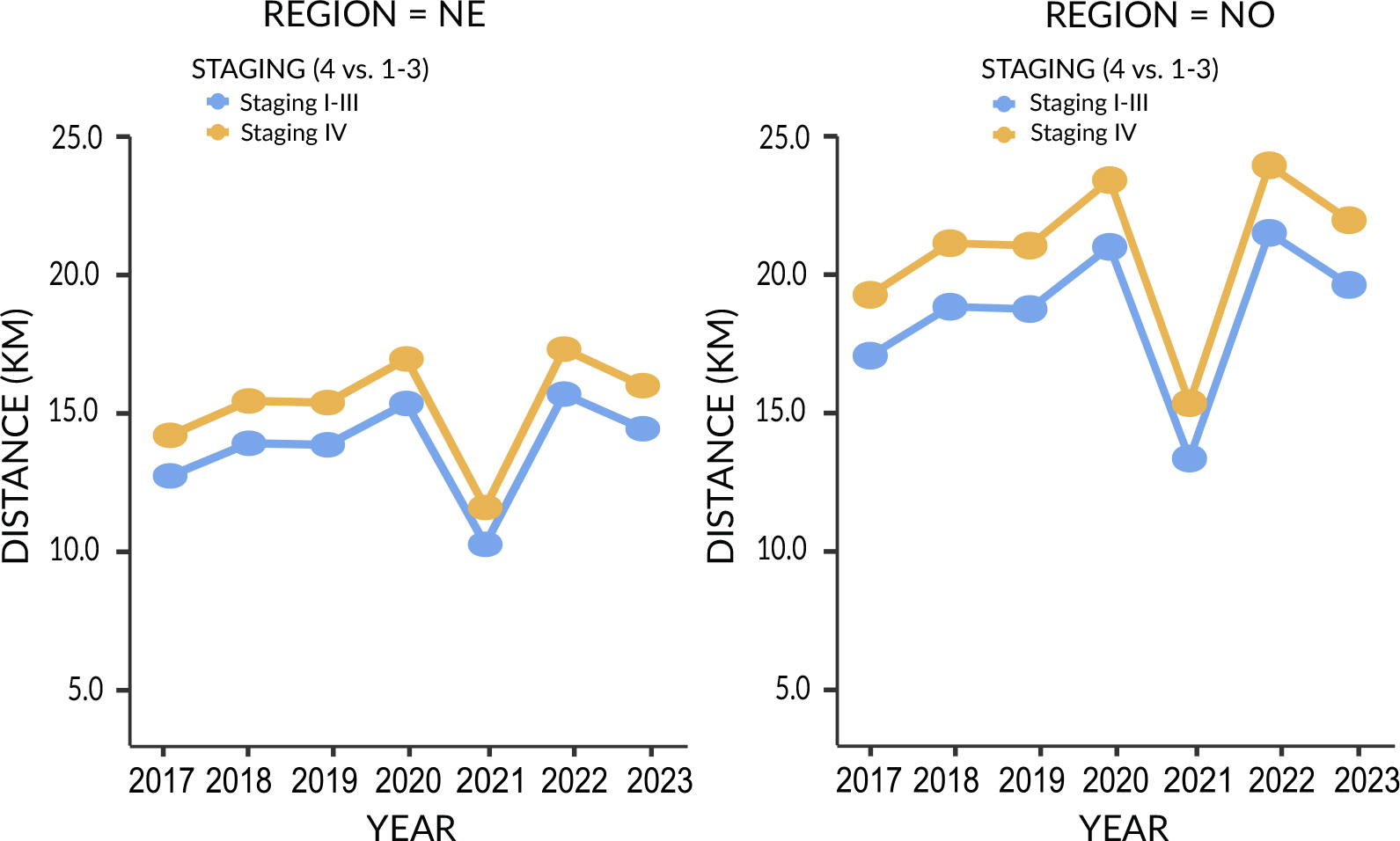
Results 4,887 records were included. The median distance traveled to treatment was greater in the Northern region (70.9 km). Multivariate analysis revealed significant association between stage IV and greater travel distances (OR 1.05; 95%CI 1.00; 1.11). People from the Northern region (OR 1.38; 95%CI 1.26; 1.51) traveled greater distances to a hospital. A significant increase was observed in 2020 (OR 1.10; 95%CI 1.01; 1.19) and 2022 (OR 1.11; 95%CI 1.02; 1.20).
Conclusion The greatest distances for hospital treatment of oral cancer occurred among people with advanced stages of the disease residing in the Northern region, highlighting inequalities in access to oncological care.
Keywords
Mouth Neoplasms; Access to Health Services; Health Inequities; Social Conditions; Cross-Sectional Studies
 Thumbnail