
 Proposal for a simplified approach to suspected meningitis case diagnosis: experience report of a reference service in the state of Piauí, Brazil, 2007-2016
Objective: to describe a simplified protocol to diagnose suspected cases of meningitis.
Methods: this is an experience report on the approach to diagnosing meningitis at the Tropical Diseases Reference Service in the state of Piauí, Brazil, between 2007 and 2016; information was extracted from the Notifiable Diseases Information System (SINAN) and the laboratory record book; the chi-square test was used to compare epidemiological surveillance indicators based on final meningitis case classification; the Phi coefficient was used to verify the correlation between presumed diagnosis and laboratory-confirmed diagnosis.
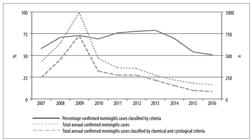
Results: considering the 4,096 cases of meningitis investigated, there was a reduction in the generic classification of meningitis cases from 72% to 47% (p<0.001); indicated laboratory investigation profile showed agreement with final meningitis case diagnosis. (rf=0.66; p<0.001).
Conclusion: a greater proportion of specific etiologic diagnosis of meningitis was achieved while the protocol was in use.
Keywords:
Diagnosis;Epidemiology, Descriptive; Cerebrospinal Fluid; Meningitis; Epidemiological Surveillance
 Thumbnail
 Thumbnail
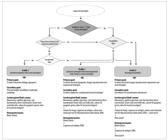
 a) According to the Health Surveillance Guide recommendations.13b) Replace with polymerase chain reaction, if available.c) Listeria monocytogenes, Brucella sp, Francisella tularensis, Actinomyces sp, Ehrlichia chaffeensis, Nocardia sp, Tropheryma whipplei.d) Cerebritis, abscess, empyema, septic venous thrombosis, Otomastoiditis.e) GeneXpert.f) Viral isolation, polymerase chain reaction, hemagglutination inhibition and immunoenzymatic test.
