 Transgenderism in studies on the health of older adults: a systematic review
Objective To describe how transgenderism is studied in research on the health of older adults.
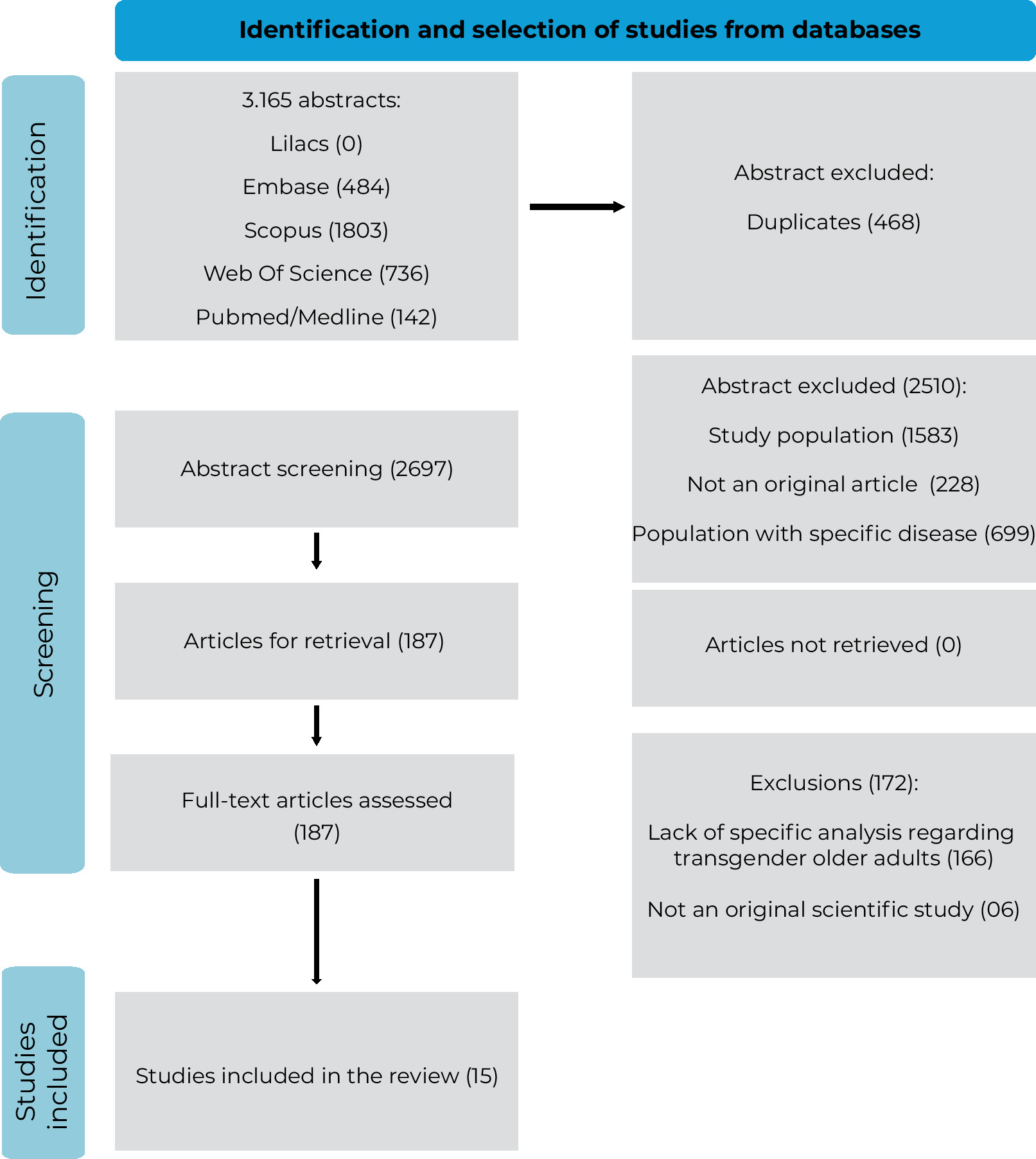
Methods This was a systematic literature review, with searches conducted in September 2022 across the LILACS, MEDLINE/ PubMed, Embase, Web of Science and Scopus databases. The articles were selected independently by two reviewers. The risk of bias was assessed using the JBI Critical Appraisal Tools and data synthesis followed the Entreq and Swim protocols.
Results A total of 15 studies were included, eight qualitative and seven quantitative, from 2014 to 2023. Most of them specifically analyzed the transgender population. The qualitative studies focused on individuals’ perceptions and experiences, health care planning and support networks. The quantitative studies addressed gender characterization, health status (including mental health), and associations with social determinants.
Conclusion Despite the different approaches, the studies addressed the subject in the context of accumulated stigmas and discrimination faced this population.
Keywords
Older adults; Older Adults aged 80 years or older; Transvestism; Transgender People; Health
Main results The aging experience of transgender people is shaped by transphobia, ageism, loneliness, fear of discrimination by caregivers, concerns about public policies, and the impact of prejudice and social exclusion on mental health.
Implications for services The diversity of gender identities and sexualities is also present among the elderly population. Healthcare professionals must be prepared to provide careful, responsible, comprehensive, and equitable care.
Perspectives There is an analytical gap on the topic in Latin American studies. Future research can contribute to the scientific debate and health systems, particularly in service provision and management, aiming to promote public policies.
 Thumbnail