 Regional inequalities in vaccination coverage and COVID-19 risk among children and adolescents: spatial analysis, Brazil, 2020–2024
Objective To identify space-time risk clusters for cases and deaths from severe acute respiratory syndrome (SARS) caused by COVID-19 and to characterize the spatial distribution of vaccination coverage among children and adolescents aged 0–19 years in Brazil.
Methods Spatial analysis study using secondary data from the 5,570 municipalities in Brazil. Cases and deaths from SARS caused by COVID-19 among children and adolescents aged 0–19 years reported between March 2020 and December 2024 in the Influenza Epidemiological Surveillance Information System (Sistema de Informação da Vigilância Epidemiológica da Gripe, SIVEP-Gripe) were included. Vaccination records from January 2021 to December 2024 were analyzed. Vaccination coverage rates were calculated by age group and vaccination schedule. Space-time clusters were identified using the spatial scan technique.
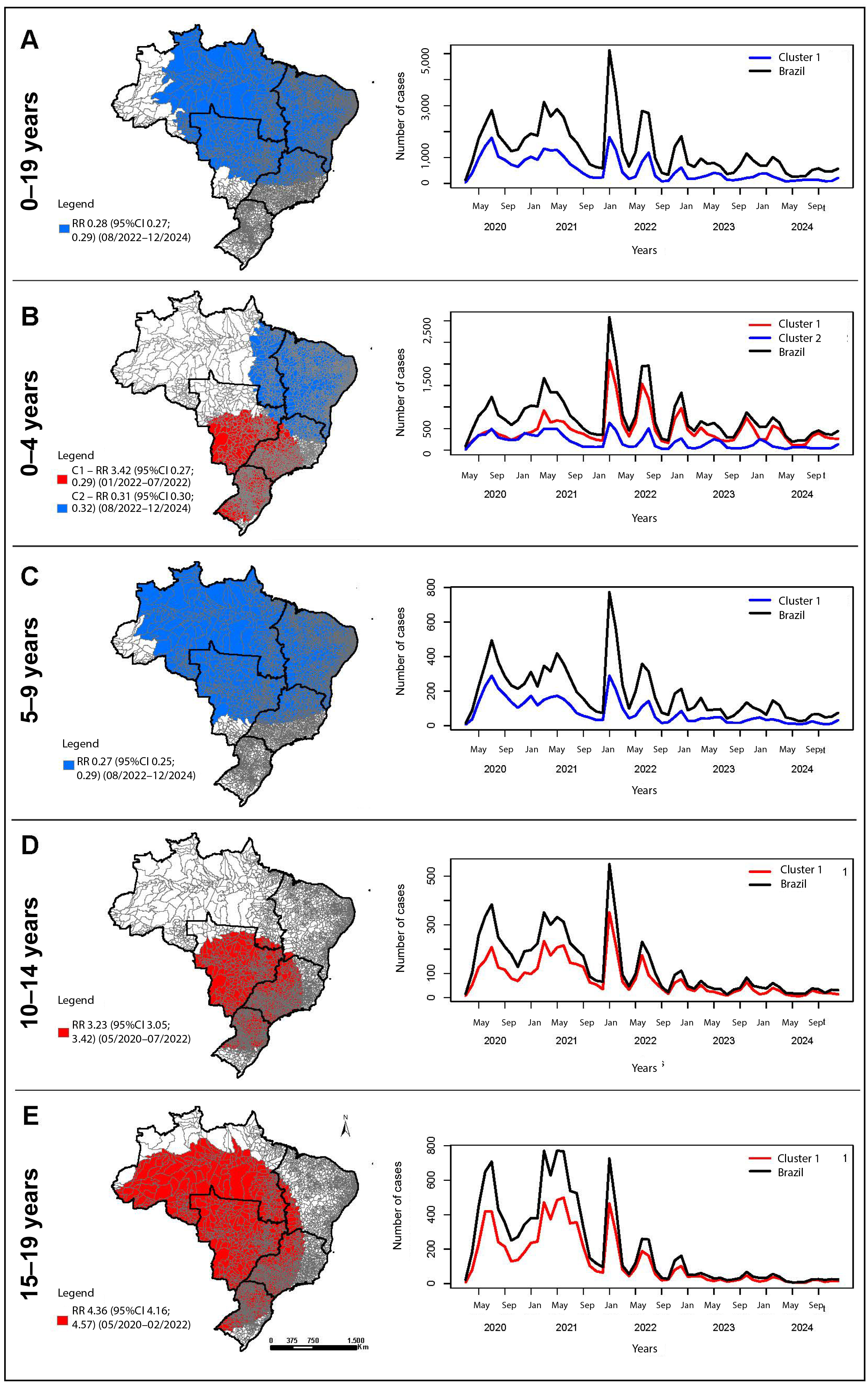
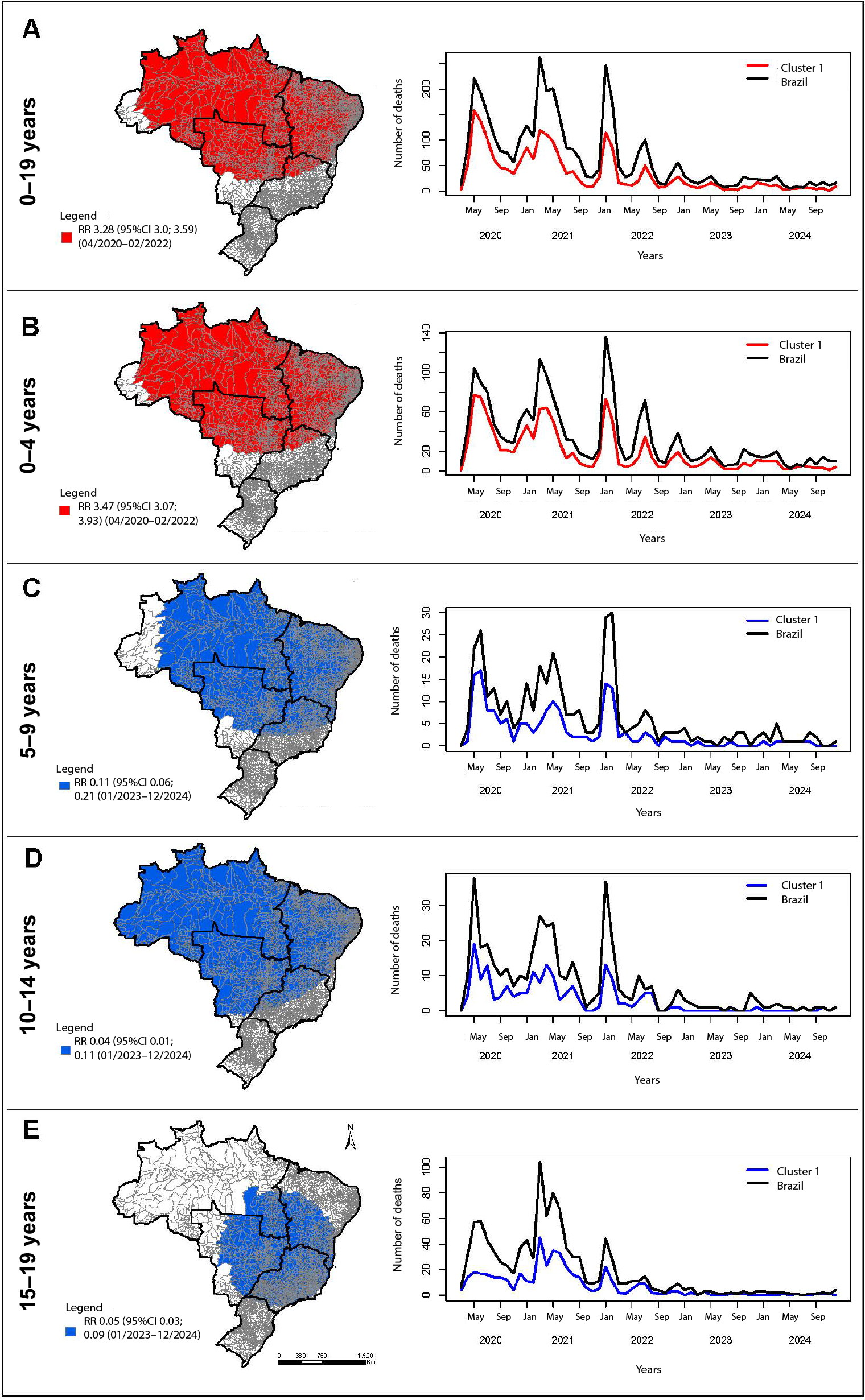
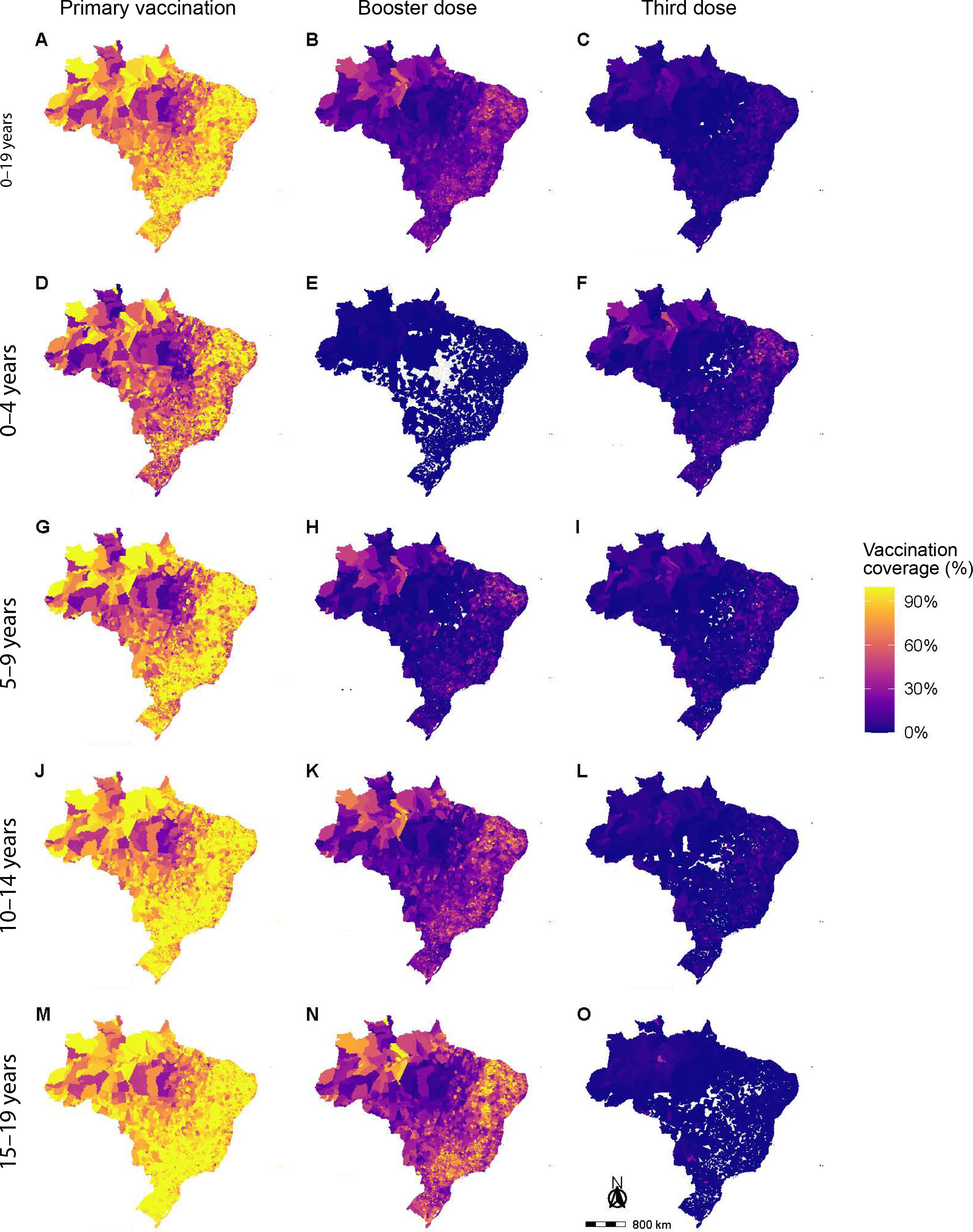
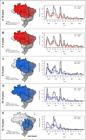
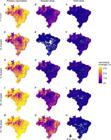
Results A total of 74,470 cases and 3,749 deaths were recorded in the population aged 0–19 years. Significant clusters of high and low risk were identified, including one protective cluster for cases among individuals aged 0–19 years (relative risk [RR] 0.28; 95% confidence interval [95%CI] 0.27; 0.29) and another high-risk cluster for deaths in the North, Northeast, and Central-West regions (RR 3.28; 95%CI 3.00; 3.59). Primary vaccination reached high coverage (85.2%), especially among adolescents aged 15–19 years (96.8%), whereas booster dose coverage remained insufficient (23.1%). The spatial distribution showed heterogeneity, with lower vaccination coverage in the North and Central-West regions.
Conclusion Space-time inequalities were observed in cases and deaths from severe acute respiratory syndrome (SARS) caused by COVID-19 among children and adolescents, with risk clusters and heterogeneity in vaccination coverage, characterized by high primary coverage and low booster coverage, especially in the North and Central-West regions..
Keywords
COVID-19; Child; Vaccines; Risk; Spatial Analysis
 Thumbnail
 Thumbnail
 Thumbnail