 Catastrophic health expenditures incurred by families in 2003, 2009 and 2018 in the Federal District, Brazil: evolution and composition
Objective To investigate the evolution of prevalence of catastrophic health expenditure in the Brazilian Federal District at three different times (2003, 2009 and 2018), as well, to identify the composition of outof- pocket expenditure in the respective years.
Method Time series study, using descriptive data from the Family Budget Survey. Prevalence was stratified by consumption quintiles.
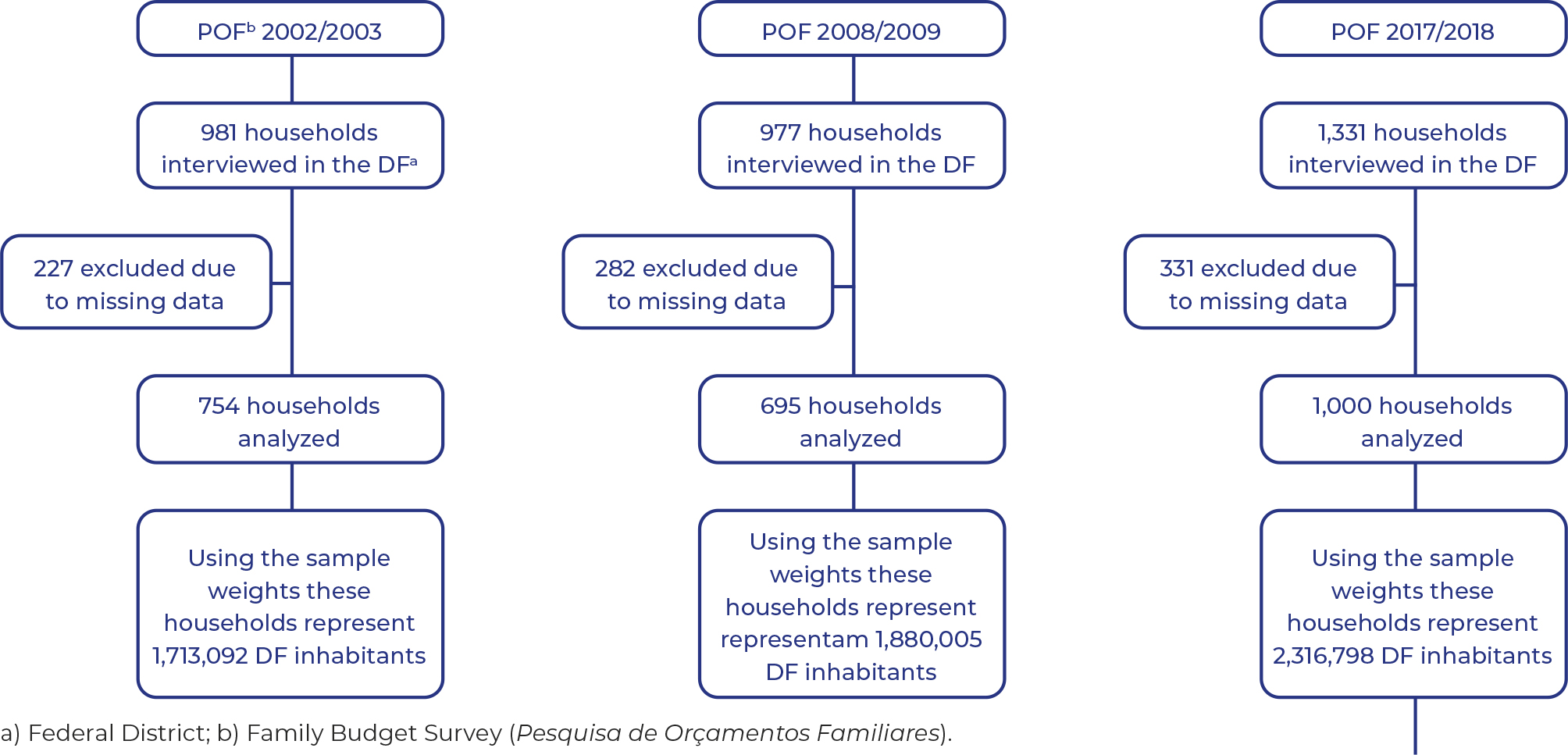
Results 754 households were selected as a sample in 2003, 695 in 2009 and 1,000 in 2018. Taking a 10% consumption threshold, prevalence of catastrophic expenditure was 12.3% (95%CI 9.6;14.9) in 2003, 15.3% (95%CI 12.1;18.3) in 2009 and 14.1% (95CI% 11.8;16.2) in 2018. Households with lower income had higher prevalence of catastrophic expenditure. Medicines have a greater burden on expenditure of low-income families.
Conclusions There was an increase in prevalence of catastrophic expenditure in the Federal District. Medicines were the main expense for the poorest families.
Keywords
Catastrophic Health Expenditure; Health Expenditure; Drug Costs; Health Care Economics and Organizations; Time Series Studies
Main results Prevalence of catastrophic health expenditure increased in the Federal District, rising from 12.3% in 2003 to 15.3% in 2018, reaching its peak in 2009 (14.1%) (10% threshold), whereby medication was the main health expenditure in the poorest strata.
Implications for services There is room for improving the performance of health services, expanding their health care provision strategies from the viewpoint of equity, through intersectoral policies. Special attention must be given to pharmaceutical assistance.
Perspectives The Federative Unit governments have a fundamental role in achieving financial protection for health care in Brazil, so that the sum of subnational efforts results in the achievement of target 3.8 of the UN Sustainable Development Goals.
 Thumbnail