 Syphilis in pregnancy detection rate: time series study associated with descriptive analysis by periods, Campo Grande, 2015–2023
Objective To analyze the time series and trend of the syphilis in pregnancy detection rate over nine years and the variations in clinical and epidemiological characteristics across four periods according to relevant public health events in Campo Grande, Mato Grosso do Sul.
Methods Time series study with descriptive analysis by periods, using data from the Notifiable Diseases Information System (Sistema de Informação de Agravos de Notificação, SINAN) and the Live Birth Information System (Sistema Nacional de Nascidos Vivos, SINASC). Segmented linear regression was used to analyze the temporal trend of the syphilis in pregnancy detection rate, and the Kruskal-Wallis test was employed to analyze clinical and epidemiological variables across the evaluated periods: penicillin shortage (2015–2016); supply normalization and pre-pandemic period (2017–2019); pandemic (2020–2021); and post-COVID-19 pandemic (2022–2023).
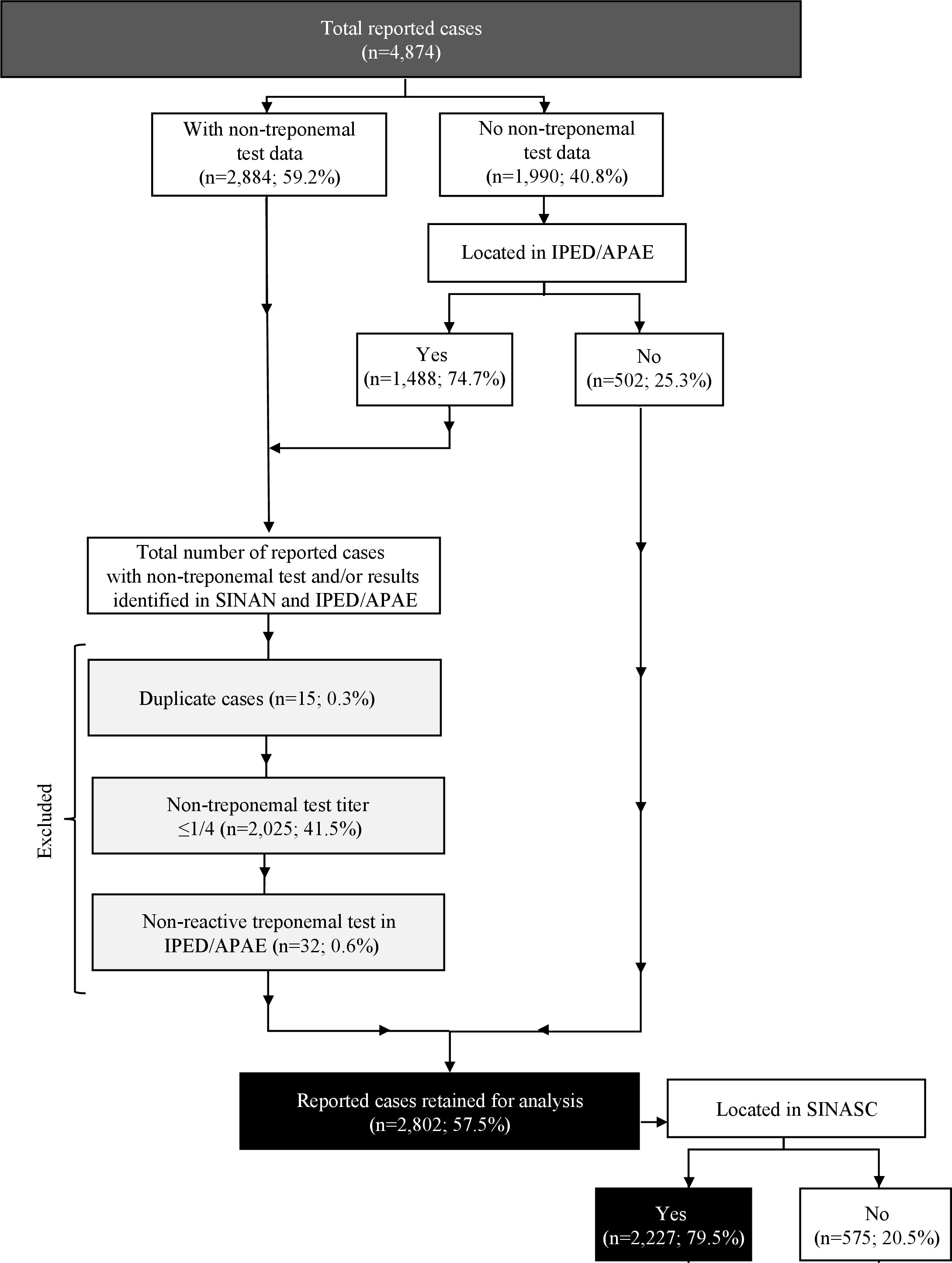
Results A total of 2,802 cases were analyzed. An increase of 170.4% in the detection rate was observed, with a rising trend until 2018 (annual percentage change, APC 31.18%; 95% confidence interval, 95%CI 4.79; 118.80; p-value 0.017) and subsequent stabilization (APC 1.16%; 95%CI -27.24; 15.83; p-value 0.936). Regarding clinical-epidemiological characteristics, there was an increase in the frequency of latent phase, reactive treponemal tests, adequate treatment, and maternal education, and a reduction in partner treatment. During 2017–2019, there was a reduction in the use of non-treponemal tests; in 2020–2021, a decrease in Brown (Brazilian mixed race)/Black/Asian/Indigenous women; and in 2022–2023, an increase in prenatal care visits and late diagnoses.
Conclusion The syphilis in pregnancy detection rate increased until 2018 and remained stable thereafter. Changes in clinical and epidemiological characteristics reflect variations in the care context, with advances in prenatal care, but persistence of weaknesses in the timely diagnosis and treatment of partners.
Keywords
Syphilis; Pregnancy; Disease Notification; Health Information Systems; Time Series Studies
 Thumbnail