 Strategic Innovation for Drug Enforcement: Brazilian Development of Certified Reference Material for Amphetamine Hydrochloride
Abstract
This study addresses a critical national gap in Brazil regarding the production of certified reference materials (CRMs) for amphetamines, which are essential for ensuring the accuracy, comparability, and metrological traceability of forensic drug analyses. The work presents the synthesis of high-purity amphetamine hydrochloride on a gram scale and its full certification as a CRM. The synthetic route comprises three steps, including oxidation, reductive amination, and an acid-base reaction. The certification process involves comprehensive studies of identity, homogeneity, stability under varying conditions, and full characterization. The initiative was carried out in partnership with the University, Institute of Metrology, Quality and Technology (Inmetro), and the Brazilian Federal Police, aiming to meet the practical demands of forensic laboratories. Additionally, it contributes to building national capacity for CRM production, reducing reliance on imports, and promoting scientific autonomy. This work represents a step toward improving the quality infrastructure in forensic science in Brazil.
Keywords:
forensic science; psychoactive substances; certified reference materials; amphetamines; Wacker-Tsuji oxidation; reductive amination
Introduction
Amphetamines are a class of psychoactive substances that strongly stimulate the central nervous system by increasing levels of dopamine, serotonin, and norepinephrine. Although they have legitimate medical applications, such as in the treatment of narcolepsy, attention-deficit/hyperactivity disorder, and obesity, non-medical use can result in severe and potentially irreversible health consequences.1-4 According to the World Health Organization, approximately 292 million people aged 15 to 64 used psychoactive substances globally in 2022, with about 64 million experiencing substance use disorders. Drug abuse is linked to an estimated 600,000 deaths annually.5 Meanwhile, Brazil reported its largest amphetamine seizure on record in 2024. The Federal Highway Police confiscated over 859,000 units, more than triple the amount seized in 2023. Commonly known as “rebite”, the drug is often used by truck drivers to stay awake and extend driving hours, posing serious risks to both individual health and road safety.6-8
The synthesis of amphetamine (1) dates back to the early 19th century, when these compounds were first developed as stimulants and employed in the treatment of medical conditions such as narcolepsy and depression. Among the classical approaches, the Leuckart synthesis and the reductive amination of phenyl-2-propanone (2) stand out, typically affording moderate to high yields under relatively simple experimental conditions. In contrast, alternative methods, such as rearrangement reactions (Hofmann, Curtius), Friedel-Crafts alkylation, and Ritter or Knoevenagel condensations, often result in lower yields or reduced reproducibility. In comparison, the methodology described herein achieves competitive yields relative to reported values, while preserving operational simplicity and employing readily available starting materials.9-12
The control of production, distribution, and non-medical use of psychoactive substances relies heavily on accurate and reliable forensic analyses. In this scenario, Certified Reference Materials (CRMs), homogeneous and stable substances with well-defined purity, play a crucial role in ensuring analytical quality, method validation, and metrological traceability in compliance with ISO/IEC 17025 and related ABNT standards.13-15 However, Brazil currently lacks domestic production of amphetamine CRMs, forcing reliance on expensive international suppliers. This dependence limits routine application in forensic laboratories, weakens national autonomy in drug enforcement, and delays strategic responses to drug-related crimes. Developing local capabilities for CRM production is therefore not only a scientific and economic imperative but a matter of sovereignty and public security.
In Brazil, the National Institute of Metrology, Quality and Technology (Inmetro) is the official institution authorized to produce and certify CRMs.16-19 The certification process involves a rigorous series of steps, including synthesis, homogenization, characterization, stability testing, and method validation. Analytical procedures must meet stringent performance criteria, such as selectivity, precision, limits of detection, and robustness, to ensure the CRM maintains its integrity during storage and transport. Moreover, certified values must be traceable either directly to International System of Units (SI) or to international certified standards, thereby ensuring comparability and legal defensibility of results across time and different laboratories.
In this context, strengthening collaboration among metrology institutes, forensic laboratories, and academic institutions becomes a strategic pillar for advancing forensic science and safeguarding national security.20,21 The domestic production and availability of high-quality CRMs play a vital role, not only in supporting public safety but also in reducing dependence on international sources. Furthermore, sustained investment in research, technical training, and scientific dissemination consolidates a robust national forensic infrastructure, empowering the country to respond effectively to the challenges of illicit drug control with scientifically validated and legally defensible evidence.
This study aims to address the national gap in amphetamine CRMs by synthesizing high-purity amphetamine hydrochloride on a gram scale and conducting its full certification process as a CRM. Developed through a partnership between the University, Inmetro, and the National Institute of Criminalistics, the initiative directly supports the operational needs of Brazilian forensic laboratories from the Federal and State Police Forces. Furthermore, it contributes to strengthening the national capacity for producing certified materials, reducing dependence on imports, and promoting greater technical autonomy of forensic science in the country.
Results and Discussion
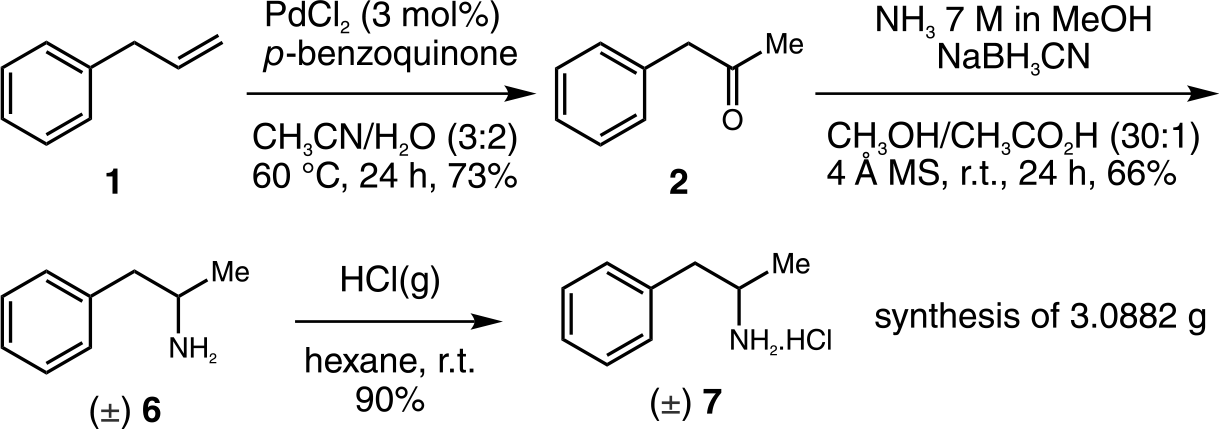
The synthetic route to amphetamine hydrochloride is based on a methodology previously developed by our research group for the synthesis of this class of compounds.22 Our investigations began with the Wacker-Tsuji oxidation, in which allylbenzene (1) was treated with 2 mol% of PdCl2 and p-benzoquinone in a 12:1 mixture of acetonitrile and water at 60 °C for 24 h, affording the desired ketone 2 in only 15% yield. To improve this result, a comprehensive study was subsequently conducted to evaluate the effects of water content, reaction temperature, reaction time, and catalyst loading on the reaction efficiency. All by-products formed under the various conditions were systematically identified and monitored, as depicted in Table 1.
The oxidation reaction begins with the coordination of olefin 1 to PdII, which facilitates a nucleophilic attack by water on the more substituted carbon, leading to the formation of desired ketone 2 after a hydride transfer step (see Supplementary Information section, Scheme S1). Alternatively, water can also attack the less substituted carbon of the PdII-coordinated olefin, resulting in the formation of 3-phenylpropanal (4). Additionally, isoallylbenzene (3) is generated via Pd-mediated isomerization, and its oxidative cleavage likely gives rise to benzaldehyde (5), as PdII can catalyze the oxidative cleavage of internal olefins with molecular oxygen under acidic conditions.
The results indicate that a higher proportion of water in the reaction mixture favors oxidation over isomerization, as expected, given that water plays an essential role in the oxidation process (entries 1-5). However, when the amount of water exceeds that of acetonitrile, no improvement in the efficiency of the desired product 2 formation is observed. Instead, this condition promotes the formation of aldehydes 4 and 5 (entry 6). Elevated temperatures enhance the efficiency of 2 formation (entries 2, 5, and 11). Additionally, longer reaction times lead to degradation of the isomerization product 3, accompanied by a slight increase in the ketone 2 yield. This suggests the occurrence of a slow conversion or a decomposition pathway that influences the final reaction outcome (entries 5, 8-10). In terms of catalyst loading, 3 mol% of PdCl2 resulted in the highest reaction efficiency and the greatest yield of 2. Lower catalyst amounts favored isomerization, while higher loadings decreased overall efficiency and led to increased formation of aldehydes 4 and 5 (entries 5, 12-15).
With intermediate ketone 2 in hand, reductive amination was carried out using a 7 M methanolic solution of NH3 (2.5 equiv) and NaBH3CN (1.5 equiv) in a mixture of CH3OH/CH3CO2H (30:1), in the presence of 4 Å molecular sieves for 24 h at room temperature, affording the racemic amphetamine (6) in 70% yield. Reaction time studies at 4, 8, and 12 h yielded the desired amine in 43-50% yield.
It is important to note that 6 is a highly volatile compound and must be handled carefully. In contrast, amine hydrochlorides are generally more stable, non-volatile, and suitable for certification as reference materials. For the synthesis of amphetamine hydrochloride (7), the free base amine was reacted with hydrochloric acid generated in situ via the reaction of sulfuric acid with sodium chloride affording the 7 in 90% yield.
Once the optimal synthetic conditions were established and 7 was successfully prepared, the batch synthesis was carried out on a gram scale. Starting from 5 g of allylbenzene (1), 3 g of amphetamine hydrochloride (7) was obtained, after three reaction steps and 43% overall yield (Scheme 1).
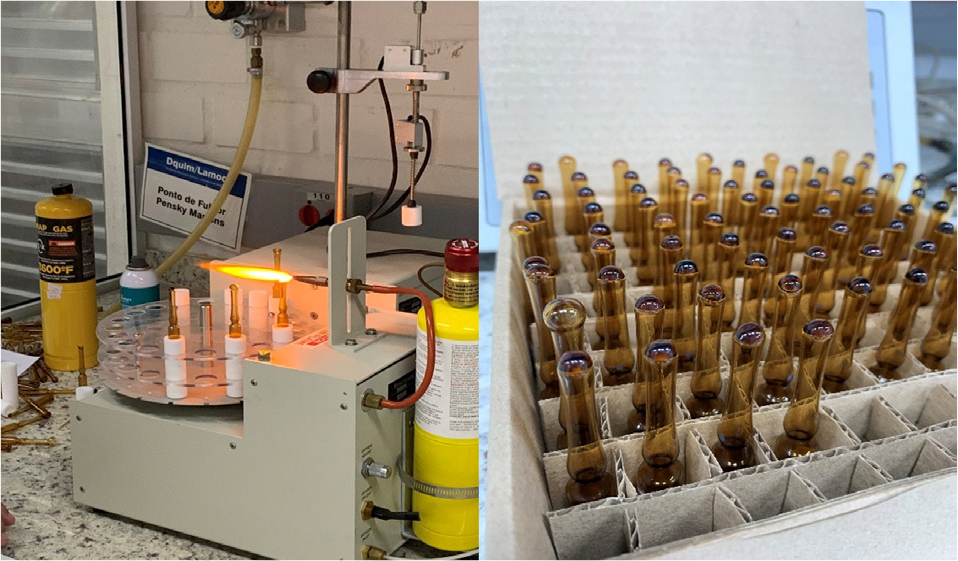
With the synthesis completed, we proceeded to develop a certification protocol to produce an amphetamine hydrochloride Certified Reference Material (CRM), in accordance with ABNT NBR ISO 17034 requirements.14 This protocol encompasses studies on identity, homogeneity, stability, and material characterization. Initially, the certification of amphetamine hydrochloride was planned in its solid form. However, during the homogenization and weighing steps for batch preparation, unlike other amphetamines previously prepared by our group, the solid form exhibited significant hygroscopicity, which compromised the stability of the CRM candidate. Consequently, the strategy was revised, and a batch of 469 units of a solution-based candidate CRM, prepared in methanol at a nominal concentration of 1 mg mL-1 (expressed as the free base), filled into 2 mL ampoules containing 1.1 mL of solution (nominal volume: 1 mL), was produced.
Qualitative analyses using 1H and 13C nuclear magnetic resonance (NMR), along with liquid chromatography-tandem mass spectrometry (LC-MS/MS), were performed to confirm the identity of the solid candidate. All NMR signal assignments and observed correlations were consistent with the structure of 7 (see Supplementary Information section, Figures S5 and S6). LC-MS/MS analysis further validated the chemical identity of the analyte. Full scan spectra revealed the [M + H]+ ion at m/z 136.2, which was selected as the precursor ion for collision-induced dissociation (CID). The resulting MS/MS spectrum showed a major fragment at m/z 119.1, corresponding to the loss of an ammonia, in agreement with the expected fragmentation pathway (see Supplementary Information section, Figure S12).
Additionally, the chlorine mass fraction was also determined by energy-dispersive X-ray fluorescence spectroscopy to further confirm the identity of the synthesized 7 (see Supplementary Information section, Figure S17). A primary chloride standard solution at 9994.2 ± 2.2 mg kg-1 was gravimetrically prepared from certified pure sodium chloride 99.9852 ± 0.0059%. An external calibration curve was constructed, and samples (0.1 g) were dissolved in 10 g of Type I water. The closest calibration point to the sample was used to calculate the chlorine mass fraction, which was found to be 208.3 ± 4.0 mg g-1. The expanded uncertainty was calculated using a coverage factor (k) = 2.18, corresponding to a confidence level of approximately 95.45% with 12 effective degrees of freedom.
In addition to the expected amine 7, three trace-level impurities were detected by LC-MS/MS with ions observed at m/z 254.3 and m/z 136.0, and identified as compounds 8, 9, and 10 (Figure 1 and Supplementary Information section, Figures S12-S17). Amines 8 and 9 are likely formed through a reductive amination between ketone 2 and amphetamine 6, while amine 10 may result from a similar reaction involving aldehyde 4 and ammonia. The chemical profile of the drug, determined through analytical methods, reveals a distinct chemical signature associated with the specific production method. Such impurities are frequently observed when amphetamines are synthesized via oxidation followed by reductive amination,22 and they serve as valuable forensic markers for tracing the synthetic route, production conditions, and potentially the geographic or laboratory origin of the drug.

After identification of the solid candidate, the solution was prepared from 0.98905 g of the homogenized material and 704 mL (556.961 g) of HPLC-grade methanol, stirred for 80 min, and then filled into ampoules with 1.1 mL of this solution at a controlled temperature range of 26 to 28 °C (Figure 2).
The between-unit homogeneity study was performed using HPLC-DAD on 10 ampoules randomly selected. Each ampoule was analyzed in triplicate, with no prior sample preparation. Homogeneity was assessed by comparing the chromatographic peak areas corresponding to 7, adopting an acceptance criterion of no more than 1% heterogeneity. No systematic trends were observed in relation to the filling order or the chromatographic injection sequence (Figure 3).
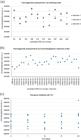
Homogeneity studies by bottling order (a) and by injection order (b) and stability analysis (c).
The uncertainty due to inhomogeneity (uhom) or standard deviation (sbb) were calculated according to equation 1, (where, MS: mean squares from the analysis of variance (ANOVA) and n0: the number of replicate measurements per unit), considering that only the between-unit component is relevant. The resulting heterogeneity contribution was 0.23%, well within the established acceptance limit, thereby confirming the homogeneity of the CRM candidate.
The stability of the CRM was measured using an isochronous design simulating the transport conditions. In this study, 15 units were randomly selected: 3 units were stored at the reference temperature of -20 °C, while the remaining 12 were exposed to 40 °C. After each 7-day interval, 3 units were transferred from the test temperature (40 °C) to the reference temperature (-20 °C), resulting in groups exposed to 40 °C for 0, 7, 14, 21, and 28 days. At the end of the study period, all units were analyzed by high-performance liquid chromatography with diode array detection (HPLC-DAD) in a single sequence to assess potential degradation of the CRM due to thermal exposure. A linear regression curve was constructed from the results and statistically analyzed, showing an insignificant slope, confirming that the material remains stable at 40 °C for up to 28 days (Figure 3c). Moreover, a component of uncertainty associated with this stability curve (ustab) was estimated in 0.97% from the product of the standard error of the regression slope by the time of study, and it was included in the final uncertainty budget of the material.
The characterization of the methanolic solution of 7 was performed via gravimetric preparation, based on the weights of the components used to prepare the batch, following the guidelines of the ABNT NBR ISO 33405 standard.23 The main source of uncertainty in calculating the mass fraction (w) of amphetamine (6), expressed as the free base, was the purity of the synthesized solid amphetamine hydrochloride (7). This purity was determined using a quantitative nuclear magnetic resonance (qNMR) approach, with corrections for impurities monitored by HPLC-DAD (see Supplementary Information section, Tables S1-S5). The chromatographic method demonstrated adequate selectivity during its validation for other amphetamines (methamphetamine, 3,4-methylenedioxyamphetamine (MDA), 3,4-methylenedioxymethamphetamine (MDMA), and methylenedioxyethyl-N-amphetamine (MDEA). No overlap of chromatographic signals from amphetamine impurities was observed in the sample analysis, and the blank (solvent) showed no signals in the regions of interest. Method repeatability was evaluated in two sample concentrations and relative standard deviation (RSD) values were 0.94% for the 0.5 mg mL-1 replicates and 0.58% for the 2 mg mL-1 replicates. Both values were below the acceptance criterion of 2.7%.
The target values for the analyzed properties were 1.263 ± 0.025 mg g-1 (k = 2) for the mass fraction of 6 in solution (as free base) and 1.000 ± 0.020 mg mL-1 (k = 2) for the concentration of 6. Based on the combined uncertainties from homogeneity studies, short-term stability tests, and gravimetric characterization, the certified value for the mass fraction of amphetamine (6) was estimated at 1.301 ± 0.027) mg g-1 (k = 2), calculated according to equation 2. The concentration of amphetamine (6) in the methanolic solution of amphetamine hydrochloride (7) was determined based on the relationship between the batch density 0.78472 ± 0.00006 g mL-1 (k = 2) and the mass fraction value. The solution was certified at 1.021 ± 0.021 mg mL 1 (k = 2), reflecting high purity and an uncertainty level suitable for forensic analyses.
Conclusions
This work resulted in the production of an amphetamine hydrochloride CRM, with a concentration of 1.021 ± 0.021 mg mL-1 (k = 2), reflecting high purity and an uncertainty level compatible with the requirements of forensic analysis. In addition, the batch synthesis, carried out on a gram scale, strengthened the robustness of the proposed methodology for preparing high-purity amphetamines. The detailed characterization of the chemical profile and impurities allowed the identification of a specific chemical signature associated with the adopted synthetic route, which may support more precise investigations into the origin of seized substances.
Of the 469 CRM units produced, 396 will be donated to state and federal forensic chemistry laboratories, 58 will be used in further certification studies, and 15 reserved for internal use by Inmetro. The free distribution of this material represents an estimated savings of half a million Brazilian Reais for the country, excluding taxes and import costs. In forensic laboratories, the CRM will ensure metrological traceability in illicit drug analyses, enhancing the technical and scientific reliability of forensic reports, reinforcing national autonomy in drug control, and supporting more timely and strategic responses to drug-related crimes.
Experimental
General information
All commercially available reagents and solvents were used as received or were purified following the guidelines of Perrin and Armarego.24 Maleic acid CRM 8792.0001, certified purity: 999.9 ± 1.7 mg g-1 (k = 2) was from Inmetro (Duque de Caxias, RJ, Brazil). All reactions were monitored by thin-layer chromatography (TLC) using aluminum-backed plates pre-coated with silica gel 60 F254 (Silicycle®) and visualized using UV light (254 nm) and by staining with phosphomolybdic acid. Purification of the synthesized products was performed by flash chromatography using silica gel (200-400 mesh) as the stationary phase. NMR data were recorded at 25 ºC using Varian 400 MR (399.96 MHz for 1H; 100.57 MHz for 13C), Varian V NMR500 (499.90 MHz for 1H; 125.70 MHz for 13C) and Bruker Daltonics Avance III HD (499.90 MHz for 1H; 125.70 MHz for 13C) spectrometers. Chemical shifts (d) are reported in parts per million (ppm), using tetramethylsilane (TMS), deuterated chloroform, or deuterated methanol as internal reference standards. Spin multiplicities are described as s (singlet), d (doublet), dd (double doublet) and m (multiplet). Coupling constant (J) values are reported in hertz (Hz). HPLC-DAD was performed on an Acquity UPLC system using an ACE 5 C8 (250 × 4.6 mm). The chromatographic method consisted of: mobile phase A (type 1 water + 0.1% trifluoracetic acid), mobile phase B (acetonitrile + 0.1% trifluoracetic acid), with a flow rate of 0.8 mL min-1, and an injection volume of 10 µL at 25 ºC column temperature, and wavelength detector (λ = 210 nm). Analysis was conducted in gradient mode starting by a plateau at 10% of phase B for 1 min followed by an increase to 20%-B in 10 min, up to 30% B in 20 min and remaining for up to 35 min, when the percentage of B was reduced to 10% again and remained for up to 42 min. Detection was performed in scan mode between 190-300 nm in addition to the use of five fixed channels at 205, 210, 234, 257, 285 nm, with the 210 nm channel being used for quantifications. LC-MS/MS was performed on a Xevo-TQD coupled to Acquity UPLC system using the same chromatographic method described above. Analysis was conducted in total scan and product ion scan mode (50-600 m/z). In both cases electrospray source operating in positive mode with capillary voltage of 4 kV, cone voltage of 35 V, desolvation temperature of 200 ºC and desolvation gas flow rate of 650 L h-1. Data obtained through HPLC DAD and LC MS/MS were acquired and processed with MassLynx V4.2 (Waters). Automatic integration was applied to amphetamine peak areas (12.3 min, 210 nm channel), while MS were analyzed manually. HRMS was performed on a microTOF-II Bruker mass spectrometer.
Synthesis of 1-phenylpropan-2-one (2)
In a 25 mL round-bottom flask were added p-benzoquinone (2.30 g, 21.28 mmol, 1.30 equiv), palladium(II) chloride (60 mg, 0.34 mmol, 0.02 equiv), 12 mL of acetonitrile, and 8 mL of distilled water. The mixture was stirred at 60 °C for 30 min, resulting in a homogeneous solution. Subsequently, allylbenzene (2.20 mL, 2.0 g, 16.92 mmol, 1.00 equiv) was added dropwise, and the reaction mixture was stirred at 60 °C for 24 h. After this period, the reaction mixture was concentrated under reduced pressure using a rotary evaporator. The crude product was dissolved in 20 mL of ethyl acetate and filtered through Celite. The filtrate was extracted with 1.3 M NaOH solution (3 × 20 mL), the organic phase was dried over MgSO4, and concentrated under vacuum. The resulting oil was purified by column chromatography using 10% ethyl acetate/hexanes as the eluent, affording 1.23 g of 1-phenylpropan-2-one (2) as a slightly yellow oil (54% yield).
IR (KBr) ν / cm-1 3035, 2925, 1712, 1675, 1625, 1603, 1496, 1452, 1417, 1357, 1229, 1158, 1124, 1077, 1030, 736, 694; 1H NMR (500 MHz, CDCl3) d 7.35-7.31 (m, 2H), 7.28-7.25 (m, 1H), 7.21-7.19 (m, 2H), 3.69 (s, 2H), 2.15 (s, 3H); 13C NMR (126 MHz, CDCl3) d 206.6, 134.4, 129.5, 128.9, 127.2, 51.2, 29.3; HRMS (ESI) m/z, calcd. for C9H10O [M + H]+: 135.0804, found: 135.0808.
Synthesis of 1-phenylpropan-2-amine (6)
To a 100 mL round-bottom flask, containing 4 Å molecular sieves, were added 100 mL of methanol, 8.77 mL of acetic acid, 1-phenylpropan-2-one (1.23 g, 9.13 mmol, 1.00 equiv), sodium cyanoborohydride (0.86 g, 13.60 mmol, 1.50 equiv), and a 7 M methanolic solution of ammonia (3.25 mL, 22.80 mmol, 2.50 equiv). The reaction mixture was stirred at room temperature for 24 h. After this period, the solution was filtered and concentrated under reduced pressure using a rotary evaporator. The crude product was dissolved in water and washed with dichloromethane (1 × 40 mL). The aqueous phase was then adjusted to pH 14 and extracted with dichloromethane (3 × 40 mL). The combined organic layers were dried over MgSO4, filtered, and concentrated under vacuum to afford 0.43 g of 1-phenylpropan-2-amine as a colorless oil (41% yield).
IR (KBr) ν / cm-1 3423, 3061, 2960, 2924, 1650, 1565, 1449, 1373, 1150, 1100, 741, 700; 1H NMR (500 MHz, CDCl3) d 7.31-7.28 (m, 2H), 7.23-7.18 (m, 3H), 3.20-3.14 (m, 1H), 2.71 (dd, 1H, J 13.3, 5.3 Hz), 2.51 (dd, 1H, J 13.3, 8.0 Hz), 1.12 (d, 3H, J 6.3 Hz); 13C NMR (126 MHz, CDCl3) d 139.7, 129.3, 128.4, 126.2, 48.5, 46.7, 23.6; HRMS (ESI) m/z, calcd. for C9H13N [M + H]+: 136.1121, found: 136.1120.
Synthesis of 1-phenylpropan-2-amine hydrochloride (7)
A 40 mL vial containing a solution of 1-phenylpropan-2-amine (0.43 g, 3.15 mmol, 1.00 equiv) in hexane was bubbled with hydrochloric acid generated from a mixture of 1.00 g of sodium chloride and 3 mL of sulfuric acid in a closed vessel. The resulting precipitate was filtered and purified by column chromatography on C18 silica with gradient elution H2O/MeOH (0-100%), affording 0.49 g of 1-phenylpropan-2-amine hydrochloride (90% yield).
IR (KBr) ν / cm-1 3450, 3050, 2950, 1600, 1496, 1386, 1098, 747, 700; 1H NMR (500 MHz, CDCl3) d 7.26-7.18 (m, 5H), 6.00 (br s, 3H), 3.59-3.54 (m, 1H), 3.28 (dd, 1H, J 13.2, 4.4 Hz), 2.83 (dd, 1H, J 13.2, 9.6 Hz), 1.34 (d, 3H, J 6.5 Hz); 13C NMR (126 MHz, CDCl3) d 137.4, 130.4, 129.9, 128.4, 50.3, 41.8, 18.3; HRMS (ESI) m/z, calcd. for C9H13N [M + H]+: 136.1121, found: 136.1127.
qNMR measurements25
The purity of the synthesized amphetamine hydrochloride solid was determined by 1H qNMR using maleic acid CRM (999.9 ± 1.7) mg g-1 (k = 2), as an internal standard (IS) where approximately 20 mg of sample and 88.0 mg of IS were weighed and dissolved in 1 mL of D2O by vortexing. Five sample replicates were prepared and each was analyzed in triplicate in randomized order. NMR measurements were conducted on a Bruker Ascend 500 MHz Avance III HD spectrometer (11.74 T) equipped with a Prodigy cryoprobe and operated at 298 K using TopSpin 4.2.1 software (Bruker). The 90° pulse width (p1) was determined by null signal optimization using a 360° pulse sequence, yielding an optimal p1 of 16.74 μs. The spin-lattice relaxation time (T1) of amphetamine hydrochloride was determined using an inversion-recovery pulse sequence with variable delay (D7), establishing a required relaxation delay (D1) of 31.35 s corresponding to 10 times the highest T1. Data were collected automatically using ICON-NMR with zg as pulse sequence, 32 transients, 0 Dummy scans (DS), 31.35 s of relaxation delay (D1), 4.65 ppm of spectral offset, 3.2768 μs acquisition time, 64k acquisition points, and digital resolution 0.15 Hz per point. Prior to each acquisition, automated probe tuning/matching, receiver gain optimization, and magnetic field shimming were performed. 1H NMR spectra were referenced to D2O signal (4.80 ppm). Phase correction was performed automatically in TopSpin and the subsequent processing was conducted in MestReNova 14.1.1 (Mestrelab Research) using exponential multiplication of FID prior to Fourier transformation (0.05 Hz line broadening) with 128k spectral size, followed by manual phase correction, spectral integration and baseline correction.
Homogeneity studies
After producing a batch of the candidate CRM in ampoules of 7 in methanol (1 mg mL-1 as free base), between-unit homogeneity study was conducted using HPLC-DAD, employing 10 units of the batch of candidate CRM selected through stratified random sampling. The batch was divided into five distinct extracts, from which two samples were randomly selected using Microsoft 365 Excel’s (version 2507) randomization function. Homogeneity was assessed by transferring ampoule contents into vials. For each unit, three 5 µL injections were performed directly from the vial, characterizing true replicates, as no prior sample preparation was carried out before the injections. For analytical processing, replicates from each sample were systematically allocated into three processing blocks. This blocking design ensured sequential analysis, where replicates from a given sample were only processed after completion of all samples from the preceding block. Amphetamine hydrochloride (7) units were automatically analyzed via MassLynx (210 nm detection channel). Amphetamine peak areas were analyzed by ANOVA. Since chromatographic peak intensity and area directly correlate with amphetamine concentration, they served as homogeneity indicators, with 1% maximum heterogeneity set as the batch acceptance criterion.
Stability study
The short-term stability study was conducted at 40 °C over a period of 28 days using an isochronous design to assess the stability of the CRM under simulated transport conditions. In this type of design, stability was evaluated using 15 units selected via a stratified random sampling approach, with three of these units being randomly removed from the 40 °C condition every 7 days and subsequently stored at the reference temperature of -20 °C for later analysis. At the end of the 28-day period, the 12 units corresponding to days 7, 14, 21, and 28 were combined with three additional units that had remained at the reference temperature throughout the study (corresponding to time zero). All 15 units were analyzed at the same time without prior sample preparation using the same HPLC DAD procedure described for homogeneity. Transport stability was evaluated by linear regression, based on the comparison of chromatographic peak areas obtained under repeatability conditions. For each unit, three true replicates were performed. To assess whether there is a time-related trend in the measured values of the candidate material units, a least-squares regression was performed. In this study, no trend was observed, as the regression curve showed a slope that was not significantly different from zero. According to ISO 33405,23 the uncertainty of this slope must be multiplied by the study duration to estimate the uncertainty due to potential material instability.
Legal and safety notices
This work was conducted in a controlled environment, and all the relevant legal authorizations to produce these materials were granted by the Brazilian National Health Surveillance Agency (ANVISA special authorization number 1267439), the Council of Pharmacy of the State of Rio de Janeiro (CRF-RJ number 20065), as well as the Federal Police (license number 2022-00616382). The authors do not endorse, in any way, the production of these substances, which are known to be toxic and hazardous to humans and the environment.
Supplementary Information
Supplementary information is available free of charge at http://jbcs.sbq.org.br as PDF file.
Acknowledgments
We are thankful for the financial support provided by the Coordenação de Aperfeiçoamento de Pessoal de Nível Superior - Brazil (CAPES, grant number 88887.516472/2020-00). K. C. C. Machado, W. Wollinger, and E. C. P. do Rego thank the Instituto Nacional de Ciências e Tecnologia sobre Substâncias Psicoativas (INCT-SP)/Conselho Nacional de Desenvolvimento Científico e Tecnológico (CNPq) (grant number 406958/2022-0); Fundação de Amparo à Pesquisa do Estado de Minas Gerais (FAPEMIG)/INCT-SP (grant number APQ-03984-24) and Coordenação de Aperfeiçoamento de Pessoal de Nível Superior (CAPES/INCT-SP). We also thank UFRJ and Inmetro for providing research infrastructure.
Data Availability Statement
The data underlying this study are available in the published article.
References
-
1 Paz-Ramos, M. I.; Cruz, S. L.; Violante-Soria, V.; Rev. Invest. Clin. 2023, 75, 143. [Crossref]
» Crossref -
2 Docherty, J. R.; Alsufyani, H. A.; J. Clin. Pharmacol. 2021, 61, S53. [Crossref]
» Crossref - 3 Sibley, D. R.; Hanin, I.; Kuhar, M.; Skolnick, P.; Handbook of Contemporary Neuropharmacology; John Wiley & Sons, Inc.: New York, USA, 2007.
-
4 do Rego, E. C. P.; Leal, R. V. P.; Fernandes, J. L. N.; Wollinger, W.; Garrido, B. C.; Rodrigues, J. M.; Metrologia 2023 [Crossref]
» Crossref -
5 United Nations (UNODC), World Drug Report 2024, https://www.unodc.org/unodc/data-and-analysis/world-drug-report-2024.html, accessed in September 2025.
» https://www.unodc.org/unodc/data-and-analysis/world-drug-report-2024.html -
6 PRF registra recorde histórico de apreensão de drogas nas rodovias federais, https://www.gov.br/secom/pt-br/assuntos/noticias/2025/janeiro/prf-registra-recorde-historico-de-apreensao-de-drogas-nas-rodovias-federais, accessed in June 2025.
» https://www.gov.br/secom/pt-br/assuntos/noticias/2025/janeiro/prf-registra-recorde-historico-de-apreensao-de-drogas-nas-rodovias-federais -
7 Apreensão de anfetaminas: PRF registra em 2022 mais de 200.000 unidades de comprimidos apreendidos na Bahia, https://www.gov.br/prf/pt-br/noticias/estaduais/bahia/2023/janeiro/apreensao-de-anfetaminas-prf-registra-em-2022-mais-de-200-000-unidades-de-comprimidos-apreendidos-na-bahia1, accessed in June 2025.
» https://www.gov.br/prf/pt-br/noticias/estaduais/bahia/2023/janeiro/apreensao-de-anfetaminas-prf-registra-em-2022-mais-de-200-000-unidades-de-comprimidos-apreendidos-na-bahia1 -
8 Apreensões de maconha e anfetamina crescem no país, diz PRF, https://www.poder360.com.br/poder-justica/apreensoes-de-maconha-e-anfetamina-crescem-no-pais-diz-prf/, accessed in June 2025.
» https://www.poder360.com.br/poder-justica/apreensoes-de-maconha-e-anfetamina-crescem-no-pais-diz-prf/ -
9 Zhou, T.; Gao, P.; Lalancette, R.; Szostak, R.; Szostak, M.; Nat. Chem 2024, 16, 2025. [Crossref]
» Crossref -
10 Kramer, S.; Org. Lett 2019, 21, 65. [Crossref]
» Crossref -
11 Mao, R.; Balon, J.; Hu, X.; Angew. Chem., Int. Ed 2018, 57, 9501. [Crossref]
» Crossref -
12 Lentra, D. C.; Lenting, P. E.; Mecinović.; GreenChem 2018, 20, 4418. [Crossref]
» Crossref -
13 World Health Organization, https://www.who.int/health-topics/drugs-psychoactive#tab=tab_1, accessed in June 2025.
» https://www.who.int/health-topics/drugs-psychoactive#tab=tab_1 -
14 ABNT NBR ISO 17034: General Requirements for the Competence of Reference Material Producers, ISO, 2017 [Link] accessed in September 2025; ABNT NBR ISO 17025: General Requirements for the Competence of Testing and Calibration Laboratories, ISO, 2017. [Link] accessed in September 2025
» Link» Link -
15 European Network of Forensic Science Institutes (ENFSI), https://enfsi.eu/docfile/guidelines-on-the-use-of-reference-materials-in-forensic-drug-analysis/, accessed in September 2025.
» https://enfsi.eu/docfile/guidelines-on-the-use-of-reference-materials-in-forensic-drug-analysis/ -
16 Instituto Nacional de Metrologia, Qualidade e Tecnologia (INMETRO), Material de Referência e Material de Referência Certificado, http://www.inmetro.gov.br/metcientifica/mrc.asp, accessed in September 2025.
» http://www.inmetro.gov.br/metcientifica/mrc.asp -
17 The Bureau International des Poids et Mesures (BIPM), https://www.bipm.org/kcdb/cmc/quick-search, accessed in September 2025.
» https://www.bipm.org/kcdb/cmc/quick-search -
18 Inmetro desenvolve material de referência para identificar drogas apreendidas no Brasil, https://agenciagov.ebc.com.br/noticias/202403/inmetro-desenvolve-material-de-referencia-para-identificar-drogas-apreendidas-no-pais, accessed in January 2024.
» https://agenciagov.ebc.com.br/noticias/202403/inmetro-desenvolve-material-de-referencia-para-identificar-drogas-apreendidas-no-pais -
19 Inmetro entrega mais de 500 Materiais de Referência Certificados para laboratórios de Química Forense, https://www.gov.br/inmetro/pt-br/centrais-de-conteudo/noticias/inmetro-entrega-mais-de-500-materiais-de-referencia-certificados-para-laboratorios-de-quimica-forense, accessed in June 2025.
» https://www.gov.br/inmetro/pt-br/centrais-de-conteudo/noticias/inmetro-entrega-mais-de-500-materiais-de-referencia-certificados-para-laboratorios-de-quimica-forense -
20 Santos, E. G. V.; Andrade, F. A. C.; Dantas, L. E. C.; Ribeiro, T. B.; Claro, A. M.; Barud, H. S.; Benedetti, A. V.; Fugivara, C. S.; Rev. Bras. Crimin 2024, 13, 7. [Crossref]
» Crossref -
21 do Couto, T. J. G.; Coulart, C. O. L.; Azevedo Jr., G. M.; Coelho P. H.; Bordoni, L. S.; Rev. Bras. Crimin 2024, 13, 92. [Crossref]
» Crossref -
22 Silva, T. G.; Souza, R. O. M. A.; Garrido, B. C.; do Rego, E. C. P.; Wollinger, W.; Finelli, F. G.; ChemPlusChem 2023, 88, e202300384. [Crossref]
» Crossref -
23 ISO 33405: Reference Materials - Approaches for Characterization and Assessment of Homogeneity and Stability, ISO, 2024. [Link] accessed in September 2025
» Link - 24 Perrin, D. D.; Armarego, W. L. F.; Purification of Laboratory Chemicals, 3rd ed.; Pergamon Press: Oxford, New York, 1988.
-
25 Wollinger, W.; Fernandes, J. L. N.; do Rego, E. C. P.; Aquino Neto, F. R.; Garrido, B. C.; Anal. Bioanal. Chem. 2025, 417, 2473. [Crossref]
» Crossref
Edited by
-
Editor handled this article:
Giovanni Wilson Amarante (Associate)