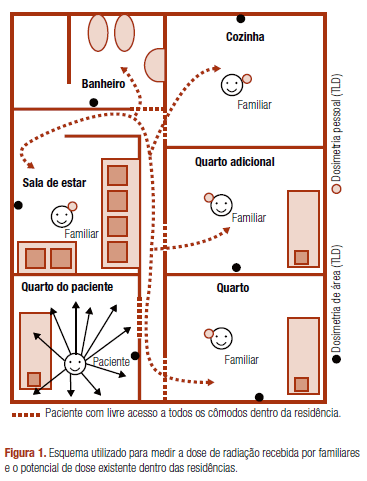
OBJETIVO: Determinar exposições decorrentes da radioiodoterapia ambulatorial do carcinoma diferenciado da tireoide (CDT) sobre os familiares dos pacientes e o meio ambiente. MÉTODOS: Administraram-se 100 a 150 mCi de (131I)NaI para tratamento ambulatorial de 20 pacientes com CDT. Monitorizaram-se com dosímetros termoluminescentes as doses de radiação recebidas por familiares (n = 27) e potenciais de dose nas residências. Também foram monitorizadas contaminação de superfície e rejeitos radioativos. RESULTADOS: Registraram-se doses < 1,0 mSv em 26 acompanhantes e 2,8 mSv em um caso, inferiores ao aceitável para exposições médicas (5,0 mSv/procedimento). Excetuando-se o quarto dos pacientes (média = 0,69 mSv), determinou-se potencial de dose nas residências < 0,25 mSv. A contaminação de superfícies (4,2 Bq.cm-2) não ultrapassou níveis de liberação, sem representar riscos mesmo em simulações do pior cenário. Os rejeitos radioativos tiveram volume de 2,5 litros e atividade estimada em 90 µCi (média = 4,5 µCi/paciente). CONCLUSÕES: Não foi constatado impacto radiológico ao meio ambiente ou aos familiares de pacientes tratados ambulatorialmente com 100 a 150 mCi de iodo-131 e acompanhados por profissionais qualificados.
Neoplasias da glândula tireoide; radioisótopos de iodo; radiometria; meio ambiente