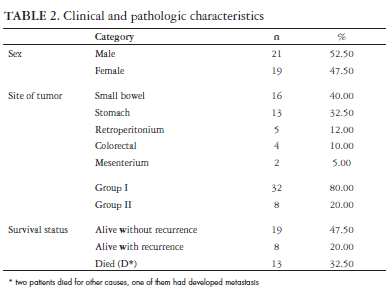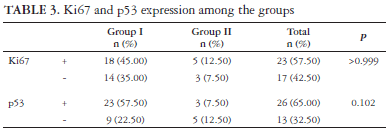
CONTEXT: Gastrointestinal stromal tumor (GIST) is the most common mesenchymal tumor. Cellular proliferation and apoptosis is gaining importance for predicting prognosis in several cancers. OBJECTIVE: To investigate the Ki67 and p53 immunostaining in GISTs. METHODS: Specimens from 40 patients with GIST were assessed for immunohistochemical expression of Ki67 and p53. The tumors were divided according the risk of recurrence in two groups: I with high or intermediate risk and; II with low or very low risk. RESULTS: Among the 40 patients, 21 were men, the mean age was 56 years, 16 occurred in the small intestine and 13 in the stomach, 5 in the retroperitonium, 4 in the colon or rectum and 2 in the mesenterium. Thirty two tumors were from group I and 8 from group II. Half of the patients developed recurrence, being 90% of the group I (P = 0.114). The tumor Ki67 labelling index ranged from 0.02 to 0.35 (mean level 0.12). This index was marginally higher in the group I patients with recurrence (P = 0.09) compared to the patients of the same group without recurrence. p53 staining was expressed in 65% of the GISTs. A higher frequency of p53 and Ki67 had been found in the group I tumors when compared to the other group (P = 0.022; OR = 8.00 - IC 95%: 1.32-48.65). CONCLUSION: The most common site was the small intestine and 80% had a malignant potential justifying the high recurrence observed. No significant correlation was found between p53 and overall outcome of the patients. In group I patients, the evaluation Ki67LI may be a marker of prognosis. The positivity of both markers is higher among the patients with worst prognosis than in the others.
Gastrointestinal stromal tumors; Ki-67 antigen; Tumor suppressor protein p53