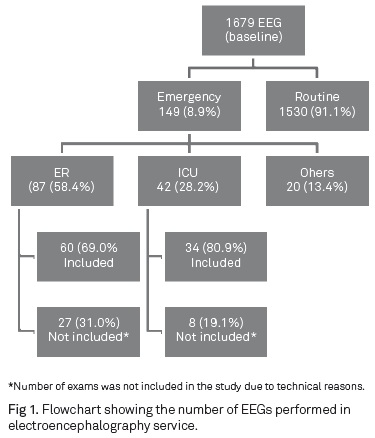
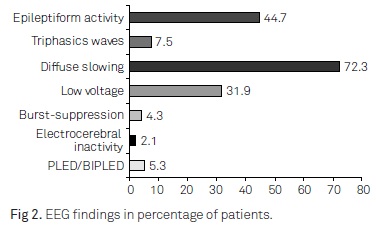
OBJECTIVES: To assess the frequency of electroencephalogram (EEG) requests in the emergency room (ER) and intensive care unit (ICU) for patients with impairment of consciousness (IC) and its impact in the diagnosis and management. METHODS: We followed patients who underwent routine EEG from ER and ICU with IC until discharge or death. RESULTS: During the study, 1679 EEGs were performed, with 149 (8.9%) from ER and ICU. We included 65 patients and 94 EEGs to analyze. Epileptiform activity was present in 42 (44.7%). EEG results changed clinical management in 72.2% of patients. The main reason for EEG requisition was unexplained IC, representing 36.3% of all EEGs analyzed. Eleven (33%) of these had epileptiform activity. CONCLUSION: EEG is underused in the acute setting. The frequency of epileptiform activity was high in patients with unexplained IC. EEG was helpful in confirming or ruling out the suspected initial diagnosis and changing medical management in 72% of patients.
emergency EEG; impaired of consciousness; emergency room; intensive care unit