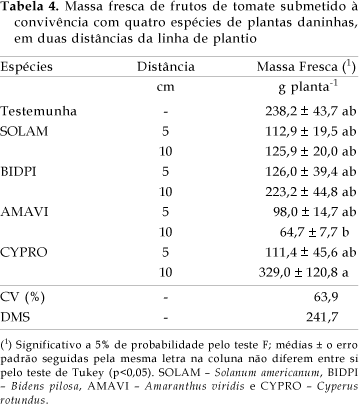
O objetivo da presente pesquisa foi estudar o efeito da interferência de caruru-de-mancha (Amaranthus viridis), picão-preto (Bidens pilosa), tiririca (Cyperus rotundus) e Maria-pretinha (Solanum americanum) sobre a altura de plantas, a área foliar, o teor de clorofila, o acúmulo de massa seca e macronutrientes na cultura e a massa fresca de frutos do tomateiro industrial. Os tratamentos foram (a) duas plantas de tomateiro + duas de A. viridis; (b) duas plantas de tomateiro + duas de B. pilosa; (c) duas plantas de tomateiro + duas de C. rotundus; e (d) duas plantas de tomateiro + duas de S. americanum. Além disso, manteve-se uma testemunha com duas plantas de tomateiro sem associação com planta daninha. Dentro de cada espécie de planta daninha, o efeito sobre a cultura foi o mesmo para todas as características avaliadas, independentemente da distância utilizada. A. viridis e S. americanum foram plantas daninhas com maior capacidade competitiva que B. pilosa e C. rotundus. O teor de clorofila, a altura e a área foliar do tomateiro não foram afetados pela convivência com as plantas daninhas. B. pilosa e C. rotundus não influenciaram no acúmulo de macronutrientes do tomateiro, enquanto A. viridis e S. americanum afetaram de maneira diferenciada em função da distância utilizada, sendo A. viridis a espécie mais competitiva. A massa fresca de frutos do tomateiro não foi reduzida pela convivência com as quatro espécies de plantas daninhas.
tomate; plantas daninhas; competição; crescimento; macronutrientes