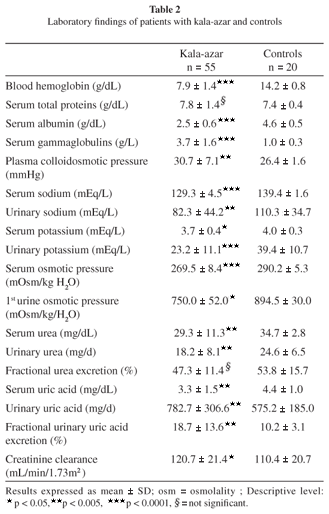
There are few reports linking hyponatremia and visceral leishmaniasis (kala-azar). This is a study of 55 consecutive kala-azar patients and 20 normal individuals as a control group. Hyponatremia and serum hypo-osmolality were detected in 100% of kala-azar patients. High first morning urine osmolality (750.0 ± 52.0 vs. 894.5 ± 30.0mOsm/kg H2O, p < 0.05), and high 24-hour urine osmolality (426.0 ± 167.0 vs. 514.6 ± 132.0 mOsm/kg H2O, p < 0.05) demonstrated persistent antidiuretic hormone secretion. Urinary sodium was high (82.3 ± 44.2 vs.110.3 ± 34.7 mEq/L, p < 0.05). Low seric uric acid occurred in 61.8% of patients and increased fractional urinary uric acid excretion was detected in 74.5% of them. Increased glomerular filtration rate was present in 25.4% of patients. There was no evidence of extracellular volume depletion. Normal plasma ADH levels were observed in kala-azar patients. No endocrine or renal dysfunction was detected. It is possible that most hyponatremic kala-azar patients present the syndrome of inappropriate antidiuretic hormone secretion.
Hyponatremia; Hypo-osmolality; Hypouricemia; Syndrome of inappropriate antidiuretic hormone secretion; Visceral leishmaniasis