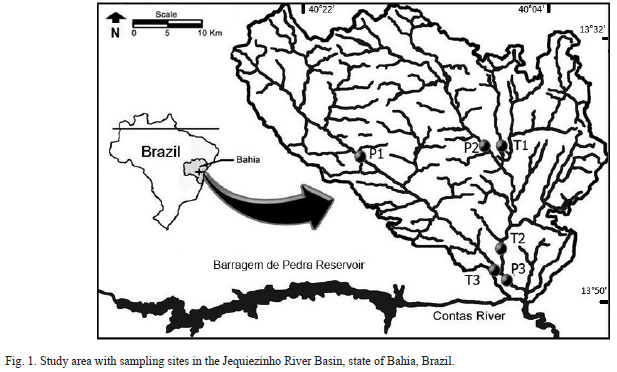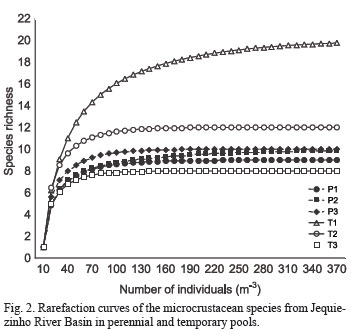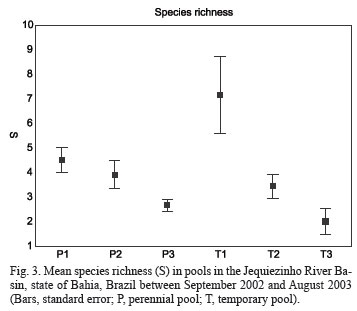
Temporary wetlands undergo recurrent drought due to the scarcity of water, which disrupts the hydrological connectivity with adjacent aquatic systems. However, some environments retain water for longer periods, allowing greater persistence of the community. The current study evaluated differences in the microcrustacean assemblages and limnological variability between perennial and intermittent pools in a semi-arid region of Brazil. The abiotic features (water temperature, pH, total alkalinity, electrical conductivity and depth) of intermittent pools were affected more than perennial pools due to loss of water volume. This may have contributed to a higher average richness and diversity index in some intermittent pools and differences in the structure of the assemblages. The lowest species richness and diversity were recorded where physical factors, such as a large quantity of suspended solids and variability in the electrical conductivity of the water and pH, make the environment unsuitable for these organisms. These results suggest that community development in intermittent pools is interrupted by the dry season; when the water returns, due to rainfall or rising groundwater, each pond undergoes a different process of colonization. In these circumstances, the biological importance of temporary aquatic environments is clear, since such pools provide shelters and have an important role in the maintenance of the regional diversity of aquatic environments.
Zooplankton; temporary wetlands; invertebrates; "caatinga"