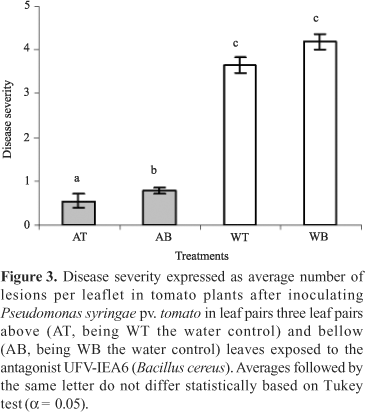
The objective of this work was to verify if the induced resistance mechanism is responsible for the capacity of a phylloplane resident bacteria (Bacillus cereus), isolated from healthy tomato plants, to control several diseases of this crop. A strain of Pseudomonas syringae pv. tomato was used as the challenging pathogen. The absence of direct antibiosis of the antagonist against the pathogen, the significant increase in peroxidases activity in tomato plants exposed to the antagonist and then inoculated with the challenging pathogen, as well as the character of the protection, are evidences wich suggest that biocontrol efficiency presented by the antagonist in previous works might be due to induced systemic resistance (ISR).
Lycopersicon esculentum; Solanum esculentum; biological control