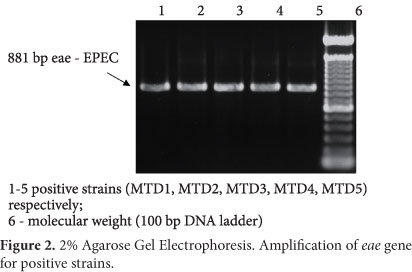
Foodborne disease caused by microorganisms is a problem of public health. Minas soft cheese is a national product manufactured using simple technology; it has high level of acceptance in the country making its production an important economic activity. Many microorganisms may be present in foods including the bacterium Escherichia coli (E. coli). Overall, E. coli is a harmless commensal bacterium; however, some strains may have a pathogenic potential. Several outbreaks of foodborne diseases associated with consumption of contaminated cheese have been reported, and the presence of pathogenic strains of E. coli has increased. The objective of this study was to isolate, evaluate the antimicrobial susceptibility, and characterize, by Multiplex PCR, the pathogenic E. coli strains isolated from Minas cheese commercialized in Rio de Janeiro. Thirty samples were analyzed and five strains of E. coli (EPEC) were identified. The assessment of antimicrobial susceptibility revealed 40% of the isolates resistant to ampicillin and 40% with intermediate resistance to ampicillin-sulbactam combination. These findings are a warning signal to health authorities since Minas cheese is a ready to eat food product, and therefore should not pose health risks to the population.
minas soft cheese; EPEC; antimicrobial