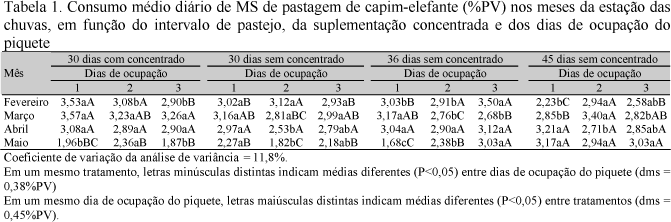
O trabalho foi realizado entre fevereiro e setembro, com o objetivo de avaliar a qualidade e o consumo de forragem de capim-elefante manejado sob pastejo rotativo, com período de ocupação dos piquetes de três dias e variação do intervalo de pastejo de: 30 dias (com e sem o uso de concentrado ao longo do ano) e 36 e 45 dias (sem o uso de concentrado). Foram usadas 24 vacas Holandês × Zebu em lactação. De fevereiro a maio o pasto foi o único volumoso. De junho a setembro, as vacas receberam cana mais 1% de uréia. A composição química de extrusas de capim-elefante foi, de modo geral, semelhante (P>0,05) entre intervalos de pastejo (6,1 a 18,2% para PB; 63,5 a 81,4% para FDN; 32,7 a 47,6% para FDA e 43,7 a 72,9% para digestibilidade in vitro da MS). Houve decréscimo no teor de PB do capim-elefante e aumento nos de FDN e FDA para cada dia adicional de ocupação do piquete (P<0,0001). Na estação chuvosa, o consumo diário de capim-elefante foi, de modo geral, semelhante (P>0,05) nos diferentes intervalos de pastejo, variando de 1,7 a 3,6%PV para MS e de 1,1 a 2,7%PV para FDN. Na estação seca, nas pastagens sem concentrado, o consumo de MS do capim-elefante variou de 0,39 a 2,2%PV e sua contribuição no consumo total da dieta decresceu de 52% no primeiro para 43% no terceiro dia de ocupação do piquete. O consumo suplementar de cana mais uréia foi efetivo em minimizar a redução no consumo total de MS.
cana-de-açúcar; digestibilidade in vitro; indicador; intervalo de pastejo; óxido crômico