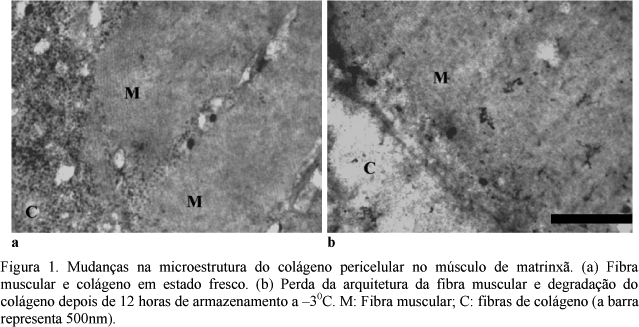
Os mecanismos que causam o amolecimento e a perda na textura post-mortem da carne de matrinxã foram determinados por meio das mudanças na microestrutura do músculo, imediatamente após a morte e depois de 12 horas de estocagem a -3°C. As observações na microestrutura, realizadas com microscópio eletrônico de transmissão, foram semelhantes aos resultados obtidos na força de ruptura do músculo medidos com o texturômetro. Os valores da força da ruptura foram menores para a carne após o resfriamento. Observou-se que as fibras do colágeno do tecido conectivo pericelular se desintegraram e que as do colágeno do tecido conectivo do miocommata conservaram sua arquitetura e integridade. Houve pouca degradação da linha Z. Isso sugere que o amolecimento post-mortem da carne de mantrinxã, durante a estocagem a -3°C, é causado pela degradação do tecido conectivo pericelular.
peixe; matrinxã; Brycon cephalus; textura; colágeno; tecido conectivo