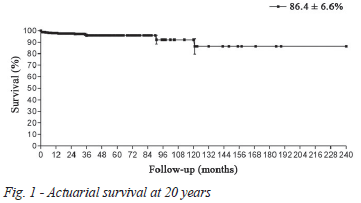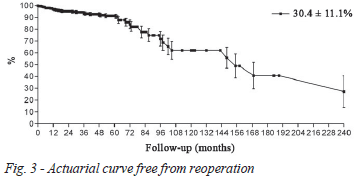
OBJECTIVE: Mitral valve repair in rheumatic patients is still a challenge. The purpose of this study is to analyze the results of mitral valve repair in rheumatic patients in the Heart Institute University of Sao Paulo Medical School. METHODS: Were analyzed retrospectively, between 1985 and 2005, 330 patients submitted to mitral valve repair in the Heart Institute of São Paulo. The mean age was 26.9 ± 15.4 years and 57.6% were female. According do clinical evaluation, 39.5% of patients were in NYHA functional class IV. The most common techniques employed were bovine pericardial strip annuloplasty in 48.4% patients and Carpentier ring annuloplasty in 22.6%. Shortening of chordae (20%) and papillary muscle splitting (17.8%) were the most common associated techniques performed. Tricuspid valve repair (26.7%) and aortic valve replacement (27.2%) were the most common associated procedures. RESULTS: The hospital mortality was 0.9% (three patients), two of them in children with active rheumatic fever. Linearized rates of thromboembolism, endocardite, reoperation and late death were 0.2%, 0.2%, 3.5% and 0.5% patients-year, respectively. Actuarial survival in 20 years was 86.4 ± 6.6%. Freedom from reoperation in 20 years was 30.3 ± 11.1%. CONCLUSION: Mitral valve conservative surgery in rheumatic patients is a feasible procedure with low operative mortality.
Mitral valve; Mitral valve insufficiency; Rheumatic fever