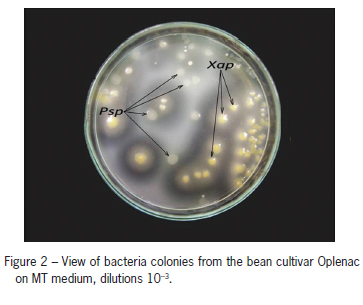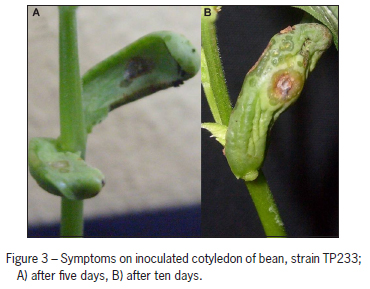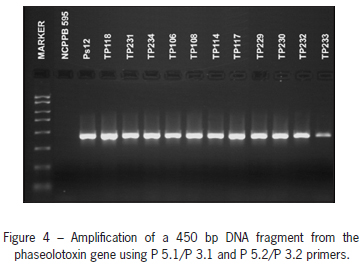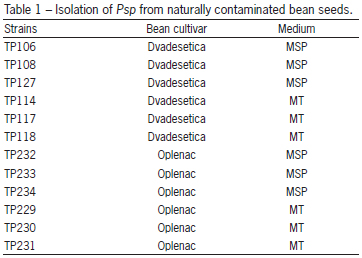
Halo blight, caused by Pseudomonas savastanoi pv. phaseolicola (Psp), is considered to be an important bacterial disease on common bean (Phaseolus vulgaris L.) in Serbia. Use of pathogen-free seeds is one of the most effective control measures against this disease. The aim of this study was to evaluate a detection method for Psp on untreated common bean seeds (23 genotypes) from commercial crops grown within Serbia. Detection of this pathogen was made by plating onto the modified sucrose peptone (MSP) and Milk Tween (MT) semi-selective mediums from soaked whole common bean seed. Colonies growing on the MSP medium were light yellow, convex and shiny, whereas on the MT medium, they were creamy white, flat and circular. The pathogenicity of the obtained strains was confirmed by the inoculation of germinated bean seed. The isolates recovered from the seed assay were further confirmed to be Psp by using both Enzyme-linked immunosorbent assay (ELISA) and polymerase chain reaction (Nested-PCR) detection methodologies. The International Seed Testing Association (ISTA) method selected for this work was found to be effective in detecting the presence of Psp in common bean seed. The bacterium Psp was detected in only two of the 23 seed samples analyzed by this method, which shows that the bacterium is not widespread in Serbia.
MSP; MT; ELISA; Nested-PCR; halo blight; pathogenicity