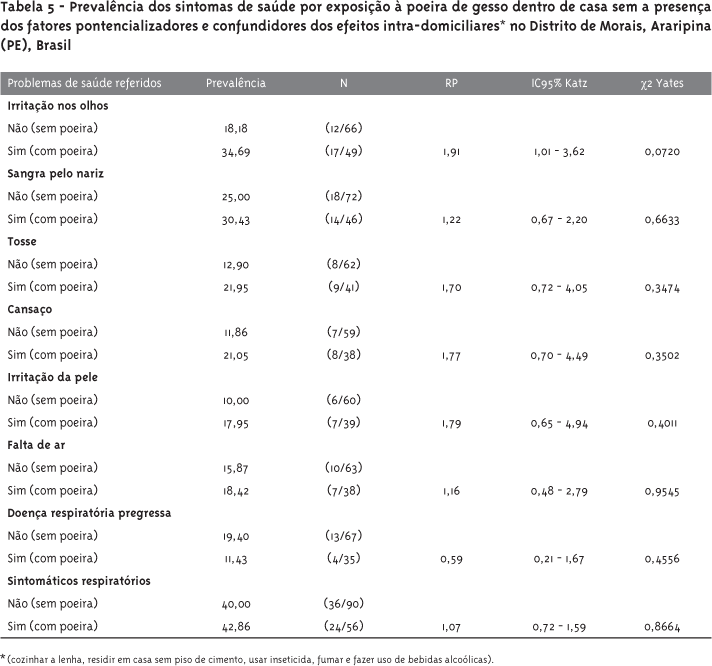
O processo de deteriorização socioambiental do polo gesseiro de Pernambuco necessita ser mais bem conhecido. Este artigo objetivou estudar os fatores epidemiológicos que concorrem com a saúde das pessoas. Um estudo epidemiológico transversal foi realizado no período de 2001 a 2003, por meio da aplicação de um questionário fechado no distrito de Morais, município de Araripina, considerado uma das principais localidades de produção de gesso e artefatos. Uma amostra randomizada foi extraída a partir dos 2.486 habitantes, considerando-se como erro aceitável de 5% para o Intervalo de Confiança (IC) de Katz de 95%. Quatrocentas e sessenta e duas pessoas foram entrevistadas e os problemas de saúde mais referidos foram: irritação dos olhos (42,92%), sangramento de nariz (37,39%), tosse (28,26%), cansaço (21,73%), irritação na pele (18,48%), falta de ar (16,26%) e história de doença respiratória pregressa (16,34%), todos estatisticamente significantes. No geral, crianças (de 1 a 9 anos) e idosos ( > 60 anos) relataram mais sintomas respiratórios. A poeira de gesso dentro de casa apresentou-se como um importante indicador qualitativo na avaliação de seu impacto na saúde das pessoas. Nos domicílios avaliados, a presença de poeira de gesso mostrou-se mais prevalente com as queixas de irritação dos olhos (RP = 1,91), irritação na pele (RP = 1,79), cansaço (RP = 1,77) e tosse (RP = 1,70).
Mineração; Indústria de cal e gesso; Poeira; Poluição ambiental; Impactos na saúde; Estudos de prevalência