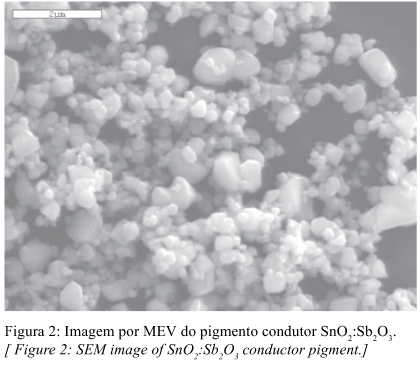
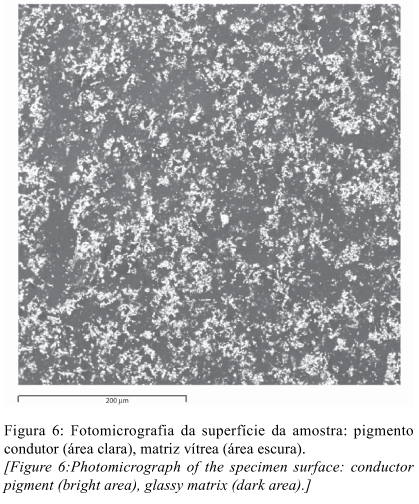
Esmaltes semicondutores são utilizados no recobrimento de isoladores elétricos para evitar descargas superficiais nos isoladores, associadas a grandes diferenças de potencial, proporcionando uma melhora no desempenho sob poluição ambiental. Como os vidrados utilizados nas indústrias cerâmicas são isolantes, uma maneira de torná-los semicondutores é adicionando óxidos condutores. Misturou-se ao esmalte porcentagens variadas do pigmento condutor SnO2 dopado com 5% de Sb2O3. O esmalte foi aplicado sobre peças de porcelana a verde e queimado a 1250 ºC. Por microscopia eletrônica de varredura verificou-se que a concentração de pigmento na superfície das amostras é baixa e não influencia a condutividade elétrica. Na fratura, a porcentagem de pigmento ficou próxima de 35%. Assim, a superfície ficou com aspecto visual de ótima qualidade. A resistividade elétrica ocorreu pelo interior do vidrado, obtendo-se valores próximos de 10(4) Ohm.m.
Pigmento; óxido de estanho; esmalte; semicondutor; isoladores