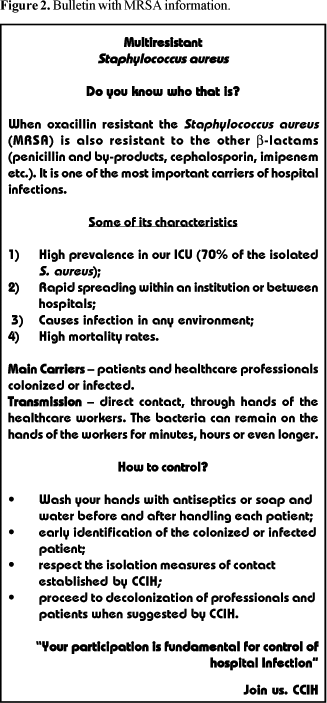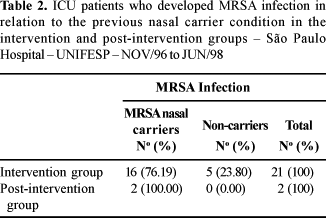
Methicillin-resistant Staphylococcus aureus (MRSA) is endemic in most Brazilian Hospitals, and there are few studies which show the efficacy of control measures in such situations. This study evaluated intensive care unit (ICU) patients, in two years divided in control, intervention and post-intervention group. Intervention measures: hands-on educational programs for healthcare workers; early identification of MRSA infected or colonized patients, labeled with a bed-identification tag for contact isolation; nasal carriers, patients, and healthcare professionals treated with topical mupirocin for five days. The hospital infection rates in the control period were compared to the ones in the post-intervention period. Hospital infection rates were found by means of the NNISS methodology The incidence coefficients of MRSA hospital infection (monthly average of 1,000 pts/day) in the control, intervention and post-intervention groups were respectively: 10.2, 5.1 and 2.5/1,000 pts/day (p<0.001) and MRSA-originated bloodstream infections were 3.6, 0.9 and 1.8/1,000 central venous catheter/day (p=0.281). Nasal colonization in both intervention and post-intervention periods was of 30.9% and 22.1% among the hospitalized patients, respectively 54.4% and 46.1% of whom were already MRSA-positive when admitted to the unit. In the intervention period, most of those MRSA infected patients (76.2%) were nasal carrier. Mortality rates were, respectively 26.6%; 27.3% and 21.0% (p<0.001). Nasal carriers, both patients (93.7%) and healthcare professionals (88.2%), were successfully treated with topical mupirocin. Intervention measures for the prevention and control of MRSA infections in ICUs, have been efficient in the reduction of the bloodstream and MRSA-originated hospital infections incidence, and reduced the overall mortality rate significantly.
MRSA; methicillin-resistant Staphylococcus aureus; intensive care unit infections