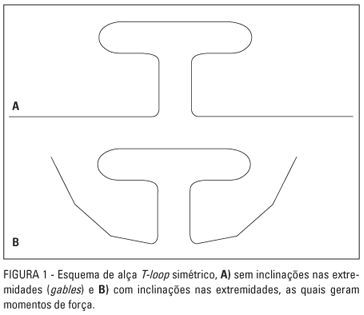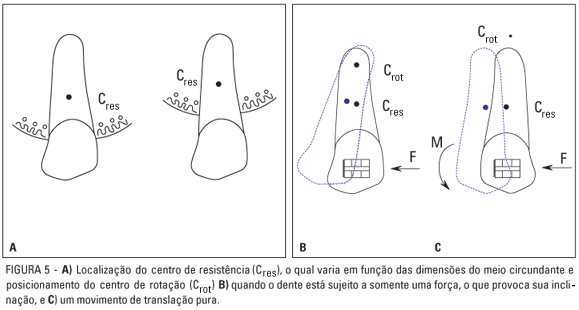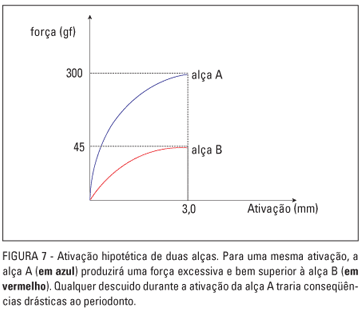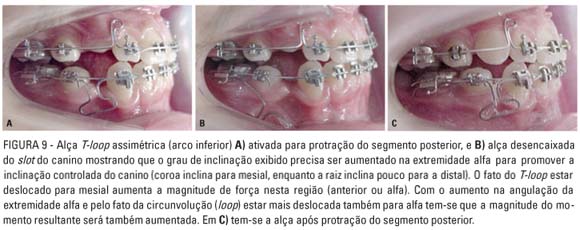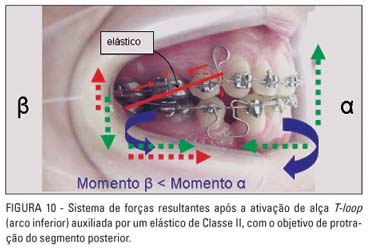
As alças de retração ortodôntica são comumente empregadas em sistema Edgewise por meio de uma abordagem seccional (ex.: retração de caninos) ou por meio de uma abordagem segmentada (ex.: retração dos dentes anteriores em conjunto). Estas alças podem modular a demanda de ancoragem, dependendo dos objetivos impostos pelo plano de tratamento. Neste trabalho são discutidas as propriedades mecânicas relacionadas ao projeto de alças de retração ortodôntica, o sistema de forças decorrente de sua conformação geométrica e ativação, e os métodos empregados para testá-las. Dentre as técnicas utilizadas na análise de uma alça, o Método dos Elementos Finitos (MEF) merece destaque. Embora seja baseado em modelos matemáticos, é uma ferramenta eficaz e não onerosa para a simulação computacional de um protótipo, podendo-se assim avaliá-lo antes de sua construção física. Já os métodos experimentais se aproximam mais da condição real, porém com custo mais elevado. A utilização em diferentes estágios de ambos os métodos é aconselhável para um melhor desenvolvimento e caracterização dos protótipos.
Alças ortodônticas; Propriedades mecânicas; Testes mecânicos; Unidade de ancoragem