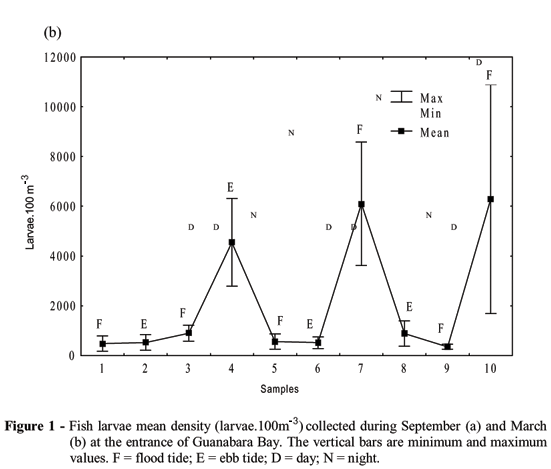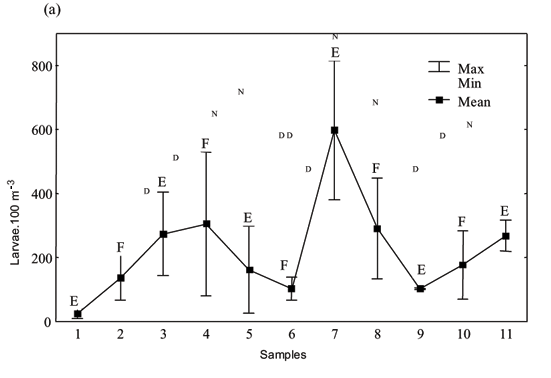
Studies were carried out to find out qualitative and quantitative temporal variations in fish larvae to relate seasonal, diurnal and tidal cycles to the density of larvae. Sampling was performed at one station, during two three-day periods in September 1995 and March 1996. Samples were collected during ebb and flood tides,in oblique hauls using a bongo net of 500 µm mesh size. A total of 42 taxa were identified. The families Engraulidae (Cetengraulis edentulus, Anchoa lyolepis) and Clupeidae (Harengula jaguana) had high mean densities and dominated both periods. Higher larval mean densities occurred in March, a period of relatively high temperatures and low salinities. The diurnal pattern of larval abundance consisted of high densities at night and low densities during the day. The observed diversity values stress the importance of this system for the maintenance of many species of fishes.
Fish larvae; seasonal variation; tidal cycle; diurnal variation; coastal bay; Guanabara Bay