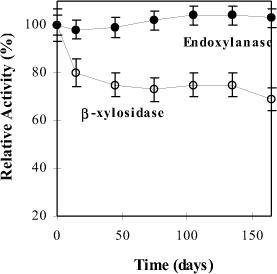
The effect of temperature on the activity and stability of endoxylanase and beta-xylosidase from Aspergillus awamori was investigated. The growth of A. awamori in milled sugar cane bagasse produced predominantly extracellular endoxylanase (30 U/ml) and lower amounts of beta-xylosidase (1.3 U/ml). Grown in sugar cane bagasse as the principal carbon source, the microorganism produced a quite stable beta-xylosidase in a temperature range of 35-55°C, but it exhibited a lower thermostable endoxylanase. The thermostability of endoxylanase was enhanced through addition of polyhydric alcohols, mainly 2 M xylitol and sorbitol solutions. Particular stability upon storage (100%) was found for endoxylanase at -4°C for 165 days. Yet for beta-xylosidase, an activity decrease of approximately 20% was observed during the first 15 days of storage, maintaining roughly 75% of initial activity until the end of the experiment.
Aspergillus awamori; thermostability; xylanases