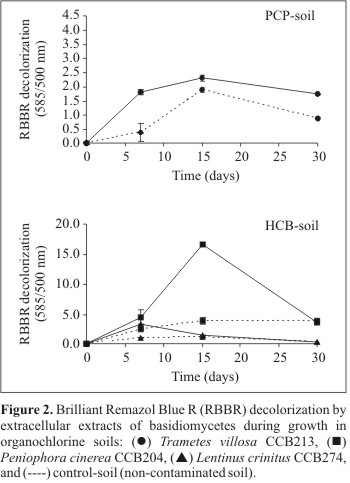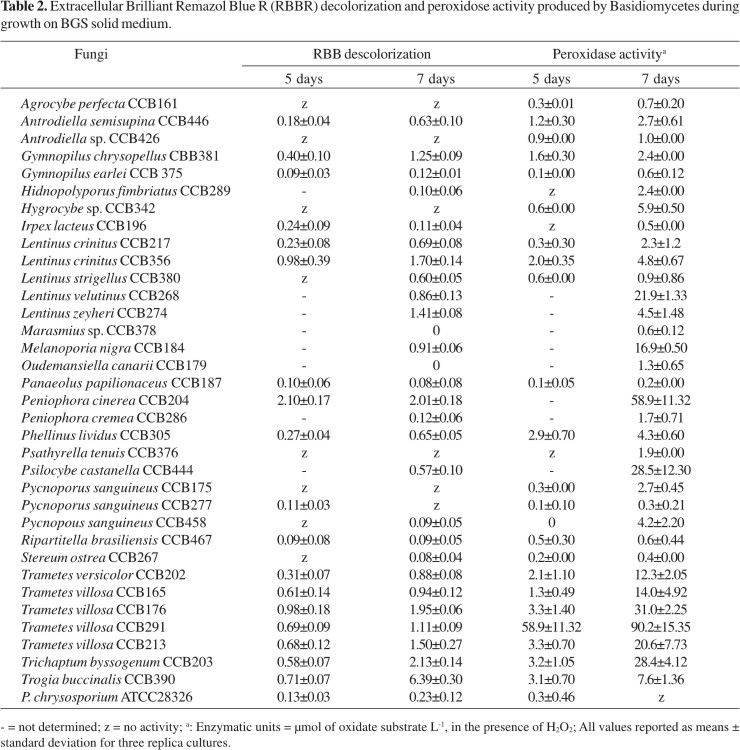
Remazol Brilliant Blue R (RBBR) dye was used as substrate to evaluate ligninolytic activity in 125 basidiomycetous fungi isolated from tropical ecosystems. The extracellular RBBR decolorizing activity produced when selected fungi were grown in solid media and in soil contaminated with organochlorines was also evaluated. A total of 106 fungi decolorized the RBBR during the growth in malt extract agar (MEA, 2%); 96 fungi showed a mycelia growth and decolorization activity stronger than the P. chrysosporium used as reference. Extracellular extracts of 35 selected fungi grown on solid medium with sugar cane bagasse (BGS) were evaluated for RBBR decolorization and peroxidase activity. All fungi showed peroxidase activities, but 5 of those were unable to decolorize the RBBR. Different patterns of ligninolytic enzymes were detected in 12 fungi extracts. Mn-dependent peroxidase (MnP) was produced by Peniophora cinerea, Psilocybe castanella, three strains of Trametes villosa, T. versicolor, Melanoporia nigra and Trichaptum byssogenum. All 12 fungi had laccase activity. Trogia buccinalis showed the highest RBBR decolorization and did not produce MnP activity. RBBR decolorization without MnP production was also observed for three strains of Lentinum tested. Higher levels of peroxidase and laccase cannot be related to high RBBR decolorization. RBBR decolorization by extracellular extract was also detected during the growth of P. castanella, L. crinitus, P. cinerea and two strains of T. Villosa in pentachlorophenol- and hexachlorobenzene-contaminated soils. These fungi showed higher RBBR decolorization when grown in the presence of organochlorine compounds than when in non contaminated soil.
white rot fungi; peroxidases; laccase; MnP; pentachlorophenol; hexachlorobenzene