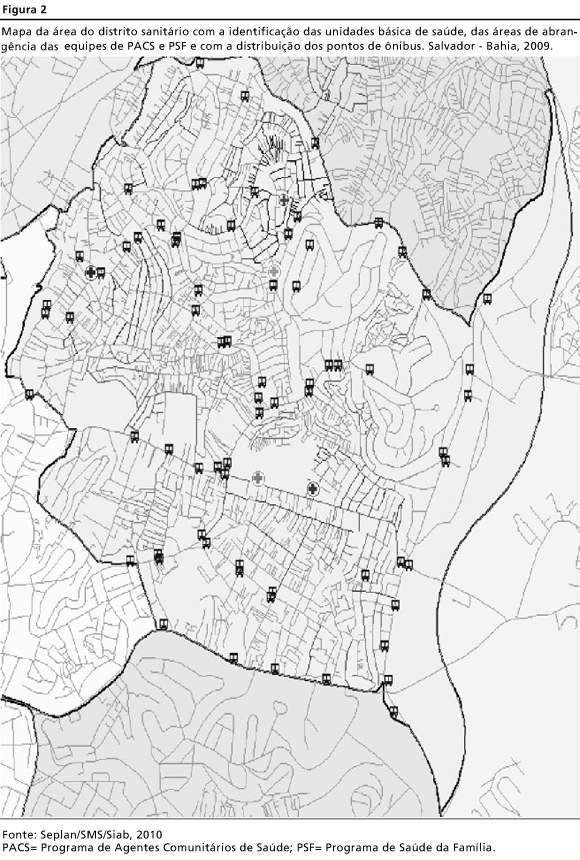
OBJETIVOS: avaliar a acessibilidade geográfica à atenção primária à saúde da população coberta pelos Programa de Agentes Comunitários de Saúde (PACS) e Programa de Saúde da Família (PSF) de um distrito sanitário de Salvador. MÉTODOS: estudo avaliativo transversal. Os dados foram coletados a partir de entrevistas realizadas junto aos profissionais das onze equipes de PACS e PSF. A análise dos dados contemplou duas dimensões: acesso da população e lógica de territorialização. RESULTADOS: o distrito apresentava relevo bastante acidentado e todas as equipes informaram a existência de barreiras geográficas na área, em especial escadarias, morros e ladeiras. Não foi observada diferença significativa na acessibilidade às equipes de PACS e PSF. O processo de territorialização esteve dissociado da concepção de território-processo. Algumas áreas de abrangência das equipes situavam-se em locais afastados das UBS, constituindo-se em importante barreira ao acesso da população. CONCLUSÕES: o processo de implantação da estratégia PACS/PSF no distrito e o modelo de territorialização adotado não atenderam aos princípios que devem nortear a organização da atenção primária à saúde, resultando em restrições na acessibilidade geográfica da população coberta. Recomenda-se que seja realizada uma revisão do desenho atual da territorialização, visando uma melhor adequação às diretrizes do PSF e à promoção de uma maior acessibilidade à atenção primária.
Avaliação em saúde; Atenção primária à saúde; Programa Saúde da Família