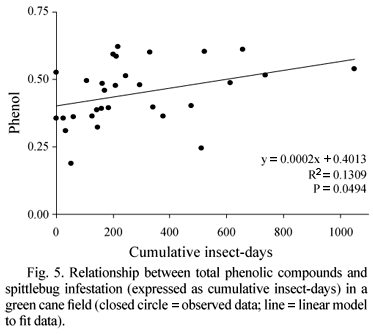
Mahanarva fimbriolata (Stål) is an important pest in Latin America and causes significant reduction in sugarcane productivity. There is no information regarding the effect of this pest on the quality of cane juice used for sugar and alcohol production. This work aimed at evaluating the quality of sugarcane juice from plants attacked by spittlebugs. The experiment was arranged in a completely randomized design with 15 replications, and comprised two treatments: control and chemical treatment with thiamethoxam. An average of 9.2 ± 4.44 spittlebug nymphs m-1 were found in the plots prior to insecticide application. Nymphs were counted 18, 35, 55, and 82 days after the initial sampling (december/2003). During the mid growing season (July 2004), the juice was extracted from stalks and analyzed for Brix, Pol, RS, pH, fiber, purity, TRS, dextran, starch, and total phenolic compounds. Stalk yield was also measured. Chemical treatment was efficient in reducing spittlebug population, and elevated both stalk yield and juice pH. The accumulated infestation expressed as insect-days was significantly and negatively correlated to yield, Pol, pH, and purity. The concentration of phenolic compounds increased with pest infestation, while dextran and starch levels were not affected. The infestation of 2.4 and 7.3 nymphs m-1 day-1 caused reductions of 8.3% and 29.8% in yield; 1.9% and 5.8% in Pol; 0.4% and 1.1% in pH and 0.4% and 1.2% in purity, respectively, in comparison to areas where the pest population was extremely low (< 0.1 nymphs m-1).
Spittlebug; insect-day; chemical control