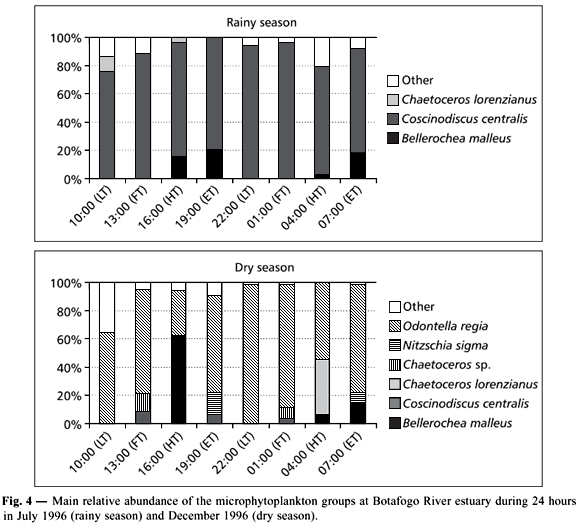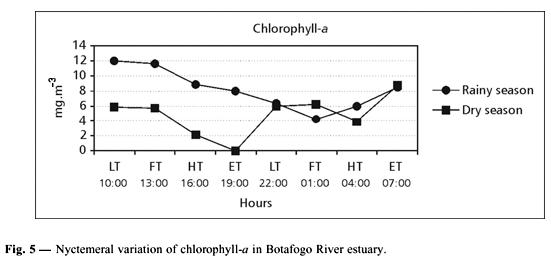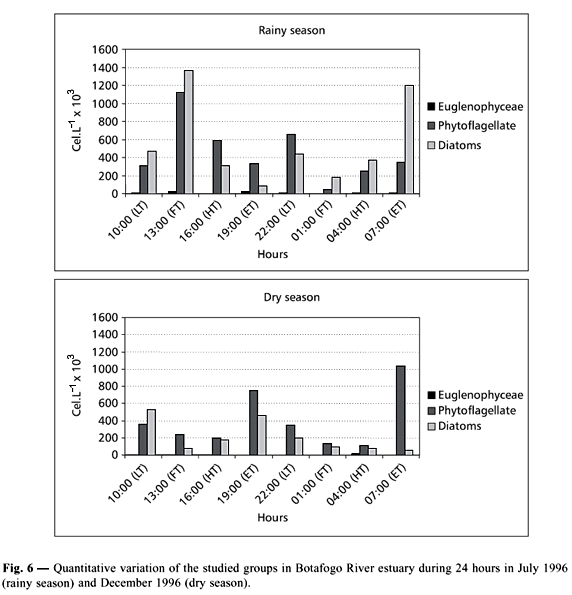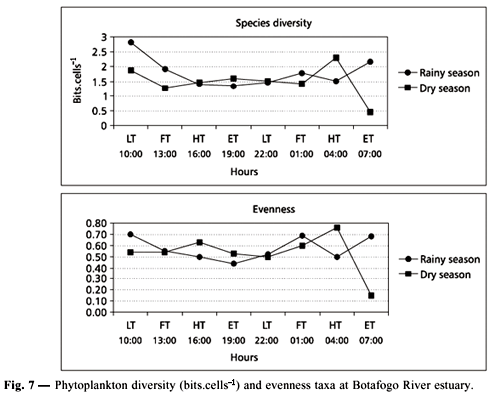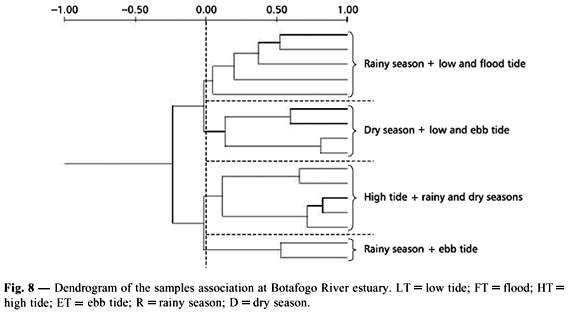
The Botafogo estuary is of socio-economical importance for Pernambuco State. It is located at the north of Santa Cruz Channel, Itamaracá, Pernambuco, Brazil (07º42'50"S and 34º52'10"W). There is a critical need to understand its functioning because of the rate at which this area is being converted to land uses. The phytoplankton dynamics was studied to enhance the knowledge of and verify the possible changes which have occurred in this ecosystem. Sampling was carried out with a plankton net 65 micrometers mesh size for qualitative data, and a Van Dorn bottle for quantitative data. Concurrent hydrological and chlorophyll-a data were collected. Samplings were made in one fixed station in July 1996 (rainy season) and December 1996 (dry season), at 3-hour intervals during 24 hours. Eighty-seven specific and infra-specific taxa were identified from net plankton samples. Diatoms were most frequent, mainly Coscinodiscus centralis and Odontella regia in the rainy and dry seasons, respectively. Phytoplankton density varied from 205,000 to 1,210,000 cell.L-1 in the dry season, and from 230,000 to 2,510,000 cell.L-1 in the rainy season, indicating eutrophic conditions. Most numerically abundant were the diatoms Cyclotella meneghiniana and Cylindrotheca closterium and the phytoflagellates. The ecosystem is polluted, and deleterious effects are minimized by the marine influence which allows periodic water renewal.
estuarine phytoplankton; nyctemeral variation; tropical