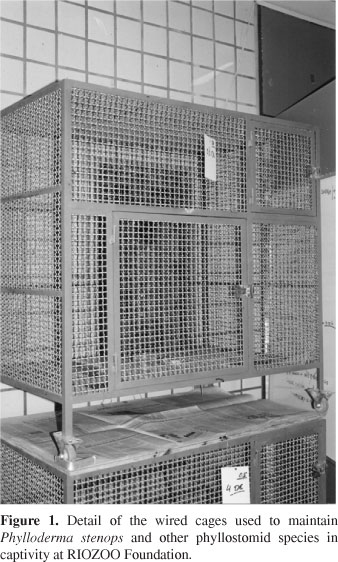
A reproductive colony of Phylloderma stenops was established in captivity. The bats were maintained in 1/2" wired screen cages sized 90 × 60 × 80 cm in a room with cycles of 13 hours of light and 11 hours of dark and with temperature and humidity ranging from 27 to 31 °C and 75 to 90% respectively. Bats were fed with a semi-liquid diet composed of chopped fruits, raw eggs, bovine meat, dog food, honey, dehydrated shrimp, salt and a vitamin and mineral complex offered daily. In the first two years of confinement the diet was complemented with laboratory-raised cockroaches, mealworms, young mice and seasonal fruits. Nine births occurred from three wild caught females 770-1050 days after capture and two captive-born females. Births occurred in September, February and November-December. The neonate measured 15.0 g of weight and present 34.1 mm of forearm length. Two captive-born females gave birth for the first time at 402-445 days of age. Phylloderma stenops species presents postpartum oestrus, gestation of 5.5 months, lactation of 3.3 months and sexual maturity at 8.0-8.5 months. Fetuses are palpable around two months before birth and females may present synchronisation of births.
reproduction; sexual maturity; gestation; neonate