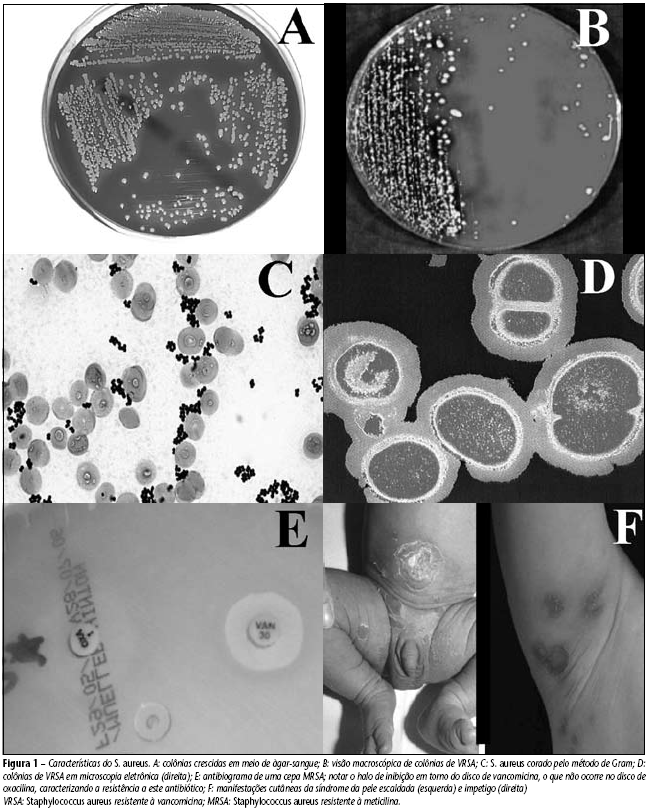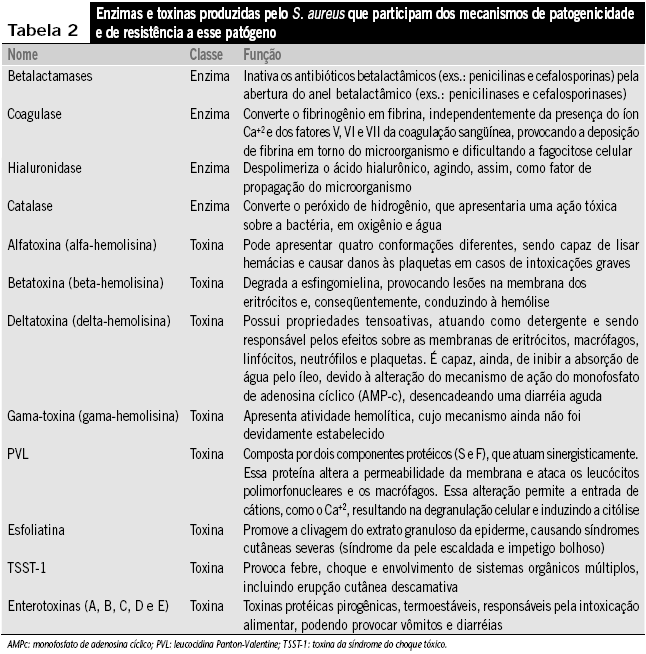
O Staphylococcus aureus é uma bactéria do grupo dos cocos gram-positivos que faz parte da microbiota humana, mas que pode provocar doenças que vão desde uma infecção simples, como espinhas e furúnculos, até as mais graves, como pneumonia, meningite, endocardite, síndrome do choque tóxico e septicemia, entre outras. Essa bactéria foi uma das primeiras a serem controladas com a descoberta dos antibióticos, mas, devido a sua enorme capacidade de adaptação e resistência, tornou-se uma das espécies de maior importância no quadro das infecções hospitalares e comunitárias. Neste artigo faremos uma revisão sobre esse agente infeccioso e as bases dos mecanismos das patologias por ele provocadas, de forma a ressaltar a necessidade de mantê-lo como alvo para o desenho de novos antibióticos.
Staphylococcus aureus; Resistência microbiana; MRSA; VISA; heteroVISA; VRSA