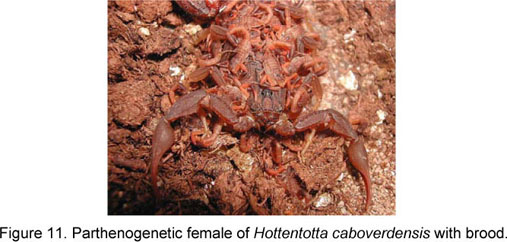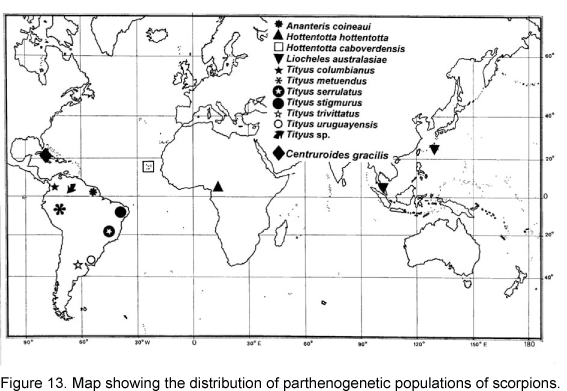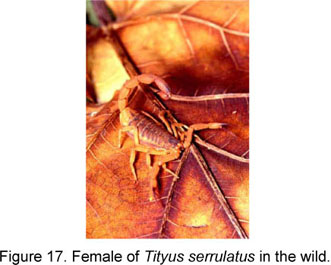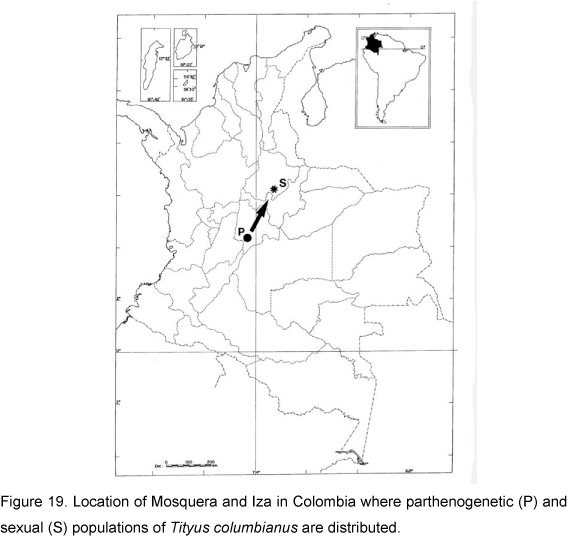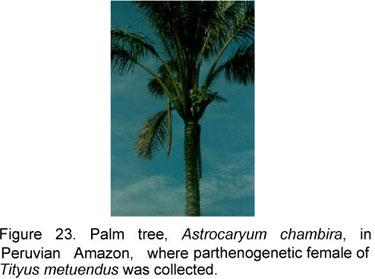
Parthenogenesis, a rare phenomenon in Chelicerates, apart from mites, is reviewed in scorpions, notably Tityus serrulatus Lutz & Mello from Brazil, Tityus columbianus (Thorell) from Colombia and Tityus metuendus Pocock from Peru and Brazil. Thelytokous parthenogenesis (with all-female broods) is most often observed. The only known exception to this is T. metuendus in which arrhenotoky (all-male broods) has been observed. In the present paper, current ideas regarding parthenogenesis in scorpions are summarized. The notion of geographic parthenogenesis ('parthénogenèse géographique'), coined by Vandel in 1928, is discussed. This rule is tentatively exemplified by a new case of parthenogenesis reported in a scorpion of the genus Tityus C. L. Koch, inhabiting 'Pico da Neblina' in Brazil / Venezuela.
scorpions; geographic parthenogenesis; review; thelytoky; arrhenotoky; deutherotoky