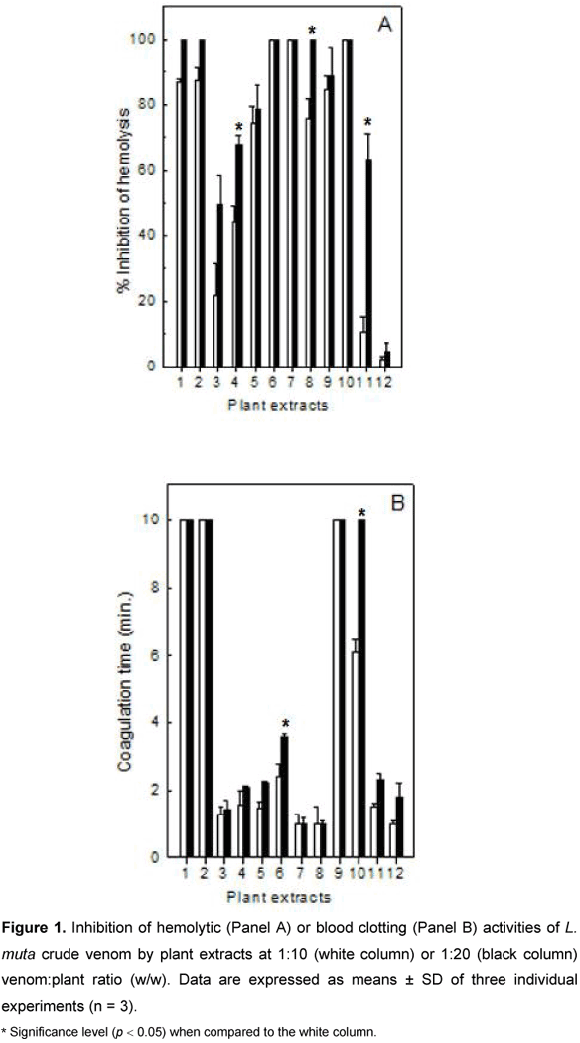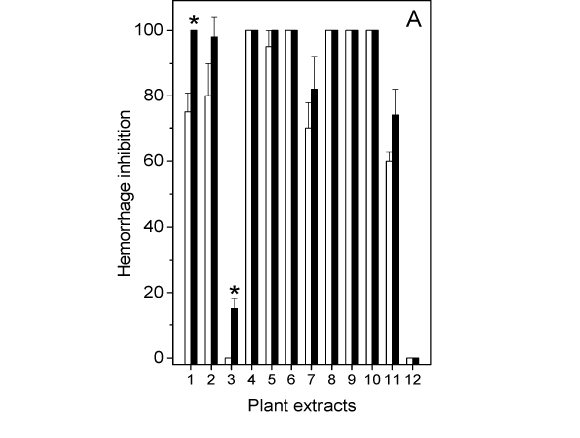
Snakebites comprise a serious health problem in several countries due to their global incidence, which exceeds 2.5 million per year, and the elevated number of victim fatalities. To counteract envenomations, antivenoms have been used regularly for more than a century. Apart from side effects including anaphylactic reactions, antivenoms are not able to efficiently neutralize local tissue damage, which contributes to increasing the severity and morbidity observed in patients. This fact, in turn, may be responsible for economic hardship, particularly in rural populations of developing countries. In the present work, we evaluated the antiophidian properties of 12 Brazilian plant extracts against the hemolytic, coagulant, hemorrhagic and proteolytic effects of Lachesis muta venom. Taken together, our data revealed that most of these aqueous products were capable of inhibiting those activities at different levels, except for Sapindus saponaria extract. In contrast, Stryphnodendron barbatiman extract completely neutralized all the analyzed biological activities. Thus, we may conclude that Brazilian flora may also be useful against L. muta accidents.
snake venom; Lachesis muta; plant extract; antivenom; biological activities