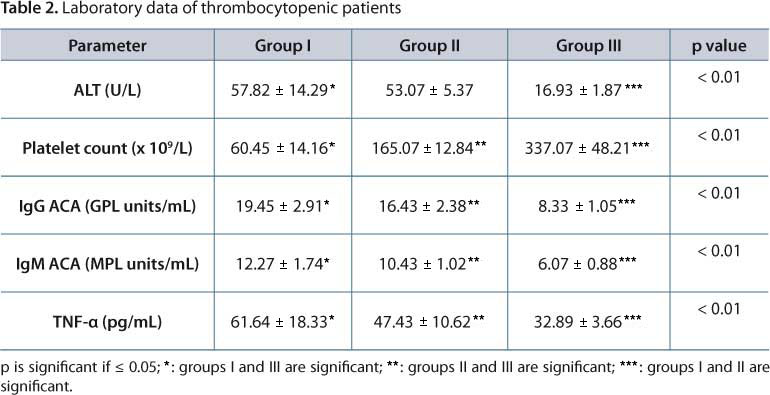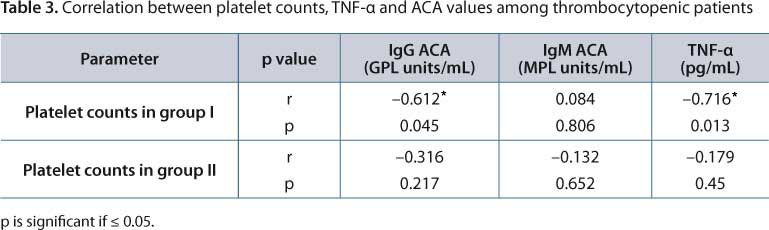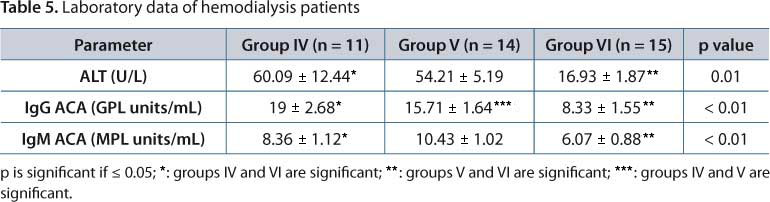
Several antibodies, including anticardiolipin antibodies (ACA), have been detected among chronically infected hepatitis C virus (HCV) patients. The present work aimed at ascertaining the clinical significance of ACA levels among HCV infection associated with two commonly encountered diseases, thrombocytopenia and arteriovenous-shunt malfunction. Six groups were studied, 11 HCV-positive thrombocytopenic patients (group I), 14 HCV-positive non-thrombocytopenic patients (group II) and 15 healthy controls (group III), 11 anti-HCV-positive hemodialysis patients with non-functioning shunt (group IV), 14 anti-HCV-positive hemodialysis patients with patent shunt (group V) (Bain Medical Equipment Co., China) and 15 healthy controls (group VI). Anticardiolipin antibody (ACA) assay was performed on all patients and controls whereas tumor necrosis factor α (TNF-α) assay was carried out on thrombocytopenic patients and controls. Thrombocytopenic groups presented an inverse correlation between IgG ACA levels and both thrombocytopenia and TNF-α levels. During the follow-up period, no other clinical manifestations related to ACA were developed. Hemodialysis groups showed a significant elevation in IgG ACA levels in groups IV and V compared to the controls, with statistically higher levels in group IV than group V. Three group IV patients were hypercholesterolemic. We can conclude that induction of proinflammatory cytokines such as TNF-α by persistent HCV infection may promote the generation of ACA. Complications of HCV, including thrombocytopenia and thrombosis in arteriovenous shunt, are more strongly correlated with IgG ACA than with IgM ACA.
hepatitis C virus; hemodialysis; anticardiolipin antibody; enzyme-linked immunosorbent assay