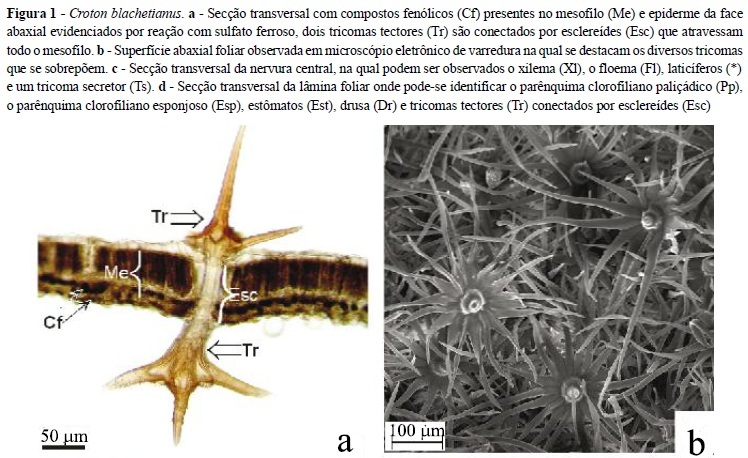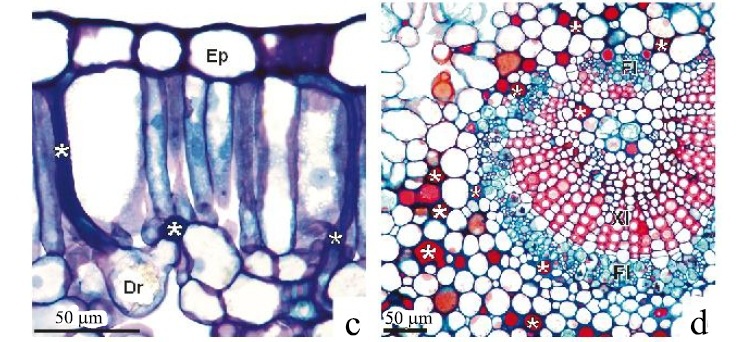
A disponibilidade de água é o principal fator limitante para as espécies vegetais em ambientes áridos e semiáridos. Nessas plantas, uma combinação de características contribui para a economia hídrica, entre elas as anatômicas. Assim, estudos em folhas de marmeleiro (Croton blanchetianus) e velame (Croton heliotropiifolius), duas espécies comuns na caatinga e de importância apícola, foram realizados para verificar as características anatômicas adaptativas relacionadas à maior eficiência na utilização de água. As folhas de ambas as espécies possuem indumento denso, parede das células basais dos tricomas impregnadas com lipídios e compostos fenólicos nas células epidérmicas e parenquimáticas. Em plantas de ambientes áridos, os tricomas podem ajudar a reduzir o aquecimento e a transpiração foliar e também impedir o fluxo apoplástico da água devido à presença de lipídios nas paredes das células basais. Estas características anatômicas podem atuar na economia hídrica e ser, desta maneira, consideradas adaptações às condições de semiaridez da caatinga.
Marmeleiro; Croton; Plantas e água; Plantas da caatinga