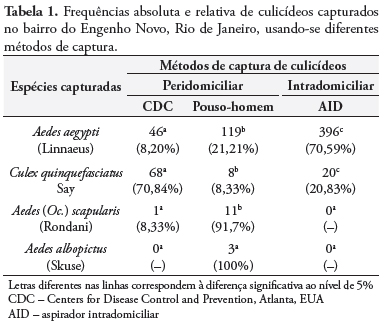
A espécie Dirofilaria immitis parasita principalmente canídeos, podendo infectar também gatos embora raramente (Felis catus Linnaeus, 1758). Seus hospedeiros intermediários podem ser diferentes espécies de culicídeos. Motivados por um caso autóctone de dirofilariose felina, encontrado na região do Engenho Novo - RJ (S 22º 90' e WO 43º 27'), estudou-se: 1) a fauna culicídica local e; 2) a ocorrência de cães portadores de microfilárias. Os estudos sobre a fauna culicídica foram conduzidos, de abril de 2003 a maio de 2004, realizando-se capturas peridomiciliares e intradomiciliares. Foram capturados 672 indivíduos (fêmeas) das espécies Aedes aegypti (Linnaeus) (561/672 - 83,5%), Culex quinquefasciatus Say (96/672 - 14,3%), Aedes (Oc.) scapularis (Rondani) (12/672 - 1,8%) e Aedes albopictus (Skuse) (3/672 - 0,4%). Apenas as espécies A. aegypti e C. quinquefasciatus foram capturadas em todos os meses do ano. Foram coletadas 235 amostras de sangue canino, durante a Campanha de Vacinação "Rio Sem Raiva", em outubro de 2003. Nenhuma amostra examinada continha microfilárias (técnicas de Knott e NAN), apesar de apenas 3,4% dos cães receberem quimioprofilaxia. A presença de culicídeos vetores, associada à possibilidade de mobilidade dos cães, pode ter favorecido o aparecimento da infecção felina na região.
Dirofilariose felina; Vetores; Mosquitos