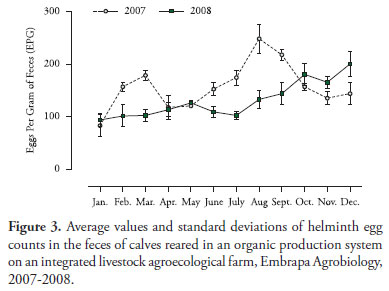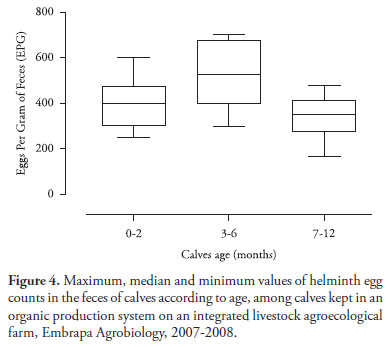
The main aim of this study was to determine the distribution of populations of gastrointestinal helminths in lactating crossbred cows and calves during the grazing season in an organic milk production system. In addition, the potential importance of the peripartum in relation to the parasite load was examined. Between January 2007 and December 2008, parasitological fecal examinations were performed on cattle belonging to the Integrated Animal Production Program of Embrapa Agrobiology. The cows' parasite load remained low during the study period, and there were no statistical differences (p > 0.05) in comparisons between the seasons. The average egg count showed a positive correlation (0.80) with the peripartum, such that egg elimination per gram (p < 0.05) was higher during the week of labor than during the pre and postpartum periods. Calves showed low parasite loads, with significantly higher egg elimination (p < 0.05) during the winter. The study indicated that infection with gastrointestinal helminths was not a limiting factor for milk production in the organic system. Specifically, it was concluded that the nematode load can be maintained at moderate levels throughout the production system, even in the absence of anthelmintic treatment.
Pasture management; peripartum; sustainable production