 Strengthening urban waste governance: Integrating data and policy in the northern coast of Rio Grande do Sul, Brazil
Abstract
Inadequate infrastructure for the final disposal of solid waste increases the vulnerability of coastal areas to environmental impacts. Poor waste management in these regions leads to severe marine contamination, as land-based waste reaches the oceans through rivers, storm water, and improper land disposal, threatening marine life. This study analyzes the integration between the National Sanitation Information System and the National Solid Waste Policy in regulating the Municipal Integrated Solid Waste Management Plans, focusing on coastal municipalities. A descriptive documentary approach was adopted, involving an analytical review of urban sanitation indicators. The results reveal significant governance gaps and the need for improved coordination in coastal management. In municipalities along the Northern Coast of Rio Grande do Sul, weak integration was found between data repositories and legislation, with extensive and redundant reporting forms. Strengthening Sanitation Information System through alignment with international standards, regulatory mechanisms, social participation, and circular economy principles — especially through the inclusion of low-income waste pickers — can enhance transparency and accountability. Integration with reports from the United Nations Environment Programme would enable the system to become a global reference, contributing to sustainable coastal management and climate change mitigation.
Key words
Coastal Waste Governance; National Sanitation Information System; National Solid Waste Policy; Solid Waste Management; Sustainability Indicators
INTRODUCTION
Ensuring efficient solid waste management at any geographical scale requires adherence to the fundamental principles of the 5Rs: refuse, reduce, reuse, redesign, and recycle (UNEP 2015, Brasil 2010). Integrated solid waste management, combined with material recovery, reduces environmental impact and improves resource efficiency (Gouveia 2012). Within this framework, global initiatives have been developed to mitigate waste generated by human consumption and improve the lifecycle quality of products (Löhr et al. 2017). One such initiative is the International Environmental Technology Centre — IETC of the United Nations Environment Programme — UNEP, which supports developing countries by providing environmental technologies. Among its outputs are global reports on solid waste aligned with the Agenda 2030 goals (UNEP 2023a). Sustainability indicators were developed as part of the Sustainable Development Goals — SDGs (UNEP 2023b). According to the European Environment Agency (EEA 2005), an indicator is a quantitative measure that simplifies and communicates complex phenomena. Solid waste management must be presented in a clear, accessible manner to facilitate effective governance.
Urban solid waste1 management in Brazil is a public responsibility and is integrated into the national sanitation system. Municipalities are responsible for collection, transfer, and final disposal. The National Sanitation Information System (NSIS) manages the sanitation data repository, collecting annual reports from municipal administrators through an online, publicly accessible platform. As a result, the system generates sanitation indicators for the country and is linked to the National Secretariat of Sanitation under the Ministry of Cities (MCid 2023). Furthermore, Brazilian Law No. 12.305/2010 establishes the National Solid Waste Policy (NSWP), defining the principles of the Municipal Integrated Solid Waste Management Plans (MISWP). Plans are integral to the objectives of the NSIS and serve as prerequisites for securing federal funding. Municipalities that maintain an up-to-date MISWP and consistently report data to the system are the only ones eligible for financial support from the federal government. However, one of the main challenges is the lack of a comprehensive database that fully meets legal requirements and provides complete, reliable information. The issue is particularly relevant when analyzing MISWP compliance, especially in coastal municipalities, which face unique challenges. As Jambeck et al. (2015) highlight, without improvements in municipal waste management, the amount of plastic in the oceans could increase significantly by 2025. Brazil has a coastline of 8,698 km and 395 coastal municipalities (Scherer et al. 2010). The interaction between natural processes and various human activities is intense in these regions (Moura et al. 2015, Pereira & Fernandino 2019). Coastal zones act as major entry points for solid waste into marine environments due to their direct land-sea interface. Studies over the past three decades indicate that the most pressing environmental problem affecting South American coastlines is pollution from solid waste of land-base origin. Several authors, including Garrity & Levings (1993), Araújo & Costa (2007), Santos et al. (2005), Silva-Cavalcanti et al. (2013), Dias et al. (2013), Moura et al. (2015) and Macedo et al. (2023), highlight that solid waste pollution is a persistent issue across southern, northern, and northeastern Brazil.
Coastal zones provide essential ecosystem services, including climate regulation, coastal protection, and support for key economic activities (Barbier et al. 2011). Addressing the challenges of solid waste pollution is particularly urgent in frontline coastal municipalities, where high population density, industrial activities, and tourism exacerbate waste-related issues. The vulnerability of these areas to climate change is further intensified by the lack of suitable disposal sites, as coastal soils are often porous and highly permeable (Strohaecker 2006). As a result, rising sea levels, extreme weather events, and the transport of solid waste into marine environments pose significant environmental risks (MMA 2017).
Based on Brazilian solid waste management policies, this study aims to assess the integration between NSIS and NSWP, specifically regarding compliance with regulations for MISWP implementation. The evaluation focuses on the alignment between legal directives and sanitation data collected from Brazilian municipalities. The approach allows for the identification of governance gaps and the proposal of improvements aimed at generating specific data on coastal waste management. As a key recommendation, the study suggests the inclusion of seven new sustainability indicators in NSIS to meet MISWP legal requirements and enhance solid waste governance. The integration of sustainability indicators into database could facilitate the sharing of national solid waste data with global references from IETC/UNEP. As highlighted by Armijo et al. (2011), performance indicators quantify the quality of solid waste services across different areas and timeframes, reflecting the efficiency of the overall system and its individual components. Sustainability indicators are particularly important for coastal municipalities, which represent the most vulnerable territories to solid waste pollution. Therefore, waste management tools must cater to the specific needs of these coastal regions.
MATERIALS AND METHODS
The research method employed was descriptive documentation (Gil 2009). The methodology involved the analysis of two official and complementary sources: Law No. 12.305/2010, which establishes the National Solid Waste Policy (Brasil 2010), and data from the National Sanitation Information System (MCid 2023). The research used the online platform available on the NSIS website. Until March 2025, the portal remained accessible for public consultation. From that date onwards, access to the portal began to be redirected to the National Basic Sanitation Information System (NBSIS) (MCid 2024). However, the system for consulting data and indicators remains unchanged. The database is now integrated into the NBSIS platform. The transition from NSIS to NBSIS is an ongoing institutional process. In this study, the original designation—NSIS—was maintained because the municipal records analyzed were collected under that system. The year 2021 was selected because it represented the most up-to-date dataset available until February 2025, the final period of the research.
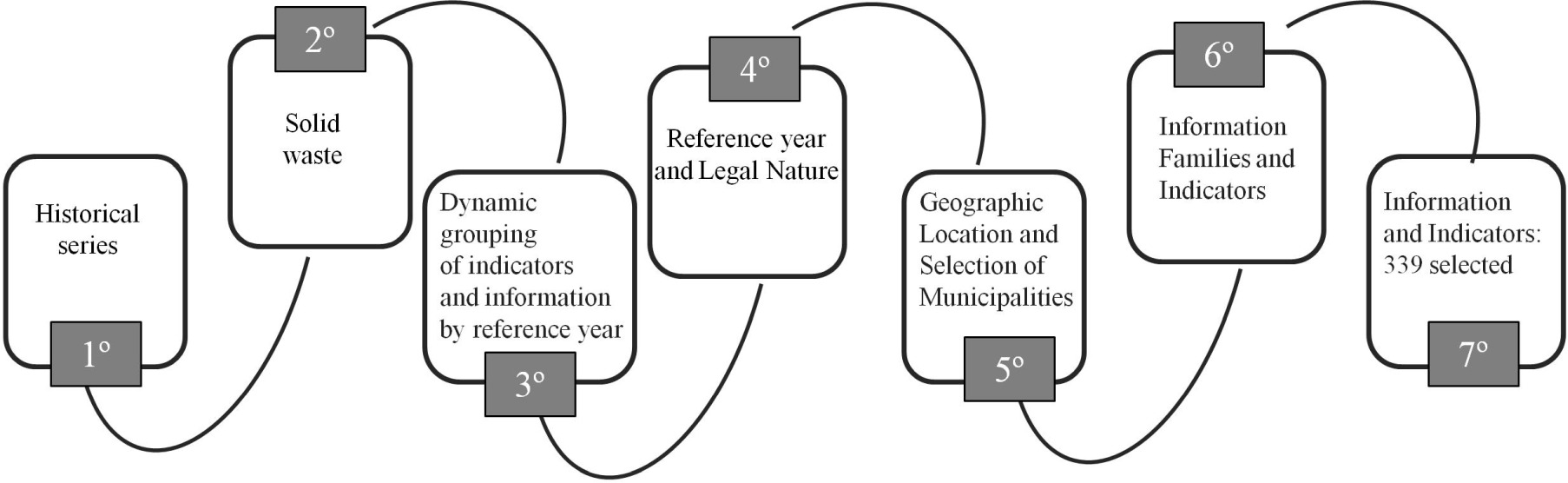
The study analyzed indicators available in the solid waste module, where municipal managers submit information. These indicators were examined in light of the legal framework outlined in Chapter II of the National Solid Waste Policy. The focus was on Section IV, which addresses the Municipal Integrated Solid Waste Plan (MISWP). Articles 18 and 19, which define the minimum required regulatory content, guided the analysis. Figure 1 illustrates the steps and filters used to access the platform and obtain the research data. The process of accessing the database followed seven defined steps.

Logical flow of the seven steps required to access and filter technical information on the NSIS online platform. This sequence reflects the procedural framework used to extract municipal solid waste data, revealing potential barriers in the system’s usability and indicator organization.
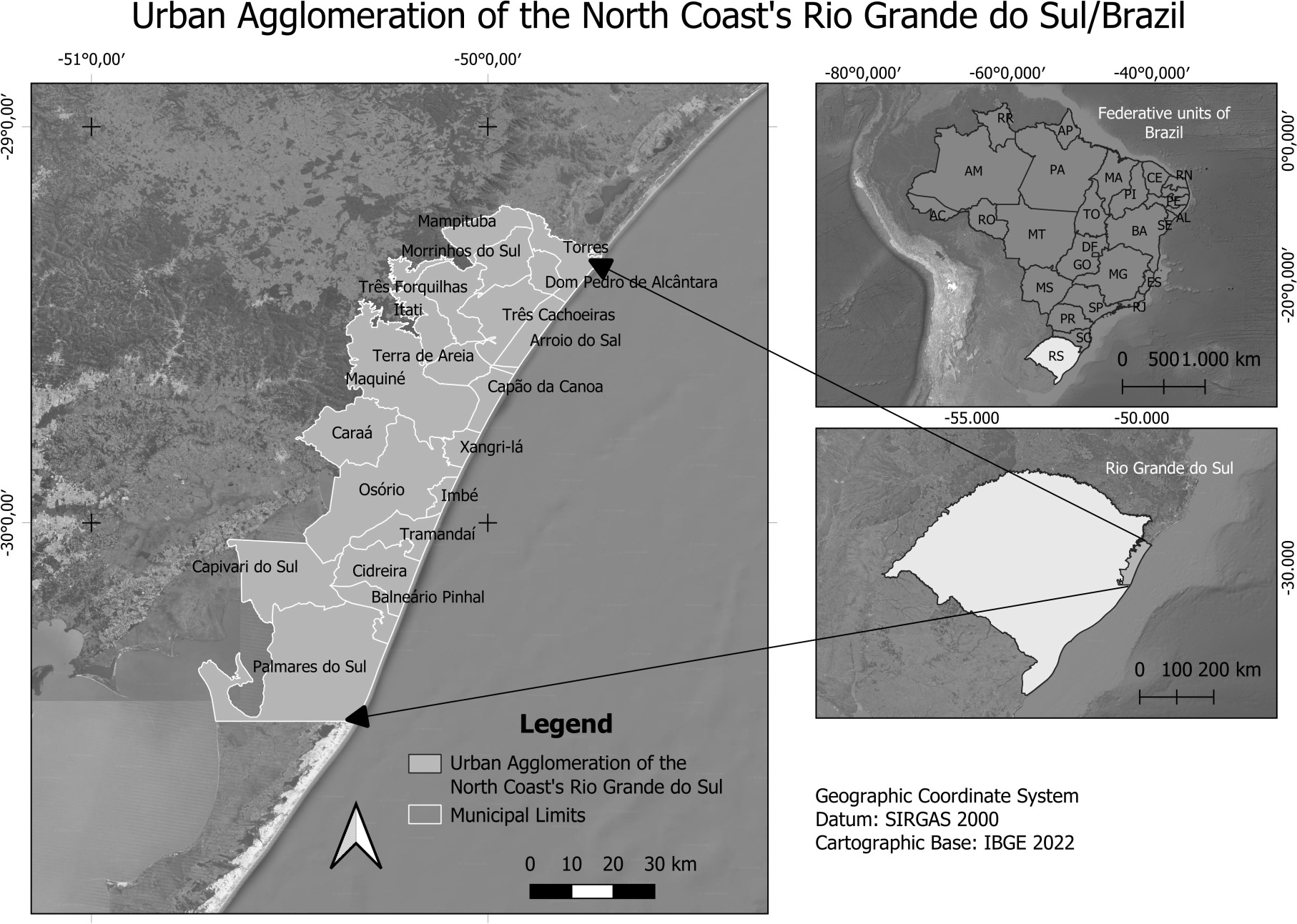
The initial three steps focused on classifying information based on the desired content. The filtering process began in the fourth step, where selected elements underwent refinement. The selection of information was based on the sample reference year 2021, with six options: direct public administration, autonomous agency, public company, private company, public consortium, and mixed-economy company with public administration. Completing the fourth step in selecting information on the platform. The territorial section selected in the next step encompassed the southern region, the state of Rio Grande do Sul, and municipalities within the northern Coastal Urban Agglomeration of Rio Grande do Sul. Access to the repository requires the selection of at least one municipality from the federation to generate the data. Complementary Law No. 12.100/2004, establishes the twenty municipalities that are part of the Northern Coastal Urban Agglomeration in the state of Rio Grande do Sul (Rio Grande do Sul 2004). These municipalities are: Arroio do Sal, Balneário Pinhal, Capão da Canoa, Capivari do Sul, Caraá, Cidreira, Dom Pedro de Alcântara, Imbé, Itati, Mampituba, Maquiné, Morrinhos do Sul, Osório, Palmares do Sul, Terra de Areia, Torres, Tramandaí, Três Cachoeiras, Três Forquilhas, and Xangri-Lá. Figure 2 presents the map showing the location of these municipalities.
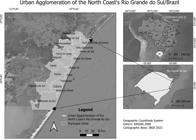
Geographic distribution of the 20 municipalities analyzed in this study, illustrating the regional challenges of waste governance in coastal areas.
The filter in the sixth step allowed the selection of 18 solid waste records for free choice. Figure 1 illustrates the process corresponding to this stage, called “Family of Information and Indicators”. Eleven issues were selected, limited to those related to urban solid waste, excluding hospital waste and construction debris. The system provided 339 questions from this selection, all of which were chosen. During the sixth step, the following search filters were applied to generate the database on the platform: general information; information on household and public collection; information on selective collection and sorting; information on street sweeping, pruning, and mowing services; information on other services; information on waste pickers; indicators of worker expenditure; indicators of household and public collection; indicators of selective collection and sorting; indicators of street sweeping, pruning and mowing; information on municipal sanitation policy and plan.
Upon completing the seven steps outlined in Figure 1, the system generated an online spreadsheet. The fields in the spreadsheet were answered by the proposers from the selected municipalities city halls. The questions and indicators were analyzed based on the quality of the questions that comprise the database. The focus of this research lies in the investigation of the questions and indicators provided in the composition of the NSIS database.
RESULTS
The questions provided by the data platform align with the NSWP. However, discrepancies and gaps exist between the questions and the requirements established by the NSWP. The legislation mandates a comprehensive diagnosis of solid waste generation in Brazilian municipalities. The diagnosis must include origin, volume, and adopted disposal methods (Art. 19, I). The NSIS is limited to collecting data on the amount generated and its collection, with the latter being incomplete. Aspects such as waste characteristics and reduction processes remain absent.
The spreadsheet generated by the online platform in 2021 included only 15 of the 19 selected municipalities. The omission suggests that at least four of them did not respond to the questionnaire for the reference year 2021 – Maquiné, Palmares do Sul, Torres, and Tramandaí. Additionally, the municipality of Cidreira was not included in this urban group during the location selection phase, indicating a system failure.
The database prioritizes quantitative data collection, especially regarding Article 18, Section II, of the NSWP. Access to federal resources depends on implementing selective collection programs with cooperatives or associations of low-income waste pickers. Nevertheless, the absence of questions on the solidarity economy weakens the MISWP by excluding social policies from waste management and neglecting mandatory social requirements. Table I outlines the regulatory requirements established by NSWP under Article 19, Section IV, for the MISWP. Among the 19 items analyzed, 6 were adequately addressed, 11 were absent from the NSIS database, and 2 were only partially covered regarding urban solid waste.
An analysis of the questionnaire revealed that the NSIS includes forms focused on categorization, quantification, and solid waste collection, aligning with Article 19, I. However, when searching for questions related to Article 19, II, no inquiries regarding suitable areas for final disposal were identified. The questionnaire disregards this criterion, compromising the assessment of municipal compliance. The law mandates the identification of areas in accordance with the Master Plan and Environmental Zoning regulations.
A significant gap was observed in Article 19, II. The database contains only three questions related to the final disposal of solid waste: in aircraft, in vessels, and the outsourcing of machinery and equipment for landfill or dumpsite operations.
Regarding Article 19, III, the database includes on intermunicipal waste management consortia. However, questions related to preventing environmental risks from solid waste management are omitted. The NSWP encourages the adoption of consortia as an economically viable solution (Art. 19, III). The form includes inquiries about delegation contracts but does not verify whether municipalities actually adopt this cooperative approach. fails to verify whether municipalities are adopting this cooperative approach. he questionnaire includes inquiries about delegation contracts but
The existence of specific plans for certain types of waste and reverse logistics systems is a legal requirement under Article 19, IV. The NSIS does not verify whether municipalities comply with reverse logistics, a fundamental pillar of the NSWP. In other words, it excludes monitoring mechanisms for these systems, making the assessment of returnable waste management imprecise. The questionnaire focuses on collection but does not assess whether there are actions to reduce waste production at the source.
An exhaustive number of questions related to operational procedures and vehicle categories were identified. While these inquiries may be useful for municipal management, they are not explicitly required by Law No. 12.305/2010. The assessment framework focuses on vehicle quantity, creating a gap regarding technical criteria for handling and disposing of transported waste. Another limitation is the absence of specific environmental licensing for safe transportation (Art. 19, VII) represents another shortcoming.
The NSIS evaluation of solid waste indicators is centered around two categories: service indicators and worker expense indicators. The latter involves financial revenue and human resource indicators. Service indicators address solid waste collection. In detail, 13 indicators were found for household waste collection services, 11 for selective collection services, and 10 for street sweeping, weeding, and clearing services. Meanwhile, worker expense indicators assess financial sustainability and the continued capacity of public agencies to provide these services. In this context, 10 worker-related expenditure indicators were identified and analyzed, including 4 general expenses, 2 related to revenue, and 4 concerning human resources. Final disposal indicators were absent.
The robustness of the solid waste module questionnaire is a notable aspect. This module differs from other sanitation categories due to its extensive number of forms. However, ten key questions necessary to meet legal requirements are missing. These include environmental licensing for transportation, environmental action programs and social participation, business creation mechanisms, intermunicipal solutions, reduction targets, logistics and recycling, monitoring mechanisms, prevention, environmental liabilities, and review periodicity. Consequently, the database remains incomplete in terms of formulating questions directly linked to Law No. 12.305/2010 for the MISWP.
The data repository includes regulatory frameworks covering aspects such as diagnostics, identification, operational procedures, and the definition of responsibilities, which are actively questioned. This represents a positive aspect, as investigating these areas can help structure targets for reduction, source separation, recycling, and reuse. Additionally, cooperatives and associations within the solidarity economy could be integrated, involving low-income individuals.
A noteworthy aspect of the questionnaire is the presence of redundant questions. For instance, the section on selective collection and collection methods includes 24 nearly identical questions, differing only in the method of execution (e.g., door-to-door collection, collector bin, container, and collection point). Similarly, 27 questions about collection trucks vary only by the type of vehicle used, such as dump trucks, container trucks, and compactors. The same issue applies to other motorized vehicles, including vessels and aircraft. These redundancies negatively impact response quality by discouraging respondents due to survey fatigue. This issue is evident from the declining response rate as the questionnaire progresses, reflecting the incomplete information provided by municipalities.
The NSIS questions do not clearly address the definition of roles among those responsible for waste management (Art. 19, VIII). Furthermore, the training of municipal technicians and managers is also neglected (Art. 19, IX). The absence of these inquiries weakens professionalization and the efficiency of municipal planning.
Environmental education is a key component of the NSWP, promoting waste reduction and recycling (Art. 19, X). The questionnaire eliminates questions related to this topic, undermining the evaluation of awareness policies. The legislation also mandates the inclusion of waste pickers in selective collection (Art. 19, XI). The form questions the existence of cooperatives but omits the types of selective collection, such as organic waste collection.
The creation of employment and income generation opportunities through recycling is a goal of the NSWP (Art. 19, XII). The survey excludes inquiries about the solidarity economy, disregarding social policies within the sector. Monitoring waste management costs is essential for financial transparency (Art. 19, XIII). Although the collected data include some financial information, they lack details on service fee structures.
Municipal plans must establish clear targets for waste reduction and recycling (Art. 19, XIV). The NSIS inquires about the existence of selective collection but fails to assess specific targets set by municipalities. Reverse logistics should be detailed in municipal plans, defining the role of the public sector (Art. 19, XV). The data collection form disregards this aspect, preventing the evaluation of system implementation.
Environmental liabilities must be identified and remediated by municipalities (Art. 19, XVIII). The NSIS disregards questions on this obligation, undermining the recovery of degraded areas. Finally, municipal plans must be periodically reviewed, with a maximum cycle of 10 years (Art. 19, XIX). The questionnaire inquires about the plan’s existence but does not address its revision.
Aligning the NSIS with legal frameworks could enhance waste management regulations. Including the periodic review of MISWP in the questionnaire will ensure compliance with Article 19, XIX. Although legislation may evolve based on emerging demands, it already provides fundamental criteria for sustainable planning.
Improving the solid waste database in Brazil is crucial for strengthening sustainability and environmental and social resilience across the country. Table II presents suggestions for indicators based on sustainability dimensions and SDG references, emphasizing coastal municipalities.
Relationship between the gaps in the SNIS, linked to the corresponding articles of law 12,305, with the suggested indicators and their relationship with the SDGs.
The integration of NSIS with sustainability indicators strengthens its link to IETC’s annual reports. These reports focus on solid waste pollution management, especially ocean plastics. Such an approach allows Brazil to contribute data on waste generation, collection, treatment, and final disposal. Strategies aligned with SDG 11.6 and SDG 14.1 also receive support.
Incorporating SDGs into repository indicators remains essential. Sanitation policies align with global targets. International comparisons become more effective. Transparency improves, and resource allocation becomes more efficient.
DISCUSSION
The results highlight structural flaws in NSIS. The lack of detailed information on final disposal restrains any accurate assessment of municipal waste management. Without disaggregated data, monitoring compliance with legislation becomes unfeasible. Data on waste disposal are available, but only two questions address the topic, providing an insufficient basis for a robust indicator. The distinction between destination and final disposal should be a central element in the questionnaire. This procedure directly influences policies related to the circular economy and environmental control (Ellen MacArthur Foundation 2019, 2021).
The NSIS fails to ask about degraded areas from old dumps or recovery actions. Such omissions cause environmental, social, and economic impacts. Degraded areas contaminate soil and water, affecting public health. Municipalities bear the remediation costs. The lack of proper land recovery harms social well-being and urban development. Proposals such as reforestation, urban parks, renewable energy projects, and eco-industrial zones could restore these sites and generate economic benefits.
Insufficient information on reverse logistics indicates misalignment with the principles of shared responsibility. Companies and manufacturers have legal obligations in post-consumer waste management. In contrast, the form omits this aspect. Without monitoring mechanisms, evaluating compliance with these responsibilities becomes imprecise. The lack of oversight in recycling and reuse policies increases the burden on public administration (Silva et al. 2021). The solid waste module contains an excessive number of redundant questions, compromising its efficiency. Instead of improving analysis, unnecessary repetition of questions makes completion exhausting. The quality of responses is directly affected. Borges et al. (2022) highlights that excessively long questionnaires negatively impact response rates. The questionnaire collects operational data on vehicle categorization. Yet, it fails to evaluate how the municipality monitors and corrects failures in the system. As a result, data reliability is compromised. A reformulation should prioritize objectivity and precision. Multiple-choice questions can reduce the burden on respondents.
Excessive dependence on external sources agreements NSIS’s autonomy in producing reliable statistics. When municipalities fail to provide complete data, national analysis becomes weaker. Improving the database structure would enhance independence in generating solid waste information (Nuortio et al. 2004).
Coastal municipalities face specific challenges. Seasonality, tourism, and high environmental sensitivity in these regions require different strategies. During peak periods, waste generation increases considerably. The rise in waste production overloads collection and disposal infrastructure. Ecologically vulnerable areas such as mangroves and coral reefs require strict measures to prevent severe environmental impacts (Silva et al. 2021, Ellen MacArthur Foundation 2019). Including specific indicators would strengthen environmental management in these municipalities. Metrics such as seasonal per capita waste generation, recyclable volume from the tourism sector, and impacts on fragile ecosystems would enable more effective mitigation policies.
Climate change may also exacerbate challenges in solid waste management. Rising sea levels may reduce available areas for final disposal. Extreme weather events, such as storms and floods, may intensify the spread of waste into sensitive areas. Introducing indicators related to the impacts of climate change may contribute to more resilient waste management strategies in coastal municipalities.
Although NSIS has advanced in structuring the municipal database, opportunities for improvement remain. Incorporating sustainability indicators may strengthen its regulatory function. Updating the system may promote social oversight and improve environmental planning (da Silva et al. 2019, Tischer 2016). Studies in the state of Rio de Janeiro demonstrate that environmental indicators may be effective tools for managing public services (Pequeno et al. 2020). Research on solid waste in coastal zones also highlights this relevance (Diederichsen et al. 2013, Almeida 2013, Andrade & Scherer 2014, Pfuetzenreuter et al. 2023).
The lack of data on the solidarity economy also represents an obstacle to MISWP effectiveness. Waste management should be approached from a technical-operational perspective. At the same time, it also plays a fundamental role in social inclusion and economic development. The omission of questions about cooperatives and waste picker associations weakens policies promoting recycling. The restriction of this information limits job and income generation in the sector (Brasil 2010).
Gaps in monitoring management and oversight costs remain. Without detailed financial indicators, sector planning becomes uncertain. The evaluation of the tariff structure should be integrated into NSIS to ensure the economic sustainability of services provided. However, the current database collects only superficial financial information. Expanding financing mechanisms is essential.
NSIS should be recognized as a fundamental tool for structuring waste management. Introducing questions that expand perspectives for sustainable actions can encourage best practices among managers. Relevant examples include selective collection of organic waste and quantification and characterization of reverse logistics materials. Identifying discarded recyclables contributes to more efficient actions. A well-structured database provides information and serves as a benchmark for municipal actions. The development of effective public policies also depends on this data.
Periodic review of municipal waste plans is legally required. However, this requirement is missing from the questionnaire. The instrument asks whether the plan exists but neglects to verify whether it is updated or revised within the legal timeframe. Without such monitoring, municipalities risk operating with outdated and ineffective guidelines. The absence of this control prevents any evolutionary analysis of waste management.
The identified weaknesses demonstrate the urgent need for a comprehensive NSIS reform. Improving the system must go beyond increasing the number of questions. The qualification of collected information must be prioritized. Strengthening autonomy and ensuring objectivity in data collection are essential. Alignment with legislation must be guaranteed. Only with these changes will the database fulfill its purpose. Transforming NSIS into a reference for developing solid waste public policies depends on these adjustments.
Adapting the system to the needs of coastal municipalities will contribute to efficient and sustainable management. Improving the database will help municipalities track progress and challenges in waste management more precisely across Brazil.
The Solid Waste Management in the World’s Cities report (UN-HABITAT 2010) highlights three key indicators for sustainable waste management. These are: (1) collection, (2) waste disposal, and (3) prevention, reuse, recycling, and valorization. Among these, NSIS addresses only collection. This limitation may hinder the assessment of urban waste sustainability. The addition of new indicators may be implemented without creating new forms. Using existing forms as a basis may optimize data collection. Changing the response format to multiple-choice options may increase the accuracy and completeness of responses. This may promote transparency and public accountability.
Five of the seven proposed indicators are included in the UN Program – Environmental Report (UNEP 2024). Adding these indicators to NSIS can fill existing gaps. Both coastal municipalities and national needs will benefit.
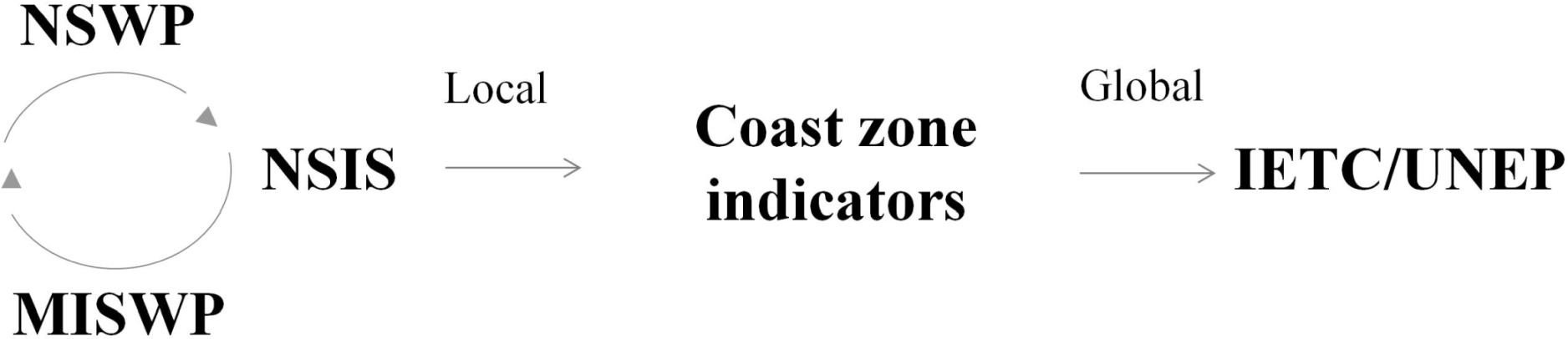
Brazil’s participation in IETC reports may be essential to strengthening waste management. Additionally, it may secure funding opportunities to improve sector infrastructure (Pereira et al. 2018). The inclusion of indicators on environmental liabilities and greenhouse gas emissions may broaden perspectives for stakeholders. This advancement may strengthen environmental sustainability and assist in mitigating climate change. Figure 3 illustrates the logical structure of the current proposal.
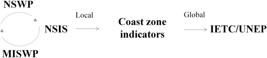
Proposed structure for strengthening the integration between NSIS indicators and the National Solid Waste Policy. The model emphasizes the inclusion of sustainability indicators aligned with international frameworks and SDGs to enhance regulatory performance and coastal waste governance.
CONCLUSIONS
NSIS is essential for solid waste management in Brazil. Nevertheless, gaps in the database compromise considerably its effectiveness and limit environmental governance. The failure to fully comply with the regulations of Law 12.305/2010 hinder recycling efforts and the proper disposal of waste, including hazardous materials (Zaman et al. 2016). Inefficiencies in data collection affect compliance with legal regulations (Cetrulo et al. 2020). Many existing indicators focus on collection and disposal. Environmental, social, and governance aspects remain overlooked. This limits integrated waste management.
The NSIS addresses legal requirements. Still, aspects such as infrastructure and services, waste destination, waste pickers, planning, and management could be monitored more deeply. Such improvements will allow municipal responses to ensure consistency in creating sustainability indicators.
The incorporation of sustainability indicators may enhance NSIS’s effectiveness. International experiences show that even developed countries face difficulties in including comprehensive waste management indicators (Turcott Cervantes et al. 2018, Olay-Romero et al. 2020). Even so, several nations have already integrated circular economy principles into their strategies. Examples include Spain (2020), Argentina (2021), and Uruguay (2024). These countries employ metrics aligned with SDGs 11, 12, and 13 to reduce natural resource extraction and optimize waste management.
Modernizing NSIS may establish a model for other countries. Prioritizing sustainability may strengthen environmental governance and expand the positive impacts of waste management. Since oceans have increasingly become a dumping ground for solid waste, discouraging improper disposal in coastal areas is urgent. This approach may contribute to local sustainable development and mitigate marine pollution on a global scale.
Integrating NSIS into the United Nations Environment Programme (UNEP) may enhance its international relevance. This connection may expand knowledge exchange and provide access to new waste management methodologies. Additionally, it may position Brazil as a global reference in waste governance. Incorporating NSIS into UNEP may facilitate resource mobilization and the development of strategies aligned with the Sustainable Development Goals. As a result, the system may evolve into a model of excellence for sustainable solid waste management.
NSIS, NSWP, and MISWP may enhance global reports, such as those from IETC/UNEP. Strengthening this database may improve the accuracy of waste management data. Integration with international frameworks may facilitate data comparison between countries. Such alignment may support more effective policies and strengthen global cooperation. Additionally, it may ensure that Brazil’s waste management strategies comply with sustainable development goals.
Acknowledgements
Special thanks to Léo A. Hartmann for his knowledge, patience, and motivation in the development of the structure of this article. Special thanks to the municipality of Caraá, RS, Brazil, for the professional opportunity granted to the first author of this manuscript. Between 2014 and 2016, experience as a biologist enabled work in solid waste management and collaboration with the NSIS database. Such experience enhanced the understanding of the topic’s complexity, requiring intense dedication and interrupting other activities. The experience was essential for the analysis and detailed perspective presented in this study.
References
- ALMEIDA DR. 2013. Aplicação de indicadores de sustentabilidade à zona costeira do município de João Pessoa/PB. Universidade Federal da Paraíba, Programa Regional de Pós-Graduação em Desenvolvimento e Meio Ambiente. João Pessoa, Brasil. Dissertação de Mestrado. (Unpublished).
- ANDRADE J & SCHERER MEG. 2014. Decálogo da gestão costeira para Santa Catarina: avaliando a estrutura estadual para o desenvolvimento do Programa Estadual de Gerenciamento Costeiro. Desenv Meio Amb 29: 139-154.
- ARAÚJO CM & COSTA M. 2007. An analysis of the riverine contribution to the solid wastes contamination of an isolated beach at the Brazilian Northeast. Manag Environ Qual 18(1): 6-12.
- ARGENTINA. 2021. Resolución 290/2021 Implementación del Programa Nacional de Fortalecimiento de la Economía Circular Inclusiva Comunitaria y Local Preciclo. Ministerio de Ambiente y Desarrollo Sostenible.
- ARMIJO C, PUMA A & OJEDA S. 2011. A set of indicators for waste management programs. In: Proc 2nd Int Conf Environ Eng Appl, Singapore, p. 1-5.
- BARBIER EB, HACKER SD, KENNEDY C, KOCH EW, STIER AC & SILLIMAN BR. 2011. The value of estuarine and coastal ecosystem services. Ecol Monogr 81(2): 169-193.
- BORGES MCP ET AL. 2022. The Brazilian National System for Water and Sanitation Data (SNIS): Providing information on a municipal level on water and sanitation services. J Urban Manag 11(4): 530-542.
- BRASIL. 2010. Lei nº 12.305. Institui a Política Nacional de Resíduos Sólidos.
- CETRULO NM, CETRULO TB, GONÇALVES DIAS SLF & RAMOS TB. 2020. Solid waste indicators in local sustainability assessment: a literature review. Rev Ambient Soc 23: 1-31.
- DA SILVA L, MARQUES PRIETTO PD & PAVAN KORF E. 2019. Sustainability indicators for urban solid waste management in large and medium-sized worldwide cities. J Clean Prod 237: 117802.
- DIAS JA, CEARRETA A, ISLA FI & MAHIQUES MM. 2013. Anthropogenic impacts on Iberoamerican coastal areas: historical processes present challenges and consequences for coastal zone management. Ocean Coastal Manag 77: 80-88.
- DIEDERICHSEN SD, GEMAEL MK, HERNANDEZ AO, OLIVEIRA AO, PAQUETTE ML, SCHMIDT AD, SILVA PG, SILVA MS & SCHERER MEG. 2013. Gestão costeira no município de Florianópolis SC Brasil: um diagnóstico. Rev Gestão Costeira Integrada 13(4): 499-512.
- EEA - EUROPEAN ENVIRONMENTAL AGENCY. 2005. EEA core set of indicators guide. Luxembourg: Office for Official Publications of the European Communities.
-
ELLEN MACARTHUR FOUNDATION. 2019. Tackling electronic waste and digital poverty in Brazil: Belo Horizonte. Ellen MacArthur Foundation. Available at: https://www.ellenmacarthurfoundation.org/circular-examples/tackling-electronic-waste
» https://www.ellenmacarthurfoundation.org/circular-examples/tackling-electronic-waste -
ELLEN MACARTHUR FOUNDATION. 2021. A taste of a circular economy for food in São Paulo. Ellen MacArthur Foundation. Available at: https://www.ellenmacarthurfoundation.org/news/new-mini-documentary-showcases-sao-paulos-circular-food-system
» https://www.ellenmacarthurfoundation.org/news/new-mini-documentary-showcases-sao-paulos-circular-food-system - GARRITY SD & LEVINGS SC. 1993. Marine debris along the Caribbean coast of Panama. Mar Pollut Bull 26: 317-324.
- GIL AC. 2009. Como elaborar projetos de pesquisa social, 6ª ed., São Paulo: Atlas, 200 p.
- GOUVEIA N. 2012. Resíduos sólidos urbanos: impactos socioambientais e perspectiva de manejo sustentável com inclusão social. Cienc Saude Colet 17(6): 1503-1510.
- JAMBECK JR, GEYER R, WILCOX C, SIEGLER TR, PERRYMAN M, ANDRADY A, NARAYAN R & LAW KL. 2015. Plastic waste inputs from land into the ocean. Science 347(6223): 768-771.
- LÖHR A, SAVELLI H, BEUNEN R, KALZ M, RAGAS A & VAN BELLEGHEM F. 2017. Solutions for global marine litter pollution. Curr Opin Environ Sustain 28: 90-99.
- MACEDO LS, GUIMARÃES CC, MANÉO FP & TEIXEIRA CE. 2023. Regional integrated solid waste management planning in Brazil: main challenges and opportunities: case of the metropolitan region of Baixada Santista, São Paulo, Brazil. In: Proc 19th Int Symp Waste Manage Resour Recovery Sustainable Landfilling, Santa Margherita di Pula, Italy. Proceedings, 10 p.
-
MCID - MINISTÉRIO DAS CIDADES. 2023. Sistema Nacional de Informações sobre Saneamento – SNIS. Available at: https://app4.cidades.gov.br/serieHistorica/
» https://app4.cidades.gov.br/serieHistorica/ -
MCID - MINISTÉRIO DAS CIDADES. 2024. Sistema Nacional de Informações em Saneamento Básico – SINISA. Available at: https://www.gov.br/cidades/pt-br/acesso-a-informacao/acoes-e-programas/saneamento/sinisa
» https://www.gov.br/cidades/pt-br/acesso-a-informacao/acoes-e-programas/saneamento/sinisa -
MMA - MINISTÉRIO DO MEIO AMBIENTE. 2017. Avaliação dos Zoneamentos Ecológico-Econômicos Costeiros (ZEEC) do Brasil: Relatório Final. Brasília: Ministério do Meio Ambiente, 182 p. Available at: https://www.researchgate.net/profile/Joao-L-Nicolodi/publication/340236617_AVALIACAO_DOS_ZONEAMENTOS_ECOLOGICO-ECONOMICOS_COSTEIROS_ELABORADOS_NO_BRASIL_RELATORIO_FINAL/links/5e7e468992851caef4a569c8/AVALIACAO-DOS-ZONEAMENTOS-ECOLOGICO-ECONOMICOS-COSTEIROS-ELABORADOS-NO-BRASIL-RELATORIO-FINAL.pdf
» https://www.researchgate.net/profile/Joao-L-Nicolodi/publication/340236617_AVALIACAO_DOS_ZONEAMENTOS_ECOLOGICO-ECONOMICOS_COSTEIROS_ELABORADOS_NO_BRASIL_RELATORIO_FINAL/links/5e7e468992851caef4a569c8/AVALIACAO-DOS-ZONEAMENTOS-ECOLOGICO-ECONOMICOS-COSTEIROS-ELABORADOS-NO-BRASIL-RELATORIO-FINAL.pdf - MOURA NSV, MORAN EF, STROHAECKER TM & KUNST AV. 2015. A urbanização na zona costeira: processos locais e regionais e as transformações ambientais — o caso do Litoral Norte do Estado do Rio Grande do Sul, Brasil. Cienc Nat 37(42): 594-612.
- NUORTIO T, VAN DEN DOOL G, HILTUNEN T, MATIKKA V, RÄSÄNEN T & KOLEHMAINEN M. 2004. Data and information utilization in waste management systems. In: Popov V, Itoh H, Brebbia CA & Kungolos S (Eds), Waste Management and the Environment II. Environmental Informatics, Department of Environmental Sciences, University of Kuopio, Finland. Southampton: WIT Press.
- OLAY-ROMERO E, TURCOTT-CERVANTES DE, HERNÁNDEZ-BERRIEL MC, LOBO-GARCÍA DE CORTÁZAR A, CUARTAS-HERNÁNDEZ M & DE LA ROSA-GÓMEZ I. 2020. Technical indicators to improve municipal solid waste management in developing countries: a case in Mexico. Waste Manag 107: 201-210.
- PEQUENO PAM, OBRACZKA M & VEIGA MM. 2020. Indicadores de desempenho nos planos municipais de gestão integrada de resíduos sólidos: a importância da regulação como instrumento de controle da prestação de serviços. Rev Bras Desenvolv 6(4): 19033-19046.
- PEREIRA E, CURI R & CURI WF. 2018. Uso de indicadores na gestão dos resíduos sólidos urbanos: uma proposta metodológica de construção e análise para municípios e regiões. Rev Eng Sanit Ambient 2(3): 471-483.
- PEREIRA TS & FERNANDINO G. 2019. Evaluation of solid waste management sustainability of a coastal municipality from northeastern Brazil. Ocean Coast Manag 179: 104839.
-
PFUETZENREUTER A, SCHERER M, RIBEIRO DE SOUZA F & PORTELA NOGUEIRA TM. 2023. Avaliação da estrutura da gestão costeira de Biguaçu, Santa Catarina. Rev Costas 3(2): 7-20. doi:10.25267/Costas.2023.v.3.i2.01.
» https://doi.org/10.25267/Costas.2023.v.3.i2.01 - RIO GRANDE DO SUL. 2004. Lei Complementar nº 12.100, de 27 de maio de 2004. Institui a Aglomeração Urbana do Litoral Norte, dispõe sobre a gestão regional e dá outras providências. DOE nº 101 de 28 de maio de 2004. Diário Oficial do Estado do Rio Grande do Sul.
- SANTOS IR, FRIEDRICH AC, WALLNER-KERSANACH M & FILLMANN G. 2005. Influence of socio-economic characteristics of beach users on litter generation. Ocean Coast Manage 48: 742-752.
- SCHERER MEG, SANCHES M & NEGREIROS DH. 2010. Gestão das zonas costeiras e as políticas públicas no Brasil: um diagnóstico. In: Barragán Muñoz JM (Ed), Manejo costero integrado y política pública en Iberoamérica: un diagnóstico – necesidad de cambio. Cádiz: Red Ibermar, p. 291-330.
- SILVA-CAVALCANTI JS, ARAUJO MCB & COSTA MF. 2013. Padrões e tendências a médio prazo da contaminação por resíduos sólidos na praia de Boa Viagem, Nordeste do Brasil. Quaternary Environ Geosci 4(1-2): 17-24.
- SILVA TGE, PONTES ACSJE, MUSETTI MA & OMETTO AR. 2021. Economia circular. Rev Prod Online 3: 951-972.
-
SPAIN. 2020. España Circular 2030: Estrategia Española de Economía Circular. Madrid: Ministerio para la Transición Ecológica y el Reto Demográfico. Available at: https://www.miteco.gob.es/es/calidad-y-evaluacion-ambiental/temas/economia-circular/estrategia.html
» https://www.miteco.gob.es/es/calidad-y-evaluacion-ambiental/temas/economia-circular/estrategia.html - STROHAECKER TM, FUJIMOTO NSVM, FERREIRA H, HELM A & ARTE AV. 2006. Caracterização do uso e ocupação do solo dos municípios do litoral norte do estado do Rio Grande do Sul. Desenv Meio Amb 13: 75-98.
- TISCHER V. 2016. Avaliação da aderência de indicadores socioambientais costeiros: estudo de caso do litoral de Santa Catarina. Rev Interdiscip Cienc 6(2): 2-19.
-
TURCOTT CERVANTES DE, LÓPEZ MARTÍNEZ A, CUARTAS HERNÁNDEZ M & LOBO GARCÍA DE CORTÁZAR A. 2018. Utilización de indicadores como herramienta para evaluar la gestión de residuos sólidos urbanos: una revisión crítica. Waste Manag 80: 51-63. doi:10.1016/j.wasman.2018.08.046.
» https://doi.org/10.1016/j.wasman.2018.08.046 -
UNEP - UNITED NATIONS ENVIRONMENT PROGRAMME. 2024. Beyond an Age of Waste: Global Waste Management Outlook 2024. Nairobi: United Nations Environment Programme, 116 p. Available at: https://www.unep.org/pt-br/resources/panorama-global-do-manejo-de-residuos-em-2024
» https://www.unep.org/pt-br/resources/panorama-global-do-manejo-de-residuos-em-2024 -
UNEP - UNITED NATIONS ENVIRONMENT PROGRAMME. 2023a. IETC – International Environmental Technology Centre – Who we are. Available at: https://www.unep.org/ietc/who-we-are
» https://www.unep.org/ietc/who-we-are -
UNEP - UNITED NATIONS ENVIRONMENT PROGRAMME. 2023b. Knowledge Platform on Sustainable Development. Available at: https://sdgs.un.org/goals
» https://sdgs.un.org/goals -
UN-HABITAT - UNITED NATIONS HUMAN SETTLEMENTS PROGRAMME. 2010. Solid Waste Management in the World’s Cities. Water and Sanitation in the World’s Cities 2010. London: Earthscan, 270 p. Available at: https://unhabitat.org/sites/default/files/2021/02/solid_waste_management_in_the_worlds_cities_water_and_sanitation_in_the_worlds_cities_2010.pdf
» https://unhabitat.org/sites/default/files/2021/02/solid_waste_management_in_the_worlds_cities_water_and_sanitation_in_the_worlds_cities_2010.pdf -
URUGUAY. 2024. Estrategia Nacional de Economía Circular de Uruguay: Acciones para la transformación del sistema de producción y consumo del país. Ministerio de Industria, Energía y Minería. Available at: https://www.gub.uy/ministerio-industria-energia-mineria/politicas-y-gestion/estrategia-nacional-economia-circular-uruguay
» https://www.gub.uy/ministerio-industria-energia-mineria/politicas-y-gestion/estrategia-nacional-economia-circular-uruguay - ZAMAN AU, SWAPAN H & SHAHIDUL M. 2016. Performance evaluation and benchmarking of global waste management systems. Resour Conserv Recycl 114: 32-41.
Edited by
-
Handling editor
Luiz Drude Lacerda
The data supporting the findings of this study are available through the Brazilian National Basic Sanitation Information System (NBSIS).