 COVID-19 on Depression and Anxiety: Analyzing Age and Sex Differences Among Patients Before and During the Pandemic
Abstract
The COVID-19 pandemic raised concerns about increased mental health morbidity, yet limited evidence exists on how demand for mental health care manifested in primary care settings during this period. This study evaluated cases of anxiety and depression with conclusive ICD-10 diagnoses recorded in medical records, examining associations with age group, sex, and the pre- versus pandemic context. The sample consisted of 8,365 individuals (6,038 females, 2,316 males; mean age 45.5±16.1 years) who sought spontaneous medical care at Basic Health Units (BHUs) between the pre-pandemic period (2019; n=2,600) and the pandemic period (2020-2022; n=5,755). Contrary to expectations, no significant increase was observed in the proportion of consultations for anxiety (P=0.7) and depression (P=0.4) during the COVID-19 pandemic compared to the pre-pandemic period. However, significant shifts within subgroups were identified: elderly individuals (≥65 years; n=1,382) showed 82% higher odds of depression compared to younger adults, while males had 12% higher odds of anxiety compared to females. These findings reveal that while the pandemic did not lead to a proportional increase in formal mental health diagnoses at primary care level, it was associated with significant demographic shifts particularly higher depression risk among the elderly and elevated anxiety risk among males.
Key words
Elderly; Depression episodes; Healthcare; mental disorders; Pandemic
INTRODUCTION
Mental disorders induced by the COVID-19 pandemic are a general concern, however, there is limited research on the epidemiology of mental disorders during the COVID-19 pandemic, reflecting the mental suffering caused by social isolation and the fear of illness and hospitalization experienced by populations worldwide. Additionally, mental disorders are long-term conditions, and the impact of the COVID-19 pandemic on these disorders may extend the effects of the pandemic on public health well beyond what was initially anticipated (Adorjan & Stubbe 2023). A study highlights that during the first two weeks of the COVID-19 outbreak, the psychological impact was classified as moderate to severe, with moderate to severe anxiety symptoms reported at 28.8% and moderate to severe stress levels reaching a prevalence of 8.1%. Thus, it is concluded that the pandemic has had negative effects, resulting in epidemiological and psychological impacts on society and diverse populations (Baron et al. 2020). Among the mental disorders presented, anxiety is primarily characterized by the anticipation of danger, tension, and a vague and uncomfortable feeling. Another mental disorder focused on depression, which can manifest as a syndrome, affecting mood and causing irritability, lack of pleasure, and apathy. It is characterized by profound sadness or an abnormal affective state in response to routine stimuli such as situations of loss, defeat, disappointment, and other adversities such as exacerbation of sympathetic activity and restlessness (Del Porto 1999). According to a study on anxiety and depression, links to viral diseases, anxiety, and mood disorders are among the most prevalent mental health conditions in both low- and middle-income countries, as well as in high-income countries (Coughlin 2012). A study carried out with 3,323 Brazilians during the pandemic indicated high levels of stress in 60% of the population assessed, with 57.5% reporting anxiety and 26% reporting depression (Lipp & Lipp 2020).
Before the pandemic, the Brazilians (adults) who did not present symptoms of insomnia and started to present symptoms, and 48% of those who already had symptoms of insomnia had worsened their symptoms. Elderly individuals frequently reported feeling sad or depressed, and this psychological fragility was compounded by the group’s high mortality rates during the pandemic, a factor that may have contributed to intense anxiety among this population (Bafail 2022). Youngsters presented twice as many sleep disorders when compared with elderly, and females presented twice as much anxiety and nervousness than male (Barros et al. 2020). A higher prevalence of anxiety symptoms was detected in female workers, with a significant association being observed between symptoms of anxiety and depression and the fact that they felt worried about the pandemic (Guillen-Burgos et al. 2022). Thus, we still cannot leave aside the social and comprehensive health issues of the elderly, in which social isolation may be a key factor, which can cause serious psychological issues in the elderly population (Hammerschmidt & Santana 2020).
There is a lack of evidence regarding how the demand for common mental disorders (anxiety/depression) manifested in Primary Health Care (PHC) settings specifically at Basic Health Units (BHUs) in Brazil during the pandemic. BHUs function as the gateway to the healthcare system and manage the community’s spontaneous demand for care. Understanding this scenario is crucial for informing public policy planning. Therefore, this study has two main research questions: 1) Was there an increase in mental health diagnoses (anxiety and depression) during the pandemic years compared to the pre-pandemic period in patients seeking care at BHUs? 2) Are there significant associations between age group, sex, and the distribution of these diagnoses? Based on global trends, we hypothesized a significant increase in both conditions during the pandemic, with differential patterns by age and sex. The objective of this research was to analyze cases of anxiety and depression (coded by International Classification of Diseases, 10th Revision - ICD-10) recorded in BHU medical records between 2019 and 2022, examining associations with sex, age group, and the pre- versus pandemic periods.
Finally, the objective of this research was to analyze mental disorders such as anxiety and depression, using ICD-10, associated with gender and age group in the period before and during the COVID-19 pandemic.
MATERIALS AND METHODS
Study Design and Eligibility criteria
This study is characterized as an observational, descriptive, analytic, retrospective, and cross-sectional research. Its results were obtained using the database of medical records from individuals who sought treatment spontaneously in Basic Health Units (BHU) located in the city of Lajeado, Vale do Taquari (Taquari Valley), Rio Grande do Sul State, Brazil.
Basic Health Units (BHUs), known as “Unidades Básicas de Saúde (UBS)” (in Portuguese) in Brazil, constitute the foundational operational infrastructure and primary point of contact within the Brazilian Unified Health System (Sistema Único de Saúde - SUS). They represent geographically defined, community-oriented facilities delivering essential, comprehensive, and continuous Primary Health Care (PHC) services to an enrolled population within a specific territory. BHUs operationalize the principles of universal access, equity, and integrality by providing a defined package of health actions encompassing health promotion, disease prevention, diagnosis, treatment, rehabilitation, palliative care, and health surveillance. Core functions include managing prevalent acute and chronic conditions, prenatal and child health programs, immunization, health education, and acting as the system’s gatekeeper for coordinating referrals to higher levels of specialized care. Service delivery typically relies on multidisciplinary teams, comprising physicians, nurses, nursing assistants, and community health agents, often supplemented by oral health teams and other professionals (Brasil 2012).
For the inclusion criteria, the following criteria were used: individuals over 18 years old, who sought medical care, due to a complaint of symptoms of mental disorders and confirmed their diagnosis with a treatment prescription. Only medical records that were complete with personal data, including age, sex, the main complaint and diagnosis described by the medical doctor, were included. The exclusion criteria were incomplete medical records.
Study population
The population of this study was defined as individuals who sought medical care on spontaneous demand in BHU, located in the city of Lajeado, Vale do Taquari (Taquari Valley), Rio Grande do Sul State, Brazil. The pre-pandemic period was defined as January 1, 2019, to March 31, 2020, and the pandemic period as April 1, 2020, to December 31, 2022. This established two distinct stages: before and during the COVID-19 pandemic. It is important to note that this study did not assess COVID-19 infection status among participants. The association investigated refers to the temporal context of the pandemic (pre-pandemic vs. pandemic periods) rather than individual infection history. Therefore, the findings reflect changes in mental health service utilization and diagnoses during the pandemic period, irrespective of whether patients were infected with SARS-CoV-2.
Data collection
Data collection from electronic medical records occurred through data collection on the SIGSS platform (Integrated Health Services Management System), used in the study location for the management and records of health professionals. Data were collected, such as sex, age, neighborhood where the individual lived, date of appointment and ICD-10 of the disease. Then, it was defined the psychiatric disorder: anxiety and depression, through conclusive medical diagnosis. This research was carried out after authorization from the Lajeado health department. The researchers obtained authorization from the coordination of the Health Secretariat via NUMESC/Núcleo Municipal de Educação em Saúde Coletiva de Lajeado (Municipal Center for Public Health Education of Lajeado).
Data Analysis
The collected data were stored in an Excel spreadsheet. Statistical analysis was performed using the statistical programs JAMOVI (Version 2.3) [Computer Software] (2022) and R Core Team (2021). To determine the period before the pandemic, appointments were considered until March/2020, while the period during the pandemic was determined from April/2020 to December/2022. As the period during the pandemic was longer, some statistical analyzes considered segmentation by year (2019, 2020, 2021 and 2022). Age group categorization (youngsters: 18-35 years; adults: 36-64 years; elderly: >65 years) was based on previous epidemiological studies on mental health during the COVID-19 pandemic (Barros et al. 2020, Bafail 2022).
Non-parametric samples analyzed in the independent groups were expressed as mean ± Standard deviation using the Brunner-Munzel Test. Data on categorical variables (sex; age group) as well as disease categories for depression and anxiety according to ICD-10 were analyzed using the Chi-square test (χ²) with adjusted z residual, using as standard criteria for post- hoc the residual value of ±1.96. To evaluate associations of factors such as age Group, sex and period of consultation in the outcomes of anxiety (No/Yes) and depression (No/Yes), Generalized Linear Binomial Logistics Models were used, respecting the premises of the analysis through diagnosis of collinearity (Tolerance and VIF). The 2019 year was used as a reference in Logistic Regression. To determine the most appropriate model, the lowest value of the Akaike information criterion (AIC) was used. P<0.05 was considered statistically significant for all analyses, and Odds Ratio and Confidence Interval (CI) were at 95%.
Ethical approval
The project was approved, under number 6.159.072, by the Research Ethics Committee of Univates (COEP/Univates), following the guidelines of Resolution nº 466, of December 12, 2012, of the National Council of Health. This study was registered in the Plataforma Brasil and in compliance with the Brazilian General Data Protection Law (LGPD – Law No. 13.709/2018) The researchers, in turn, undertook to maintain the confidentiality of the information collected. At all the research stages, the ethical principles set forth in Resolution nº 466/2012 of the Ministry of Health were observed (2012), in addition, according to this Resolution, this study does not require the use of the written informed consent form (WICF).
RESULTS
General results
A total of 8,365 individuals who met the selection criteria were analyzed. The mean age of the population sampled was 45.5±16.1 (median 44; IQR: 32-58), with 6,038 (72.3%) female and 2,316 (27.7%) male, showing a significant difference in sex ratio (P<0.001). The mean age of females was 44.9±15.8 (median: 44; IQR: 32-57) and 47±16.8 (median: 46; IQR: 33-60) for males, with a minimum age of 18 for both sexes and a maximum of 92 for males and 95 for females. The Brunner-Munzel statistical test identified a significant difference in age between sexes (Statistics = 4.76; d.f.=3923; p<0.001).
Pre and pandemic period
An increased number of individuals who needed services because of depression and anxiety was verified, between before and during the pandemic. Before the pandemic (2019), 2,600 appointments were observed (31.1%) and during the pandemic period (2020-2022) there were 5,755, representing 68.9% of the sample (P<0.001). When separated by year, it was also observed a significant difference, being in 2019 (1657 appointments), 2020 (1479), 2021 (2060) and 2022 (3160) (X2=817; d.f. =3; P<0.001).
There was no association between notifications per year and anxiety (X2=1.39; d.f.=3; P=0.70) and depression (X2=2.91; d.f.=3; P=0.40) disorders. When including the specific ICDs for each disorder, it was possible to verify a significant difference between the proportions (Table I). That is, it was observed that there was a greater frequency of cases of anxiety assigned as “anxiety disorder, unspecified” in 2019, “adjustment disorders” in 2020, and the diagnosis of “Generalized anxiety disorder” in 2022. In other frequencies between the two periods evaluated, there was no significant difference. For depression, cases of “Depressive Episode” were more frequent in 2022, while “Other depressive episodes,” “Moderate depressive episode,” “Severe depressive episode without psychotic symptoms,” and “Depressive episode, unspecified” were the most frequently reported diagnoses in 2019. “Mild depressive episode” was most frequent in 2020 and 2021.
Distribution of observed and expected frequencies of specific anxiety and depression diagnoses (International Classification of Diseases, 10th Revision [ICD-10] codes) by year of consultation (2019-2022).
Regarding depression, the ICD-10 most reported in patients were “Depressive episode”, followed by “Mild depressive episodes”, both before and during the pandemic. For the Anxiety categories, “Generalized anxiety disorder”, followed by “episodic paroxysmal anxiety” [panic disorder] regardless of the individuals assessed.
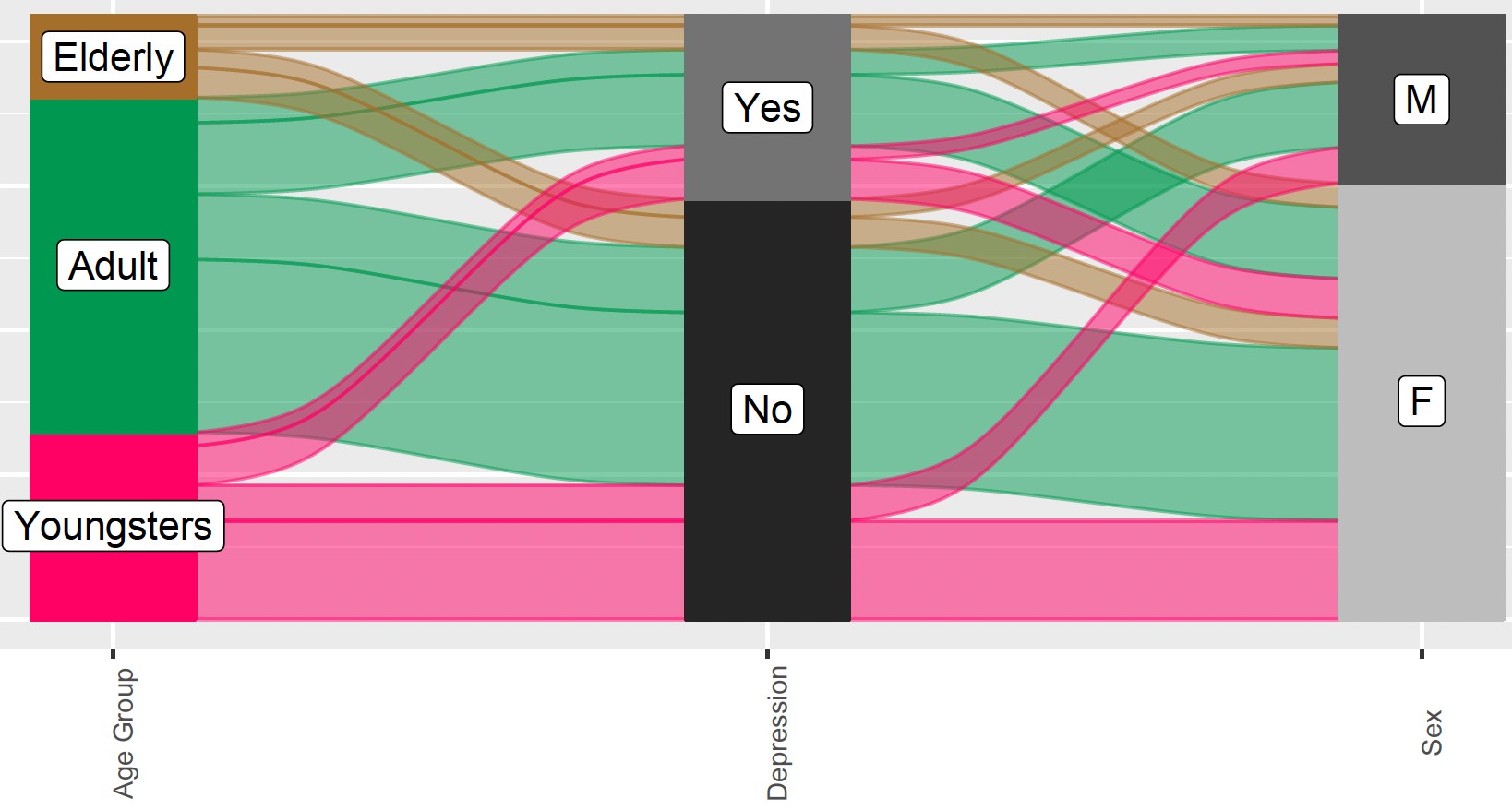
When evaluating the relationship between sex and depression (Yes/No) and anxiety (Yes/No), there was no association between sex and depression (X2=3.36; d.f.=1; P=0.06; OR =0.9; CI95% =0.815-1.005) (Figure 1a) and anxiety (X2=2.84; d.f.=1; P=0.09; OR =1.09; CI95%=0.98-1.21) (Figure 1b). When analyzed by year, a significant association was observed between sex and consultation frequency (χ² = 176.63; df = 3; p < 0.001), with the frequency of consultations for females being higher than predicted in 2019, 2020, and 2021, and lower than anticipated in 2022 (Table II). Regarding males, the frequency was only higher than projected in 2022, while in 2019, 2020, and 2021, a lower frequency of appointments was anticipated (Table II).
Depression and anxiety categories according to cases reported in the county of Lajeado, Rio Grande do Sul between the years 2019 and 2022.

Alluvial diagrams showing the distribution of depression (a) and anxiety (b) diagnoses according to age group (youngsters: 18-35 years; adults: 36-64 years; elderly: >65 years) and sex (F: female; M: male). The width of each flow is proportional to the number of individuals.
A significant association was observed between age group and depression (χ²=73.3; df=2; p<0.001), with a higher frequency in elderly individuals. For anxiety, a significant association was also observed (χ²=74.5; df=2; p<0.001), with higher frequencies in youngsters and adults.
Furthermore, when evaluating the relationship between the age group and the years of the appointment period, a significant relationship was observed between these factors (X2=85.21; d.f.=6; P<0.001) (Figure 2ab). The elderly demonstrated a higher frequency expected in the year 2022 (N=538), while youngsters showed a higher frequency observed in the years 2019 (N=568) and 2021 (N=699) using the adjusted z residual.

Stacked column graphs representing the frequency of anxiety (a) and depression (b) notifications by year (2019-2022), age group, and sex. F: female; M: male. Statistical significance was assessed using chi-square tests with adjusted standardized residuals (|z| > 1.96 indicating cells contributing to overall association).
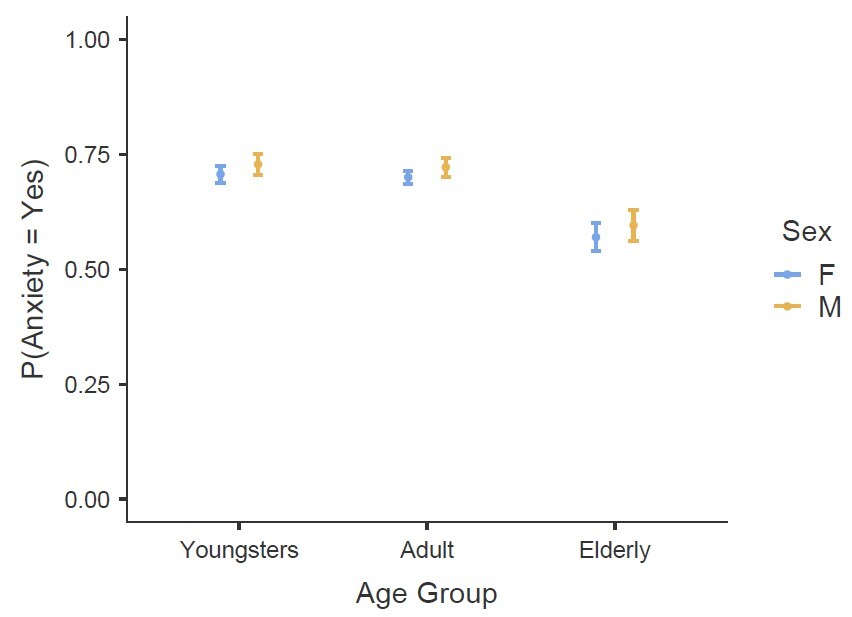
When using Binomial Logistic Regression for the outcome variables anxiety (Yes/No) and depression (Yes/No), we can assume that, elderly are 45% less likely to experience anxiety than youngsters (X2=74.85; d.f.=2; OR=0.55; 95% CI:0.48-0.64; P<0.001), and males have 12% higher odds of experiencing anxiety compared to females (X2=3.87; d.f.=1; OR:1.12; 95%CI: 1.01-1.25; P<0.05). When referring to the probability of a clinical condition, both youngsters’ females and males showed 70.7% and 72.9% of experiencing anxiety, respectively. While for the elderly, those probabilities are lower (57% and 59.6%, respectively) (Figure 3; Table III).
Marginal means estimated from the interaction of the independent variables sex (F/M) and age group (youngsters; adult; elderly) for the anxiety reported between 2019 and 2022.
Predicted probability (with 95% confidence intervals) of receiving an anxiety diagnosis, based on the interaction between sex and age group in individuals seeking care at Basic Health Units (2019-2022). Probabilities were derived from binomial logistic regression models adjusting for year of consultation.
Males had 11% lower odds of depression compared to females (OR=0.89; 95% CI: 0.80-0.99; p=0.042), while elderly individuals had 82% higher odds compared to younger adults (OR=1.82; 95% CI: 1.57-2.10; p<0.001). With regard to the probability of an experiencing depression, both females and males who are elderly showed 42.7% and 40%, respectively, while for the youngsters, those probabilities are lower (29.1% and 26.8%, respectively) (Figure 4; Table IV). It is worth noting that the years of study using the pre-pandemic year (2019) as a reference did not show association with both clinical conditions of anxiety (X2=2.47; d.f.=3; P=0.48) and depression (X2=4.26; d.f.= 3; P=0.23).
Marginal means estimated from the interaction of the independent variables sex (F/M) and age group (youngsters; adult; elderly) for the depression reported from 2019 to 2022.

Predicted probability (with 95% confidence intervals) of receiving a depression diagnosis, based on the interaction between sex and age group in individuals seeking care at Basic Health Units (2019-2022). Probabilities were derived from binomial logistic regression models adjusting for year of consultation.
DISCUSSION
The primary aim of this study was to investigate whether the COVID-19 pandemic was associated with an increased demand for mental health care related to anxiety and depression at Basic Health Units. Global literature on collective traumatic events consistently reports a rise in mental health disorders following such crises (Keya et al. 2023). Surprisingly, our findings did not corroborate this trend: although the absolute number of consultations increased significantly between 2019 and 2022 (from 2,600 to 5,755), the proportion of consultations specifically attributed to anxiety and depression showed no significant association with the year of care. This discrepancy between our results and the broader epidemiological literature warrants careful examination. Several hypotheses may explain the absence of a proportional increase in anxiety and depression diagnoses in this primary care setting. First, underdiagnosis and barriers to healthcare access during the pandemic likely played a crucial role. Mental disorders are subject to considerable underdiagnosis even under normal circumstances a Brazilian study estimated a 63.6% underdiagnosis rate for depression (Faisal-Cury et al. 2022), and only one-third of anxiety cases are estimated to be correctly diagnosed (DeMartini et al. 2019). The pandemic exacerbated this problem: health systems became overwhelmed, BHUs redirected resources to COVID-19 management, and individuals with mild to moderate symptoms may have avoided seeking care due to fear of contagion (Haileamlak 2021). Consequently, the true prevalence of mental health suffering may have increased without a corresponding increase in formal diagnoses. Second, the distinction between population-based symptom surveys and service-based diagnoses is critical. Studies reporting high rates of anxiety and depression during the pandemic (e.g., Barros et al. 2020, Lipp & Lipp 2020) typically assessed self-reported symptoms in the general population, whereas our study captured conclusively diagnosed cases in individuals who actively sought care. The gap between these two measures symptoms versus formal diagnoses may have widened during the pandemic due to reduced healthcare engagement. Third, the profile of spontaneous demand at BHUs may have shifted. Patients with chronic, pre-existing mental health conditions may have continued their follow-up appointments, while individuals with new-onset, pandemic-related anxiety may have sought alternative care channels (pharmacies, emergency rooms, or informal support), thereby diluting the proportion of new psychiatric diagnoses recorded in BHU databases.
Depression and Aging
However, the characteristics of the elderly population, in which the highest increase in the number of appointments at the BHUs was observed during the pandemic period, can lead us to some hypotheses. Still about underdiagnosis, depression in the elderly seems to be especially a victim of this condition, and as this is a significant part of the sample to be consulted at the BHUs during the pandemic period, this trend may have been exacerbated (Allan et al. 2014). Although depression is a disorder with already well-defined and delimited characteristics, in the case of the elderly, it can have an atypical manifestation. The symptoms detected can often be attributed to the natural psychosocial processes of aging, such as distancing from the social circle and changing roles in family dynamics (Crowther & Ninan 2023). In addition to the unusual presentation, depression in the elderly often tends to be attributed to natural changes in old age. The context in which the elderly live frequently includes social isolation due to separation from family and close social circles (Birrer & Vemuri 2004). Considering the context of the pandemic, a possibility to be considered is that an atypical depression in an even more atypical context may tend to go unnoticed by the eyes of a health professional. Beyond diagnostic bias, structural factors related to healthcare delivery during the pandemic likely contributed to the patterns observed. These include reduced health-seeking behavior among individuals with mild to moderate symptoms due to fear of contagion, prioritization of acute and COVID-related complaints in BHUs, and disruption of follow-up consultations essential for monitoring and diagnosing chronic mental health conditions (Haileamlak 2021). The elderly, who may have required more frequent in-person visits, were disproportionately affected by these service delivery changes.
In the context of these findings to the results of the study, these characteristics allow us to infer some possibilities about the relationship between the elderly population and depression and social isolation caused by the pandemic. The elderly population faced pre-existing vulnerabilities to social isolation prior to the pandemic due to retirement, bereavement, and reduced social networks (Cotterell et al. 2018). Rather than suggesting they were ‘used to’ isolation, the pandemic likely amplified these existing vulnerabilities without necessarily translating into increased service utilization, possibly due to the barriers to healthcare access discussed above. Therefore, the context of the pandemic may not have caused significant differences in depressive conditions. Still, there is the bias of underdiagnosis in the elderly, which may have caused the pandemic as another contextual element that often masks or discredits symptoms of depression.
Male Depression
Still considering a bias towards a possible underdiagnosis of depression, the data obtained on the male population observed in the study also leaves room for investigating this possibility. Firstly, it is important to highlight that the prevalence of depression in males is already typically observed to be lower than that in females in multiple studies. Then, the results observed here do not differ from an already well-defined pattern regarding depressive disorder (Abate 2013). However, several observed factors corroborated the hypothesis of underdiagnosis of depression in males, including the higher rate of suicide and addictive and risky behaviors in general in males, which are at least contradictory when compared to the observed rate of depression (Shi et al. 2021). In the context of this study, where the search for care came from the patient, including his own perception of symptoms and of what qualify as symptoms of mental disorders, many of the factors that are estimated to contribute to the underdiagnosis of depression in males become especially relevant. Depressive disorder in males often presents an atypical picture and is certainly influenced by gender-specific socialization. The already observed phenomenon of male, in general, seeking less medical care than female can also be attributed to typical male socialization (Call & Shafer 2018). From this, hypotheses such as the accuracy of diagnostic tools and the patient’s contact with the health system become propositions to be investigated. On the one hand, diagnostic tools for depressive disorder may not be adjusted to the atypical manifestations observed in men with a traditional socialization, on the other hand, these men may not seek out the health system on their own.
Anxiety and sex
While the lower numbers of depressive disorders in men observed in this study are in line with expectations, the numbers observed in anxiety differ considerably from the norm. Depressive disorder is not exclusive when talking about lower prevalence and underdiagnosis in males, however, contrary to the literature, in the sample collected, a higher rate of anxiety disorder was observed in male individuals. The higher prevalence of anxiety in females is a solid trend and continuously observed in recent studies with different populations, as in both articles published in respectively 2023 and 2024 that reinforce the same trend in two populations, one in Canada and the other in Nepal (Yeretzian et al. 2023, Shawon et al. 2024). It is estimated that the usual higher prevalence of anxiety in females has strong relationships with the social roles assigned, demonstrating a considerably greater predictive power than other factors (Arcand et al. 2020). Knowing this, two possibilities arise: that men registered more anxiety disorders than anticipated and that female registered fewer anxiety disorders than expected. Although females are usually more frequently diagnosed with mental disorders than men, it is important to highlight another relevant fact that can influence data collection on mental disorders in female: diagnostic error. The literature indicates that females are considerably more susceptible to diagnostic errors than males and mental disorders are no exception (Mahajan et al. 2020). An additional consideration is the potential role of occupational exposure. During the pandemic, essential workers often overrepresented by males in sectors such as transportation, construction, and industrial labor faced continued in-person work, increasing their exposure to COVID-19-related stressors and potentially contributing to elevated anxiety levels (Curtis et al. 2022). Unfortunately, occupational data were not available in this study and should be investigated in future research.
Females in general have a greater tendency towards anxiety and the hypothesis of diagnostic inaccuracy is certainly valid, the findings of this study are not exclusive and the hypothesis that men have recorded more anxiety disorders than expected cannot be discarded. The finding that males had higher odds of anxiety may seem paradoxical given their lower propensity to seek care. However, it could reflect that when they do seek help, their symptoms are more severe or distressing, making a diagnosis more likely. Alternatively, the pandemic context may have lowered the threshold for men to seek help specifically for anxiety-related complaints, particularly those linked to media exposure and mortality concerns (Curtis et al. 2022).
Curtis et al. (2022) evaluated the relationship between media exposure about COVID-19 and anxiety, where males exhibited a stronger association and tendency to anxiety. Another study also addressed the issue of exposure to information about the pandemic and its consequences for anxiety, it found a higher association of anxiety in males (Saravanan et al. 2020). One theory to explain this effect is that male were the biggest victims of the pandemic when it came to mortality and hospitalization, this information was widely disseminated in the pandemic numbers displayed by the media records (Curtis et al. 2022). The role of the media in covering the COVID-19 pandemic, perhaps the first major global event with such extensive coverage, is undeniable, and so the impact of this on mental health cannot be ignored. Therefore, It can be hypothesized that this new trend regarding anxiety and its distribution by sex may be the result of a new form of contact with situations that cause anxiety, which changes the impact of the situation on the affected populations.
Depressive episodes and categorization problems
Questions about possible cases of underdiagnosis and even diagnostic error when it comes to mental disorders such as depression and anxiety bring our focus to the way these disorders are diagnosed and classified. Regarding diagnoses by ICD-10, we can infer that the proportion of diseases categorized changed significantly before and during the pandemic, especially when it comes to depression, since during the pandemic the variability of ICD-10 decreased, with most cases classified by “Depressive episodes” (F32). It is worth noting that the classification of depressive episodes itself has already been discussed multiple times, and its accuracy has been criticized. The classification is based on time limits and the severity of symptoms, which themselves vary over time, and the main criticism of this strategy is the inconsistency of the information obtained and the possible loss of information (Patten 2023). In addition to the already criticized arbitrariness of the classification, the variables evaluated themselves may have been harmed in the context of the pandemic, especially regarding the duration of symptoms, which is directly linked to the classification as a depressive episode. The assessment of the duration of symptoms may have had its accuracy distorted by the overload of health centers during the pandemic period, which reduced the possibility of access to health professionals, thus making it difficult to monitor symptoms over multiple appointments (Haileamlak 2021). Furthermore, the classification of major depressive disorder is rarely made immediately and categorization as a depressive episode is generally the initial diagnosis that eventually evolves throughout follow-up. Then, something that may have been made impossible by the context of the COVID-19 pandemic (Ng et al. 2016).
The persistent underdiagnosis is evident in the atypical presentations in the elderly and males, while the changing profile of spontaneous demand is reflected in the increased odds of depression among the elderly, a group that continued to seek care. Finally, the discrepancy between our service-based data and population symptom surveys reinforces that the pandemic’s psychological impact may not have been fully captured in primary care records, highlighting a critical gap between suffering and formal diagnosis.
Unspecified anxiety in the context of COVID-19
As for Anxiety, the proportions remain similar between the two periods except for “Unspecified Anxiety Disorder”, and during the pandemic no more diagnoses of this nature were made. The finding makes sense when considering that “Unspecified Anxiety Disorder” is an umbrella term used for disorders that do not meet the criteria for other classifications (Sakurai et al. 2023). Furthermore, the diagnosis and definition of anxiety are extremely context-dependent, with generalized anxiety, phobias, social phobia, and agoraphobia being not only dependent on the range of symptoms presented, but also on the situation in which they are inserted (Ströhle et al. 2018). With the scale and day-to-day effects of the COVID-19 pandemic, it is possible to assume that for most anxious patients, it fulfilled the role of the context in which anxiety symptoms are inserted. Thus, with such an event affecting the collective, it is possible to infer that it is natural to attribute anything related to anxiety to the context in which the patient is inserted, which impacts the diagnosis of unspecified anxiety disorders.
Limitations
This study has several limitations that should be considered when interpreting the findings. First, the data were derived from a single municipality in southern Brazil, which may limit generalizability to other regions or countries with different healthcare structures and pandemic experiences. Second, the analysis relied on medical records and conclusively diagnosed cases, which likely underestimates the true prevalence of mental distress particularly given the well-documented underdiagnosis of anxiety and depression in primary care (Faisal-Cury et al. 2022, DeMartini et al. 2019). Third, the observational, cross-sectional design precludes causal inferences about the pandemic’s effect on mental health. Fourth, we could not assess COVID-19 infection status, symptom severity, treatment received, or longitudinal outcomes of diagnosed conditions. Fifth, the classification of “pre-pandemic” versus “pandemic” periods using March 2020 as a cutoff may not capture the full complexity of the pandemic’s phased impact on mental health, including potential delayed effects. Sixth, occupational and socioeconomic data were not available, limiting our ability to examine these potential confounders. Finally, the study period ended in December 2022, and longer-term follow-up is needed to assess whether the mental health consequences of the pandemic will emerge in primary care settings in subsequent years.
CONCLUSIONS
This study reveals that, among individuals seeking spontaneous care at Basic Health Units in a Brazilian municipality, there was no proportional increase in formal diagnoses of anxiety and depression during the first three years of the COVID-19 pandemic. This finding contrasts with the expected surge in mental health morbidity reported in population-based symptom surveys and highlights a critical gap between psychological distress and its recognition within primary healthcare systems. The absence of such an increase likely reflects pandemic-related barriers to healthcare access, the overwhelmed state of health services, and the well-documented phenomenon of underdiagnosis of mental disorders, particularly in primary care settings. Despite this overall stability, significant shifts within demographic subgroups were observed: elderly individuals demonstrated substantially higher odds of depression, while males showed unexpectedly higher odds of anxiety. These patterns suggest that the pandemic’s mental health impact was not uniformly distributed and that traditional risk factors may have been reconfigured during this global crisis. From a public health perspective, our findings underscore the need for proactive mental health screening in primary care, particularly targeting vulnerable groups such as the elderly, and for strengthening health information systems to better capture the true burden of psychological distress during health emergencies. Future research should investigate whether the delayed mental health consequences of the pandemic will emerge in primary care settings in subsequent years, as well as explore the specific mechanisms underlying the elevated anxiety risk observed in males.
Declaration of competing interest
The authors declare that they have no known competing financial interests or personal relationships that could have appeared to influence the work reported in this paper.
References
-
ABATE KH. 2013. Gender disparity in prevalence of depression among patient population: a systematic review. Ethiop J Health Sci 23(3): 283-288. doi: 10.4314/ejhs.v23i3.11.
» https://doi.org/10.4314/ejhs.v23i3.11 - ADORJAN K & STUBBE HC. 2023. Insight into the long-term psychological impacts of the COVID-19 pandemic. Eur Arch Psychiatry Clin Neurosci 273(2): 287-288. doi: 10.1007/s00406-023-01599-6.
- ALLAN CE, VALKANOVA V & EBMEIER KP. 2014. Depression in older people is underdiagnosed. Practitioner 258(1771): 19-22.
- ARCAND M, JUSTER RP, LUPIEN SJ & MARIN MF. 2020. Gender roles in relation to symptoms of anxiety and depression among students and workers. Anxiety Stress Coping 33(6): 661-674. doi: 10.1080/10615806.2020.1774560.
-
BAFAIL DA. 2022. Mental Health Issues Associated With COVID-19 Among the Elderly Population: A Narrative Review. Cureus 14(12): e33081. doi: 10.7759/cureus.33081.
» https://doi.org/10.7759/cureus.33081 -
BARON MV, VIGANO AJP, SHERER GDG, VELHO IK, SANTOS MMD, SILVEIRA JB & COSTA BEP. 2020. Impacts of COVID-19 on the mental health of the Chinese. Rev Saúde Coletiva 10: 2670-2678. Doi: https://doi.org/10.36489/saudecoletiva.2020v10i54p2661-2678.
» https://doi.org/10.36489/saudecoletiva.2020v10i54p2661-2678 -
BARROS MBA ET AL. 2020. Relato de tristeza/depressão, nervosismo/ansiedade e problemas de sono na população adulta brasileira durante a pandemia de COVID-19. Epidemiol Serv Saúde 29(4): e2020427. https://doi.org/10.1590/S1679-49742020000400018.
» https://doi.org/10.1590/S1679-49742020000400018 - BIRRER RB & VEMURI SP. 2004. Depression in later life: a diagnostic and therapeutic challenge. Am Fam Physician 69(10): 2375-2382.
- BRASIL. 2012. Ministério da Saúde. Secretaria de Atenção à Saúde. Departamento de Atenção Básica. Política Nacional de Atenção Básica / Ministério da Saúde. Secretaria de Atenção à Saúde. Departamento de Atenção Básica. Brasília: Ministério da Saúde, 110 p.
-
CALL JB & SHAFER K. 2018. Gendered Manifestations of Depression and Help Seeking Among Men. Am J Mens Health 12: 41-51. doi: 10.1177/1557988315623993.
» https://doi.org/10.1177/1557988315623993 -
CASTILLO RGL, RECONDO R, ASBAHR FR & MARFRO GG. 2000. Transtornos de ansiedade. Braz J Psychiatr 2000(22): 20-23. https://doi.org/10.1590/S1516-44462000000600006.
» https://doi.org/10.1590/S1516-44462000000600006 -
COTTERELL N, BUFFEL T & PHILLIPSON C. 2018. Preventing social isolation in older people. Maturitas 113: 80-84. doi: 10.1016/j.maturitas.2018.04.014.
» https://doi.org/10.1016/j.maturitas.2018.04.014 - COUGHLIN SS. 2012. Anxiety and Depression: Linkages with Viral Diseases. Public Health Rev 34(2): 7. doi: 10.1007/BF03391675.
- CROWTHER G & NINAN S. 2023 Managing depression in frail older people; too little too late or pathologising loss? Future Healthc J 10: 107-111. doi: 10.7861/fhj.2023-0045.
-
CURTIS AF, RODGERS M, MILLER MB & MCCRAE CS. 2022. Impact of Sex on COVID-19 Media Exposure, Anxiety, Perceived Risk, and Severity in Middle-Aged and Older Adults. J Aging Health 34: 51-59. doi: 10.1177/08982643211025383.
» https://doi.org/10.1177/08982643211025383 -
DEL PORTO JA. 1999. Conceito e diagnóstico. Braz J Psychiatr 21: 06-11. https://doi.org/10.1590/S1516-44461999000500003.
» https://doi.org/10.1590/S1516-44461999000500003 -
DEMARTINI J, PATEL G & FANCHER TL. 2019. Generalized Anxiety Disorder. Ann Intern Med 170(7): ITC49-ITC64. doi: 10.7326/AITC201904020.
» https://doi.org/10.7326/AITC201904020 -
FAISAL-CURY A, ZIEBOLD C, RODRIGUES DMO & MATIJASEVICH A. 2022. Depression underdiagnosis: Prevalence and associated factors. A population-based study. J Psychiatr Res 151: 157-165. doi: 10.1016/j.jpsychires.2022.04.025.
» https://doi.org/10.1016/j.jpsychires.2022.04.025 -
GUILLEN-BURGOS HF ET AL. 2022. Prevalence and associated factors of mental health outcomes among healthcare workers in Northern Colombia: A cross-sectional and multi-centre study. J Affect Disord Rep 10:100415. doi: 10.1016/j.jadr.2022.100415.
» https://doi.org/10.1016/j.jadr.2022.100415 - HAILEAMLAK A. 2021. The impact of COVID-19 on health and health systems. Ethiop J Health Sci 31(6): 1073-1074. doi: 10.4314/ejhs.v31i6.1
-
HAMMERSCHMIDT AKS & SANTANA RF. 2020. Saúde do idoso em tempos de pandemia da COVID-19. Cogit Enferm 25: e72846. doi: http://dx.doi.org/10.5380/ce.v25i0.72849.
» https://doi.org/10.5380/ce.v25i0.72849 -
JAMOVI. 2022. The jamovi project 2022 (Version 2.3) [Computer Software]. Available at https://www.jamovi.org
» https://www.jamovi.org -
KEYA TA, LEELA A, HABIB N, RASHID M & BAKTHAVATCHALAM P. 2023. Mental Health Disorders Due to Disaster Exposure: A Systematic Review and Meta-Analysis. Cureus 15(4): e37031. doi: 10.7759/cureus.37031.
» https://doi.org/10.7759/cureus.37031 - LIPP MEN & LIPP LMN. 2020. Stress e Transtornos Mentais Durante a Pandemia da COVID-19 no Brasil. Bol Acad Paul Psicol 40: 180-191.
-
MAHAJAN P, BASU T, PAI CW, SINGH H, PETERSEN N, BELLOLIO MF, GADEPALLI SK & KAMDAR NS. 2020. Factors Associated With Potentially Missed Diagnosis of Appendicitis in the Emergency Department. JAMA Netw Open 3(3): e200612. doi: 10.1001/jamanetworkopen.2020.0612.
» https://doi.org/10.1001/jamanetworkopen.2020.0612 -
NG CW, HOW CH & NG YP. 2016. Major depression in primary care: making the diagnosis. Singapore Med J 57(11): 591-597. doi: 10.11622/smedj.2016174.
» https://doi.org/10.11622/smedj.2016174 -
PATTEN SB. 2023. Problematic features of episode-based definitions of depression and a preliminary proposal for their replacement. Front Psychiatry 14: 1121524. doi: 10.3389/fpsyt.2023.1121524.
» https://doi.org/10.3389/fpsyt.2023.1121524 -
R CORE TEAM. 2021. R: A Language and environment for statistical computing. (Version 4.1) [Computer software]. Retrieved from https://cran.r-project.org (R packages retrieved from MRAN snapshot 2022-01-01).
» https://cran.r-project.org -
SAKURAI H ET AL. 2023. Clinical practice for unspecified anxiety disorder in primary care. PCN Rep 2(3): e118. doi: 10.1002/pcn5.118.
» https://doi.org/10.1002/pcn5.118 -
SARAVANAN C, MAHMOUD I, ELSHAMI W & TAHA MH. 2020. Knowledge, Anxiety, Fear, and Psychological Distress About COVID-19 Among University Students in the United Arab Emirates. Front Psychiatry 11: 582189. doi: 10.3389/fpsyt.2020.582189.
» https://doi.org/10.3389/fpsyt.2020.582189 -
SHAWON MSR, HOSSAIN FB, HASAN M & RAHMAN MR. 2024. Gender differences in the prevalence of anxiety and depression and care seeking for mental health problems in Nepal: Analysis of nationally representative survey data. Glob Ment Health (Camb) 11: e46. doi: 10.1017/gmh.2024.37.
» https://doi.org/10.1017/gmh.2024.37 -
SHI P, YANG A, ZHAO Q, CHEN Z, REN X & DAI Q. 2021. A Hypothesis of Gender Differences in Self-Reporting Symptom of Depression: Implications to Solve Under-Diagnosis and Under-Treatment of Depression in Males. Front Psychiatry 12: 589687. doi: 10.3389/fpsyt.2021.589687.
» https://doi.org/10.3389/fpsyt.2021.589687 -
STRÖHLE A, GENSICHEN J & DOMSCHKE K. 2018. The Diagnosis and Treatment of Anxiety Disorders. Dtsch Arztebl Int 155(37): 611-620. doi: 10.3238/arztebl.2018.0611.
» https://doi.org/10.3238/arztebl.2018.0611 -
YERETZIAN ST, SAHAKYAN Y, KOZLOFF N & ABRAHAMYAN L. 2023. Sex differences in the prevalence and factors associated with anxiety disorders in Canada: A population-based study. J Psychiatr Res 164: 125-132. doi: 10.1016/j.jpsychires.2023.06.018.
» https://doi.org/10.1016/j.jpsychires.2023.06.018
Edited by
-
Handling editor
João Duarte
The data that support the findings of this study are available on request from the corresponding author, Dr. Guilherme Liberato da Silva. The data are not publicly available due to containing information that could compromise the privacy of research participants.