 Phytotoxic and antifungal compounds for agriculture are interestingly produced by the endophytic fungus Fusarium sp. (Ascomycota) isolated from Piper sp. (Piperaceae)
Abstract
Our study focused on the phytotoxic and antifungal activities of metabolites isolated from <italic>Fusarium</italic> sp., an endophyte associated with the medicinal plant <italic>Piper</italic> sp. Chromatographic separations of the <italic>Fusarium </italic>sp. crude extract led to the isolation of three analogous compounds: anhydrofusarubin (1), 5,10-dihydroxy-1,7-dimethoxy-3-methyl-1H-benzo[g]isochromene-6,9-dione (2), and javanicin (3). The structures of the isolated compounds were determined by high-resolution mass spectrometry (HRMS) analysis and direct comparison of 13C NMR data with that reported in the literature. The isolated compounds were evaluated for phytotoxic activity against <italic>Lactuca sativa</italic> and <italic>Agrostis stolonifera</italic>. All compounds exhibited strong phytotoxic activity on both plant species, completely inhibiting seed germination at a concentration of 1 mg mL-1. Additionally, the isolated compounds were evaluated against <italic>Lemna paucicostata</italic>, achieving a 50% growth inhibition (IC50) at concentration of 64, 28, and 31 μM for compounds 1, 2, and 3, respectively. The antifungal activity of these compounds was evaluated using a bioautography assay targeting the agricultural pathogen <italic>Colletotrichum fragariae</italic>. Among them, compound 2 demonstrated significant antifungal activity. Our results showed that tropical medicinal plants harbor an interesting endophyte that has a potential reservoir of bioactive compounds. Moreover, the structures of these compounds could serve as scaffold for the development of new pesticides.
Key words
Agriculture; endophytes; natural products; pesticides
INTRODUCTION
Endophytic fungi are microorganisms that colonize plant tissues for part or all of their life cycle without causing any apparent adverse symptoms in the plants (Jia et al. 2016, dos Reis et al. 2022). In symbiosis with their host plants, these fungi can provide defense against pathogens and herbivores by producing pesticide metabolites, while acquiring nutrients and protection. These microorganisms can synthesize a wide variety of chemically distinct metabolites, exhibiting diverse activities relevant to medicinal, industrial, and agricultural applications (Asomadu et al. 2024). Once isolated and identified, these metabolites can be investigated for their potential as biopesticidal agents (Macías-Rubalcava & Garrido-Santos 2022).
The genus Fusarium Link (1809), classified within the fungal family Nectriaceae (Ascomycota), is a cosmopolitan group of filamentous fungi that harbors over 70 species (Singh et al. 2021, Villavicencio et al. 2021, Yadav & Meena 2021). Recognized as one of the most dominant endophytic fungal genera in the world, Fusarium is ubiquitous in nature which are widely found in soil, plants, and organic substrates (Nucci & Anaissie 2007). Additionally, Fusarium taxa are responsible for producing toxic secondary metabolites known as mycotoxins (e.g., fumonisins), which can impair the immune system of infected plants, impede cell proliferation, disrupt plasma membrane function, cause apoptosis, and inhibit protein synthesis (Chukwudi et al. 2021, Abbas et al. 1993, Qin et al. 2017).
Agriculture is one of the main pillars of the global economy, and its ability to sustain a growing global population has been a constant concern and remains a top priority in global policies (Pilling et al. 2020). It is expected that the agricultural sector will face numerous challenges in ensuring food production and supply in the coming years, as the human population is projected to reach 9.7 billion by 2050 (Roser & Rodés-Guirao 2019). In the 1940s, with the onset of the chemical era in agriculture, the development and use of synthetic pesticides became widely adopted (Zimdahl 2015). They encompass the categories of herbicides, nematicides, fungicides, and insecticides, which are used to eliminate organisms considered undesirable in agriculture (Chopra et al. 2011). In the current global scenario, pesticides are indispensable for maintaining crop productivity and profits, as well as food security for the growing human population. Nonetheless, the intensive use of pesticides over the past seven decades has raised concerns regarding environmental contamination, as well as adverse effects on non-target organisms, including humans (Carvalho 2017). Similarly, with the increasing occurrence of weed and fungal resistance to herbicides and fungicides currently available in the market (Heap 2024, Corkley et al. 2022), this study aimed to investigate the potential phytotoxic and antifungal compounds produced by an endophytic fungus Fusarium sp.
MATERIALS AND METHODS
Fungus origin and preparation of extracts for biological assays
The fungus Fusarium sp. was obtained from the Collection of Microorganisms and Cells of the Universidade Federal de Minas Gerais (UFMG), with the reference number UFMGCB 15449. It was originally isolated as an endophyte from the medicinal tropical plant species Piper sp. collected in the Tropical Rain Forest Rio Doce State Park, Minas Gerais, Brazil, in July 2017 (Florindo 2019). The fungus was cultured on a large scale following the method established by Rosa et al. (2013). The strain was inoculated onto 660 Petri dishes containing potato dextrose agar (PDA, Sigma, USA) medium, with each dish measuring 90 x15 mm and containing 20 mL PDA. Two 5-mm fungal plugs were placed at the center of PDA plates and incubated for 15 days in a biological oxygen demand incubator at 25 °C. Subsequently, the fungal mycelia were fragmented and transferred to 125 mL Erlenmeyer flasks, frozen at -20 °C for 24 h, and subsequently subjected to the lyophilization process (Liofilizador Liobras – L108) for 5 days. Next, 120 mL of dichloromethane (Neon, Brazil) was added to each conical flask and allowed to settle for 7 days at ambient temperature. Later, the organic phase was filtered using filter paper (50 x 50 - 80 g) and transferred to pre-weighed scintillation vials. After drying the extract in a fume hood, it was preserved at -4 °C until the bioassay was conducted.
Fungal identification
We employed molecular biology techniques for the Fusarium sp. UFMGCB 15449 identification. DNA extraction was conducted following the protocol outlined by Rosa et al. (2009). Amplification of the transcribed internal spacer (ITS-5.8S) region for filamentous fungi was carried out as described by Rosa et al. (2009), utilizing the primers ITS1 and ITS4 (White et al. 1990). Additionally, amplification of the β-tubulin gene (Glass & Donaldson 1995), commonly employed for delineating fungal taxa with low intraspecific variation, was performed using the primers Bt2a/Bt2b, following the method outlined by Gonçalves et al. (2015). Representative consensus sequences of the fungal taxa were deposited in the NCBI GenBank database. To achieve species-level identification based on ITS and β-tubulin sequence data, NCBI BLAST was used to align the endophyte’s consensus sequence with the most closely related species (Altschul et al. 1997). Fungal classification adhered to the guidelines of Kirk et al. (2008) and utilized the databases MycoBank (http://www.mycobank.org) and Index Fungorum (http://www.indexfungorum.org).
Assay for phytotoxic activity against Lactuca sativa and Agrostis stolonifera
The crude fungal extract, fractions obtained via silica gel column chromatography, and isolated pure compounds were evaluated for their phytotoxic effects on Lactuca sativa L. (lettuce, dicot) and Agrostis stolonifera L. (bentgrass, monocot) seeds, following the procedure outlined by Dayan et al. (2000). Seeds of L. sativa (Iceberg A Crisphead from Burpee Seeds) and A. stolonifera (Penncross variety, belonging to the creeping bentgrass species, sourced from Turf-Seed, Inc. in Hubbard, Oregon) underwent initial surface sterilization by immersion in a 2.5% sodium hypochlorite solution for 10 min. Subsequently, the seeds were thoroughly rinsed with sterile deionized water and air-dried in a sterile condition. Each well in a 24-well plate (Corning Inc., Corning, NY, USA) was filled with either A. solonifera seeds (10 mg), or L. sativa (5 seeds) placed on Whatman no. 1 filter paper. The test compounds and fractions were dissolved in a 10% acetone solution in sterile, deionized water. Then, 200 µL of the test solution was added to each well containing seeds, while the control wells received 200 µL of 10% acetone in water, and the negative control well received only 200 µL of water. A 1 mM acifluorfen solution (ChemServices, West Chester, PA, USA) served as the positive control. The plate was covered and sealed with Parafilm and placed in a Percival Scientific CU-36L5 incubator, under continuous light conditions at 24 °C with an average photosynthetically active radiation (PAR) of 120 µmol s−1 m−2. Phytotoxic activity was qualitatively assessed visually by comparing seed germination in each well after 7 days for L. sativa and A. stolonifera, using a rating scale ranging from 0 to 5. A rating of 0 indicated no effect (all seeds germinated), while a rating of 5 indicated no seed germination. Each experiment was conducted in triplicate.
Phytotoxicity-guided fractionation and isolation of phytotoxic compounds
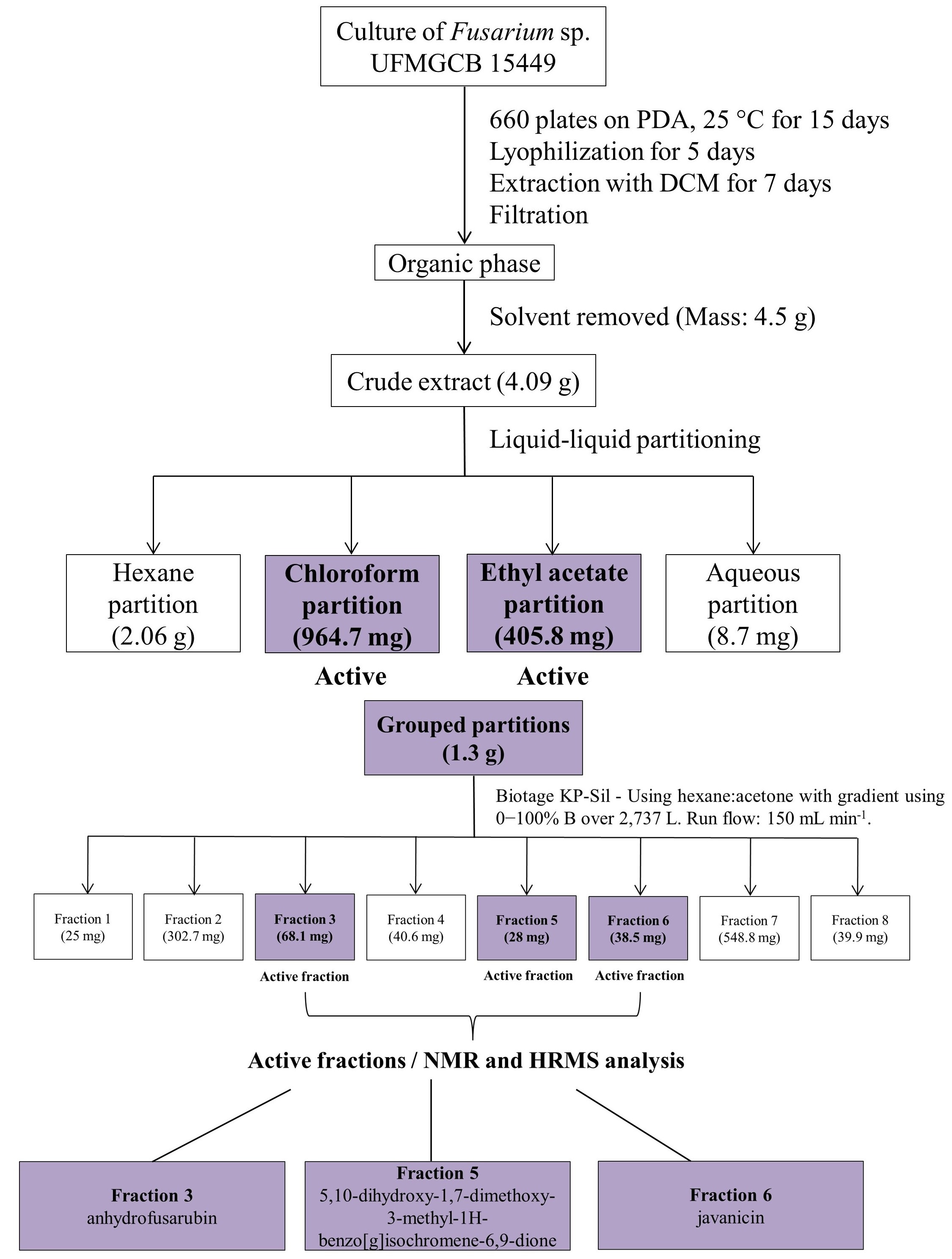
Initially, 4.09 g of dichloromethane (DCM) extractables from the fungi was dissolved in 160 mL MeOH/H2O (90:10, v/v) and subjected to liquid/liquid partitioning with 60 mL of hexane (3 times), yielding 2.06 g of hexane extractables. The remaining partition (MeOH/H2O, 90:10, v/v) was adjusted to 70:30 (v/v) MeOH/H2O by adding 22.8 mL of H2O and partitioned with 30 mL of chloroform (three times), resulting in 964.7 mg of chloroform (CHCl3) extractables. The remaining MeOH was removed using rotary evaporation, followed by the addition of 40 mL of ethyl acetate (three times), resulting in 405.8 mg of ethyl acetate extractables. The water extract was rotary evaporated to remove any residual organics, and the water was lyophilized, obtaining 8.7 mg of water extractables (Figure 1). Guided by the lettuce and creeping bentgrass bioassays, the chloroform and ethyl acetate partitions showed activity, and had similar TLC profiles. So, these partitions were combined and subjected to column chromatography using an Isolera One system (Biotage), equipped with a dual wavelength UV detector (220 and 340 nm) and an automatic fraction collector. Separation was performed using normal-phase column chromatography on a Biotage Sfar 100g column (60 µm). The separation was performed using a linear gradient of hexane (solvent A) and acetone (solvent B), from 0−100% B over 2,737 L. The flow rate was 150 mL min-1. Portions of 20 mL each were collected in 16 × 150 mm test tubes. According to TLC and UV chromatogram profiles, the fractions were recombined into nine fractions, named F1-F9. These fractions were evaluated for their phytotoxicity activities, with fractions F3 (1), F5 (2), and F6 (3) had the highest phytotoxicity.
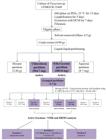
Flowchart of bioassay-guided chemical fractionation of the methylene chloride extract from the fungus Fusarium sp. UFMGCB 15449.
Compound 1 (anhydrofusarubin) as purple powder. High-resolution DART positive m/z 289.0710 [M + H]+, calculated for C15H13O6 289.0712. 13C NMR (101 MHz, CDCl3) δ 182.90, 177.82, 161.51, 159.93, 157.59, 157.53, 132.91, 122.66, 110.84, 109.88, 107.90, 94.61, 62.90, 56.66, 20.12 (Kurobane et al. 1980). Compound 2 (5,10-dihydroxy-1,7-dimethoxy-3-methyl-1H-benzo[g]isochromene-6,9-dione) as purple solid. High-resolution DART positive m/z 319.0823 [M + H]+, calculated for C16H15O7 319.0817. 13C NMR (101 MHz, CDCl3) δ 180.66, 175.45, 161.42, 161.27, 159.83, 158.42, 132.52, 121.21, 111.37, 110.07, 107.70, 94.66, 94.54, 56.79, 55.89, 20.73 (Parisot et al. 1989). Compound 3 (javanicin) as purple powder. High-resolution DART positive m/z 291.0868 [M + H]+, calculated for C15H15O6 291.0868. 13C NMR (101 MHz, CDCl3) δ 203.92, 184.44, 177.78, 161.43, 160.67, 160.38, 142.58, 134.28, 109.73, 109.68, 108.45, 56.86, 41.28, 30.11, 12.93 (Maharjan et al. 2020).
Phytotoxicity assay with Lemna paucicostata (duckweed)
Using the slightly modified method of Michel et al. (2004), Lemna paucicostata Hegelm. cultures, originating from a single colony that included a mother and two daughter fronds, were cultivated in a beaker with Hoagland’s No. 2 Basal Salt Mixture (Sigma H2395, San Luis Obispo, CA, USA) at a concentration of 1.6 g L-1. Iron was supplemented by adding 1 mL of 1000× FeEDTA solution per liter of Hoagland media. The pH of the medium was adjusted to 5.5 using 1N NaOH and subsequently filter-sterilized through a 0.2 µm filter. The L. paucicostata cultures were grown in approximately 100 mL sterile jars with vented lids in a Percival Scientific CU-36L5 incubator, maintaining continuous light conditions at 24 °C and an average of 120 µmol s−1 m−2 PAR. The doubling time for the plants was approximately 24 to 36 h. For assays, nonpyrogenic polystyrene sterile six-well plates (Costar 3506, Corning Incorporated, Wilmington, NC, USA) were used. Each well contained 4950 µL of Hoagland’s media and 50 µL of water, solvent, or the compound dissolved in the appropriate solvent, resulting in a final solvent concentration of 1% by volume. Atrazine was used as the positive control. Two three-frond plants of the same age (4 to 5 days old) and approximate size were inoculated into each well. All six-well plates were placed in the Percival incubator at 24°C and an average PAR of 120 µmol s-1 m-2. The LabScanalyzer (LemnaTec GmbH, Aachen, Germany), an image analyzer, was used to measure the frond surface area. Measurements were recorded on day 0 and day 7. The dose-response analysis and calculation of the half-maximal inhibitory concentration (IC50) were performed with R software version 4.2.1, supported by the drc package.
Antifungal bioautography assay
The antifungal activity of pure compounds was evaluated against Colletotrichum fragariae (isolate CF63), a fungal pathogen affecting various vegetables and fruits, using a TLC bioautography method as described by Stappen et al. (2015). Briefly, the fungus was grown for 7-10 days at 27 ± 1 °C in PDA medium. Fresh condia were collected by flooding the culture plate with 10 mL sterile water and gently scraping them off using a sterile, L-shaped spatula and filtered through sterile double Miracloth (Calbiochem-Novabiochem Corp., La Jolla, CA, USA) to remove mycelia. Spore concentration was determined using a Countess 3 cell counter (Invitrogen), and the resulting suspension was centrifuged at 1968 rcf for 10 min to collect spores, with the supernatant discarded. The inoculum for the bioautography assay was prepared by adding PDB-TLC media (12.5 g PDB, 0.5 g agar, 0.5 mL Tween 80 in 500 mL of water) to achieve a spore concentration of 3 × 10⁵ spores mL-1. Each test compound dissolved in acetone (10 mg mL-1) was pipetted onto a silica gel plate (Analtech, Inc. Silica Gel GHLF, 250 μm) in two volumes, 1 μL (10 μg of solute) per spot, and 10 μL (100 μg of solute), in triplicates. After solvent evaporation, TLC plates were sprayed with C. fragariae inoculum until uniformly dampened. Inoculated TLC plates were then placed in a moisture chamber box under conditions of 100% relative humidity and incubated in a growth chamber for 3 days at 27 ± 1 °C with a 12-ho photoperiod and photon flux of 60 ± 5 µmol s·m−2 s−1 to optimize fungal growth. Antifungal activity was determined by the presence of inhibition zones (clear white zones with no fungal growth). For positive control plates, we used technical grade fungicides fludioxonil (>99.5%, Chem Service, Inc., West Chester, PA, USA) and captan (>98%, Chem Service, Inc., West Chester, PA), applying 1 µL from a 2 mg mL-1 stock solution, which is equivalent to 2 µg of solute. For natural product-based fungicides, thymol (analytical grade 99-101%, Sigma-Aldrich, Inc.) and carvacrol (natural, 99%, FG, Sigma-Aldrich, Inc.), we used a 10 mg mL-1 stock solution and applied 2 µL, equivalent to 20 µg of solute. Ethanol was used as the solvent for all solutions.
RESULTS AND DISCUSSION
Fungal identification
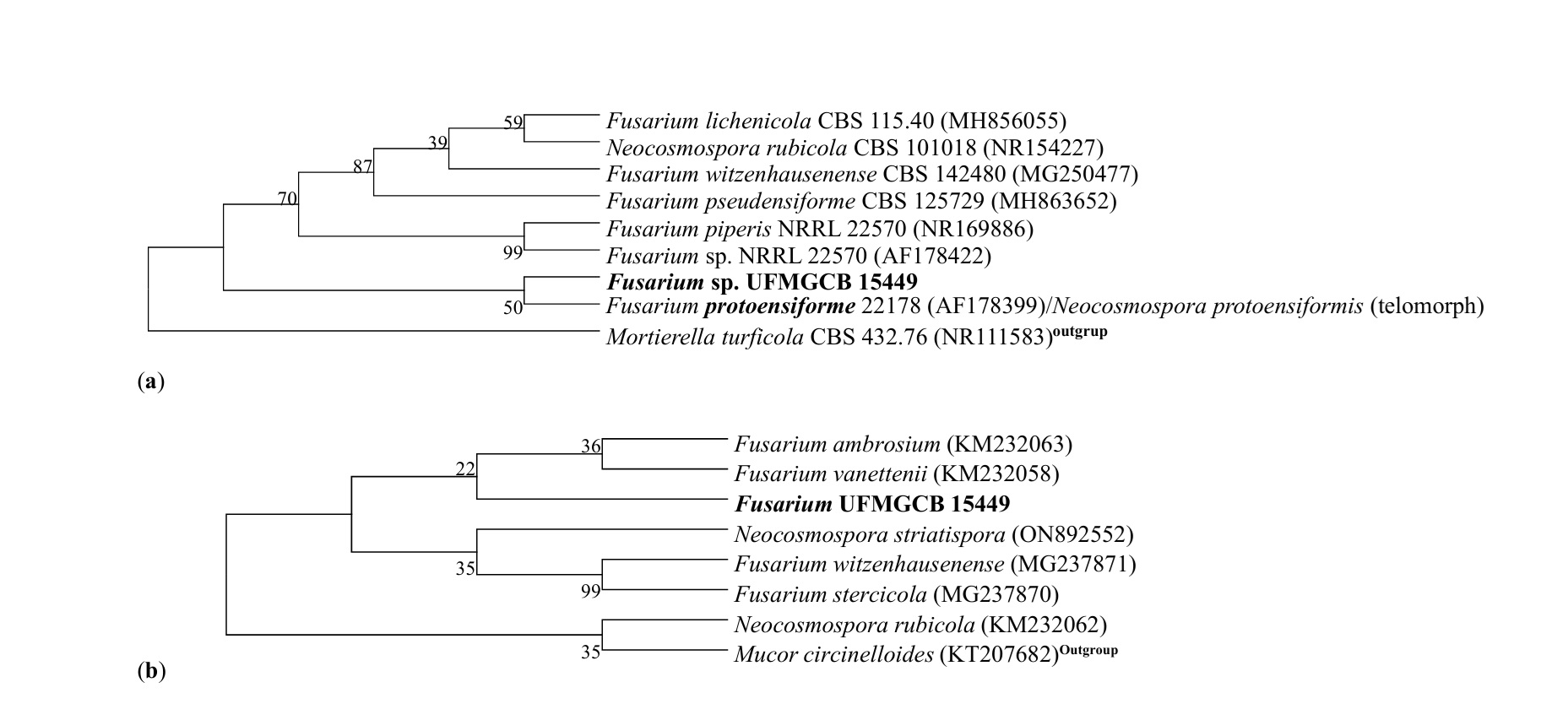
Fusarium sp. UFMGCB 15449 underwent molecular biology techniques for its taxonomic elucidation. The ITS sequence BLAST analysis showed that the closest sequence (98% query cover and 97.75% identity) belonged to the fungus Fusarium sp. (AF178399). Additionally, a comparison of the fungal ITS sequence with the closest species deposited in the GenBank (Figure 2a) indicated a phylogenetic proximity to Fusarium protoensiforme (AF178399)/Neocosmospora protoensiformis (telomorph). The β-tubulin sequence BLAST analysis showed 100% query cover and 96.41% identity with the species Fusarium witzenhausenense (MG237871). Further comparison of the fungal β-tubulin sequence with the closest species deposited in the GenBank (Figure 2b) formed a separate cluster. The phylogenetic analysis using both sequences was not sufficient to conclusively identify the endophyte Fusarium sp. UFMGCB 15449 to the species level, and further detailed taxonomic studies, including classical morpho-physiological techniques, will be necessary.
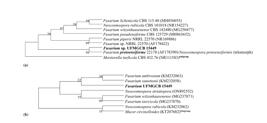
Phylogenetic analysis of the sequences of endophytic fungus Fusarium UFMGCB 15449 (in bold) compared with type sequences of the closest species following BLAST analysis, deposited in the GenBank database. The trees were constructed based on the (a) ITS and (b) β-tubulin region sequences using the maximum composite likelihood method. The sequences of Mortierella turficola (NR111583) and Mucor circinelloides (KT207682) were used as out-group.
Anamorphic fungal taxonomy is traditionally based on the comparative macro- and micromorphology of asexual reproductive structures. The bioactive taxon Fusarium sp. UFMGCB 15449 was cultivated in different culture media and exhibited distinct asexual structures exclusive to the genus Fusarium. Molecular biology techniques confirmed the genus but did not allow identification at the species level. However, this is not unusual, as Fusarium has a confusing and variable taxonomic record, resulting from the unchecked and inconsistent application of species epithets to toxigenic, pathogenic, and endophytic isolates (Campos et al. 2011). Species belonging to the genus Fusarium (Hypocreaceae, Ascomycota) are usually described as phytopathogens of various plants. However, some species can inhabit plant tissues (Souza et al. 2004, Campos et al. 2011) or grow as saprobes on plant debris and in soil (Glenn et al. 2007).
Phytotoxicity-guided fractionation and isolation of phytotoxic compounds
Despite the different ecological roles of Fusarium, several studies report on its biological activities as endophytes, mainly for medical purposes. Fusarium endophytes recovered from coffee plants (Sette et al. 2006) and the medicinal Dioscorea zingiberensis (Xu et al. 2007) displayed antimicrobial activities against Gram-positive and Gram-negative bacteria. In addition, Fusarium endophytes have demonstrated antifungal activities against clinical strains of Paracoccidioides brasiliensis and Cladosporium sphaerospermum (Campos et al. 2011).
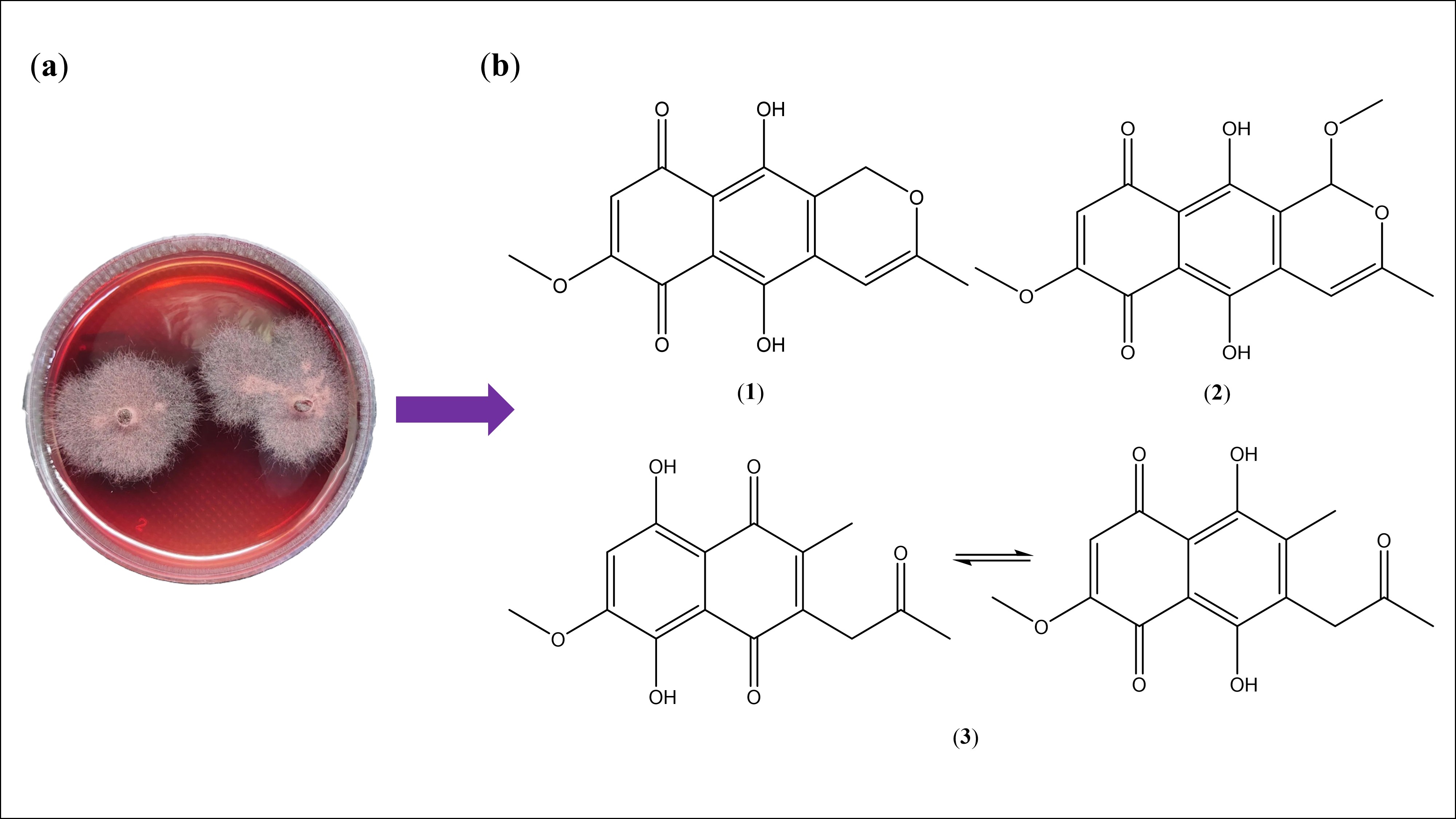
In our study, after phytotoxicity-guided fractionation, three compounds were isolated from the active fractions of Fusarium sp. UFMGCB 15449, anhydrofusarubin (1), 5,10-dihydroxy-1,7-dimethoxy-3-methyl-1H-benzo[g]isochromene-6,9-dione (2), and javanicin (3) (Figure 3). The isolated compounds were evaluated for phytotoxicity against lettuce (dicotyledonous) and bentgrass (monocotyledonous) at a concentration of 1 mg mL-1 and 1 mM, respectively. At a concentration of 1 mg mL-1 (ca. 4 mM), all compounds demonstrated phytotoxic activity against both tested model plants, achieving a ranking of 5, indicating 100% inhibition of seed germination. This activity was comparable to that of synthetic herbicide acifluorfen at the same concentration. However, at a concentration of 1 mM (ca. 0.26 mg mL-1), the compounds did not exhibit any phytotoxic activity.
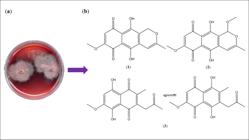
(a) Culture of Fusarium sp. UFMGCB 15449 on a PDA plate. (b) The chemical structures of quinone compounds purified from the active fraction: anhydrofusarubin (1), 5,10-dihydroxy-1,7- dimethoxy-3-methyl-1H-benzo[g]isochromene-6,9-dione (2), and javanicin (3).
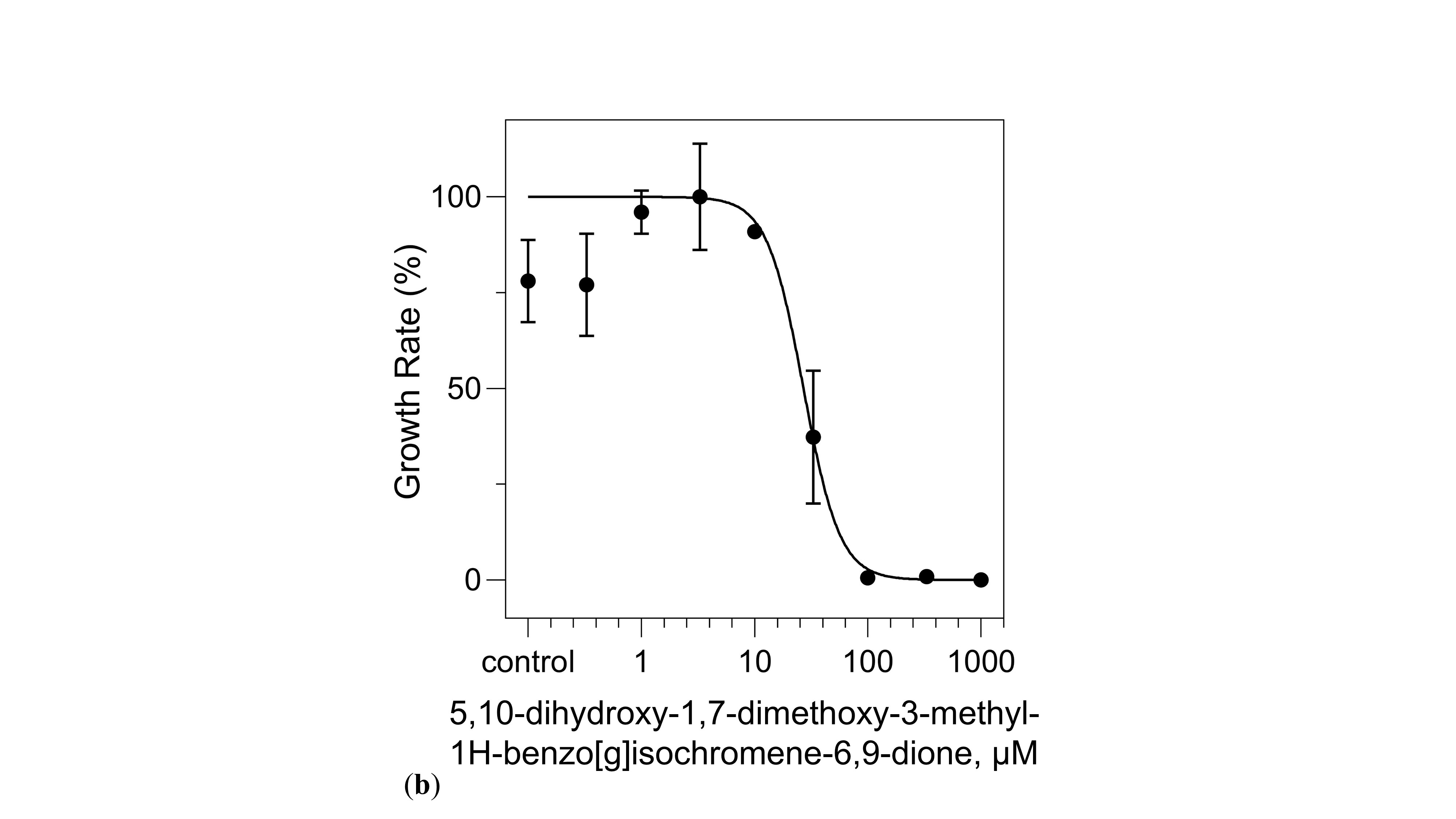
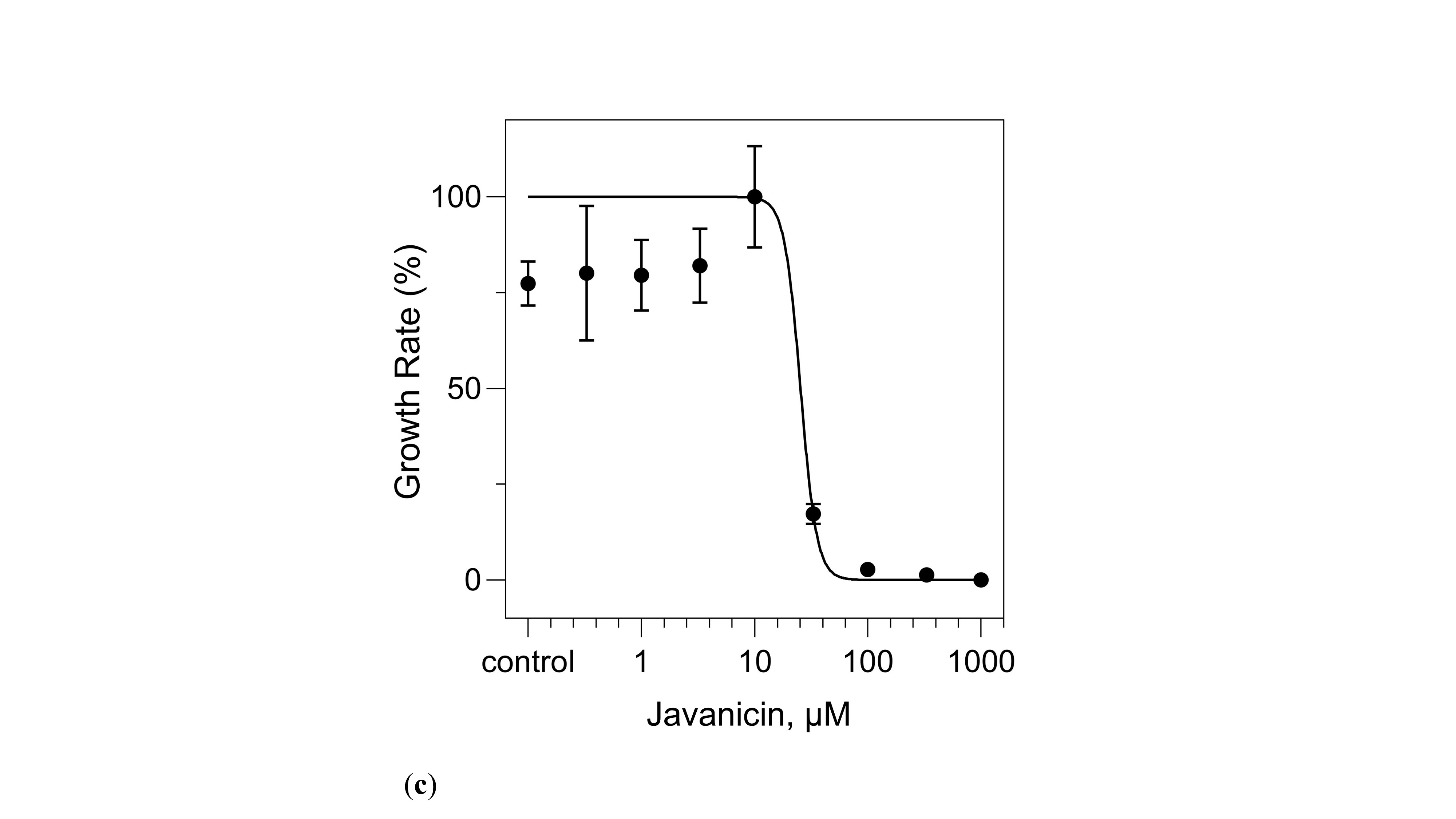
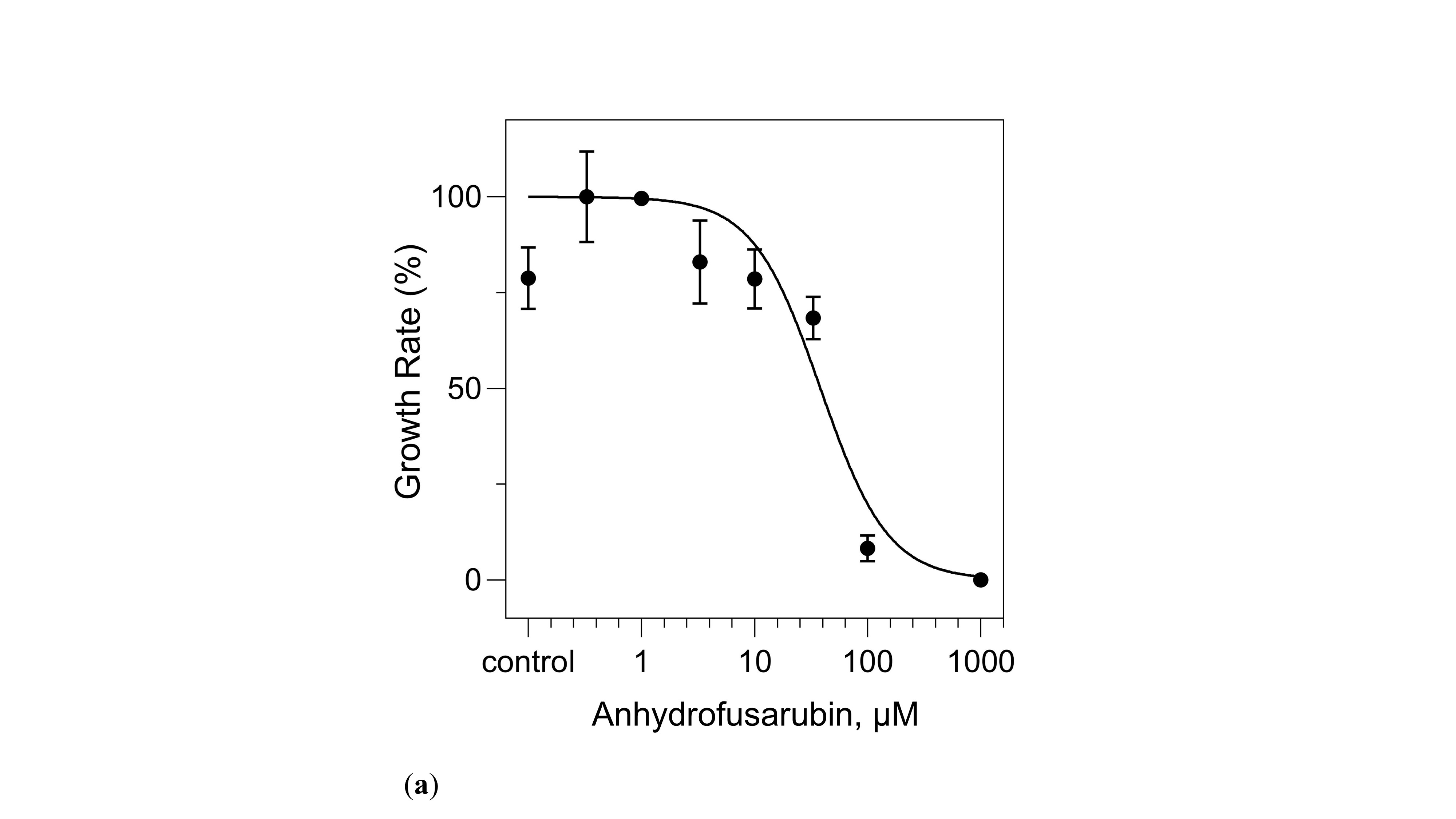
The compounds were further assessed with a dose-response bioassay using duckweed. Compound 1 exhibited a 50% growth inhibition (IC50) at a concentration of 64 µM, while compounds 2 and 3 demonstrated IC50 values of 28 and 31 µM, respectively (Figure 4). The genus Lemna is commonly used by the pesticide industry, environmental toxicologists, and others as a model for investigating the effects of phytotoxins and herbicides (Einhellig et al. 1985, Michel et al. 2004, Grossmann et al. 2012). Due to extensive prior testing of various herbicides using this method, it has become feasible to compare the isolated compounds with these established products (Amagasa et al. 1994, Michel et al. 2004). Under comparable experimental conditions, the phytotoxicity demonstrated by the isolated compounds surpassed that of certain synthetic herbicides like glyphosate and clomazone, which exhibited IC50 values of 388 and 126 µM, respectively, in the same bioassay (Michel et al. 2004). Lower IC50 values indicate that these compounds are potent enough to achieve the desired inhibitory effect which can lead to reduced cost, environmental impact, and potentially fewer non-target effects compared to compounds with higher IC50. All three compounds appeared to cause hormesis (greater growth than the control) at one or more concentrations below those that inhibit growth. Hormesis is common with both natural and synthetic phytotoxins (Belz et al. 2007, Belz & Duke 2017).
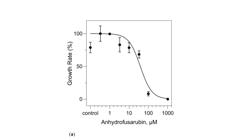
Phytotoxicity assay with Lemna paucicostata (duckweed). Effects of (a) anhydrofusarubin (1), (b) 5,10-dihydroxy-1,7-dimethoxy-3-methyl-1H-benzo[g]isochromene-6,9-dione (2), and (c) javanicin (3) on the growth (% of initial frond area) of L. pausicostata at varying concentrations after 7 days of exposure. Each treatment was carried out in triplicate. Error bars are ±1 standard error of the mean.
Anhydrofusarubin (1) and javanicin (3), two naphthoquinone pigments, are synthesized primarily by various species of the fungus Fusarium (Tatum & Baker 1983, Khan et al. 2018). These compounds can also be obtained by heating the compound fusarubin (Ammar et al. 1979). Both compounds have demonstrated promising antibiotic properties and significant cytotoxic efficacy against certain types of cancer (Khan et al. 2016, Moni et al. 2022, Pankin et al. 2023). Although these compounds have shown phytotoxic effects on radish and pea seedlings, the literature on their phytotoxic activity is very limited (Baker et al. 1981, Medentsev & Akimenko 1992). Additionally, we found no previous publication on the phytotoxicity of 5,10-dihydroxy-1,7-dimethoxy-3-methyl-1H-benzo[g]isochromene-6,9-dione (2), making this study the first to report phytotoxic activity of this compound.
Natural napthoquinones such as plumbagin have been explored as structural templates for synthesis of new herbicides (Durán et al. 2019), however, similar efforts have not been published using the compounds that we report in this paper. The herbicidal effects of 2-hydroxy-3-alkyl-1,4-naphthoquinones is inhibition or photosystem II (PSII) of photosynthesis by binding to the quinone binding site of the D1 protein of PSII (Jewess et al. 2002). This is a likely target for the compounds reported in this paper, however, further study is required for the confirmation. There are no quinone-based commercial herbicides, and there is a need for new PSII inhibitor herbicides because of the evolution of resistance, toxicity concerns, and other limitations of current commercial PSII inhibitor herbicides (Twitty & Dayan 2024).
Antifungal bioautography assay
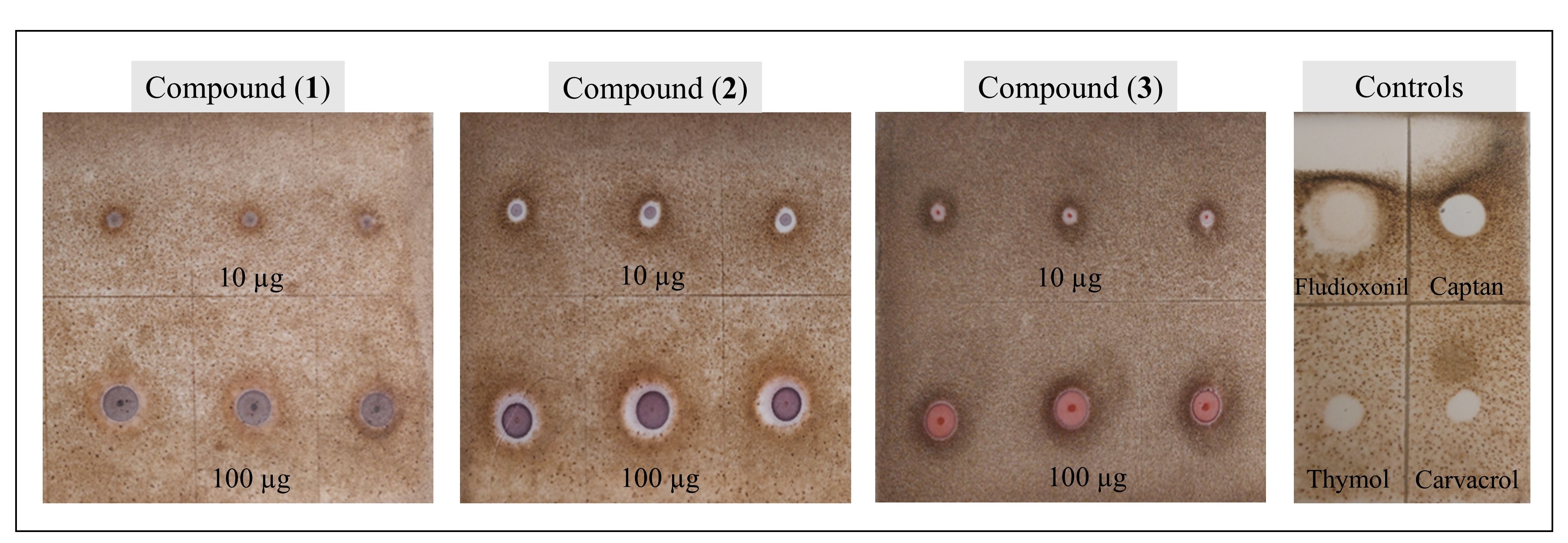
The antifungal properties of the isolated compounds were evaluated at 10 and 100 μg/spot against the plant pathogenic fungus C. fragariae using a thin-layer chromatography bioassay (Figure 5). Among them, compound 1 exhibited no activity, compound 3 displayed weak antifungal activity, revealing an inhibition zone measuring 8 ± 0.5 mm at 100 µg and 4 ± 0.5 mm at 10 µg. Compound 2 demonstrated significantly greater antifungal activity, with an inhibition zone measuring 12 ± 1 mm at 100 µg and 5 ± 0.5 mm at 10 µg. The commercial fungicides captan and fludioxonil exhibited inhibition zones of 9 and 16 mm, respectively, at 2 µg spot-1, while carvacrol and thymol showed inhibition zones of 8 and 9 mm, respectively, at 20 µg spot-1.
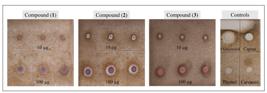
Thin layer chromatography bioautography of (a) anhydrofusarubin (1), (b) 5,10- dihydroxy-1,7-dimethoxy-3-methyl-1H-benzo[g]isochromene-6,9-dione (2), (c) javanicin (3), and (d) controls against the phytopathogenic target Colletotrichum fragariae.
We found no previous reports of the antifungal activity of 5,10-dihydroxy-1,7-dimethoxy-3-methyl-1H-benzo[g]isochromene-6,9-dione (2), suggesting this to be the first report of antifungal activity of this compound. Javanicin (3) has previously documented antifungal activity (Kharwar et al. 2009). Isolated from the fungus Chloridium sp., javanicin exhibited potent antifungal effects against agricultural pathogens such as Cercospora arachidicola, Fusarium oxysporum, Rhizoctonia solani, and Verticillium dahliae, with MIC values spanning from 5 to 20 µg mL-1 (Kharwar et al. 2009). Anhydrofusarubin (1) has been described as having no antifungal activity against Aspergillus niger (Moni et al. 2022), though Ammar et al. (1979) reported the mild antifungal activity of anhydrofusarubin against A. niger. The results obtained in this work are consistent with those published in the literature.
Napthoquinones have studied for possible fungicide use for decades (e.g., Fieldgate & Woodcock 1973) and are of great interest as possible medicinal fungicides (Futuro et al. 2018). Several natural napthoquinones (e.g., juglone and plumbatin) are reported to be fungicidal, as reviewed by Martínez & Benito (2005). Meazza et al. (2003) found several natural napthoquinones to be fungitoxic to more than one Colletothrichum species. Structural alteration of compound 2 of the present study could improve the fungicidal activity.
CONCLUSIONS
Our results indicated that endophytes isolated from a tropical medicinal plant represent an interesting reservoir of bioactive compounds. These endophytes can produce phytotoxic and fungicidal compounds, potentially valuable for the development of new pesticides. Our study marked the first report of compound 2 displaying biological activity. The structures of these compounds could prove valuable for the development of new pesticides; however, further studies, including determination of the molecular targets, are essential to fully understand their potential.
Acknowledgements
This study received financial support from Conselho Nacional de Desenvolvimento Científico e Tecnológico (CNPq) (200218/2023-9), Coordenação de Aperfeiçoamento de Pessoal de Nível Superior (CAPES) and USDA Cooperative Agreement 58-6060-1-001 grant to the University of Mississippi (SOD).
References
- ABBAS HK, DUKE SO & TANAKA T. 1993. Phytotoxicity of fumonisins and related compounds. J Toxicol Toxin Rev 12: 225-251.
- ALTSCHUL SF, MADDEN TL, SCHÄFFER AA, ZHANG J, ZHANG Z, MILLER W & LIPMAN DJ. 1997. Gapped BLAST and PSI-BLAST: a new generation of protein database search programs. Nucleic Acids Res 25: 3389-3402.
- AMAGASA T, PAUL RN, HEITHOLT JJ & DUKE SO. 1994. Physiological effects of cornexistin on Lemna pausicostata Pestic Biochem Physiol 49: 37-52.
- AMMAR MS, GERBER NN & MCDANIEL LE. 1979. New antibiotic pigments related to fusarubin from Fusarium solani (MART.) SACC. I. Fermentation, isolation, and antimicrobial activities. J Antibiot 32: 679-684.
- ASOMADU RO, EZEORBA TPC, EZIKE TC & UZOECHINA JO. 2024. Exploring the antioxidant potential of endophytic fungi: a review on methods for extraction and quantification of total antioxidant capacity (TAC). 3 Biotech 14: 1-18.
- BAKER RA, TATUM JH & NEMEC S. 1981. Toxin production by Fusarium solani from fibrous roots of blight-diseased citrus. Phytopathology 71: 951-954.
- BELZ RG & DUKE SO. 2014. Herbicides and plant hormesis. Pest Manag Sci 70: 698-707.
- BELZ RG, VELINI ED & DUKE SO. 2007. Dose/response relationships in allelopathy research. In: Fujii Y & Hiradate S (Eds), Allelopathy: New Concepts and Methodology. Science Publishers, Enfield, NH, p. 3-29.
- CAMPOS FF, JOHANN S, COTA BB, ALVES TM, ROSA LH, CALIGIORNE RB, CISALPINO PS, ROSA CA & ZANI CL. 2011. Antifungal activity of trichothecenes from Fusarium sp. against clinical isolates of Paracoccidioides brasiliensis Mycoses 54: e122-129.
- CARVALHO FP. 2017. Pesticides, environment, and food safety. Food Energy Secur 6: 48-60.
- CHOPRA AK, SHARMA MK & CHAMOLI S. 2011. Bioaccumulation of organochlorine pesticides in aquatic system—an overview. Environ Monit Assess 173: 905-916.
- CHUKWUDI UP, KUTU FR & MAVENGAHAMA S. 2021. Mycotoxins in maize and implications on food security: A review. Agric Rev 42: 42-49.
- CORKLEY I, FRAAIJE B & HAWKINS N. 2022. Fungicide resistance management: Maximizing the effective life of plant protection products. Plant Pathol 71: 150-159.
- DAYAN FE, ROMAGNI JG & DUKE SO. 2000. Investigating the mode of action of natural phytotoxins. J Chem Ecol 26: 2079-2094.
- DOS REIS JBA, LORENZI AS & DO VALE HMM. 2022. Methods used for the study of endophytic fungi: A review on methodologies and challenges, and associated tips. Arch Microbiol 204: 675.
- DURÁN AG, CHINCHILL N, MOLINILLO JMB & MACÍAS FA. 2019. Structure-activity relationship studies of naphthoquinone analogs. The search for new herbicides based on natural products. Pest Manag Sci 75: 2517-1529.
- EINHELLIG FA, LEATHER GR & HOBBS LL. 1985. Use of Lemna minor L. as a bioassay in allelopathy. J Chem Ecol 11: 65-72.
- FIELDGATE DA & WOODCOCK D. 1973. Fungicidal and chemical constitution. XX. The activity of substituted 1,4-napthohydroquinone esters and substituted 1,4-naphthoquinones against powdery mildews. Pestic Sci 4: 193-200.
- FLORINDO RHDS. 2019. Bioprospecção de metabólitos secundários bioativos produzidos por fungos endofíticos associados à Piper sp. coletada no Parque Estadual do Rio Doce, Minas Gerais.
-
FUTURO DO, FERREIRA PG, NICOLETTI CD, BORBA-SANTOS LP, DA SILVA FC, ROZENTAL S & FERREIRA VF. 2018. The antifungal activity of napthoquinones: An integrative view. An Acad Bras Cienc 90: 1187-1214. DOI: 10.1590/0001-3765201820170815.
» https://doi.org/10.1590/0001-3765201820170815 - GLASS NL & DONALDSON GC. 1995. Development of primer sets designed for use with the PCR to amplify conserved genes from filamentous ascomycetes. Appl Environ Microbiol 61: 1323-1330.
- GLENN AE. 2007. Mycotoxigenic Fusarium species in animal feed. Anim Feed Sci Tech 137: 213-240.
- GONÇALVES VN ET AL. 2015. Antibacterial, antifungal and antiprotozoal activities of fungal communities present in different substrates from Antarctica. Polar Biol 38: 1143-1152.
- GROSSMANN K, HUTZLER J, TRESCH S, CHRISTIANSEN N, LOOSER R & EHRHARDT T. 2012. On the mode of action of the herbicides cinmethylin and 5-benzyloxymethyl-1,2-isoxazolines: putative inhibitors of plant tyrosine aminotransferase. Pest Manag Sci 68: 482-492.
- HEAP I. 2024. The International Herbicide-Resistant Weed Database. www.weedscience.org, accessed May 24, 2024.
- JEWESS PJ, HIGGINS J, BERRY KJ, MOSS SR & BOOGAARD AB. 2002. Herbicidal action of 2-dhydroxy-3-alkyl-1,4-napththoquinones. Pest Manag Sci 58: 234-242.
- JIA M, CHEN L, XIN HL, ZHENG CJ, RAHMAN K, HAN T & QIN LP. 2016. A friendly relationship between endophytic fungi and medicinal plants: a systematic review. Front Microbiol 7: 906.
- KHAN MIH, SOHRAB MH, RONY SR, TAREQ FS, HASAN CM & MAZID MA. 2016. Cytotoxic and antibacterial naphthoquinones from an endophytic fungus, Cladosporium sp. Toxicol Rep 3: 861-865.
- KHAN N, AFROZ F, BEGUM MN, ROY RONY S, SHARMIN S, MONI F, MAHMOOD HASAN C, SHAHA K & SOHRAB MH. 2018. Endophytic Fusarium solani: A rich source of cytotoxic and antimicrobial napthaquinone and aza-anthraquinone derivatives. Toxicol Rep 5: 970-976.
- KHARWAR RN, VERMA VC, KUMAR A, GOND SK, HARPER JK, HESS WM & STROBEL GA. 2009. Javanicin, an antibacterial naphthaquinone from an endophytic fungus of neem, Chloridium sp. Curr Microbiol 58: 233-238.
- KIRK PM, CANNON PF, MINTER DW & STALPERS JA. 2008. Dictionary of the Fungi, 10th ed., Wallingford, UK, 551 p.
- KUROBANE I, VINING LC, MCINNES AG & WALTER JA. 1980. Use of 13C in biosynthetic studies. The labeling pattern in dihydrofusarubin enriched from [13C]-and [13C, 2H] acetate in cultures of Fusarium solani Can J Chem 58: 1380-1385.
- MACÍAS-RUBALCAVA ML & GARRIDO-SANTOS MY. 2022. Phytotoxic compounds from endophytic fungi. Appl Microbiol Biotechnol 106: 931-950.
- MAHARJAN S, LEE SB, KIM GJ, CHO SJ, NAM JW, CHIN J & CHOI H. 2020. Isolation of unstable isomers of lucilactaene and evaluation of anti-inflammatory activity of secondary metabolites produced by the endophytic fungus Fusarium sp. QF001 from the roots of Scutellaria baicalensis Molecules 25: 923.
- MARTÍNEZ MJA & BENITO PB. 2005. Biological activity of quinones. Stud Nat Prod Chem 30: 303-366.
- MEAZZA G, DAYAN FE & WEDGE DE. 2003. Activity of quinones on Colletotrichum species. J Agric Food Chem 51: 3824-3938.
- MEDENTSEV AG & AKIMENKO VK. 1992. Mechanism of phytotoxic action of naphthoquinone pigments of the fungus Fusarium decemcellulare Phytochemistry 31: 77-79.
- MICHEL A, JOHNSON RD, DUKE SO & SCHEFFLER BE. 2004. Dose-response relationships between herbicides with different modes of action and growth of Lemna paucicostata: an improved ecotoxicological method. Environ Toxicol Chem 23: 1074-1079.
- MONI F, SAIFULLAH N, AFROZ F, RONY SR, SHARMIN S, SHAHINUZZAMAN ADA & SOHRAB MH. 2022. Antibacterial and cytotoxic compounds from endophyte Fusarium solani isolated from Centella asiatica (L.). J Biol Act Prod Nat 12: 436-449.
- NUCCI M & ANAISSE E. 2007. Fusarium infections in immunocompromised patients. Clin Microbiol Rev 20: 695-704.
- PANKIN D, POVOLOTCKAIA A, SMIRNOV M, BORISOV E, GULYAEV A, DOROCHOV A & MOSKOVSKIY M. 2023. Theoretical investigation of anhydrofusarubin: structural and optical properties. Crystals 13: 1556.
- PARISOT D, DEVYS M & BARBIER M. 1989. Anhydrofusarubin lactol from Nectria haematococca Phytochemistry 28: 3240-3241.
- PILLING D, BÉLANGER J & HOFFMANN I. 2020. Declining biodiversity for food and agriculture needs urgent global action. Nat Food 1: 144-147.
- QIN X, ZHANG RX, GE S, ZHOU T & LIANG YK. 2017. Spingosine kinase AtSPHK1 functions in fumonisin B1-triggered cell death in Arabidopsis Plant Physiol Biochem 119: 70-80.
- ROSA LH, QUEIROZ SC, MORAES RM, WANG X, TECHEN N, PAN Z, CANTRELL CL & WEDGE DE. 2013. Coniochaeta ligniaria: antifungal activity of the cryptic endophytic fungus associated with autotrophic tissue cultures of the medicinal plant Smallanthus sonchifolius (Asteraceae). Symbiosis 60: 133-142.
- ROSA LH, VAZ AB, CALIGIORNE RB, CAMPOLINA S & ROSA CA. 2009. Endophytic fungi associated with the Antarctic grass Deschampsia antarctica Desv.(Poaceae). Polar Biol 32: 161-167.
-
ROSER M & RODÉS-GUIRAO L. 2019. Future population growth. Disponível em: https://ourworldindata.org/future-population-growth#citation Acessed Mar 9, 2023.
» https://ourworldindata.org/future-population-growth#citation - SETTE LD, PASSARINI MRZ, DELARMELINA C, SALATI F & DUARTE MCT. 2006. Molecular characterization and antimicrobial activity of endophytic fungi from coffee plants. World J Microb Biot 22: 1185-1195.
- SINGH A, KUMAR J, SHARMA VK, SINGH DK, KUMARI P, NISHAD JH & KHARWAR RN. 2021. Phytochemical analysis and antimicrobial activity of an endophytic Fusarium proliferatum (ACQR8), isolated from a folk medicinal plant Cissus quadrangularis L. S Afr J Bot 140: 87-94.
- SOUZA A, SOUZA ADL, ASTOLFI FILHO S, BELÉM PINHEIRO ML, SARQUIS MIM & PEREIRA JO. 2004. Atividade antimicrobiana de fungos endofíticos isolados de plantas tôxicas da Amazônia: Palicourea longiflora (Aubl.) Rich e Strychnos cogens Benthan. Acta Amaz 31: 185-195.
- STAPPEN I ET AL. 2015. Antimicrobial and repellent activity of the essential oils of two Lamiaceae cultivated in western Himalaya. Curr Bioact Compd 11: 23-30.
- TATUM JH & BAKER RA. 1983. Naphthoquinones produced by Fusarium solani isolated from citrus. Phytochemistry 22: 543-547.
-
TWITTY A & DAYAN FE. 2024. Is there a place for new herbicides targeting photosynthetic electron transport. Weed Sci 72(4): 1-25. DOI: 10.1017/wsc.2024.20.
» https://doi.org/10.1017/wsc.2024.20 - VILLAVICENCIO EV, PORTERO CE & NARVAEZ-TRUJILLO A. 2021. Antibacterial and antifungal activity of organic and peptidic extracts of Ecuadorian endophytic fungi. Adv Microbiol 11: 266-282.
- WHITE TJ, BRUNS T, LEE S & TAYLOR J. 1990. Amplification and direct sequencing of fungal ribosomal RNA genes for phylogenetics. In: Innis MA et al. (Eds), PCR Protocols. Academic Press, New York, NY, USA, p. 315-322.
- XU JG, ZHAO XM, HAN XW & DU YG 2007. Antifungal activity of oligochitosan against Phytophthora capsici and other plant pathogenic fungi in vitro Pestic Bioch Phys 87: 220-228.
- YADAV G & MEENA M. 2021. Bioprospecting of endophytes in medicinal plants of Thar Desert: An attractive resource for biopharmaceuticals. Biotechnol Rep 30: e00629.
- ZIMDAHL RL. 2015. Six chemicals that changed agriculture. Academic Press, p. 216.