 Vertical distribution of the zooplankton in the Antarctic Peninsula during the austral summer of 2017
Abstract
Zooplankton plays a crucial role as the primary consumers in the Southern Ocean and its ecological processes, particularly in the Antarctic Peninsula, influenced by regional glaciological and oceanographic changes. To assess the overall composition of these communities, vertical samples were collected at various depths using a Multinet at oceanographic stations in the Antarctic Peninsula during the XXXV OPERANTAR expedition in summer 2017. Abiotic data (temperature, salinity and chlorophyll-a) were collected using a CTD and a fluoremeter. Organisms were identified to a higher level, with Chaetognatha and Euphausiacea identified to species whenever possible. Copepoda were the most abundant (73.4%), with Calanoida present in all samples and more abundant at 300m. Salpidae ranked as the second most abundant taxon (16.6%) up to 100m. Three species of Chaetognatha were identified, with Eukrohnia hamata being the most abundant, particularly at 300m. Two species of Euphausiacea were found, Euphausia superba and Thysanoesa macrura, with low abundances. Abiotic parameters showed significant relationships with the taxa. The region exhibits complex oceanography associated with zooplankton communities. The recorded data align with the zooplankton characterization of this region, uncovering a prevalence of Copepoda and surface abundant Salpidae, along with Chaetognatha (particulary E. hamata) and Euphausiacea.
Key words
abiotic parameters; community structure; key species; Southern Ocean
INTRODUCTION
Zooplankton act as the primary link in the energy flow of the food web in the water column, playing a crucial role in primary productivity and other essential ecological processes, such as the biological carbon pump (Raymont 1983, Schnack-Schiel & Isla 2005, Steinberg & Landry 2017) particularly in polar regions (Infante 1988), these organisms are subject to environmental fluctuations, which are reflected in their abundances (Richardson 2008).
The specific conditions of the Southern Ocean (SO) directly influence zooplankton communities (Clarke & Peck 1991, Atkinson et al. 2004). Encompassing a vast area with an extensive range of low temperatures and isolated at the southernmost extreme of the globe, the SO influences the global climate and is connected with all ocean basins (Lynne et al. 2011). The continuous eastward flow of the Antarctic Circumpolar Current (ACC) encircles the Antarctic Continent up to ~60°S. Recently it has been suggested that its temperature is rising and that the ice coverage is declining (Cook et al. 2005, Meredith & King 2005), influencing the stratification and vertical distribution of biological communities in the water column (Convey et al. 2014).
In the Antarctic Peninsula (AP) the vulnerability of ice fields and climatic and oceanographic variability is evident (Meredith & King 2005), and the zooplankton populations have been the subject of many studies in order to evaluate the impact of these environmental changes (Steinberg et al. 2015, Tarling et al. 2018). The AP is a region of high biological productivity (Zhou et al. 1994), crucial for the reproduction and development of various zooplanktonic organisms, especially the Antarctic Krill (Brinton & Towsend 1991).
The order Euphausiacea plays a fundamental role in the Antarctic food web. Antarctic Krill, Euphausia superba is recognized as a key organism in biological structuring (Siegel 1988, 1989). They are found over approximately 32 million km² around the Southern Ocean (Siegel & Watkins 2016). It constitutes the primary food item for various Antarctic predators, such as seabirds, fish and large mammals (Newell & Newell 1963). In the AP region, other euphausiid species like Euphausia crystallorophias and Euphausia frigida can also be found (Montú et al. 1990, Pakhomov & Perissinotto 1994).
Chaetognatha is another important group in the SO, has a widespread distribution and high abundances (Hopkins 1985). They constitute the second most abundant group of zooplankton after Copepoda (El-Sayed 1985). Eukrohnia hamata is highlighted as the most abundant and frequent species in the AP (Oresland 1990). They are essential for the trophic energy transfer in polar regions (Oresland 1995), paying a significant role in the biological carbon pump during the austral summer (Raymont 1983, Giesecke et al. 2010) and serving as excellent bioindicatiors of water masses (Johnson & Terazaki 2004).
Since the 1970’s, changes in some zooplankton populations in the SO have been reported (Flores et al. 2012), linked to alterations in oceanographic characteristics and the extent of sea ice (Atkinson et al. 2004). Zooplankton is considered an excellent environmental bioindicator with its metabolic and reproductive processes associated with the water column temperature (Richardson 2008). Also, zooplankton’s biogeographical distribution is linked to variations in oceanographic features such as the SO’s fronts (Esquivel-Garrote et al. 2023, Esquivel-Garrote & Muxagata 2023) and is vulnerable to prevailing global and regional climate patterns. Changes in zooplankton communities and specific composition of groups such as Copepoda (Tarling et al. 2018), Chaetognatha (Takahashi et al. 2010), Euphausiacea (Atkinson et al. 2004), among others, have already been reported in the recent literature.
Considering the significance of studies on the zooplankton communities and their tremendous importance for the SO ecosystem and the global climate (Ratnarajah et al. 2023), this present study presents the composition and distribution of zooplankton, investigating the correlations of these assemblages with abiotic characteristics in different levels of the water column during the austral summer of 2017 in the AP region.
MATERIALS AND METHODS
The study area covers the AP region in the Atlantic sector of the SO, including the northeast sector of the Bellingshausen Sea (E#24) and the waters of the Gerlache Strait (E#07 e E#12) and Bransfield Strait (E#15, E#30, E#33 e E#49) (Fig. 1).
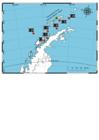
Map of the study area, indicating the sampling stations with the Multinet during the summer of 2017.
The zooplankton samples used in this study were collected during the XXXV OPERANTAR (Operação Antartica Brasileira, Brazilian Antarctic Operation) on board of the Polar Ship Armirante Maximiano during the austral summer of 2017. A total of seven oceanographic stations were conducted using a Multinet Midi (Hidro-bios 0.24m²) equipped with five 300 μm nets (Table I). The vertical sampling covered five strata of 100 meters (m) each (total of 500m sampled in the water column). Shallower locations were sampled with only three strata (300m depth sampled). The filtered volume of water was estimated using the Ocean Lab software (3.5.5.6) with an aid of a flowmeter attached to the net. All samples were preserved in a 4% formalin solution neutralized with borax according to Steedman (1976). Chlorophyll-a (μgL-¹), temperature (°C) and salinity data were acquired through a CTD (Conductivity, Temperature and Depth) and fluorimeter attached to the Multinet.
Oceanographic stations with Multinet during XXXV OPERANTAR. GS = Gerlache Strait; BS = Bransfield Strait; B = Bellingshausen Sea.
Once in the lab, all zooplankton organisms were counted and identified to major taxonomic groups using Bogorov chambers, a stereoscopic microscope and zooplankton identification guides (Brinton 1975, Kirkwood 1984, Mauchline & Fisher 1969, Mauchline 1971, 1980, O’Sullivan 1983, O’Sullivan & Hosie 1985). The subclass Copepoda were classified into different orders according to Dussart & Defaye (1995) and sizes (large Copepoda equivalent to >2000μm; samall Copepoda equivalente to <2000μm). Organisms from the Euphausiacea order and the Chaetognatha phylum were separated and identified at the lowest taxonomic level possible according to Baker et al. (1990), Bone et al. (1991), Lutschinger (1993) and Pierrot-Bults & Chidgey (1988). Samples containing large quantities of gelatinous organisms from the Salpidae order were meticulously examined and washed with 4% formalin, in order to remove organisms attached to their structures, and then quantified. Fragments of Siphonophorae from the Hydrozoa class found in the samples were summarized as one (1) organism. Pteropoda, Isopoda, Amphipoda, Mysida, Appendicularia, Foraminifera, Cnidaria, Siphonophorae, Echinodermata, Decapoda Cirripedia and non-identified (n.i.) larvae of Osteichthyes, were grouped in the category “others” due to their low abundances.
The results were recorded and tabulated as number of organisms in 1000m-3. The abundances were converted to log10(x+1) to stabilize the variances. Pearson correlation coefficients were used to measure the strength of the association of taxa with the average abiotic parameters for each depth stratum. All analyses presented here were performed using Quantum Gis (3.32.2) and Ocean Data View (v5).
RESULTS
Biological data
A total of 15,676 organisms were counted and grouped into 21 taxa (Table II). Copepoda was the most abundant group in all samples (73,46%), followed by Salpidae (16,60%), Chaetognatha (3,36%), Euphausiacea (2,62%) and Ostracoda (2,33%).
List of Taxa and their Frequency of Occurrence (FO%), Relative Abundance (RA%) and Maximum density of Organisms (org. 1000m-3). (n.i. = not-identified).
Overall, the dominant portion of Copepoda was reported below 100m, with higher abundances at 300m in stations E#07 (39,391 org. 1000m-3), E#12 (57,043 org. 1000m-3) and E#15 (50,565 org. 1000m-3) (Fig. 2c). Calanoida represented 87% of the group. The order Cyclopoida were recorded in higher abundances at GS stations, a total of 28,984 org. 1000m-3 while Harpacticoida amounted to only 77 org. 1000m-3 at station E#15 at 200m. 56% of small Copepoda (<2000μm) belonged to the Cyclopoida order. It is noticeable that large Copepoda (>2000μm) showed higher abundances in the deeper layers for all stations, numerically more abundant at 300m at E#12 and E#15.

Spatial distribution of the zooplankton community across the Antarctic Peninsula. a) Stratum 0 ¬ 100m depth; b) Stratum 101 ¬ 200m depth; c) Stratum 201 ¬ 300m depth; d) Stratum 301 ¬ 400m depth; e) Stratum 401 ¬ 500m depth.
Salpidae appeared in 94% of the samples, being dominant in the first 100m (Fig. 2a). They were co-dominators with Copepoda at some stations at greater depths. Their highest abundances (exceeding 10,000 org. 1000m-3) were observed at E#33. This group dominates the surface layers of the BS. Only 5% of the total Salpidae appeared in the samples E#07, E#12 and E#24.
Ostracoda and Polychaeta were quite frequent groups recorded in higher abundances at depths deeper than 300m. The maximum values of Ostracoda (2,307 org. 1000m-3) and Polychaeta (1,730 org. 1000m-3) occurred in BS at the deepest stratum (Fig. 2e). Only 107,1 Ostracoda 1000m-3 and 74,1 Polychaeta 1000m-3 were recorded at E#24 in the Bellinghausen Sea, the lowest occurrences throughout all samples. The “Others” were dominated by Appendicularia, Foraminifera and Pteropoda, that accounted for 52%, 26% and 9% of the total organisms in this category.
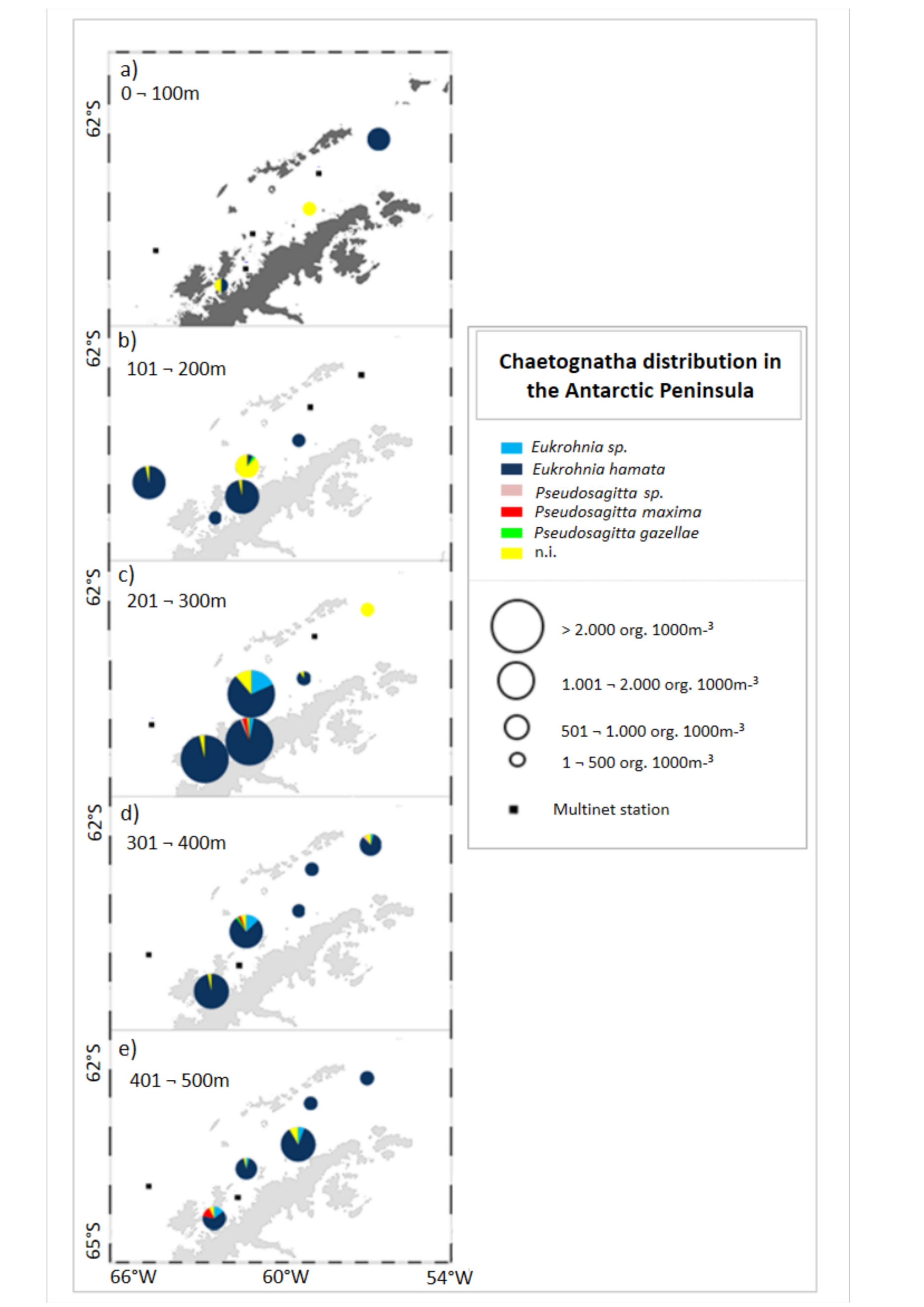
A total of 511 Chaetognatha were found in the samples, with 438 identified at species level. From those Eukrohnia hamata represented 94,4% of all the identified Chaetognatha, followed by Pseudosagitta maxima (1,14%) and Pseudosagitta gazellae (0,45%). Overall, the highest abundances of Chaetognatha were collected in the 200m stratum (Fig. 3b) at stations E#07 (3,478 org. 1000m-3) and E#12 (2,782 org. 1000m-3) in the GS. Pseudosagitta maxima was found at three stations (E#07, E#12 and E#15) below 200m. Pseudosagitta gazellae was found only at E#15 in the BS, with densities below 47 org.1000m-3.

Spatial distribution of Chaetognatha species across the Antarctic Peninsula. a) Stratum 0 ¬ 100m depth; b) Stratum 101 ¬ 200m depth; c) Stratum 201 ¬ 300m depth; d) Stratum 301 ¬ 400m depth; e) Stratum 401 ¬ 500m depth. (n.i. = not-identified).
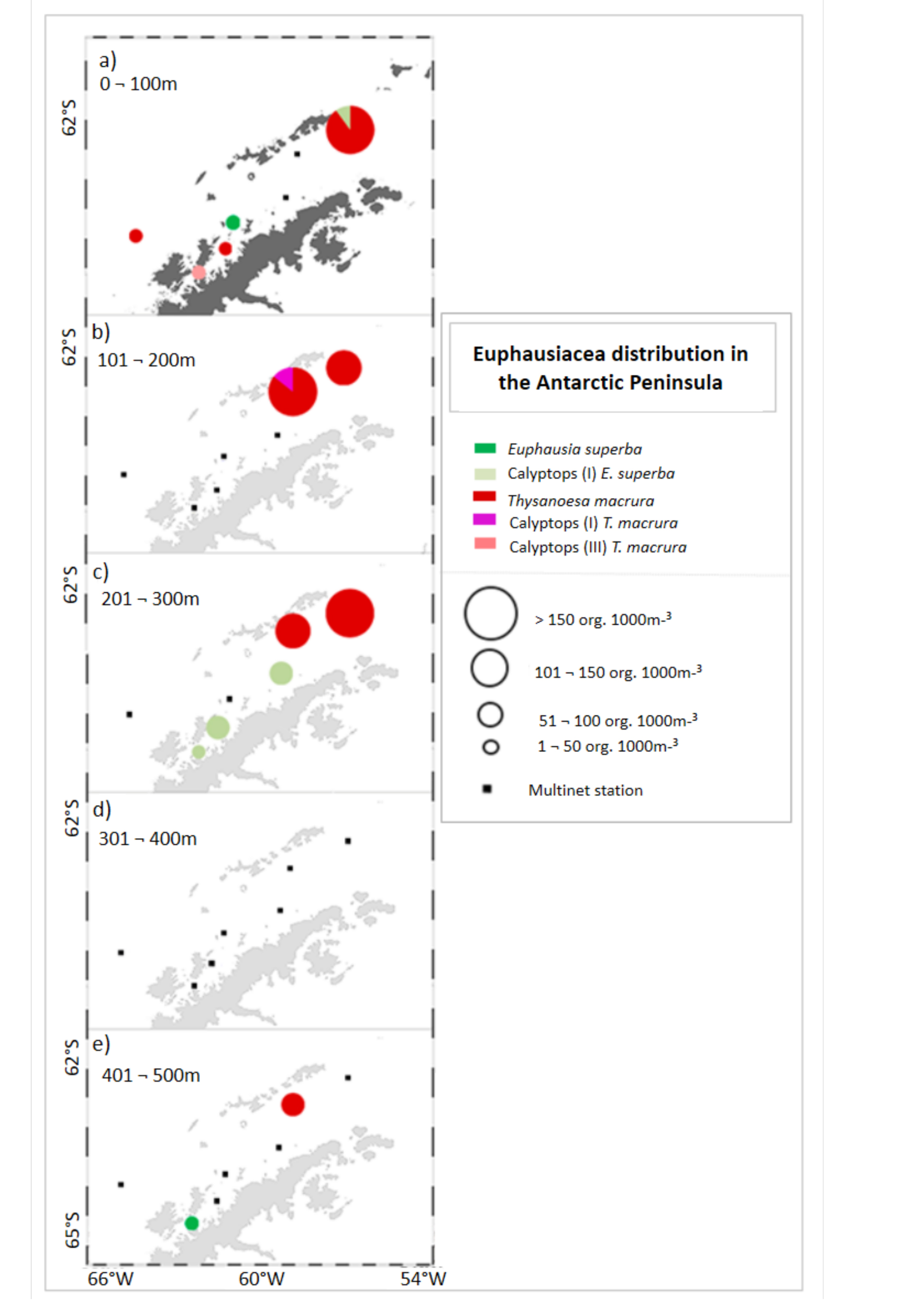
Euphausiacea was found predominantly in the first 100m of the water column, with only two identified species. Thysanoesa macrura was the most abundant species, accounting for 82% Euphausiacea. Adult individuals of T. macrura were numerically greater in BS. Their maximum densities reached 360 org. 1000m-3 at E#49. Adult individuals of E. superba occurred only at E#07 (400m) and E#15 (100m) (Fig. 4). Larval stages Calyptops I e II of T. macrura were recorded in the 200m strata at E#07 and E#33. Below 300m, only two specimens of T. macrura (E#33) and one of E. superba (E#07) were recorded, with numbers below 77 org. 1000m-3.

Spatial distribution of Euphausiacea species across the Antarctic Peninsula. a) Stratum 0 ¬ 100m depth; b) Stratum 101 ¬ 200m depth; c) Stratum 201 ¬ 300m depth; d) Stratum 301 ¬ 400m depth; e) Stratum 401 ¬ 500m depth.
Environmental parameters and analysis
The highest temperature value was recorded in the surface layer at E#24 (3.19°C). Only BS stations reached near-minimum values of -1°C below 100m (E#25, E#33 and E#49). Low temperatures were recorded at E#07 in GS at deep layers. Salinity values ranged between 33.3 and 34, with the highest values at E#24. Surface waters showed lower values, especially at E#12 in GS. The highest surface chlorophyll-a value was also recorded at E#12 (5.55ugL-1), followed by E#33 (1.53μgL-1) in the BS. Layers below 100m did not exceed 0,69μgL-1 of Chl-a (Fig. 5).

Abiotic parameters for each strata for the Multinet stations. a) Average temperature (°C); b) Average salinity; c) Average chlorophyll-a (μgL-1).
The Pearson Correlation Analysis (Table III) showed significant and negative correlations of environmental parameters with all major taxonomic groups identified. High and negative correlations were observed between temperature, Chl-a and depth with Copepoda, Chaetognatha, Ostracoda, Polychaeta and “others”. A weak and negative correlation appeared between salinity and T. macrura. Concentrations of Salpidae showed a significant and negative correlation with Copepoda and P. maxima. In contrast, high concentrations of Copepoda exhibited significant and negative correlations with Salpidae and T. macrura.
Pearson Correlation Analysis indicating the relationships between taxa and biological and abiotic parameters collected in the AP during the summer of 2017.
DISCUSSION
The AP is characterized by a complex oceanography and frontal systems within a crucial transitional environment, where distinct water masses with varying abiotic parameters interact (for further information, see Orsi et al. 1995, Sangrá et al. 2011, 2017). This abiotic scenario influences the structure and composition of the zooplankton community (Atkinson et al. 2012, Su et al. 2022). Moreover, the GS and BS are described as the most productive regions in the AP (Zhou et al. 2002). Changes in the sea ice and sea shelves patterns lead to increased primary production in the AP, especially in regions near the coast (Canals et al. 2016, Aracena et al. 2018).
The results presented in this study highlight Copepoda as the most abundant group in the AP, consistent with findings from Atkinson & Ward (2012) and Canals et al. (2016) which emphasize that Copepoda is the most significant and diverse group in this region. The Copepoda can increase their biomass and biodiversity by up to 80% during the austral summer in surface layers (Bradford-Grieve et al. 1999), particularly in coastal areas with high phytoplankton availability (Smetacek et al. 1990). Due to their varying sizes and feedings habits (Hopkins 1985) they can contribute in different ways sustaining the AP’s food web (Zhou et al. 2002).
Some studies indicate shifts in Copepoda size structure where smaller species dominate early in the summer while larger species prevail toward the end of stratification and into early fall (García et al. 2016, 2020). In our study, there was an evident dominance of the order Calanoida, consistent with other authors’ findings (Tarling et al. 2004, Atkinson et al. 2012). Larger Calanoida Copepoda such as Metridia gerlachei, were the most abundant during the austral summer (Tarling et al. 2018). On the other hand, Marrari et al. (2011) emphasizes that smaller copepods from the order Cyclopoida are also abundant in this region. These smaller copepods persist for brief periods during their season, prevailing in waters with higher concentrations of chlorophyll-a (Fransz 1988) and playing a crucial role in the energy flow of the AP’s food web (Atkinson et al. 2004, Thompson et al. 2013).
Euphausiacea holds the title of keystone species in the Antarctic marine ecosystem (Siegel 1988, 1989). Atkinson et al. (2017) records that the highest densities of Euphausiacea in the AP occur up to 200m, decreasing when the depth increases. According to the literature, the most abundant species for the AP are E. superba, E. frigida, E. crystallorophias and T. macrura (Makarov et al. 1990, Ross et al. 1996, Atkinson et al. 2012). Here in our work we found two of these important species, Euphausia superba and T. macrura, which were also identified as the most abundant species by Steinberg et al. (2015) reporting great patches near the surface (Raymont 1983). Seasonal ecological successions are marked by these organisms throughout the AP (Atkinson et al. 2012, Conroy et al. 2020).
As our results pointed out that T. macrura prevailed throughout the AP, typically found in northern oceanic regions of AP and decreasing in their numbers further south (Atkinson et al. 2017). Tysanoesa macrura also plays a fundamental role in the diet of various fish, penguins, seals and whales in the SO (Marrari et al. 2011). Siegel et al. (2013) reported a significant concentration of juvenile Euphausiacea southern in the AP, coinciding with the higher phytoplankton concentration areas (Nordhausen 1992, 1994, Wiebe et al. 2011). Larval stages of E. superba are often observed in the GS and near the South Shetland Islands (Makarov et al. 1990, Atkinson et al. 2012, Rombolá et al. 2019), crucial areas for the growth of diverse populations (Zhou et al. 1994).
Several international projects such as the Convention for the Conservation of Antarctic Marine Living Resources (CCAMLR), funded in 1982, and Circumpolar Data on Antarctic Krill (KRILLBASE) (Atkinson et al. 2017), funded in 1990, monitor Euphausiid populations revealing various positive and negative anomalies in the AP (Steinberg et al. 2015). Atkinson et al. (2004) highlight a correlation between krill abundances and the extent of winter sea ice, which has been changing in recent years (Stammerjohn et al. 2008). Additionally, due their high mobility, vertical samplings with nets like Multinet may not be efficient for capturing these organisms, which could explain the low records in this study. Despite this, it is crucial to recognize that, although these populations are changing and being recorded in smaller numbers, potentially affecting the entire Southern Ocean ecosystem (Flores et al. 2012), our findings suggest that Copepoda can also play a significant role in the water column in terms of ecosystem functioning. They may even have a greater impact than krill, which are often regarded as the primary contributors, thereby maintaining a vital balance within this environment.
Chaetognatha are the main consumers of Copepoda biomass (Oresland 1990, Giesecke et al. 2010). The Chaetognatha species recorded here are consistent with most publications for the AP (Pakhomov et al. 2002, Kruse et al. 2010) and are found to be the second most abundant group after Copepoda (Raymont 1983). They can represent portions between 5 to 30% of zooplankton biomass on de SO (Pakhomov et al. 2002). These voracious zooplankton predators dominate the SO, preferentially in the deeper layers of the water column (Duró & Gili 2001, Kruse et al. 2010). Larger species such as P. maxima and P. gazellae are often found in deeper layers at shelf regions (Kruse et al. 2010). Eukrohnia hamata is the most abundant and frequent specie in the AP, followed by Solidosagitta marri and P. gazellae according to Duró & Gili (2001). Pseudosagitta maxima goes next, in lower numbers (Oresland 1990). Giesecke et al. (2010) shows that P. gazellae contributes to 30% of the biomass predation in the SO, and it’s essential in the biological pump during the austral summer. Steinberg et al. (2015) point out a trend of decreasing of Chaetognatha abundances in the AP related to the reduction in the extent of sea ice.
Organisms of the Salpidae order play a significant role in the structure of zooplankton communities, standing out for their efficiency in filtering particles on the water column (Raymont 1983) and having the potential to consume large concentrations of phytoplankton in the surface layers (Atkinson et al. 2012). Reviewed studies indicate an increase in the capture of these organisms around the SO (Atkinson et al. 2004, Pakhomov et al. 2006, Bernard et al. 2012). McClintock et al. (2008) explains the importance of the ACC flow, carrying Salpidae to the western shelf of the AP. The most common species in the SO is Salpa thompsoni, representing about 95% of the group and reported in abundance in the AP (Perissinotto & Pakhomov 1998, Słomska et al. 2021). Positive and negative anomalies in Salpidae abundance are reported in Steinberg et al. (2015)’s review, related to changes in SO oceanographic characteristics, such as variations in sea surface temperature, sea ice extent and climate patterns (Barlett et al. 2018, Słomska et al. 2021). The highest concentrations of Salpidae recorded in this data set corresponded to low concentrations of Chl-a in surface layers, Raymont (1983) suggest that, in polar regions, these efficient filters have effective biological mechanisms to maintain abundance in the water column, like their alternate life cycles.
The contrast between “salp years” and “krill years” in the AP region has been consistently documented in numerous publications (Perissinotto & Pakhomov 1998, Pakhomov et al. 2002, Ross et al. 2014). Raymont (1983) already reported a competitive relationship between these two efficient Antarctic filter feeders. The literature extensively discusses the alternation of S. thompsoni and E. superba abundances (Atkinson et al. 2004, 2017, Steinberg et al. 2015) and the coexisting groups in time and space (Pakhomov et al. 2002, Ross et al. 2008, Bernard et al. 2012) in the SO. Furthermore, efforts are made to explain the factors that drives this relationship (Pakhomov et al. 2002) such as environmental variations in the AP’s complex oceanography, along with changes in the phytoplankton composition (for example Mendes et al. 2013). Henschke et al. (2016) rethink the act of Salpidae with the advance of climate change in the SO, emphasizing their crucial role in the vertical carbon flux and potential fecal pellet production, enhancing the overall biological pump around the SO (Henschke et al. 2016, Iversen et al. 2016).
The study recorded the vertical distribution of the main zooplankton groups, with emphasis on Chaetognatha and Euphausiacea, for an extremely complex region that has shown clear evidence of climate variations in the global scenario (Cook et al. 2005, Meredith & King 2005). The results indicated the dominance of Copepoda throughout the water column, alternating on the surface with high abundances of Salpidae. Overall, Chaetognatha were frequent and abundant, with three species identified, E. hamata particularly prevalent. Euphausiacea were recorded in low abundances and low species diversity, appearing punctually in their larval stages. Further studies in time and space are necessary for understanding and describing these important Antarctic communities and their responses to climate change, facilitating the assessments on global marine biodiversity (Ratnarajah et al. 2023) especially in the SO.
ACKNOWLEDGMENTS
The authors thank the Programa Antártico Brasileiro (PROANTAR) and the crew of the NPo Almirante Maximiano and fellow researchers of the Laboratório de Zooplâncton of Universidade Federal do Rio Grande (FURG) for their support in the samplings. We express our gratitude to the INTERBIOTA (INTERações BIOlógicas em ecossiTemas marinhos próximos à Península Antártica sob diferentes impactos de câmbios climáticos) Project, GOAL (Grupo de Oceanografia de Altas Latitudes) and the financial support institutions CAPES (Fundação Coordenação de Aperfeiçoamento de Pessoal de Nível Superior) and CNPq (Conselho Nacional de Desenvolvimento Científico e Tecnológico). We also acknowledge the financial support from the PROEX-CAPES (Programa de Excelência Academica) for the publication of this article. EM would like to thank CNPq (Grants #307633/2023-3).
REFERENCES
- ARACENA C, GONZÁLEZ HE, GARCÉS-VARGAS J, LANGE CB, PANTOJA S, MUÑOZ F, TECA E & TEJOS E. 2018. Influence of summer conditions on surface water properties and phytoplankton productivity in embayments of the South Shetland Islands. Polar Biol 41(10): 2135-2155.
- ATKINSON A & WARD P. 2012. An overview of Southern Ocean zooplankton data: abundance, biomass, feeding and functional relationships. CCAMLR Science 19: 171-218.
- ATKINSON A ET AL. 2017. KRILLBASE: A circumpolar database of Antarctic krill and salp numerical densities, 1926-2016. Earth Syst Sci Data 9(1): 193-210.
- ATKINSON A, SIEGEL V, PAKHOMOV E & ROTHERY P. 2004. Long-term decline in krill stock and increase in salps within the Southern Ocean. Nature 432: 100-103.
- ATKINSON A, WARD P, HUNT BPV, PAKHOMOV EA & HOSIE GW. 2012. An overview of Southern Ocean zooplankton data: abundance, biomass, feeding and functional relationships. CCAMLR Science 19: 171-218.
- BAKER AC, BODEN BP & BRINTON E. 1990. A practical guide to the Euphausiids of the world. British Museum (Natural History), London, 96 p.
- BARLETT EMR, TOSONOTTO GV, PIOLA AR, SIERRA ME & MATA MM. 2018. On the temporal variability of intermediate and deep waters in the Western Basin of the Bransfield Strait. Deep Sea Res II: Top Stud Oceanogr 149: 31-46.
- BERNARD KS, STEINBERG DK & SCHOFIELD OME. 2012. Summertime grazing impact of the dominant macrozooplankton off the Western Antarctic Peninsula. Deep-Sea Res I: Oceanogr Res Pap 62: 111-122.
- BONE Q, KAPP H & PIERROT-BULTS AC. 1991. The Biology of Chaetognaths. Oxford University Press, 173 p.
- BRADFORD-GRIEVE JM, MARKHASEVA E, ROCHA CEF & ABIAHY BB. 1999. Copepoda. In: Boltovskoy D (Ed), South Atlantic Zooplankton, vol. 2, Backhuys Publishers, Leiden, The Netherlands, p. 869-1098.
- BRINTON E. 1975. Euphausiids of the south east Asian waters, NAGA report. Scientific Results of Marine Investigations of South China Sea and the Gulf of Thailand 1959-1961. Scripps Institution of Oceanography, University of California, La Jolla, California, vol. 4, issue 5, p. 1-287.
- BRINTON E & TOWSEND AW. 1991. Development rates and habitat shifts in the Antarctic neritic euphausiid Euphausia crystallorophias, 1986-1987. Deep-Sea Res I: Oceanogr Res Pap 38(8/9): 1995-1211.
- CANALS M, AMBLAS D, DOMACK EW, LASTRAS G, LAVOIE C, CASAMOR JL & SMITH C. 2016. The seafloor imprint of the Gerlache-Boyd Ice Stream (65-62°S), northern Antarctic Peninsula. Mem Geol Soc 45(1): 477-484.
- CLARKE A & PECK LS. 1991. The physiology of polar marine zooplankton. Polar Res 10(2): 355-370.
- CONROY JA, STEINBERG DK, THIBODEAU PS & SCHOFIELD O. 2020. Zooplankton diel vertical migration during Antarctic summer. Deep Sea Res I: Oceanogr Res Pap 161: 103324
- CONVEY P ET AL. 2014. Reviews. The spatial structure of Antarctic biodiversity. Ecol Monog, ESA 84(2): 203-244.
- COOK AJ, FOX AJ, BAUGHAN DG & FERRIGNO JG. 2005. Retreating glacier fronts on the Antarctic Peninsula over the past half-century, Science 308(5721): 541-544.
- DURÓ A & GILI JM. 2001. Vertical distribution and abundance of juvenile chaetognaths in the Weddell Sea (Antarctica). Polar Biol 24(1): 66-69.
- DUSSART BH & DEFAYE D. 1995. Introduction to the Copepoda. Guides to the Identification of the Microinvertebrates of the continental Waters of the World. SPB Academic Publishing, 28 p.
- EL-SAYED SZ. 1985. Plankton of the Antarctic seas. Antarctica, p. 135-153.
- ESQUIVEL-GARROTE O & MUXAGATA E. 2023. Composition patterns of surface mesozooplankton in the zonal fronts of Drake Passage. J Plankton Res 00: 1-17.
- ESQUIVEL-GARROTE O, MUXAGATA E & HOSIE G. 2023. Spatial and temporal variation and distribution of mesozooplankton in the Drake Passage sampled with the Continuous Plankton Recorder. Deep-Sea Res I: Oceanogr Res Pap 192: 103936.
- FLORES H ET AL. 2012. Impact of climate change on Antarctic krill. Mar Ecol Prog Ser 458: 1-19.
- FRANSZ HG. 1988. Vernal abundance, structure and development of epipelagic copepod populations of the eastern Weddell Sea (Antarctica). Polar Biol 9(2): 107-114.
- GARCÍA MD ET AL. 2016. Micro-and-mesozooplankton responses during two contrasting summers in a coastal Antarctic environment. Polar Biol 39: 123-137.
- GARCÍA MD, DUTTO MS, CHAZARRETA CJ, BERASATEGUI AA, SCHLOSS IR & HOFFMEYER MS. 2020. Micro-and-mesozooplankton successions in a Antarctic coastal environment during a warm year. PLoS ONE 15(5): e0232614.
- GIESECKE R, GONZÁLEZ HE & BATHMANN U. 2010. The role of the chaetognath Sagitta gazellae in the vertical carbon flux of the Southern Ocean. Polar Biol 33(3): 293-304.
- HENSCHKE N, EVERETT JD, RICHARDSON AJ & SUTHERS IM. 2016. Rethinking the Role of Salps in the Ocean. TREE 31(9): 720-733.
- HOPKINS TL. 1985. Food web of an Antarctic midwater ecosystem. Mar Biol 89(2): 197-212.
- INFANTE AG. 1988. El Plancton de las Aguas Continentales. OEA, Washington, DC (USA), 130 p.
- IVERSEN MH, PAKHOMOV EA, HUNT BPV, VAN DER JAGT H, WOLF-GLADROW D & KLASS C. 2016. Sinkers or floaters? Contribution from salp pellets to the export flux during a large bloom event in the Southern Ocean. Deep-Sea Res II: Top Stud Oceanogr 138: 116-125.
- JOHNSON TB & TERAZAKI M. 2004. Chaetognath ecology in relation to hydrographic conditions in the Australian sector of the Antarctic Ocean. Polar Biosci 17: 1-15.
- KIRKWOOD JM. 1984. A guide to the Decapoda of the Southern Ocean. Antarctic Division, Department of Science and Technology, vol. 11.
- KRUSE S, BREY T & BATHMANN U. 2010. Role of midwater chaetognaths in Southern Ocean pelagic energy flow. Mar Ecol Prog Ser 416: 105-113.
- LUTSCHINGER S. 1993. The Marine Fauna of New Zealand Chaetognatha (Arrow Worms). N Z Oceanogr Inst Mem 101: 61.
- LYNNE T, PICKARD G, EMERY W & SWIFT J. 2011. Southern Ocean. In: Lynne T, Pickard G, Emery W & Swift J (Eds), Descriptive Physical Oceanography. Elsevier Ltd., p. 437-472.
- MAKAROV R, MENSHENINA L & SPIRIDONOV V. 1990. Distributional ecology of euphausiid larvae in the Antarctic Peninsula region and adjacent waters. In: Proc NIPR Symp Polar Biol 3: 23-35.
- MARRARI M, DALY K, TIMONIN A & SEMENOVA T. 2011. The zooplankton of Marguerite Bay, western Antarctic Peninsula-Part II: Vertical distributions and habitat partitioning. Deep-Sea Res II: Top Stud Oceanogr 58(13-16): 1614-1629.
- MAUCHLINE J. 1971. Euphausiacea larvae. Fiches d’Identification du Zooplancton. Fiche 135/137: 1-16.
- MAUCHLINE J. 1980. Advances in marine biology (Volume 18) - The biology of mysids and euphausiids. Academic Press, London, 681 p.
- MAUCHLINE J & FISHER LR. 1969. Advances in marine biology. Vol. 7: The biology of Euphausiids. Academic Press, London, 454 p.
- MCCLINTOCK J, DUCKLOW HW & FRASER W. 2008. Ecological responses to climate change on the Antarctic Peninsula: the peninsula is an icy world that’s warming faster than anywhere else on Earth, threatening a rich but delicate biological community. Am Sci 96(4): 302.
- MENDES CRB, TAVANO VM, LEAL MC, DE SOUZA MS, BROTAS V & GARCIA CAE. 2013. Shifts in the dominance between diatoms and cryptophytes during three late summers in the Bransfield Strait (Antarctic Peninsula). Polar Biol 36: 537-547.
- MEREDITH MP & KING JC. 2005. Rapid climate change in the ocean west of the Antarctic Peninsula during the second half of the 20th century. Geophys Res Lett 32(19): 1-5.
- MONTÚ M, FERNANDES LFL, DE OLIVEIRA IR & CORDEIRO TA. 1990. Poblaciones de eufausidos de la region del estrecho de Bransfield y adyacencias: Primera expedición antartica Brasileña. Verano 1982–1983 (2. aFASE). Nerítica 5(1): 65-94.
- NEWELL GE & NEWELL RC. 1963. Marine Plakton, a pratical guide. Hutchinson Educat London, 221 p.
- NORDHAUSEN W. 1992. Distribution and growth of larval and adult Thysanoessa macrura (Euphausiacea) in the Bransfield Strait Region, Antarctica. Mar Ecol Prog Ser 83(2): 185-196.
- NORDHAUSEN W. 1994. Distribution and diel vertical migration of the euphausiid Thysanoessa macrura in Gerlache Strait, Antarctica. Polar Biol 14(4): 219-229.
- ORESLAND V. 1990. Feeding and predation impact of the chaetognath Eukrohnia hamata in Gerlache Strait, Antarctic Peninsula. Mar Ecol Prog Ser 63: 201-209.
- ORESLAND V. 1995. Winter population structure and feeding of the chaetognath Eukrohnia hamata and the copepod Euchaeta antarctica in Gerlache Strait, Antarctic Peninsula. Mar Ecol Prog Ser 119(1): 77-86.
- ORSI AH, WHITWORTH III T & NOWLIN JR WD. 1995. On the meridional extent and fronts of the Antarctic Circumpolar Current. Deep-Sea Res I: Oceanogr Res Pap 42(5): 641-673.
- O’SULLIVAN DB. 1983. A guide to the pelagic Tunicates of the Southern Ocean and adjacent waters. Antarctic Division, Department of Science and Technology, vol. 8.
- O’SULLIVAN DB & HOSIE GW. 1985. A general guide to the metazoan zooplankton groups of the Southern Ocean. Antarctic Division, Department of Science, vol. 30.
- PAKHOMOV EA, DUBISCHAR CD, STRASS V, BRICHTA M & BATHMANN UV. 2006. The tunicate Salpa thompsoni ecology in the Southern Ocean. I. Distribution, biomass, demography and feeding ecophysiology. Mar Biol 149(3): 609-623.
- PAKHOMOV EA, FRONEMAN PW & PERISSINOTTO R. 2002. Salp/krill interactions in the Southern Ocean: spatial segregation and implications for the carbon flux. Deep-Sea Res II: Top Stud Oceanogr 49(9-10): 1881-1907.
- PAKHOMOV EA & PERISSINOTTO R. 1994. Antarctic neritic krill Euphausia crystallorophias: spacio-temporal distribution, growth and grazing rates. Deep-Sea Res I: Oceanogr Res Pap 43(1): 59-87.
- PERISSINOTTO R & PAKHOMOV AE. 1998. The trophic role of the tunicate Salpa thompsoni in the Antarctic marine ecosystem. J Mar Syst 17(1-4): 361-374.
- PIERROT-BULTS AC & CHIDGEY KC. 1988. Chaetognatha: keys and notes for the identification of the species. The Linnean Society of London, 66 p.
- RATNARAJAH L ET AL. 2023. Monitoring and modelling marine zooplankton in a changing climate. Nat Commun 14(1): 564.
- RAYMONT JEG. 1983. Plankton and productivity in the oceans. Vol. 2: Zooplankton. Pergamon Press, Oxford, 824 p.
- RICHARDSON AJ. 2008. In hot water: zooplankton and climate change. IJMS 65(3): 279-295.
- ROMBOLÁ EF, FRANZOSI CA, TOSONOTTO GV, ALDER VA & MARSCHOFF ER. 2019. Variability of euphausiid larvae densities during the 2011, 2012, and 2014 summer seasons in the Atlantic sector of the Antarctic. Polar Sci 19: 86-93.
- ROSS RM, QUETIN LB & LASCARA CM. 1996. Distribution of Antarctic krill and dominant zooplankton west of the Antarctic Peninsula. Antarct Res Ser 70: 199-217.
- ROSS RM, QUETIN LB, MARTINSON DG, IANNUZZI RA, STAMMERJOHN SE & SMITH RC. 2008. Palmer LTER: Patterns of distribution of five dominant zooplankton species in the epipelagic zone west of the Antarctic Peninsula, 1993–2004. Deep-Sea Res II: Top Stud Oceanogr 55(18-19): 2086-2105.
- ROSS RM, QUETIN LB, NEWBERGER T, SHAW CT, JONES JL, OAKES SA & MOORE KJ. 2014. Trends, cycles, interannual variability for three pelagic species west of the Antarctic Peninsula 1993-2008. Mar Ecol Prog Ser 515: 11-32.
- SANGRÀ P, GORDO C, HERNÁNDEZ-ARENCIBIA M, MARRERO-DÍAZ A, RODRÍGUEZ-SANTANA A, STEGNER A, MARTÍNEZ-MARRERO A, PELEGRÍ JL & PICHON T. 2011. The Bransfield current system. Deep-Sea Res I: Oceanogr Res Pap 58(4): 390-402.
- SANGRÀ P, STEGNER A, HERNÁNDEZ-ARENCIBIA M, MARRERO-DÍAZ A, SALINAS C, AGUIAR-GONZÁLEZ B, HENRÍQUEZ-PASTENE C & MOURIÑO-CARBALLIDO B. 2017. The Bransfield gravity current. Deep-Sea Res I: Oceanogr Res Pap 119: 1-15.
- SCHNACK-SCHIEL SB & ISLA E. 2005. The role of zooplankton in the pelagic-benthic coupling of the Southern Ocean. Sci Mar 69(2): 39-55.
- SIEGEL V. 1988. A concept of seasonal variation of krill (Euphausia superba) distribution and abundance west of the Antarctic Peninsula. In: Siegel V (Ed), Antarctic ocean and resources variability. Springer, Berlin, p. 219-230.
- SIEGEL V. 1989. Winter and spring distribution and status of the krill stock in Antarctic Peninsula waters. Arch Fisch Wiss 39: 45-72.
- SIEGEL V, REISS CS, DIETRICH KS, HARALDSSON M & ROHARDT G. 2013. Distribution and abundance of Antarctic krill (Euphausia superba) along the Antarctic Peninsula. Deep-sea Res I: Oceanogr Res Pap 77: 63-74.
- SIEGEL V & WATKINS JL. 2016. Distribution, biomass and demography of Antarctic krill, Euphausia superba. Biology and ecology of Antarctic krill, p. 21-100.
- SŁOMSKA A, PANASIUK A, WEYDMANN A, WAWRZYNEK J, KONIK M & SIEGEL V. 2021. Historical abundance and distributions of Salpa thompsoni hot spots in the Southern Ocean, with projections for further ocean warming. Aquat Conserv Mar Freshw Ecosyst 31(8): 2095-2102.
- SMETACEK V, SCHARED R & NOTHIG E. 1990. Seasonal and regional variation in the pelagic and its relationship to the life history cycle of krill. Antarctic Ecosystems, Ecological Change and Conservation, p. 103-114.
- STAMMERJOHN SE, MARTINSON DG, SMITH RC, YUAN X & RIND D. 2008. Trends in Antarctic annual sea ice retreat and advance and their relation to El Niño Southern Oscillation and Southern Annular Mode variability. J Geophys Res 113: C03S90.
- STEEDMAN HF. 1976. General and applied data on formaldehyde fixation and preservation of marine zooplankton. Zooplankton fixation and priservation. Monographs on oceanographic methodology. The Unesco Press 4: 103-154.
- STEINBERG DK & LANDRY MR. 2017. Zooplankton and the Ocean Carbon Cycle. Ann Rev Mar Sci 9(1): 413-444.
- STEINBERG DK ET AL. 2015. Long-term (1993–2013) changes in macrozooplankton off the Western Antarctic Peninsula. Deep-Sea Rest I: Oceanogr Res Pap 101: 54-70.
- SU Z, ZHANG Z, ZHU Y & ZHOU M. 2022. Long-Term Warm-Cold Phase Shifts in the Gerlache Strait, Western Antarctic Peninsula. Front Mar Sci 9: 877043.
- TAKAHASHI KT, KAWAGUCHI SO, HOSIE GW, TODA TN & MITSUO MF. 2010. Surface zooplankton distribution in the Drake Passage recorded by Continuous Plankton Recorder (CPR) in late austral summer of 2000. Polar Sci 3(4): 235-245.
- TARLING GA, SHREEVE RS, WARD P, ATKINSON A & HIRST AG. 2004. Life-cycle phenotypic composition and mortality of Calanoides acutus (Copepoda: Calanoida) in the Scotia Sea: a modelling approach. Mar Ecol Prog Ser 272: 165-181.
- TARLING GA, WARD P & THORPE SE. 2018. Spatial distributions of Southern Ocean mesozooplankton communities have been resilient to long-term surface warming. Glob Change Biol 24: 132-142.
- THOMPSON GA, DINOFRIO EO & ALDER VA. 2013. Structure, abundance and biomass size spectra of copepods and other zooplankton communities in upper waters of the Southwestern Atlantic Ocean during summer. J Plankton Res 35(3): 610-629.
- WIEBE PH, ASHJIAN CJ, LAWSON GL, PIÑONES A & COPLEY NJ. 2011. Horizontal and vertical distribution of euphausiid species on the Western Antarctic Peninsula US GLOBEC Southern Ocean study site. Deep-Sea Res II: Top Stud Oceanogr 58(13-16): 1630-1651.
- ZHOU M, NIILER PP & HU JH. 2002. Surface currents in the Bransfield and Gerlache straits, Antarctica. Deep-Sea Res I: Oceanogr Res Pap 49(2): 267-280.
- ZHOU M, NORDHAUSEN W & HUNTLEY M. 1994. ADCP measurements of the distribution and abundance of euphausiids near the Antarctic Peninsula in winter. Deep-Sea Res I: Oceanogr Res Pap 41(9): 1425-1445.