
 Effects of Vertical Earthquake Ground Motion on the Seismic Response of Base-Isolated Reinforced Concrete Buildings
Abstract
This study investigates the effects of vertical ground motion on the seismic design of base-isolated structures. Two soil classes were considered, and for each class, near-fault and far-fault ground motions were selected, resulting in four seismic scenarios. Earthquake acceleration records were identified for each scenario and scaled to the Maximum Considered Earthquake (MCE) and Design Basis Earthquake (DBE) hazard levels. A finite element model of a base-isolated building was developed, and nonlinear time-history analyses were performed to evaluate the influence of vertical ground motion on structural response. The results show that the vertical earthquake component significantly increases isolator forces, overturning moments, vertical displacements, and vertical accelerations. These effects are considerably more pronounced under near-fault ground motions than under far-fault conditions. In addition, differences in soil class further amplify the influence of vertical ground motion on the seismic response of base-isolated structures. The findings demonstrate that both fault distance and site conditions should be explicitly considered in the seismic design of base-isolated buildings. Furthermore, limiting the ratio of the shorter plan dimension to the building height, while accounting for fault distance and soil class, may contribute to safer and more reliable seismic design.
Key words
Vertical earthquake effects; time-history analysis; seismic isolation; near-fault
INTRODUCTION
Base isolation, one of the widely adopted methods to enhance the seismic resilience of structures, can be implemented through different techniques. Isolators, commonly classified as elastomeric bearings and friction-based devices, are selected depending on the type and characteristics of the structure under consideration (Liu et al. 2025, Zheng et al. 2025, Yang et al. 2025, Yuan et al. 2025). In other words, friction-based seismic isolation systems are more suitable for structures where the structural load changes abruptly, whereas elastomeric isolators are preferable in cases where tensile effects may develop (Kanyilmaz & Castiglioni 2017). The primary objective of employing these isolation systems is to ensure that structures remain operational without sustaining damage for the intended design life. Nevertheless, there are various factors that may cause structural damage. Among these factors, earthquake ground motion is the most significant. For this reason, codes incorporating various linear and nonlinear methods have been developed to analyze the seismic behavior of structures, along with structural analysis programs based on the finite element method (FEM) to enable the application of these methods (Nguyen et al. 2025, Chen et al. 2024, Nguyen & Truong 2024, Srinath & Gopikrishna 2025, He et al. 2025, Haque et al. 2025, AFAD 2018, ASCE 2022, Celep 2020). Moreover, performance-based earthquake engineering (PBEE) frameworks have been used to evaluate seismic performance by linking structural response to expected damage and loss measures. In this context, the FEMA P-58 methodology provides a comprehensive framework for seismic performance assessment of structural systems (Du et al. 2021). In addition, recent studies have also focused on uncertainty quantification in structural response analysis, highlighting the importance of accounting for modeling parameter variability in structural response assessment (Gao et al. 2025). In structural analyses performed using linear and nonlinear methods, the vertical seismic action is considered according to the Turkish Building Earthquake Code 2018 (AFAD 2018) as two-thirds of the product of the spectral acceleration coefficient in the horizontal direction and the effect of the dead load on the structure. In ASCE 7-22 (ASCE 2022), the vertical seismic effect is considered in a manner similar to the Turkish Building Earthquake Code 2018, depending on the seismic design category and the type of structure. Accordingly, the vertical elastic design spectrum is employed in structural analyses, with the vertical seismic effect defined as 0.3SavG. In addition, the expression 0.2SDSG is also used in structural analyses. For base-isolated structures analyzed using linear methods, the aforementioned ratios are employed for the vertical seismic effect, whereas in nonlinear analyses, the time-history method is used. Furthermore, in Eurocode 1998-1 (CEN 2004), when the maximum acceleration of the vertical elastic design spectrum is 0.25 g (2.5 m/s²), analyses are performed using the vertical elastic design spectrum. To ensure the safety of the isolation system, the effect of earthquake ground motion in the vertical direction is as important as that in the horizontal direction. Ensuring the buckling and deformation checks of the isolators, as well as the overturning safety of the isolation system, is an important design step. On the other hand, to ensure the safety of the isolation system, tensile force or uplift should not develop on the isolators. Vertical earthquake ground motion increases the vertical displacements and tensile forces experienced by the isolation units (Hoang et al. 2021). Additionally, as the distance to the fault decreases and, correspondingly, the occurrence of pulse-like ground motions increases, the forces induced on the isolation units by vertical earthquake motions also increase (Quaranta et al. 2022, Li et al. 2023, Gunes 2022, Farajian et al. 2022). Structural irregularities also lead to an amplification of seismic effects in structures. As in conventional structures, such irregularities in base-isolated buildings contribute to an increase in effects such as torsion induced by earthquake ground motion (Ozer et al. 2022, Shakib & Fuladgar 2003). For an accurate assessment of vertical seismic effects, the scaling of the selected ground motion records is as important as the selection itself. In some cases, post-earthquake investigations have shown that the design spectral acceleration values can be smaller than the actual spectral acceleration (Ibrahim et al. 2024, Gurbuz & Cengiz 2025). Accordingly, in the development of the vertical elastic design spectrum, several studies have utilized the correlation between the variability of the vertical-to-horizontal spectral acceleration ratio and the variability of horizontal ground motion models, and recommendations have been proposed (Gulerce & Abrahamson 2011, Kale & Akkar 2020, Jaimes & Garcia 2019). To achieve safety against the vertical seismic effects, in addition to studies focusing on the updating of design spectra, innovative isolator designs have been proposed with specific damping capacity in the vertical direction, similar to that in the horizontal directions (Yang et al. 2025, Wu et al. 2025, Luo et al. 2024).
Previous studies have generally focused on near-fault earthquakes in terms of vertical seismic effects. However, in addition to the distance of structures from the fault, factors such as soil class, structural period, and site period are also important in the seismic response of structures. Therefore, adopting a more gradual classification of near-fault and far-fault conditions and determining analysis methods accordingly may provide a safer approach. For this purpose, this study examines the vertical seismic effects on base-isolated structures by considering variations in fault distance and soil class. Four different scenarios were prepared by combining fault distance and soil classes, and earthquake acceleration records were selected for these scenarios. Subsequently, the selected earthquake acceleration records were scaled. Through nonlinear time-history analyses, the role of vertical seismic effects on the critical parameters of base-isolated structure design was investigated. Unlike previous studies that primarily examine near-fault characteristics or vertical ground motion effects separately, the present study evaluates the combined influence of fault distance and soil class on the vertical seismic response of base-isolated structures. In this way, the study provides further insight into the conditions under which vertical earthquake effects become critical for base-isolated structural systems.
MATERIALS AND METHODS
Seismic Isolation
The main principle of seismic isolators is to reduce the earthquake accelerations acting on a structure by increasing its fundamental vibration period to a certain extent. Due to their high vertical stiffness and low horizontal stiffness, seismic isolators are more flexible in the horizontal direction compared to the vertical. The structural system of base-isolated buildings is typically classified into three components: the substructure, the isolation system, and the superstructure. The section of the structure located below the isolators is referred to as the substructure, the section containing the isolators constitutes the isolation system, and the part above the isolators is the superstructure. With this distinction, different seismic design levels are applied in base-isolated buildings. The substructure and the isolation system are designed according to the DD-1 (Maximum Considered Earthquake: MCE) earthquake level, while the superstructure is designed based on the DD-2 (Design Basis Earthquake: DBE) earthquake level. The superstructure behaves as a rigid block during an earthquake, thereby minimizing inter-story relative displacements. Seismic isolators are classified into two main categories: elastomeric and friction-based isolation units. Elastomeric isolators are further subdivided into low-damping rubber, high-damping rubber, and lead-core rubber types. Low-damping rubber isolators exhibit linear behavior during design when the unit deformation ratio (defined as the displacement over the rubber height) reaches 100%. Although their damping ratio is around 2–3%, they are easy to manufacture and model. Due to the low damping, the use of additional dampers is generally required. High-damping rubber isolators can reach a unit deformation ratio of approximately 250%–350%. Their damping ratio ranges between 10% and 20%, allowing the design to be carried out without the need for additional dampers. Lead-core rubber isolators provide high damping due to the lead core at their center, with damping ratios reaching approximately 25%–30% (FEMA 2007). While increasing the amount of lead in such isolators enhances damping, it can adversely affect the isolator’s recentering capability, i.e., its ability to return to its original position after an earthquake. Therefore, this aspect is considered during the design phase to determine the optimal damping ratio (Constantinou et al. 2011). An important consideration in the design of elastomeric isolation units is their ability to resist tensile forces to a certain extent.
Friction-based isolation units are mainly classified into two types: flat-surface and curved-surface units. Flat-surface friction isolators can be used in combination with elastomeric isolation units. Elastomeric units may have difficulty controlling buckling in areas of the structure where loads are high. Increasing the isolator diameter could be a solution; however, the resulting increase in stiffness and the associated decrease in period may lead to higher forces transmitted to the superstructure. Therefore, flat-surface friction isolators are more suitable in cases where buckling control is not ensured in the isolators or when it is desired to limit the forces transmitted to the superstructure. Since they lack recentering capability, flat-surface friction isolators are not suitable to be used alone in an isolation system. For proper recentering, it is considered appropriate in design to have at least three elastomeric isolation units in the system for each flat-surface friction isolator. Curved-surface friction isolators are available in three configurations: single-, double-, and triple-surface friction pendulums.
Curved-surface friction isolators extend the structural period compared to elastomeric isolation units, thereby transmitting lower forces to the superstructure. Additionally, they are more suitable for use in cases of large displacements or when the structural load changes suddenly (e.g., warehouses). However, unlike elastomeric isolation units, they do not provide resistance to tensile forces and, therefore, are not used in cases where near-fault effects are significant or where the structure’s geometry exposes it to tensile forces. In determining important parameters for analysis, such as the isolation system’s period and stiffness, the friction coefficient, and equivalent radius of curvature are considered. Forces in the isolation units are illustrated in Figure 3.


Forces acting on isolation units: a) elastomeric units, b) friction-based units (FEMA 2007).
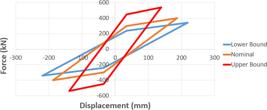
During the design phase, isolators are assigned lower and upper limit values to account for factors such as aging, environmental effects, loading rate, heating, and manufacturing variability. When the lower limit values govern, the isolator exhibits the maximum displacement and, consequently, the minimum force. Conversely, when the upper limit values are considered, the minimum displacement and maximum force are obtained. Therefore, the maximum displacement of the isolation system is calculated using the lower limit values, while the maximum force acting on the isolator is determined using the upper limit values. For elastomeric isolation units, the lower and upper limits are applied to the characteristic strength (FQ ) and the secondary stiffness (k 2). In friction-based isolation units, the lower and upper limits are applied to the coefficient of friction. Other isolator properties are then recalculated using these values (AFAD 2018, ASCE 2022). Figure 4 presents an example force–displacement curve based on the lower limit, nominal, and upper limit parameters. Within the scope of the study, lead-core rubber isolators were used to observe tensile effects caused by vertical earthquakes and to provide the required damping ratio.
Equivalent Lateral Force Method
In base-isolated structures, the Equivalent Lateral Force Method is applied in the preliminary design stage to determine the properties of isolators. In such structures, the substructure is analyzed according to the DD-1 earthquake level and the superstructure according to the DD-2 earthquake level. Accordingly, the analysis is carried out for both DD-1 and DD-2 earthquake levels using the horizontal elastic design spectrum. Initially, the energy dissipated in a single loading cycle (Wd ) and the corresponding effective damping ratio (βe ) are calculated (Eq. 1). For elastomeric isolation units, the effective damping ratio is determined using Eq. 2, while for friction-based isolation units, it is calculated using Eq. 3 (AFAD 2018, ASCE 2022).
Based on the effective damping ratio, the damping scaling factor is determined. The calculated effective damping ratio is expressed as a percentage (value × 100) and is considered the equivalent damping ratio in Eq. 4.
Subsequently, the system period and the corresponding maximum displacement are determined. In the formula, Km represents the effective stiffness of the system (ke ).
The calculated displacement is amplified by a factor determined based on the plan dimensions to account for potential torsional effects in the system. If the corresponding factor is less than 1.1, it is taken as 1.1.
The forces acting on the superstructure are calculated using Eq. 8, based on the values determined up to this stage.
Examined Building
A structural model of a base-isolated building was developed using ETABS (CSI 2024) to simulate the effects of vertical earthquake ground motion for different fault distances and soil types. The bay spacing was taken as 6 m, with a total plan dimension of 30 m in both directions. The building consists of 8 stories, with a story height of 3 m. The cross-sectional dimensions of the structural members were determined in accordance with the relevant codes (AFAD 2018, ASCE 2022, TSE 2000, 2021). Column cross-sections were defined as 60×60 cm and 120×120 cm, beam cross-sections as 60×60 cm and 80×60 cm, and slab thickness was set to 15 cm. The concrete class was taken as C40 for the structural elements located below the isolation level and C35 for the elements above the isolation level. Reinforcement detailing of the structural members was defined in accordance with the requirements of the Turkish Building Earthquake Code (2018). The base isolation system was installed at the top of the ground-floor columns, separating the superstructure from the substructure. Figure 5 shows the three-dimensional model of the building and a typical floor plan.

Lead-rubber bearings were used in the base-isolated building model. The properties of the isolators were determined based on different fault distances and soil classes, in accordance with the relevant codes and technical reports (AFAD 2018, ASCE 2022, Celep 2022, CEN 2005a, b). The primary geometric and mechanical parameters of the LRB isolators used in the base isolation system are summarized in Table I. Most of these parameters remained constant for the considered scenarios, while only the isolator diameter and the lead core diameter were varied depending on the fault distance conditions.
The Lead-Rubber Bearings (LRBs) used in the base isolation system were modeled in ETABS using multi-linear plastic link elements. The nonlinear force–deformation behavior of the isolators was defined based on the mechanical parameters provided in Table I. The horizontal behavior of the isolators was represented using nonlinear shear properties, while the vertical response was defined through the axial link properties of the multi-linear plastic link element. This modeling approach allows the vertical degree of freedom of the isolation system to be explicitly considered in the nonlinear time-history analyses. Within this modeling framework, the axial response of the isolators enables the evaluation of both compressive and tensile forces that may develop under vertical ground motion effects, while the tensile stresses in the isolators were maintained within practical limits commonly adopted in engineering design. In addition, in accordance with the provisions of the seismic design code, the effective damping ratio of the isolation system was taken not to exceed 30%, and lower- and upper-bound isolator properties were defined using the modification factors specified in the code.
The Time-History Analysis Method
This method, applicable to all types of structures and all fault distance conditions, allows the direct application of earthquake loads to the structure and is therefore considered the most accurate method for predicting structural response (Feizolahbeigi & Mendes 2025). The first step in time-history analysis is the selection and scaling of earthquake records, considering parameters such as fault distance, soil class, source mechanism, and shear-wave velocity of the site. After selecting earthquake acceleration records, they were scaled using the spectral-matching scaling method. In this method, the average spectrum of the earthquake acceleration records is compared with the horizontal elastic design spectrum at each period value. Subsequently, the records are scaled so that they are not smaller than the design spectrum accelerations. In addition, the vertical components of the records were matched to the corresponding vertical elastic design spectrum to ensure compatibility with the target spectra used in the analyses.
For each scenario, earthquake acceleration records were selected using the PEER (PEER 2024) database and relevant studies (FEMA 2009). An initial pool of records was first compiled and then screened considering parameters such as source-to-site distance (Rjb), soil conditions represented by Vs30, and fault mechanism to ensure that the selected motions represent realistic seismic scenarios. As a result of this screening process, the selected records have moment magnitudes ranging between Mw 5.90 and Mw 7.62, representing moderate-to-large earthquake events capable of producing significant ground motion demands. The selected records also include different fault mechanisms such as strike-slip, reverse, reverse-oblique, and normal faulting. The classification of near-fault and far-fault records was based on the Joyner–Boore distance (Rjb). Records with Rjb distances less than 10 km were considered near-fault, while those with larger distances were classified as far-fault events. For each soil class, the near-fault and far-fault ground motion records were selected from the same earthquake events but recorded at different stations. This approach helps to reduce the influence of source-related variability and allows the effect of fault distance on the structural response to be more clearly evaluated. The selected earthquake acceleration records were then scaled using the SeismoMatch software (SEISMOSOFT 2024). Tables II and III present the selected earthquake acceleration records for the far-fault condition, corresponding to soil classes ZC and ZD. On the other hand, Tables IV and V provide the selected earthquake acceleration records for the near-fault condition, also corresponding to soil classes ZC and ZD.
As the fault distance decreases and acceleration values increase, sudden and large variations in the velocity–time history, referred to as pulses occur, resulting in an increase in seismic responses (Kazaz et al. 2024, Wang et al. 2024, Luo et al. 2025). The velocity–time histories of the Northridge earthquake selected for the far-fault scenario with soil class ZC in Table II and of the corresponding near-fault station record in Table IV were generated using MATLAB (MATHWORKS 2024) and are presented in Figure 6. According to the velocity–time plots, sudden and large amplitudes occur under the near-fault condition, resulting in an irregular variation, whereas a more uniform variation is observed under the far-fault condition.

Ethics Statement
Ethical approval was not required for this study because it did not involve human participants, animals, or human data.
RESULTS AND DISCUSSION
In the nonlinear time-history analyses, the two orthogonal horizontal components together with the corresponding vertical component recorded at the same station were applied simultaneously. To evaluate the influence of the vertical ground motion component, two sets of analyses were performed for each record: (i) analyses considering only the horizontal components and (ii) analyses considering the horizontal and vertical components together. Subsequently, the directions of the horizontal components were rotated by 90°, and the analyses were repeated. From the total set of analyses, the absolute maximum values obtained from all analyses were identified and averaged.
Story Accelerations
The vertical component of the earthquake does not have a significant effect on story accelerations in the x and y directions, whereas it considerably increases the story accelerations in the z direction. When the fault distance remains the same and the soil class changes from ZC to ZD, the horizontal acceleration increases more than the vertical acceleration, resulting in a decrease in the Vertical-to-Horizontal (V/H) acceleration ratio. As shown in Figure 7, the acceleration in the z direction increases significantly as the fault distance decreases. Furthermore, the V/H acceleration ratio also increases with decreasing fault distance. In the near-fault scenarios, the increase in vertical acceleration is approximately twice that of the far-fault scenarios, reaching up to 0.9g. Consequently, the V/H acceleration ratio is higher compared to the far-fault condition.

Base-isolated structure. a) Story acceleration in the z direction, b) V/H acceleration ratio.
Overturning moments
The variation of overturning moments at the isolation level due to the vertical component of earthquakes was investigated. As shown in Figure 8, an average increase of approximately 40% in the overturning moment was observed under the far-fault scenario. In the near-fault scenario with ZC soil conditions, the overturning moment exhibited an average increase of about 60%. For the soil class ZD, the increase reached approximately 80%. Consequently, when seismic isolation is applied to a conventional structure, the resulting increase in the fundamental period may lead to larger base shear forces in soft soil conditions (FEMA 2007). As a result, due to the larger structural period and the adverse variation of soil properties in the near-fault condition, the overturning moments of the isolation system increased more significantly compared to the far-fault case.

Variation of overturning moments of the isolation system in the base-isolated structure. a) x direction, b) y direction.
Isolator Forces
Significant variations in tensile and compressive forces in the isolators were observed due to the vertical component of the earthquakes. As shown in Figure 9, under the far-fault condition, the average change in compressive forces in the isolators occurred at similar levels for both soil classes. Under the near-fault condition, on the other hand, the effect of the vertical component of the earthquake was more pronounced compared to the far-fault scenario. For the near-fault scenario with soil class ZC, the average change in compressive forces was approximately 33%. When the soil class is ZD, the change reached 43%. Consequently, due to the adverse variation of soil properties in the near-fault condition, the effects of the vertical earthquake component are higher compared to the far-fault scenarios. Figure 9 presents the average tensile force changes in the isolators resulting from the vertical component of the earthquake. The average change in tensile forces under the far-fault scenario is 95% for soil class ZC and 36% for soil class ZD. For the near-fault scenario with soil class ZC, the change was 111%, and for the ZD soil class scenario, it reached 143%. Within the far-fault scenarios, when the soil class changes from ZC to ZD, the effects of the horizontal components of the earthquake were higher compared to the vertical effects. In conclusion, although the effects of the vertical component of the earthquake increased in magnitude, they decreased in percentage terms. In the near-fault condition, when the soil class changed from ZC to ZD, the influence of vertical earthquake forces on the compressive and tensile forces in the isolators was higher compared to that of the horizontal forces.

Vertical Displacements
The average vertical displacements at the top ends of the isolators were investigated. According to Figure 10, the effect of vertical earthquake forces on the average vertical displacement at the isolator top was 72% for the far-fault scenario with soil class ZC and 71% for the far-fault scenario with soil class ZD. Due to the change in soil class, the horizontal earthquake forces increase more than the vertical ones, resulting in a relative decrease in the percentage effect of the vertical component. In the near-fault condition, however, the adverse variation of soil properties leads to a relative increase in the effect of vertical earthquake forces, in contrast to the far-fault scenarios. For soil class ZC, the observed increase was 48%, while for soil class ZD, it reached 57%.

CONCLUSIONS AND REMARKS
In this study, the effects of vertical earthquake component on base-isolated structures were investigated by considering two different fault distances and two different soil classes. Four scenarios were created based on the combinations of fault distance and soil class. Ground motion records were selected and scaled for these scenarios. Through nonlinear time-history analyses, the influence of the vertical earthquake component on key parameters relevant to base-isolated structural design was examined. The key findings obtained from the analyses are listed below:
-
Vertical earthquake component did not have a significant effect on story shear forces, story drifts, or story accelerations in the horizontal directions.
-
Table VI presents the changes in various structural parameters critical to base-isolated structural design resulting from the vertical component of earthquakes. Nonlinear time-history analyses numerically demonstrate that, under different scenarios, story accelerations in the vertical direction, overturning moments at the isolation level, forces in the isolators, and vertical displacements at the top ends of the isolators increase significantly.
-
In the far-fault scenarios, structural response increases were more pronounced for soil class ZC. Due to the differences in soil class conditions represented in the selected ground motion records, the effects induced by horizontal earthquake accelerations became larger, resulting in a relative decrease in the vertical earthquake effects. However, when the fault distance decreased, the vertical earthquake effects increased more significantly, despite the simultaneous increase in horizontal component-induced effects due to soil class variations. In addition, to make a general assessment, the selected ground motion records were chosen from different fault types. When structures are subjected to reverse fault effects, the vertical earthquake effects may increase regardless of soil class or fault distance. Accordingly, these observations suggest that near-fault and far-fault classifications may also benefit from considering the seismic potential of the fault and site conditions, and that corresponding analytical approaches may need to account for these factors in structural analyses.
-
The observed behavior may be associated with differences in the dynamic characteristics of the soil. When the soil class changes from ZC to ZD, the lower shear wave velocity (Vs30) leads to increased site amplification, which modifies the characteristics of the ground motion experienced by the structure. This amplification can influence the interaction between soil response and the dynamic properties of the structural system, potentially altering the relative contribution of vertical and horizontal seismic components. Consequently, the differences observed between soil classes may be associated with the combined effects of soil amplification and the dynamic interaction between soil conditions and structural response.
-
In cases where the distance to the fault decreases, effects referred to as pulse-like ground motion may occur. In addition to the increase in vertical earthquake effects, the presence of pulse effects can lead to critical safety concerns for the structure. Therefore, it is suggested that introducing a limit condition for the ratio of the shortest plan dimension to the building height in base-isolated structures would represent a safer approach to ensure structural system reliability.
-
The results indicate that fault distance and soil conditions play an important role in the vertical seismic response of base-isolated structures. In particular, the analyses indicate that structures located closer to the fault may experience more pronounced vertical earthquake effects, especially under softer soil conditions. Therefore, careful consideration of fault proximity and site conditions is important in the seismic design and assessment of base-isolated structures. Furthermore, under near-fault conditions, the ratio of the shortest plan dimension to the building height may influence the tensile forces in the isolators, which may affect the overall safety of the structural system. However, since the present study is based on a single structural model, further parametric studies involving buildings with different heights and plan dimensions are required before establishing generalized design recommendations.
-
Significant increases in the compressive and tensile forces of the isolators were observed due to the vertical component of the earthquake. Therefore, accurate assessment of vertical earthquake effects is of vital importance for safety checks, such as buckling and deformation in isolators. In addition, noticeable increases in story accelerations in the vertical direction were observed in the analyzed structure. In this regard, defining limit values for vertical story accelerations in design codes is considered to be a significant contribution to improving structural safety.
In conclusion, this study comprehensively investigated the effects of vertical ground motion on base-isolated structures by considering parameters such as fault distance and soil class. The results indicate that, under certain conditions, the vertical component of earthquakes may significantly influence the structural responses of base-isolated structures. In this regard, the present study is expected to contribute to the literature and provide useful insights for future research on the assessment of vertical earthquake effects in base-isolated systems. It should be noted that the findings of this study are limited to the investigated structural configuration and the selected set of ground motion records. Therefore, further parametric studies involving different building configurations and a broader range of ground motion records are required to generalize the observed trends.
Acknowledgements
This paper is based on Mehmet Fırat Karapınar’s PhD thesis entitled “Effect of Vertical Earthquake Ground Motion on Seismic Behavior of RC Buildings,” which was supervised by Professor Baris Sayin.
References
- AFAD - MINISTRY OF INTERIOR DISASTER AND EMERGENCY MANAGEMENT PRESIDENCY. 2018. TBEC: Turkish building earthquake code. AFAD, Ankara, Turkey.
- ASCE - AMERICAN SOCIETY OF CIVIL ENGINEERS. 2022. ASCE 7-22: Minimum design loads and associated criteria for buildings and other structures. Reston, VA: ASCE.
- CELEP Z. 2020. Nonlinear Behavior and Analysis in Reinforced Concrete Structural Systems. 5th ed., Beta Press, Istanbul. 318 p. ISBN: 978-975-95405-8-6.
- CELEP Z. 2022. Introduction to Earthquake Engineering and Seismic-Resistant Structural Design. 8th ed., Beta Press, Istanbul. 764 p. ISBN: 978-975-95405-9-3.
- CEN - EUROPEAN COMMITTEE FOR STANDARDIZATION. 2004. EN 1998-1: Design of structures for earthquake resistance – part 1: general rules, seismic actions and rules for buildings. CEN, Brussels, Belgium.
- CEN - EUROPEAN COMMITTEE FOR STANDARDIZATION. 2005a. EN 1337-3: Structural bearings – part 3: elastomeric bearings. CEN, Brussels, Belgium.
- CEN - EUROPEAN COMMITTEE FOR STANDARDIZATION. 2005b. EN 1998-2: Design of structures for earthquake resistance – part 2: bridges. CEN, Brussels, Belgium.
- CHEN X, HU H, FU W, LIU T, SUN Y & LIU C. 2024. Rapid assessment of seismic performance for multi-story RC frame buildings using direct prediction method. Case Stud Constr Mater 22: e04621.
- CSI - COMPUTERS AND STRUCTURES INC. 2024. CSI ETABS v21: Integrated software package for the structural analysis and design of buildings. Computers and Structures Inc.
- CONSTANTINOU MC, KALPAKIDIS I, FILIATRAULT A & ECKER LAY RA. 2011. LRFD-based analysis and design procedures for bridge bearings and seismic isolators. Technical Report MCEER-11-0004.
- DU X, BAI W, BAI J, YAN D, GONG M & SUN J. 2021. Comparative seismic performance assessment of reinforced concrete frame structures with and without structural enhancements using the FEMA P-58 methodology. ASCE-ASME J Risk Uncertainty Eng Syst A Civ Eng 7(4): 04021047-1.
- FARAJIAN M, SAEED N & KANG W. 2022. Seismic vulnerability assessment of base isolated liquid storage tanks under near fault ground motions. Structures 43: 1901-1912.
- FEIZOLAHBEIGI A & MENDES N. 2025. Evaluation of different types of advanced analysis for the study of the seismic behavior of masonry minarets. Structures 78: 109314.
- FEMA - FEDERAL EMERGENCY MANAGEMENT AGENCY. 2007. FEMA 451B: Instructional material complementing FEMA 451 design examples. FEMA, Washington, DC, USA.
- FEMA - FEDERAL EMERGENCY MANAGEMENT AGENCY. 2009. FEMA P695: Quantification of building seismic performance factors. FEMA, Washington, DC, USA.
- GAO J, BAI W, DU K & QI J. 2025. Quantifying the uncertainty of structural parameters using machine learning-based surrogate models. ASCE-ASME J Risk Uncertainty Eng Syst Part A Civ Eng 11(2): 04025023.
- GULERCE Z & ABRAHAMSON NA. 2011. Site-specific design spectra for vertical ground motion. Earthq Spectra 27(4): 1023-1047.
- GUNES N. 2022. Effects of near-fault pulse-like ground motions on seismically isolated buildings. J Build Eng 52: 104508.
- GURBUZ T & CENGIZ A. 2025. Structural damages during the February 06, 2023 Kahramanmaraş Earthquakes in Turkey. Structures 191: 109214.
- HAQUE F, RAHAT MH & HAQUE M. 2025. Seismic performance evaluation of multi-storied RC structures by nonlinear static analysis. Results Eng 25: 104105.
- HE D, CHENG X, LIU H, LI Y, ZHANG H & DING Z. 2025. Machine learning-based seismic fragility curves of regular infilled RC frames. J Build Eng 99: 11545.
- HOANG PH, PHAN HN & NGUYEN VN. 2021. On the influence of the vertical earthquake component on structural responses of high-rise buildings isolated with double friction pendulum bearings. Appl Sci 11: 3809.
- IBRAHIM AR, MAKHLOOF DA & REN X. 2024. Seismic performance and collapse of RC framed-wall structure excited with Turkey/Syria destructive earthquake. Structures 59: 105774.
- JAIMES MA & GARCIA JR. 2019. New vertical-to-horizontal ratio spectrum due to intraslab earthquakes for soft-soil sites of Mexico City. Soil Dyn Earthq Eng 126: 105804.
- KALE Ö & AKKAR S. 2020. A new formulation for a code-based vertical design spectrum. Earthq Eng Struct Dyn 49(10): 963-980.
- KANYILMAZ A & CASTIGLIONI CA. 2017. Reducing the seismic vulnerability of existing elevated silos by means of base isolation devices. Eng Struct 143: 477-497.
- KAZAZ İ, BILGE İH & GÜRBÜZ M. 2024. Near-fault ground motion characteristics and its effects on a collapsed reinforced concrete structure in Hatay during the February 6, 2023 Mw7.8 Kahramanmaraş earthquake. Eng Struct 298: 117067.
- LI M, GUO J, ZHANG P & GUAN Z. 2023. Vertical effects of near-fault ground motions and the optimal IMs for seismic response of continuous girder bridges with FPB isolators. Eng Struct 289: 116326.
- LIU D, NAGGAR MHE, NIU X, FANG H & XU C. 2025. Seismic performance of subway station fitted with rubber bearings via pushover analysis. Soil Dyn Earthq Eng 196: 109487.
- LUO Q, ZHANG G, DING B & JI Z. 2025. Evaluation of strongest ground motions under strike-slip rupture for the Luding and Imperial Valley earthquakes. Soil Dyn Earthq Eng 194: 109390.
- LUO W, LIANG Q, ZHUO Y, LU Z, LI J & HE Z. 2024. A novel three-dimensional isolation bearing for buildings subject to metro- and earthquake-induced vibrations: Laboratory test and application. J Build Eng 86: 108798.
- MATHWORKS. 2024. MATLAB 2024: Analyze data, develop algorithms and create models. MathWorks Inc.
- NGUYEN DV, CHOO Y, NGUYEN PH & KIM D. 2025. Nonlinear seismic soil-structure interaction analysis of shallow-founded structure: centrifuge test, numerical analysis, and deep learning approach. Comput Geotech 186: 107382.
- NGUYEN HH & TRUONG VH. 2024. Machine learning-based prediction of seismic lateral deflection of steel trusses using nonlinear time history analysis. Structures 69: 107369.
- OZER E, INEL M & CAYCI BT. 2022. Seismic behavior of LRB and FPS type isolators considering torsional effects. Structures 37: 267-283.
-
PEER - PACIFIC EARTHQUAKE ENGINEERING RESEARCH CENTER. 2024. Available at: https://peer.berkeley.edu
» https://peer.berkeley.edu - QUARANTA G, ANGELUCCI G & MOLLAIOLI F. 2022. Near-fault earthquakes with pulse-like horizontal and vertical seismic ground motion components: analysis and effects on elastomeric bearings. Soil Dyn Earthq Eng 160: 107361.
-
SEISMOSOFT. 2024. SeismoMatch: Earthquake software for response spectrum matching. Available at: https://www.seismosoft.com
» https://www.seismosoft.com - SHAKIB H & FULADGAR A. 2003. Effect of vertical component of earthquake on the response of pure-friction base-isolated asymmetric buildings. Eng Struct 25: 1841-1850.
- SRINATH G & GOPIKRISHNA K. 2025. Effect of repeated earthquakes on multi-storied RC buildings using IDA. Structures 79: 109475.
- TSE - TURKISH STANDARDS INSTITUTION. 2000. TS 500: Requirements for design and construction of reinforced concrete structures. TSE, Ankara, Turkey.
- TSE - TURKISH STANDARDS INSTITUTION. 2021. TS 498: Design load values for the dimensioning of structural elements. TSE, Ankara, Turkey.
- WANG G, YAN SD, LI DQ & DU W. 2024. Seismic performance assessment of high arch dams considering the pulse-like and directionality effects of near-fault ground motions. Eng Struct 321: 119010.
- WU Y, ZHANG R, LI A, WANG Z, LU S, FU J, YANG Z & WANG W. 2025. The constant-ductility response spectra for vertical seismic isolated SDOF systems with asymmetric bilinear hysteresis model. Structures 74: 108527.
- YANG H, WU G, MA Y, ZHAO G, LIU W, HUANG H, YANG Z, WANG J & LIU L. 2025. Experimental and seismic analysis of a novel ring spring vertical isolation bearing with central ring. Structures 79: 109424.
- YANG J, TONG T, LIU Z & LIU P. 2025. Plug-in seismic isolation joints in modular steel structures: Experimental and numerical evaluation. J Constr Steel Res 234: 109673.
- YUAN W, XIE B, ZHOU W, YIN Z, WANG Z & DING T. 2025. Seismic performance analysis of wind and rain bridge structures and design of a seismic vibration damping program using rubber isolators. Structures 79: 109474.
- ZHENG W, CHEN J, WANG H, TAN P, LI J & WANG S. 2025. A novel damping adaptive pendulum isolation system for seismic resilience enhancement of continuous bridges. Eng Struct 339: 120465.
Edited by
-
Handling editor
Diego Knupp
The data that support the findings of this study are available from the corresponding author upon reasonable request.


